A Cheat Sheet for POS ERP Integration
- November 13
- 13 min


A Vendor Management System (VMS) is a software platform that helps businesses manage their relationships with external suppliers, vendors, and contractors. It acts as a central hub for all vendor-related activities, from initial onboarding to final payment. This article explains what a VMS is, how it works, and why a Vendor Management System is a valuable tool for modern companies.
Key Takeaways:
A Vendor Management System is a technology solution designed to automate and simplify the entire lifecycle of managing third-party suppliers. It provides a structured framework for businesses to find, engage, and manage their external workforce and service providers. This includes freelancers, temporary staff, and consulting firms.
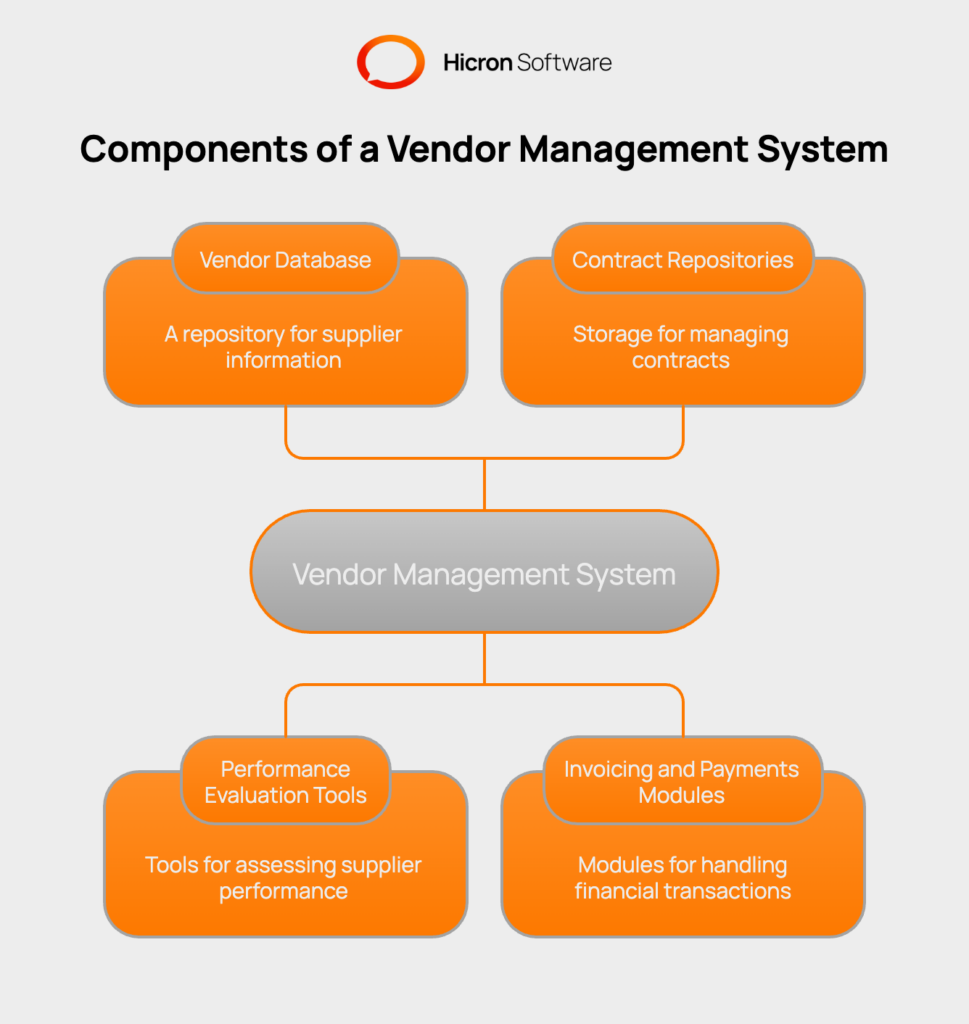
The core components of a VMS typically include
Industries such as healthcare, IT, finance, and manufacturing often use VMS platforms to handle their complex networks of suppliers and ensure operational consistency.
A VMS works by creating a single, digital environment where all vendor-related processes can be executed and monitored. The process begins when a company needs to hire a new supplier or contractor. The system facilitates vendor discovery, screening, and selection.
Once a vendor is chosen, the software guides them through an automated onboarding process, collecting necessary documents like contracts, tax forms, and compliance certifications. As the vendor performs work, the VMS tracks their progress, monitors performance against key metrics, and manages timesheets or project milestones.
When work is complete, the system helps process invoices and payments, ensuring everything is accurate and timely. Workflows for sourcing new talent, approving work orders, and evaluating performance are all managed within the platform.
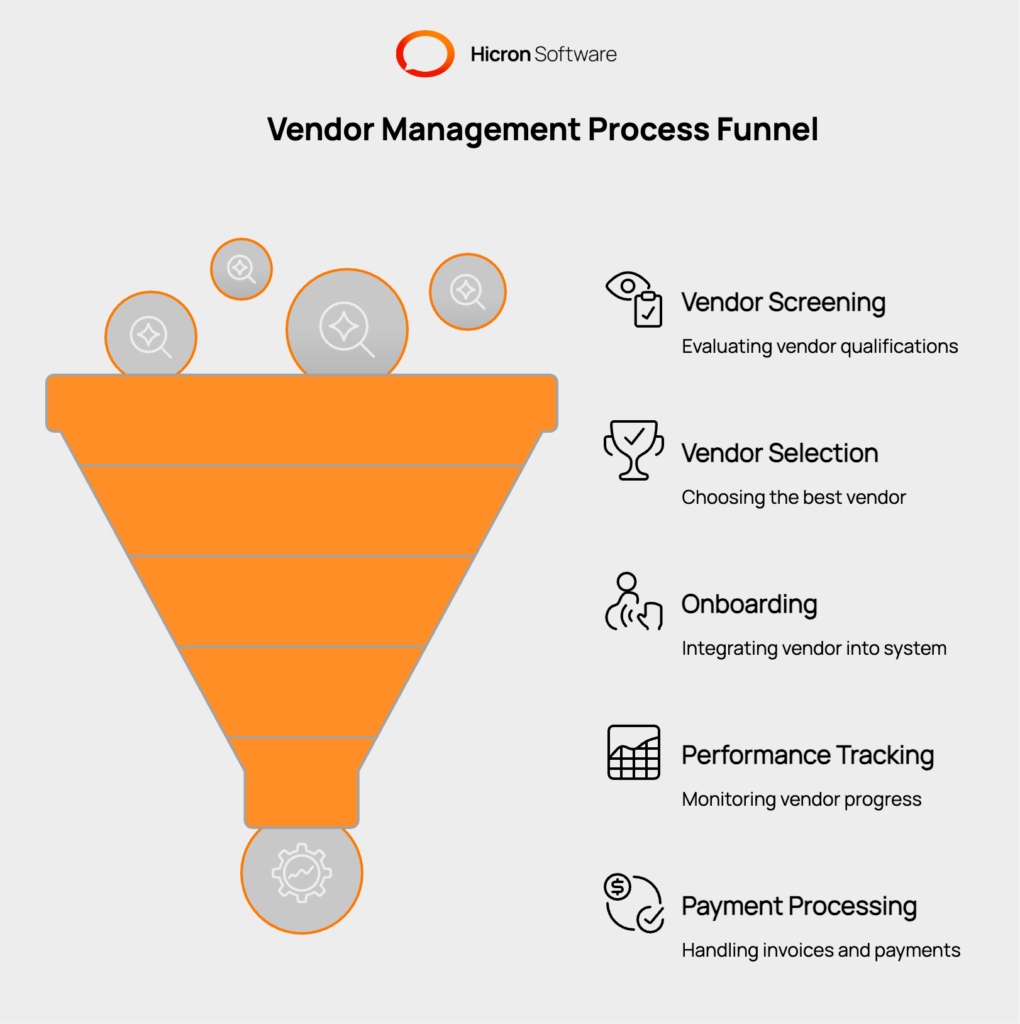
A comprehensive VMS offers several features to streamline supplier management.
Implementing a VMS provides numerous advantages for organizations.
VMS solutions, or supplier lifecycle management software, come in several forms to meet different business needs. The most common distinction is between cloud-based and on-premise systems. Cloud-based VMS platforms are hosted by the provider and accessed via the internet, offering flexibility and lower upfront costs. On-premise solutions are installed on a company’s own servers, providing greater control over data and security.
Some VMS platforms are designed for specific industries, with features tailored to the unique challenges of sectors like healthcare or finance. There are also standalone systems that focus purely on vendor management, as well as integrated solutions that are part of a larger suite of business software, such as an Enterprise Resource Planning (ERP) system.
|
Type |
Description |
|
Cloud-based VMS |
Hosted by the provider and accessed online, offering flexibility and lower upfront costs. |
|
On-premise VMS |
Installed on a company’s servers, providing greater control over data and security. |
|
Industry-specific VMS |
Tailored features for sectors like healthcare or finance to address unique compliance and workflow needs. |
|
Standalone VMS |
Focuses purely on vendor management capabilities without broader business modules. |
|
Integrated VMS |
Part of a larger software suite, such as ERP, to unify vendor data with other business functions. |
Managing vendors without a dedicated system can create many difficulties. Manual processes are often slow and prone to human error, leading to inefficiencies and increased administrative costs. Without central supplier lifecycle management software, companies lack visibility into vendor performance, making it hard to assess the value they receive.
Disorganized data stored in different files or departments creates information silos, complicating compliance and risk management efforts. This is one reason formal third-party risk management practices are increasingly important in procurement and supplier oversight, as outlined by Amazon Business.
To select the right vendor management system, start by considering your organization’s needs. Scalability is key, as your vendor management technology should grow with your business and handle more vendors and users as needed. Integration is another important factor. The system should connect with your existing tools like accounting or human resources platforms to keep your processes smooth. Choose or develop a platform that is easy to use so your team and vendors can adopt it quickly.
When speaking with VMS providers, ask about their customer support, how they manage security, and what the implementation process involves. Find out how they protect your data and what steps they take to help you move your information into the new system. Check that they offer training and support to make the transition easier.
Make sure your choice fits your business goals. Whether you want to lower costs, improve compliance, or increase efficiency, your vendor management suite should include features that meet these priorities. Taking time to match the system to your requirements will help your organization gain value over the long term.
|
Criterion |
What to Look For |
|
Scalability |
Ability to support growth in vendors, users, and transactions without performance issues. |
|
Integrations |
Native connectors or APIs to accounting, HR, ERP, and procurement systems. |
|
Usability |
Intuitive interface and simple workflows for both internal teams and vendors. |
|
Security |
Strong data protection, access controls, audit logs, and compliance certifications. |
|
Implementation |
Clear timeline, migration support, training, and change management resources. |
|
Support |
Responsive customer support, SLAs, and a helpful knowledge base. |
|
Business Alignment |
Features that map to goals like cost reduction, compliance, and efficiency. |
Popular Vendor Management System platforms include SAP Ariba for enterprise procurement, Coupa for spend and supplier management, Workday VNDLY for contingent workforce programs, GEP SMART for sourcing and procurement, and Oracle Procurement for ERP connected vendor processes.
The field of vendor management is continuously evolving. Artificial intelligence (AI) and automation are becoming more common, helping with tasks like vendor selection and performance prediction. We are also seeing deeper integration with other enterprise tools like ERP and Customer Relationship Management (CRM) systems, creating a more unified view of business operations. Additionally, there is a growing focus on using VMS technology to promote sustainability and ethical sourcing by tracking vendor practices related to environmental and social governance. Contact us to start developing your customized Vendor Management System, tailored to your specific business needs.
The main purpose of a VMS (Vendor Management System) is to automate and centralize the management of a company’s external vendors, contractors, and suppliers. It streamlines processes like onboarding, contract management, performance tracking, and payments to improve efficiency and control.
A VMS (Vendor Management System) focuses specifically on managing supplier relationships and contingent workforces. An Enterprise Resource Planning (ERP) system is a broader software suite that integrates various business processes, such as finance, HR, manufacturing, and supply chain management. While an ERP may have procurement modules, a VMS offers more specialized tools for vendor lifecycle management.
A VMS (Vendor Management System) is used by various departments within a company, including procurement, human resources, legal, and finance teams. It helps them collaborate on managing the company’s relationships with its external workforce and service providers.
Yes, small businesses can benefit from a VMS (Vendor Management System). While once seen as a tool for large enterprises, many modern VMS solutions are cloud-based and scalable, making them affordable and accessible for smaller companies looking to professionalize their vendor management and improve efficiency.
A VMS (Vendor Management System) helps with compliance by providing a central repository for all vendor documentation, including contracts, licenses, and insurance certificates. It can automatically track expiration dates and send alerts, ensuring that all vendors meet regulatory and company standards, which reduces legal and financial risks.
Hicron Software proved to be a trusted partner with unmatched technical expertise, delivering a scalable and user-friendly web application that was pivotal to our successful U.S. market expansion.
Hicron’s contributions have been vital in making our product ready for commercialization. Their commitment to excellence, innovative solutions, and flexible approach were key factors in our successful collaboration.
I wholeheartedly recommend Hicron to any organization seeking a strategic long-term partnership, reliable and skilled partner for their technological needs.

After carefully evaluating suppliers, we decided to try a new approach and start working with a near-shore software house. Cooperation with Hicron Software House was something different, and it turned out to be a great success that brought added value to our company.
With HICRON’s creative ideas and fresh perspective, we reached a new level of our core platform and achieved our business goals.
Many thanks for what you did so far; we are looking forward to more in future!

Hicron is a partner who has provided excellent software development services. Their talented software engineers have a strong focus on collaboration and quality. They have helped us in achieving our goals across our cloud platforms at a good pace, without compromising on the quality of our services. Our partnership is professional and solution-focused!

The IT system supporting the work of retail outlets is the foundation of our business. The ability to optimize and adapt it to the needs of all entities in the PSA Group is of strategic importance and we consider it a step into the future. This project is a huge challenge: not only for us in terms of organization, but also for our partners – including Hicron – in terms of adapting the system to the needs and business models of PSA. Cooperation with Hicron consultants, taking into account their competences in the field of programming and processes specific to the automotive sector, gave us many reasons to be satisfied.