11 DevOps Automation Tools to Streamline Your Workflow
- May 21
- 10 min


A supplier portal is a digital platform that serves as a centralized gateway for a company to connect, communicate, and conduct business transactions with its suppliers. It acts as a single source of truth where procurement teams and vendors can interact efficiently.
Managing a complex network of vendors with outdated tools like email chains and spreadsheets often leads to operational bottlenecks. A supplier portal offers a solution by centralizing these interactions into a single, efficient platform. This article explores how the right supplier portal development can transform your business operations. You will learn what a supplier portal is, the key benefits it offers, and how to choose between custom and off-the-shelf solutions. We will also guide you through the implementation process and explain how automation can drive growth through stronger supplier collaboration and supplier performance management.
Key Takeaways:
A supplier portal acts as a bridge between your company and its external partners. It is a secure online interface where a supplier can log in to view orders, submit documentation, and track payments. By moving these interactions to a dedicated portal, you eliminate the chaos of scattered emails and phone calls. This centralization is the first step toward a more organized supply chain. When you implement a supplier portal, you provide a structured environment for managing supplier relationships.
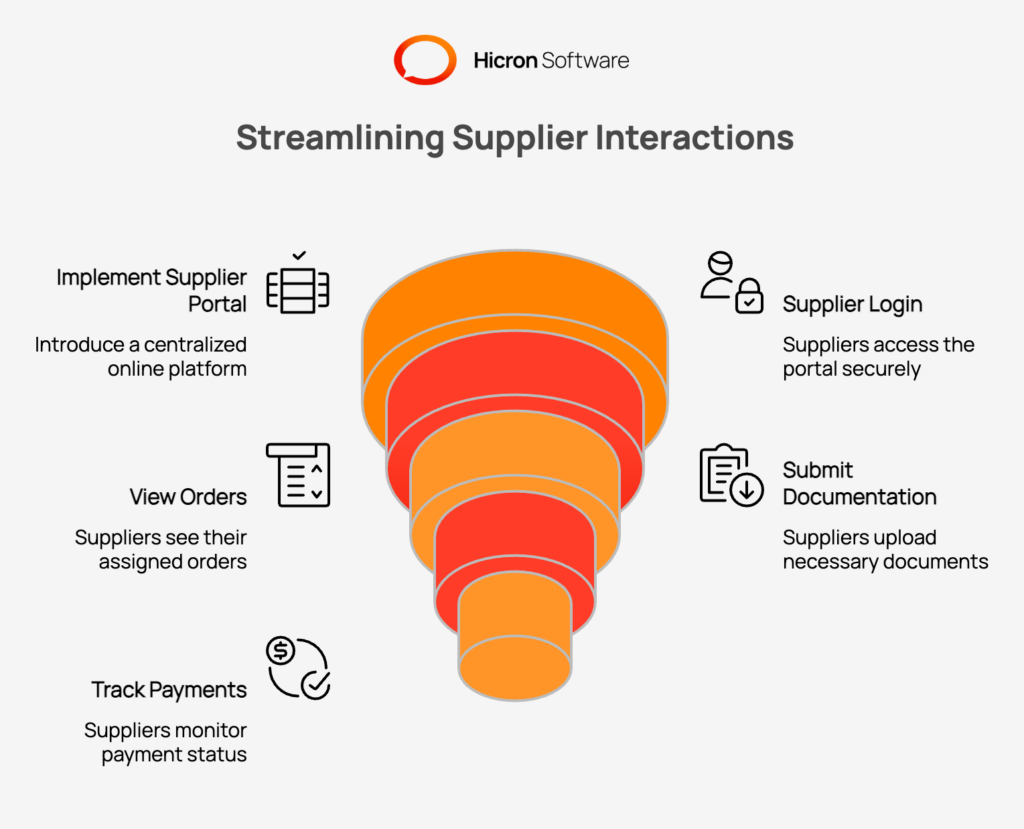
The need for such a solution becomes obvious when you analyze the inefficiencies of traditional methods. Without a portal, your procurement team likely spends hours manually entering data or chasing down a missing invoice. A supplier portal software solution automates these repetitive tasks. It ensures that your vendor management process is consistent and reliable. Having a single platform for all supplier interactions reduces the risk of miscommunication and errors.
A modern supplier portal simplifies vendor management by providing a comprehensive view of your entire supplier network.
Modern supplier portals change how organizations manage vendor relationships by replacing email threads and spreadsheets with one system for all activity. The result is less manual work, fewer errors, and greater control for procurement teams.
Automation and streamlined workflows are at the heart of the modern supplier portal. Instead of staff spending hours on repetitive tasks, the portal handles routine actions:
This lowers the risk of manual errors and removes bottlenecks that cause lost time.
Modern portals include features that make daily vendor management tasks easier and more accurate:
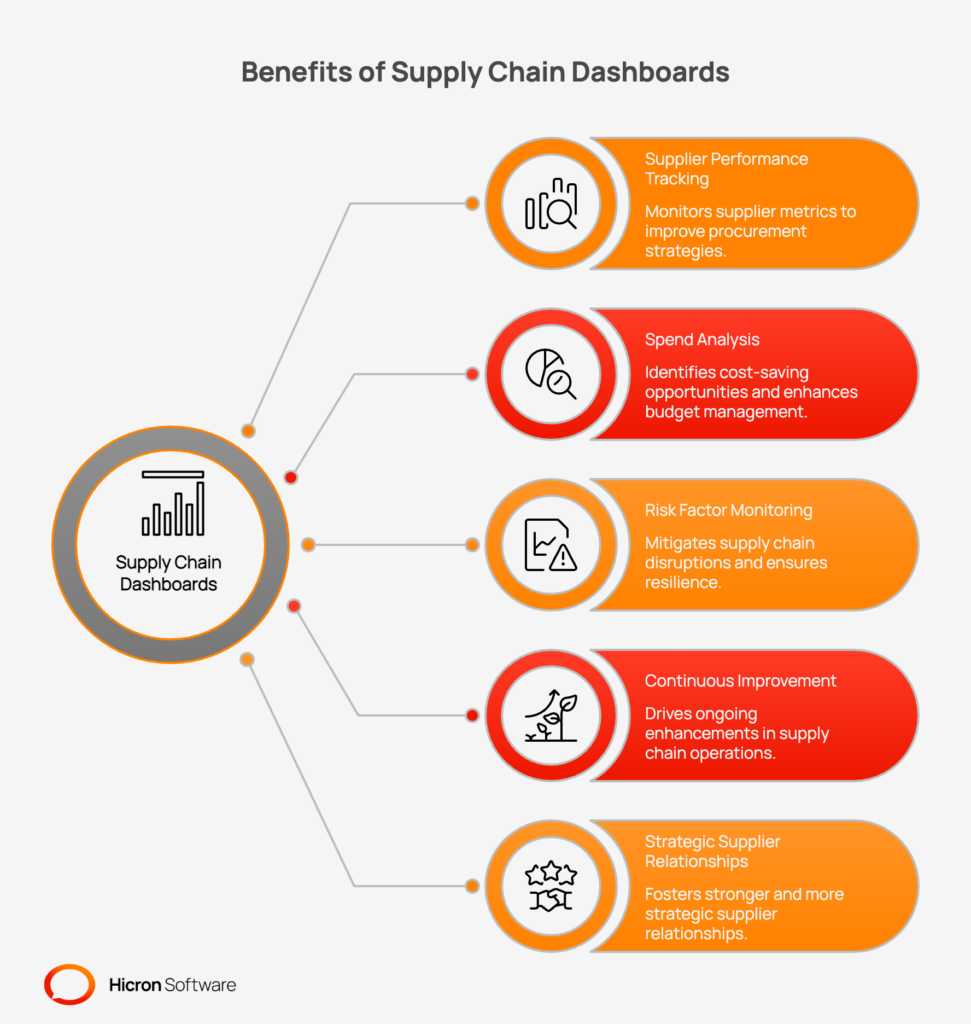
Procurement teams gain clear oversight through:
This helps teams anticipate problems, identify trends, and manage supplier activities instead of reacting to issues as they arise.
Key vendor management workflows improve in speed and quality:
The benefits of a supplier portal are extensive and impact various aspects of your business. One primary advantage is cost savings. By automating the exchange of documents like the purchase order and invoice, you cut down on processing costs. Manual errors, which often lead to payment disputes, are drastically reduced because the data flows directly from the supplier to your ERP system. This integration ensures financial accuracy across the board.
Improved compliance is another critical benefit. A supplier portal helps you enforce strict governance by requiring vendors to upload necessary certifications directly to the system. The portal should be able to alert you when a document is near expiration, helping you manage supplier risk proactively. Additionally, supplier portals provide a clear audit trail of every transaction. This accountability is vital for internal audits and maintaining regulatory standards.
A self-service supplier portal transforms the way vendors interact with your company. Instead of waiting for your administrative staff to update their bank details or contact information, a supplier can make these changes independently. This self-service capability empowers the supplier and ensures that their data is always current. It removes bottlenecks and allows your procurement team to trust the data they are seeing.
A self-service portal speeds up conflict resolution. If a supplier has a query about an invoice status, they can simply check the portal rather than sending an email and waiting for a response. This transparency improves the supplier experience. When you offer a user-friendly web portal, you encourage high supplier adoption rates. Vendors are more likely to engage with a system that respects their time and simplifies their daily tasks.
Off-the-shelf software solutions can be effective, but they often come with limitations. Custom supplier portal development addresses the unique challenges of your specific operations. If your procurement processes are complex or if you require specialized integration with legacy systems, a custom portal is often the superior choice. It allows you to build workflows that align perfectly with your internal procedures rather than forcing you to adapt to rigid software.
A custom portal also offers a competitive advantage by allowing you to create a unique experience for your partners. You can design the interface to reflect your brand and specific industry terminology. With a custom solution, you own the code and the data completely. This independence protects you from unexpected vendor price hikes or discontinued features. For companies that view their supply chain as a strategic asset, a custom portal is a worthwhile investment.
|
Feature Category |
Custom Solution |
Off-the-Shelf Solution |
|
Setup Time |
Months |
Weeks |
|
Upfront Cost |
High |
Low/Medium |
|
Customization |
Unlimited |
Limited to configuration |
|
Ownership |
You own the code |
You pay a license fee |
Selecting the right supplier portal requires a careful assessment of features. Integration capability is paramount. The portal must be able to connect with your existing ERP system to ensure data consistency. If the software solution cannot integrate effectively, you risk creating data silos that hamper efficiency. Data must flow automatically between the portal and your financial systems to truly streamline supplier operations.
Security is another non-negotiable factor. Since the portal handles sensitive financial data and contracts, it must have robust protection measures. Look for features like encryption and multi-factor authentication. Usability is also critical; the portal needs to be intuitive. If the interface is too complex, supplier adoption will suffer. Finally, scalability is essential. The software must be able to handle an increasing volume of data and users as your company grows.
|
Feature |
Importance |
Example Use Case |
|
Integration |
High |
Syncing purchase orders from your ERP system directly to the supplier portal to eliminate manual data entry. |
|
Security |
High |
Protecting sensitive financial data and supplier contracts through role-based access and data encryption. |
|
Usability |
Medium |
A supplier logging in to easily update their contact information or check an invoice status without needing assistance. |
|
Scalability |
Medium |
The portal continuing to perform efficiently as your company grows from 100 to 1,000 suppliers. |
Before you choose the right supplier portal, look for customizable workflows and reporting capabilities that align with your metrics. Mobile accessibility is also increasingly important for on-the-go approvals. Consider the vendor’s reputation. In some cases, selecting a supplier portal may mean choosing between a ready-made solution and a custom one. Vet them carefully to ensure they offer strong support in your supplier management software journey.
Implementing a supplier portal involves more than just installing software. It starts with data hygiene. You must clean your existing supplier master data before migrating it to the new system. Bad data will only lead to confusion and errors. Once your data is ready, involve stakeholders from procurement, IT, and finance to define the exact requirements. Their input ensures you implement supplier portal correctly.
Change management is the next hurdle. You need to train both your internal team and your suppliers on how to use the new portal. Provide clear guides and support to facilitate this transition. Effective supplier onboarding is crucial for success. If vendors find the new process difficult, they will resist using it. Communicate the benefits clearly, such as faster invoice processing and real-time visibility. By managing expectations and providing support, you ensure a smooth rollout.
|
Actions |
Stakeholders |
Expected Outcomes |
|
1. Define Project Scope & Requirements |
Procurement, IT, Finance, Executive Leadership |
A clear project plan with defined goals, budget, and a list of essential portal features. |
|
2. Clean and Migrate Supplier Data |
Data Management Team, IT, Procurement |
An accurate and up-to-date supplier database migrated into the new portal without errors. |
|
3. Configure Portal & Workflows |
IT, Software Vendor, Procurement Team |
The portal is set up to match company branding and automate key processes like onboarding and invoice approval. |
|
4. Conduct Pilot Testing |
A select group of suppliers, Pilot Test Team, IT |
Bugs are identified and fixed. User feedback is collected to refine the portal experience before full launch. |
|
5. Develop Training & Support Materials |
HR/Training Department, Procurement |
Comprehensive guides and FAQs are created to help internal users and suppliers adopt the new system. |
|
6. Execute Phased Rollout |
All Suppliers, Procurement, IT, Support Team |
Suppliers are onboarded in manageable groups, ensuring adequate support and a smooth transition. |
|
7. Monitor Adoption & Gather Feedback |
Analytics Team, Procurement, All Users |
High supplier adoption rates and continuous improvement of portal functionality based on user feedback. |
Automation is the engine that drives efficiency in a modern supplier portal. By automating routine procurement processes, you save valuable time. For example, the portal enables automated invoice matching. When a supplier submits an invoice through the supplier portal, the system can instantly compare it against the purchase order and receipt. If they match, the invoice is approved for payment automatically.
Beyond invoicing, automation assists with compliance and maintenance. The portal can send automated reminders to suppliers when certifications are due for renewal. It can also guide new vendors through the onboarding process with automated workflows. This reduces the manual burden on your staff. A portal built with these automation capabilities ensures that your procurement operations run smoothly and consistent standards are maintained.
|
Automated Workflow |
Description |
Benefit |
|
Invoice Matching |
The system automatically compares a submitted invoice against the purchase order and delivery receipt to verify accuracy. |
Eliminates manual data entry errors and speeds up the “straight-through processing” of payments. |
|
Compliance Tracking |
The portal monitors the expiration dates of supplier certifications (e.g., insurance, ISO) and sends automated renewal reminders. |
Reduces supplier risk by ensuring all vendors remain compliant without requiring manual audits. |
|
Onboarding Automation |
New suppliers are guided through a digital checklist of required forms and tax documents, with automated progress tracking. |
Reduces administrative burden and significantly shortens the time to get new vendors operational. |
|
Order Acknowledgment |
Vendors receive instant notifications of new Purchase Orders and can confirm receipt or flag issues with a single click. |
improving communication speed and ensuring alignment on delivery timelines immediately. |
Supplier collaboration is a strategic necessity in today’s market. Your company relies on the reliability and innovation of your suppliers. A supplier portal fosters this collaboration by creating a shared space for joint planning. When you share inventory data and forecasts within the portal, suppliers can better plan their production, reducing lead times and stockouts.
Strong relationships also build resilience. If a supplier encounters a disruption, they can communicate it quickly through the portal, allowing you to react immediately. This transparency builds trust. Supplier networks that are digitally connected can adapt faster to market changes. By using supplier portals to strengthen these ties, you turn vendors into true partners who are invested in your mutual success.
A generic portal can sometimes feel like a barrier, but a custom portal serves as a bridge. By tailoring the portal to the specific needs of your vendors, you demonstrate that you value their partnership. For instance, you can configure the supplier portal to provide specific reporting tools that help them track their performance. This adds value to their operations and transforms the portal into a useful tool for them.
Additionally, a custom portal allows you to treat different supplier tiers appropriately. A strategic partner might need deep integration for real-time data sharing, while a smaller vendor might only need a simple interface to submit invoices. Customizing these pathways ensures that every supplier finds the system easy to navigate. When you streamline vendor interactions in a way that respects their processes, you build loyalty and ensure a more reliable supply chain.
A well-designed supplier portal gives businesses better control over their global supplier relationships by making daily operations more organized and efficient. These portals bring all supplier information management, communication, workflows, and performance data together in one place, which removes confusion caused by scattered emails and manual entry.
Built-in features such as supplier status, automated document management, digital approvals, and supplier scorecards allow procurement teams to track results, avoid common mistakes, and make better decisions. Self-service tools let suppliers check information, share documents, and communicate more freely, which supports stronger business partnerships and greater transparency.
With the right supplier portal, common processes like onboarding and invoice approvals become faster and more reliable. Companies benefit from improved compliance, more accurate reporting, and better cost management. Choosing a solution that fits your business, whether custom-built or standard software, supports growth and helps create a supplier network that adapts with your organization.
Ready to transform your vendor management?
Do not let outdated processes hinder your business growth. Contact us today to discuss how our expert software developers can build the perfect supplier portal solution tailored to your needs.
While the initial investment may be higher than off-the-shelf software, a custom portal offers long-term value by eliminating licensing fees and perfectly matching your specific workflows.
Yes, an effective supplier portal software is designed to integrate with major ERP systems, ensuring that data like purchase orders and invoices are synchronized automatically.
It enables suppliers to manage their own information through self-service tools, reducing the risk of manual data entry errors by the buyer’s team.
Yes, businesses can opt for custom supplier portal development to address unique workflows, specialized integrations, and industry-specific requirements.
Hicron Software proved to be a trusted partner with unmatched technical expertise, delivering a scalable and user-friendly web application that was pivotal to our successful U.S. market expansion.
Hicron’s contributions have been vital in making our product ready for commercialization. Their commitment to excellence, innovative solutions, and flexible approach were key factors in our successful collaboration.
I wholeheartedly recommend Hicron to any organization seeking a strategic long-term partnership, reliable and skilled partner for their technological needs.

After carefully evaluating suppliers, we decided to try a new approach and start working with a near-shore software house. Cooperation with Hicron Software House was something different, and it turned out to be a great success that brought added value to our company.
With HICRON’s creative ideas and fresh perspective, we reached a new level of our core platform and achieved our business goals.
Many thanks for what you did so far; we are looking forward to more in future!

Hicron is a partner who has provided excellent software development services. Their talented software engineers have a strong focus on collaboration and quality. They have helped us in achieving our goals across our cloud platforms at a good pace, without compromising on the quality of our services. Our partnership is professional and solution-focused!

The IT system supporting the work of retail outlets is the foundation of our business. The ability to optimize and adapt it to the needs of all entities in the PSA Group is of strategic importance and we consider it a step into the future. This project is a huge challenge: not only for us in terms of organization, but also for our partners – including Hicron – in terms of adapting the system to the needs and business models of PSA. Cooperation with Hicron consultants, taking into account their competences in the field of programming and processes specific to the automotive sector, gave us many reasons to be satisfied.