What is a Vendor Management System (VMS)? 2026 Guide
- October 03
- 12 min


Definition: Vendor Management System (VMS) is a centralized platform that streamlines how businesses oversee suppliers and related processes. Effective supplier management is vital in a competitive market, where disruptions can impact every part of the supply chain.
By organizing vendor data, communication, and workflows in one place, a VMS helps companies build stronger, more efficient relationships with their suppliers. In fact, organizations using VMS solutions report up to a 30% improvement in supplier collaboration.
In this article, we outline the core advantages of implementing a Vendor Management System, including enhanced supplier partnerships, increased efficiency, improved quality control, and key features to consider when selecting the right platform.
A vendor management system (VMS) is a type of supplier management software that acts as a comprehensive, centralized platform for managing all interactions with your suppliers. Its core purpose is to digitize and automate the entire supplier lifecycle, from onboarding and performance tracking to invoicing and payment.
By consolidating vendor-related activities, a VMS eliminates fragmented data and manual workflows, so streamlining operations.
These vendor management tools are designed to centralize supplier data, making information accessible to all relevant stakeholders in one place. This unified approach streamlines key processes, such as order placements, contract renewals, and compliance checks, which significantly improves operational efficiency.
Furthermore, a VMS fosters better communication by providing a shared space for collaboration, updates, and issue resolution, ensuring everyone is aligned.
Switching to a centralized platform for managing vendors can unlock substantial advantages for any business. By consolidating activities within supplier management software, organizations achieve greater efficiency, visibility, and better supplier relationships. Below, we break down these benefits with clear subheadings for easy navigation and improved SEO.
| Benefit | Description & impact |
| Improved supplier relationships | Fosters strong vendor collaboration through a centralized platform with shared dashboards and real-time communication tools, leading to faster issue resolution and strategic alignment. |
| Enhanced efficiency in order management | Achieves greater order management efficiency by automating workflows for purchase orders, approvals, and tracking. This supplier management software reduces manual tasks. |
| Better quality control | Implements consistent quality control by monitoring supplier performance against benchmarks, tracking compliance, and managing feedback directly within the system. |
| Centralized data and reporting | Consolidates all vendor data into a single source, enabling real-time analytics for data-driven decision-making and proactive supply chain management. |
| Cost savings | Reduces operational costs by automating processes, minimizing errors and delays, and providing insights to optimize spending and negotiate better terms with suppliers. |
A vendor management system fosters effective communication and transparency between your business and its suppliers. Features such as shared dashboards, real-time updates, and built-in feedback mechanisms encourage open dialogue and facilitate the quick resolution of disputes.
For example, when there’s a quality issue, both parties see updates instantly and can align on corrective actions right away. This increased transparency helps build trust, resolve conflicts faster, and ensures suppliers are aligned with your standards and expectations.
Order management efficiency is one of the biggest gains from implementing supplier management software. A VMS automates critical workflows such as order tracking, approvals, and update notifications.
Integrations with leading systems like SAP or Oracle allow data to flow across your operations, reducing manual entry and errors.
Automated workflows ensure that purchase orders move quickly through each step, freeing teams to focus on strategic activities instead of repetitive tasks.
Quality control is critical in maintaining supplier performance. Vendor management tools help monitor suppliers against established benchmarks using features like automated quality audits, complaint tracking, and performance scoring.
By keeping all quality documentation and feedback centralized within the platform, it’s easier to catch issues early, ensure compliance, and hold suppliers accountable, all of which protect your brand’s reputation.
A VMS serves as a single source of truth for all supplier information, encompassing contracts, orders, and performance analytics. This centralized data repository enables comprehensive reporting and easy access to key trends, spending patterns, and risk indicators.
Real-time reporting capabilities help your team make proactive, data-driven decisions, identify improvement areas, and react quickly to supply chain challenges.
Automating processes and streamlining vendor collaboration can lead to meaningful cost reductions. A VMS minimizes delays and reduces administrative errors by keeping workflows tight and clear.
Optimized order management helps avoid excess inventory, while better supplier collaboration reduces the costs associated with late deliveries or subpar quality.
Altogether, these efficiencies lower operational expenses and drive measurable savings across the supply chain.
Vendor management systems (VMS) are not one-size-fits-all; their flexibility allows businesses across diverse industries to address specific challenges and optimize their supply chains. From ensuring regulatory compliance in healthcare to managing complex global supplier networks in manufacturing, a VMS provides the framework for efficiency and control.
These platforms are used to centralize supplier data, automate workflows, and enhance collaboration, ultimately leading to stronger operational performance.
| Industry | VMS application |
| Manufacturing | Utilizes VMS to manage suppliers of raw materials and components, track performance against quality standards, and ensure timely deliveries to maintain smooth production schedules. |
| Healthcare | Employs VMS to manage vendor compliance with strict regulations (like HIPAA), handle credentialing, and streamline the procurement of critical medical supplies and equipment. |
| Retail | Leverages VMS to optimize the supply chain by automating order management, improving collaboration with suppliers on promotions, and ensuring consistent product availability for consumers. |
In the manufacturing industry, managing a vast network of suppliers for raw materials, components, and machinery is a daily challenge. A VMS is crucial for maintaining production schedules and ensuring quality. It helps manufacturers by:
The healthcare sector operates under intense regulatory pressure, where patient safety and data security are of paramount importance. A VMS helps healthcare organizations manage suppliers of medical equipment, pharmaceuticals, and services while upholding strict compliance. Key uses include:
For retailers, success depends on having the right products on the shelf at the right time. Managing thousands of suppliers, from global brands to local artisans, requires a sophisticated approach. A VMS helps retailers by:
Selecting the right vendor management system is a critical decision that can significantly impact your operational efficiency and supplier relationships. The best vendor management system for your business will provide a comprehensive set of tools tailored to your specific needs. As you evaluate your options, focus on solutions that act as a centralized platform, simplifying complexity and providing clear visibility across your entire supply chain.
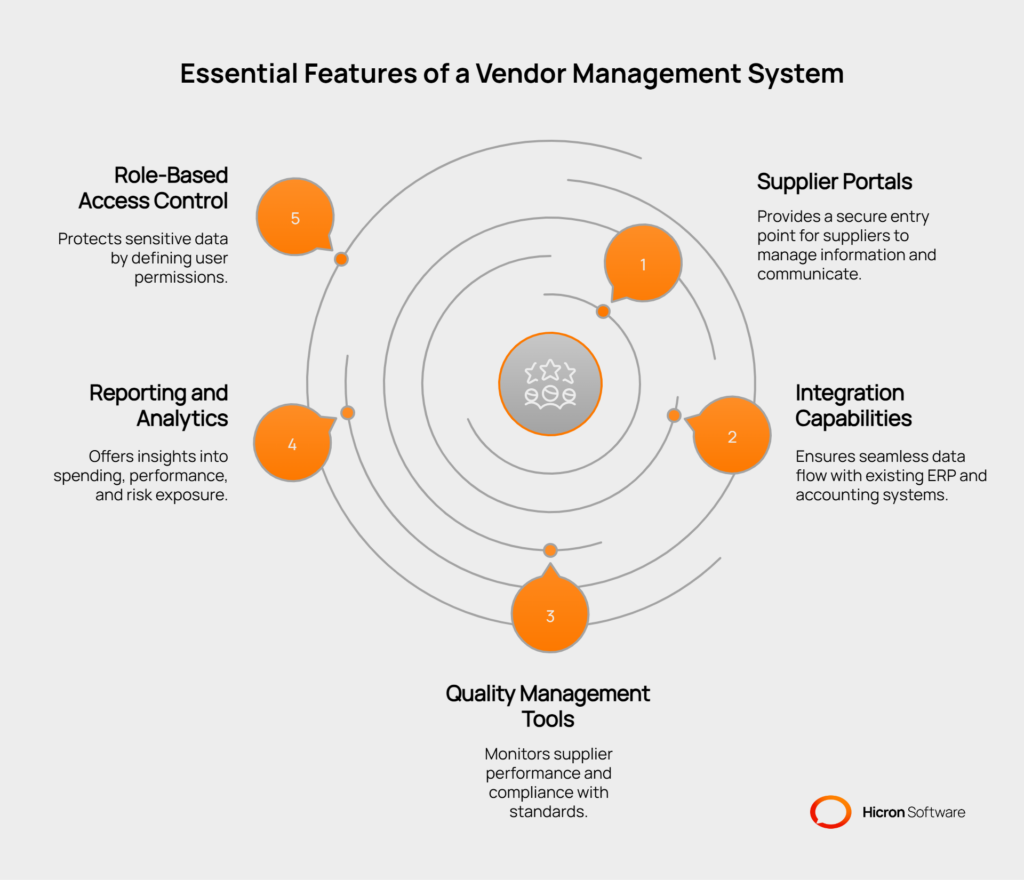
Here are five essential features to look for in a top-tier supplier management software:
A dedicated supplier portal is fundamental for effective vendor collaboration. This feature provides your suppliers with a single, secure entry point to manage their information, submit invoices, respond to bids, and communicate with your team. By providing vendors with self-service capabilities, you reduce administrative burdens and empower them to keep their data current, resulting in fewer errors and stronger partnerships.
Your vendor management system shouldn’t operate in a silo. Look for a platform with strong integration capabilities that can connect with your existing enterprise resource planning (ERP) systems, like SAP, and other accounting or procurement software. This connectivity ensures a smooth flow of data across your organization, eliminating manual data entry and providing a single source of truth for all vendor-related activities.
Maintaining quality and compliance is non-negotiable. An effective VMS should include tools for monitoring supplier performance against key metrics and contractual obligations. Features such as automated scorecards, compliance tracking dashboards, and corrective action workflows enable you to manage quality control proactively. This ensures that all vendors consistently meet your standards.
Data-driven decision-making is key to optimizing your supply chain. The best vendor management system will offer powerful reporting and analytics features. Customizable dashboards should provide at-a-glance insights into spending, supplier performance, risk exposure, and other critical KPIs. These analytics enable you to identify opportunities for cost savings, negotiate better contracts, and manage your supplier base strategically.
Security and control are paramount when managing sensitive vendor information. Role-based access control allows you to define user permissions, ensuring that team members can only view and edit information relevant to their roles. This feature protects sensitive data, prevents unauthorized actions, and helps maintain a clear audit trail for all activities within the centralized platform.
While off-the-shelf vendor management systems offer a wide range of features, they are built for the masses and may not fit every organization like 1:1. For businesses with highly specialized processes or strict industry requirements, a pre-packaged solution can create more friction than it resolves.
This is where a custom vendor management system becomes a powerful strategic asset, offering the flexibility and scalability needed to support unique operational demands.
So, when does it make sense to go custom? A tailored solution is often the right choice when standard software falls short. If your team relies on unique workflows that an off-the-shelf system can’t accommodate, or if you need to integrate with complex, proprietary, or legacy systems, a custom build may be necessary. It allows you to design a platform that molds to your business, not the other way around.
The conversation around software often defaults to the cloud, but for many organizations, on-premises deployment remains the preferred choice. A custom VMS can be designed to work within your existing infrastructure, providing specific advantages.
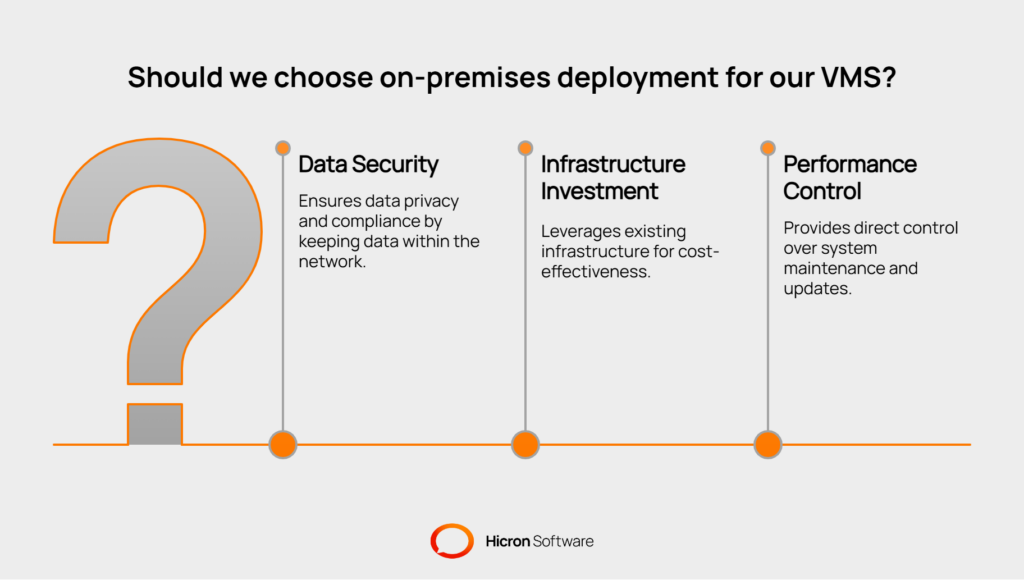
Businesses often prefer on-premises solutions for several key reasons:
A custom VMS can be specifically tailored for an on-premises setup, ensuring it integrates perfectly with your existing servers and security protocols for maximum performance and control.
The true power of a custom VMS lies in its ability to deliver features built specifically for your needs. Instead of trying to adapt generic tools, you can create a system that solves your exact challenges.
The world of vendor management is on the brink of a major transformation, driven by powerful technological advancements. While current systems have mastered centralization and process automation, the future of vendor management lies in predictive, intelligent, and transparent operations. These emerging trends are set to redefine how businesses interact with their suppliers, moving from reactive management to proactive partnership and optimization.
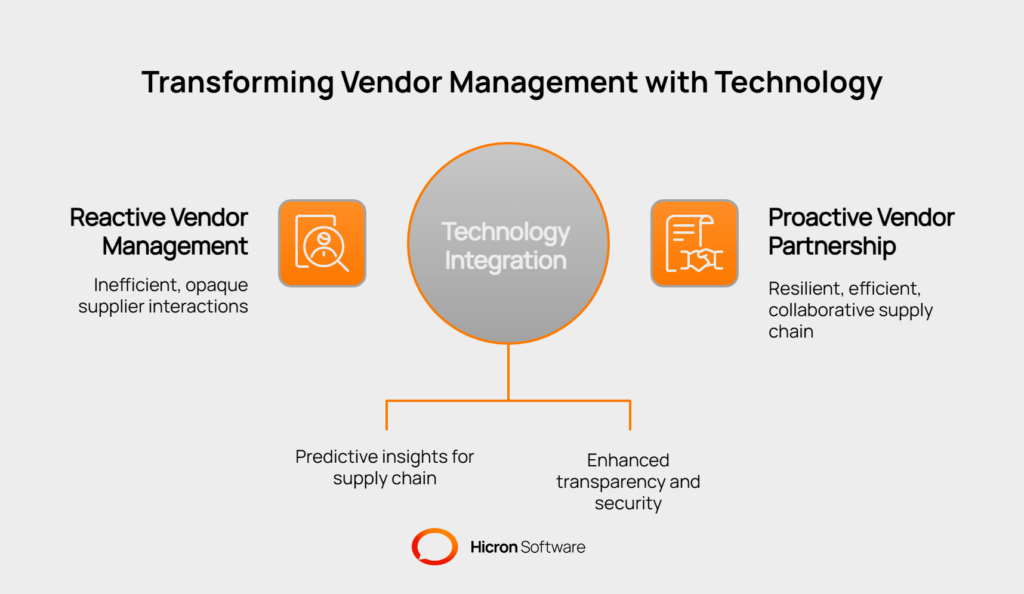
One of the most significant trends is the integration of AI-driven analytics. Future VMS platforms will go beyond standard reporting to offer predictive insights. By analyzing vast datasets, artificial intelligence will help identify potential supply chain disruptions before they happen, recommend optimal supplier choices based on performance forecasts, and even automate complex negotiations.
This use of AI in supply chain management will allow businesses to make smarter, faster decisions, minimizing risks and capitalizing on opportunities with unprecedented accuracy.
Another game-changing technology is blockchain, which enhances transparency and security. Trust and traceability are critical in a global supply chain, and blockchain provides an immutable, decentralized ledger to track every transaction and movement of goods.
From verifying the origin of raw materials to confirming ethical sourcing practices, this technology creates a single, shared source of truth for both businesses and their suppliers. This enhanced transparency not only strengthens supplier relationships by building trust but also simplifies compliance audits and helps prevent fraud.
These advancements work together to create a more dynamic and intelligent vendor ecosystem. AI-powered predictive insights will flag potential issues, while blockchain provides the verifiable data trail needed to address them.
The result is a more resilient and efficient supply chain. As these technologies mature, they will enable a new level of collaboration, turning the traditional buyer-supplier relationship into a true strategic partnership focused on mutual growth and innovation.
Moving from manual spreadsheets and disjointed communication to a centralized platform is a game-changer. Implementing a robust Vendor Management System (VMS) empowers your organization to build stronger, more transparent supplier relationships, enhance operational efficiency, and ensure rigorous compliance.
By automating workflows, centralizing data, and providing better analytics, a VMS turns vendor management from an administrative burden into a strategic advantage. You gain the visibility and control needed to reduce risks, control costs, and drive better performance across your entire supply chain.
Ready to streamline your supplier management and unlock new efficiencies? Contact us today to learn more about our solutions!
A Vendor Management System is a centralized platform designed to streamline supplier management, improve efficiency, and enhance supplier relationships.
By providing real-time communication tools, shared dashboards, and collaboration features, a VMS fosters transparency and trust between businesses and suppliers.
Key benefits include improved supplier relationships, streamlined order management, centralized data, enhanced quality control, and cost savings.
Yes, most VMS platforms offer integration capabilities with ERP systems, such as SAP, ensuring data flow and operational efficiency.
A centralized platform consolidates all supplier data and workflows, enabling better visibility, faster decision-making, and improved supply chain efficiency.
Hicron Software proved to be a trusted partner with unmatched technical expertise, delivering a scalable and user-friendly web application that was pivotal to our successful U.S. market expansion.
Hicron’s contributions have been vital in making our product ready for commercialization. Their commitment to excellence, innovative solutions, and flexible approach were key factors in our successful collaboration.
I wholeheartedly recommend Hicron to any organization seeking a strategic long-term partnership, reliable and skilled partner for their technological needs.
After carefully evaluating suppliers, we decided to try a new approach and start working with a near-shore software house. Cooperation with Hicron Software House was something different, and it turned out to be a great success that brought added value to our company.
With HICRON’s creative ideas and fresh perspective, we reached a new level of our core platform and achieved our business goals.
Many thanks for what you did so far; we are looking forward to more in future!

Hicron is a partner who has provided excellent software development services. Their talented software engineers have a strong focus on collaboration and quality. They have helped us in achieving our goals across our cloud platforms at a good pace, without compromising on the quality of our services. Our partnership is professional and solution-focused!

The IT system supporting the work of retail outlets is the foundation of our business. The ability to optimize and adapt it to the needs of all entities in the PSA Group is of strategic importance and we consider it a step into the future. This project is a huge challenge: not only for us in terms of organization, but also for our partners – including Hicron – in terms of adapting the system to the needs and business models of PSA. Cooperation with Hicron consultants, taking into account their competences in the field of programming and processes specific to the automotive sector, gave us many reasons to be satisfied.