Modernizing Insurance Frontends with Java-Based Frameworks like Vaadin
- June 07
- 13 min


Insurtech integration and legacy system modernization describe the process of updating outdated insurance systems using advanced technology. Legacy system modernization is the process of updating outdated technology that many insurance companies still rely on to manage their core business processes. These systems can slow down operations and make it harder to meet new market and customer demands.
This article provides an in-depth look at how insurance companies can modernize legacy systems by integrating new technologies such as AI, APIs, and cloud platforms. It discusses the main challenges involved in updating insurance legacy applications. It outlines best practices for successful insurance and insurtech integration. It details strategies for working within complex regulatory environments. Readers will find practical guidance for connecting older infrastructure to modern solutions, along with steps for developing a clear roadmap. The content is aimed at technology leaders who need clear explanations, actionable advice, and an overview of the transformation process for legacy insurance systems.
Key Takeaways
The insurance industry faces a massive “legacy tax.” Organizations that rely on legacy infrastructure struggle with rigid product development cycles and an inability to use real-time data. When insurance companies delay modernizing legacy systems, they risk losing market share to agile insurtech startups. The heavy burden of outdated systems prevents you from delivering the fast, personalized customer experience that today’s policyholder expects.
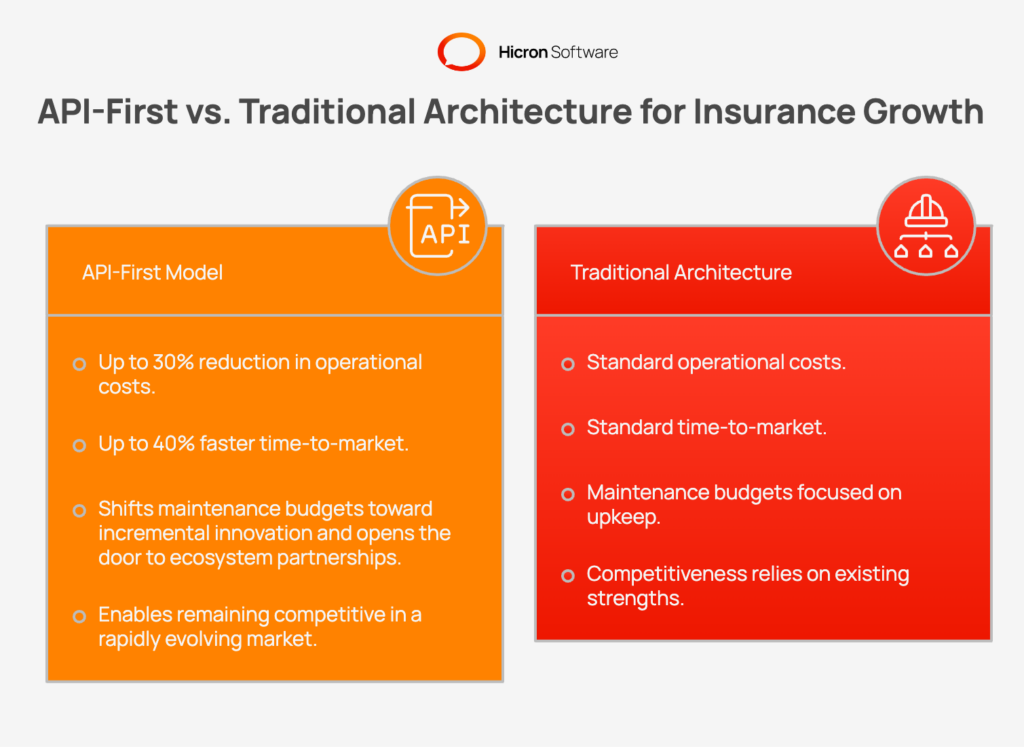
Adopting an API-first model changes the financial equation. Organizations that modernize report up to a 30% reduction in operational costs and up to 40% faster time-to-market. Shifting maintenance budgets toward incremental innovation opens the door to ecosystem partnerships. Embracing modern architecture allows you to create new business opportunities and remain competitive in a rapidly evolving market.
Making modernization a priority ensures your organization can handle advanced data analytics. When insurers transition away from legacy systems, they unlock the ability to leverage real-time insights. This data-driven approach dramatically improves customer satisfaction and operational efficiency across all insurance operations.
The technical mismatches are daunting. COBOL mainframes and flat-file storage clash directly with modern REST/JSON microservices. Legacy systems often tightly couple business logic to the user interface, making simple updates risky and expensive. The sheer complexity of legacy systems means that integrating new technologies requires careful planning and specialized knowledge.
Organizational hurdles also hinder progress. Many teams lack modern API skills and resist moving away from familiar legacy applications. Maintaining compliance and audit trails during a transition adds another layer of difficulty. Addressing these challenges is critical because integrating new tools with outdated legacy systems can cause unexpected downtime if not handled correctly.
However, you can overcome these obstacles by adopting proven strategies and best practices. By breaking the problem down into manageable parts, technology leaders can implement solutions without disrupting daily operations. Modernizing insurance platforms is complex, but the right approach reduces risk and ensures a secure, scalable future.
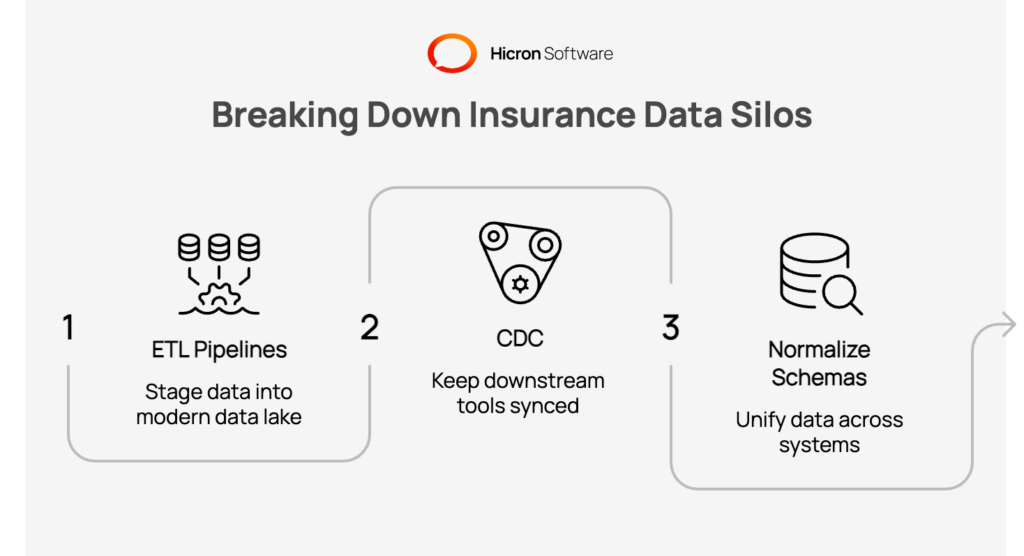
Data silos are a primary barrier to insurtech integration. A modern data-centric hub can solve this issue. Extract, Transform, Load (ETL) pipelines can stage legacy policy and claims data into a modern data lake. This makes information accessible to modern insurtech solutions without straining the original mainframe.
Using Change Data Capture (CDC) keeps downstream tools synced without constantly polling fragile databases. This method ensures integration between old and new environments. Normalizing data schemas across disparate systems is the first step toward true interoperability. It provides the foundation for analytics and gives your team a unified view of the customer.
When you streamline data flow, you unlock the power of modern applications. Every insurer benefits from removing silos, as it directly impacts claims management and underwriting speed. Better data access means you can automate routine tasks and focus human talent on complex decision-making.
Choosing the right technology to integrate is a major decision. Enterprise Service Buses (ESBs) are ideal for deep, complex, on-prem legacy orchestration. They handle heavy mainframe batch files effectively. However, for cloud-first, SaaS-heavy integrations, Integration Platform as a Service (iPaaS) is superior. iPaaS allows fast, low-code connections to innovative insurtech platforms.
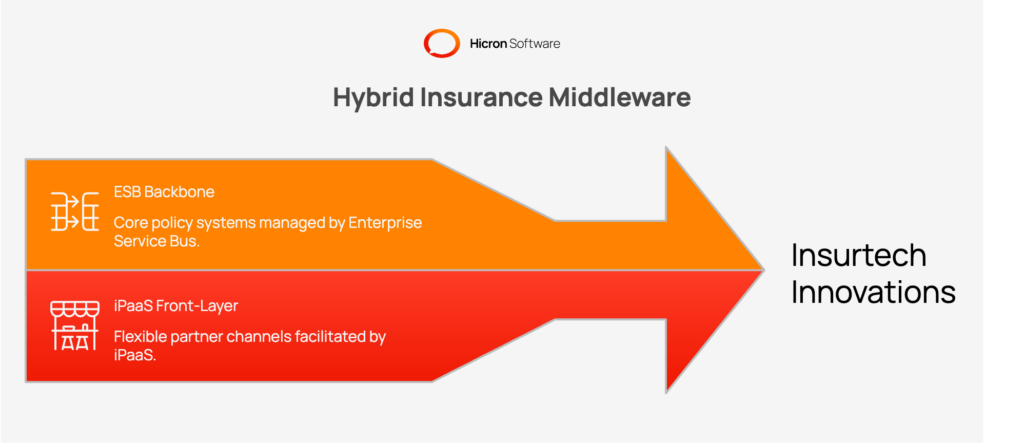
A hybrid insurance middleware approach often works best. You can use an ESB as the backbone for core policy systems and an iPaaS as the flexible front-layer for partner channels. This architecture supports insurtech innovations while maintaining the stability of your legacy system. It offers scalability and makes integrating new technologies much more cost-effective.
This layered approach protects your existing systems while adding new capabilities. It gives insurers the agility to test new insurtech companies without committing to a massive overhaul. Using the right middleware ensures you can connect cutting-edge tools to your infrastructure seamlessly.
Treating application programming interfaces as strategic products changes how you build software. An API-first approach builds a modern RESTful API layer over legacy databases. This acts as a buffer, shielding developers from the underlying complexity. APIs make it easier to connect disparate systems and share data securely.
Security is paramount when opening up your architecture. Implementing OpenID Connect and OAuth 2.0 ensures safe data exchange across distributed endpoints. This secure interface allows you to leverage external partnerships and expand your digital ecosystem safely.
API-first thinking makes transforming legacy systems much smoother. Instead of replacing the entire system at once, you can build new features on top of it. This methodology drives productivity and allows your IT team to deliver value faster.
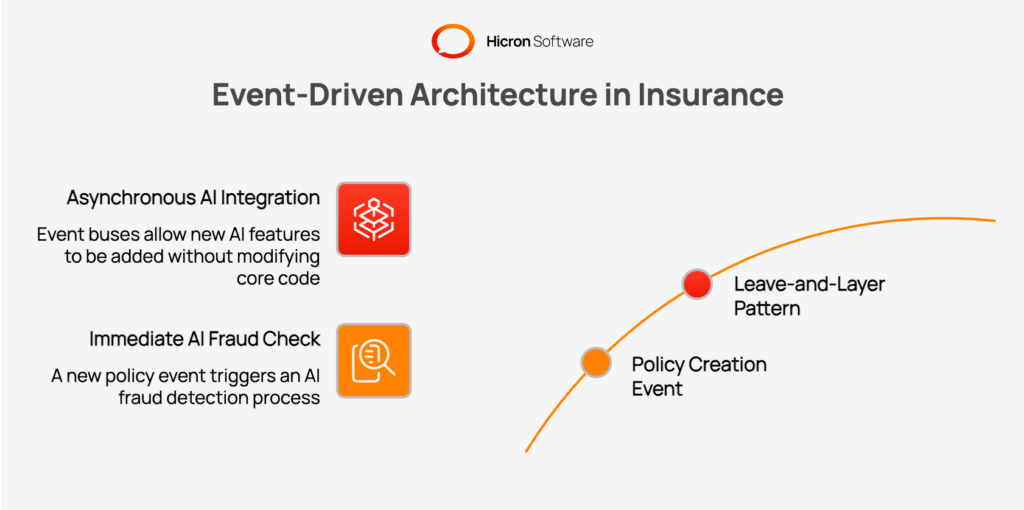
Event-Driven Architecture (EDA) triggers actions instantly across your network. For example, a policy creation event can immediately trigger an AI fraud check. The “Leave-and-Layer” architectural pattern uses event buses to add new asynchronous AI capabilities without touching the monolithic core code.
Robotic Process Automation (RPA) can also be deployed as a non-invasive integration method. RPA can navigate old systems when native APIs are impossible to build. When you combine RPA with technologies like AI, you can automate manual data entry and streamline claims processing. Using AI and machine learning helps you underwrite policies faster and more accurately.
These modern technologies dramatically reduce manual workloads. They allow you to leverage artificial intelligence to detect patterns and anomalies in real-time. By deploying AI, insurers may uncover insights that were previously hidden within massive datasets.
The “Strangler Fig” pattern allows you to gradually replace legacy functions by extracting them into microservices. This contrasts with the “Leave-and-Layer” approach but serves a similar goal: risk reduction. By externalizing business rules into a separate, low-code engine, you minimize changes to the core code.
Decoupling customer-facing portals from the backend is necessary. This ensures the core acts strictly as a back-of-house system of record. You can implement these changes incrementally, testing each phase thoroughly. This guarantees you are integrating new tools without disrupting the existing system.
Following these practices ensures your daily operations continue smoothly. It protects the business from outages while steadily improving the technology stack. You can modernize safely and efficiently.
ACORD standards have evolved from traditional, paper-based PDFs to next-generation digital formats. ACORD 2.0 provides API-ready JSON standards that simplify data exchange. Utilizing these standardized data models reduces integration complexity by up to 35% and improves straight-through processing.
For instance, a digital ACORD submission can flow seamlessly through middleware into an underwriter’s workbench. This completely eliminates manual rekeying and reduces errors. A standardized format makes data easier to process and analyze across different platforms.
Adopting these industry standards is crucial for interoperability. It allows you to connect with other insurtech startups and partners quickly. Standards act as a common language, bridging the gap between legacy insurance systems and modern tools.
Phased rollouts are highly recommended. Start with a bounded domain, such as claims triage, using parallel processing to validate accuracy before full deployment. This controlled phase allows you to identify issues early.
Using API gateways is another critical practice. Implement rate limiting and throttling to protect fragile legacy cores from being overwhelmed by cloud-native traffic spikes. Establish fail-safes like feature flags and circuit breakers in the integration layer. This allows you to roll back faulty integrations instantly, preventing system crashes.
These practices to ensure stability are non-negotiable. They protect your insurers’ data and maintain continuous service for your customers. By following these guidelines, you ensure a seamless transition to modern systems.
Building a roadmap requires clear vision and careful execution.
This structured approach prevents scope creep and manages costs. Integrating modern insurtech systems requires discipline, but a well-defined plan keeps the project on track. Every successful transformation relies on a solid roadmap.
Insurers do not need to “rip and replace” everything to innovate. Smart integration patterns, modern middleware, and API-led connectivity unlock the power of insurtech safely. You can modernize your operations and improve your technology stack without massive disruption.
Schedule a consultation with our software development experts today to map out a customized modernization strategy tailored to your specific legacy code and infrastructure.
Sources:
Legacy Insurance Systems are outdated technologies used by insurers for tasks like claims processing and policy management. They lack the flexibility and efficiency of modern Insurtech platforms.
Replacing Legacy Insurance Systems with Insurtech solutions helps insurers reduce costs, improve efficiency, and meet customer expectations for fast, digital-first services.
Insurtech uses advanced technologies like AI and EDI to streamline insurance operations, automate workflows, and deliver personalized, customer-centric services.
Digital transformation modernizes insurance operations, enabling faster claims processing, real-time data access, and improved customer satisfaction.
AI automates claims processing, enhances fraud detection, and provides predictive analytics, helping insurers make faster, data-driven decisions.
EDI (Electronic Data Interchange) automates data sharing between insurers, brokers, and customers, improving accuracy, speed, and operational efficiency.
Insurtech platforms offer scalability, cost savings, faster claims processing, and better customer experiences through automation and cloud-based solutions.
Insurers can begin by auditing their systems, partnering with Insurtech providers, and implementing scalable, cloud-based platforms in phases.
Legacy systems are expensive to maintain, inflexible, and unable to meet modern customer demands for fast, digital services.
Insurtech platforms provide real-time updates, personalized policy options, and seamless digital experiences through mobile apps and chatbots.
Hicron Software proved to be a trusted partner with unmatched technical expertise, delivering a scalable and user-friendly web application that was pivotal to our successful U.S. market expansion.

Hicron’s contributions have been vital in making our product ready for commercialization. Their commitment to excellence, innovative solutions, and flexible approach were key factors in our successful collaboration.
I wholeheartedly recommend Hicron to any organization seeking a strategic long-term partnership, reliable and skilled partner for their technological needs.

After carefully evaluating suppliers, we decided to try a new approach and start working with a near-shore software house. Cooperation with Hicron Software House was something different, and it turned out to be a great success that brought added value to our company.
With HICRON’s creative ideas and fresh perspective, we reached a new level of our core platform and achieved our business goals.
Many thanks for what you did so far; we are looking forward to more in future!

Hicron is a partner who has provided excellent software development services. Their talented software engineers have a strong focus on collaboration and quality. They have helped us in achieving our goals across our cloud platforms at a good pace, without compromising on the quality of our services. Our partnership is professional and solution-focused!

The IT system supporting the work of retail outlets is the foundation of our business. The ability to optimize and adapt it to the needs of all entities in the PSA Group is of strategic importance and we consider it a step into the future. This project is a huge challenge: not only for us in terms of organization, but also for our partners – including Hicron – in terms of adapting the system to the needs and business models of PSA. Cooperation with Hicron consultants, taking into account their competences in the field of programming and processes specific to the automotive sector, gave us many reasons to be satisfied.