Custom InsurTech Solutions that Give You a Competitive Edge
- March 26
- 38 min


Cloud technology for insurance refers to the use of internet hosted servers to store, manage, and process data. Scalable insurance systems utilize this infrastructure to replace on-premises setups. This approach enables firms to handle variable workloads and meet strict regulatory standards.
Updating core insurance applications ensures operations remain efficient. Modern cloud architecture supports fluctuating workloads like sudden claims surges. Tech owners and underwriters rely on these stable frameworks daily. Maintaining regulatory compliance is another primary goal of this transition. Readers will learn how microservices break down monolithic structures. We detail how container orchestration distributes tasks during open enrollment. We also explain cloud-native and serverless computing models that cut idle infrastructure expenses. Adapting these scalable insurance systems prepares firms for future market demands. The text covers actionable steps to start your modernization project today.
Key Takeaways:
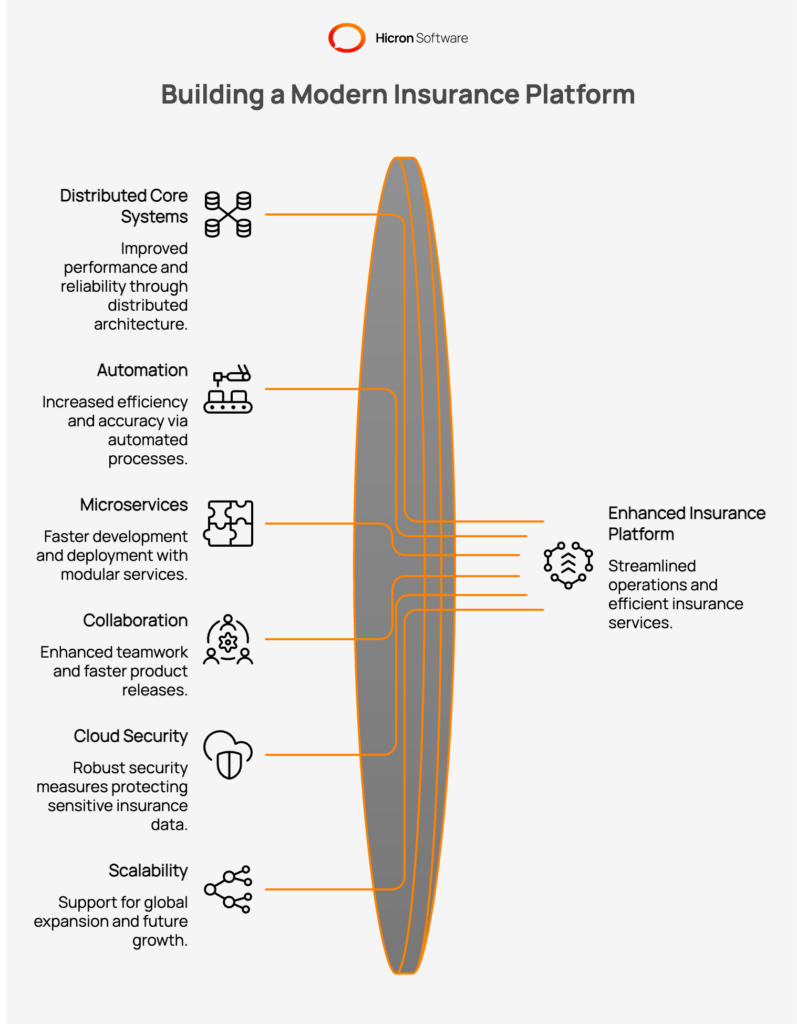
Insurance core systems perform better on distributed platforms. A modern insurance platform manages both claims and policies. Cloud-based insurance software handles massive data sets easily. The architecture supports real time data processing perfectly.
You automate routine tasks to save time and effort. Automation improves accuracy across the entire organization. Developers build new features using discrete microservices. They deploy updates without disrupting core functions at all. Continuous testing prevents software defects from reaching production.
Teams collaborate better with shared digital environments. You release digital insurance products to market faster. Cloud providers invest heavily in infrastructure security. End-to-end cloud solutions cover every business need. Scalable environments support aggressive global expansion plans.
The demand for agility and cost reduction drives cloud transformation. Insurance firms face pressure to update slow legacy applications. Monolithic applications limit deployment speed and increase operational friction.
Scalable architectures handle increased policyholder volume easily. They also manage high claims processing demands during catastrophic events. Moving infrastructure to the cloud allows independent service scaling.
Transitioning from monolithic applications to agile environments improves reliability. Traditional on-premises systems struggle with unexpected traffic spikes. Modern cloud setups automatically adjust capacity based on current needs. This transition reduces the operational friction that slows down brokers. It helps companies remain competitive in a shifting market.
Microservices define the core of modern frameworks. They break down monolithic setups for policy management and underwriting. This modular approach improves deployment speed by up to 75 percent. Developers can update individual components without disrupting the entire platform. Insurtech digital transformation relies heavily on microservices deployment.
Container orchestration with Kubernetes provides another core structural component. It distributes workloads efficiently during high-demand periods like open enrollment. Kubernetes provides a predictable environment for steady applications.
Serverless models offer additional flexibility for bursty workloads. A well-planned native cloud architecture combines these technologies. This strategy creates highly resilient insurance software.
|
Core Component/Pattern |
Description |
Key Benefits |
|
Policy Administration Applications |
Software handling comprehensive client lifecycle management and policy renewals. |
Improves operational scalability and securely manages essential client details. |
|
Underwriting Components |
Tools utilizing advanced data calculation models for precise risk assessment. |
Delivers accurate risk evaluation and enhances decision-making capabilities. |
|
Claims Processing Applications |
Systems managing initial intake and final settlement processes accurately. |
Handles peak claims surges efficiently during major weather events. |
|
Billing Modules |
Applications designed to process policy premiums and complex financial transactions. |
Ensures secure financial operations and highly accurate premium management. |
|
Microservices |
Independent and highly deployable digital software services replacing monolithic structures. |
Accelerates application updates and improves overall system deployment resilience. |
|
Event-Driven Mechanisms |
Automated functions triggered instantly by specific internal system conditions. |
Provides real-time responsiveness for immediate fraud alerts and automated actions. |
|
Serverless Computing |
Cloud provider infrastructure utilizing a strict pay-per-use billing model. |
Eliminates idle resource expenses and reduces infrastructure costs heavily. |
|
Containerized Environments |
Isolated digital environments managing stable application loads via orchestration tools like Kubernetes. |
Delivers predictable execution performance for complex underwriting engines safely. |
|
APIs and Middleware |
Integration layers routing critical information between internal databases and external tools. |
Ensures deep software interoperability and seamless integration without operational disruptions. |
|
ACORD Data Standards |
Industry guidelines defining common data formats for sharing sensitive policy information. |
Guarantees strict regulatory compliance and secures digital data exchange between institutions. |
|
Hybrid Technical Models |
Frameworks blending heritage legacy systems securely with modern cloud software layers. |
Maintains operational resilience while supporting ongoing digital modernization projects. |
Cloud scalability relies on three main deployment models.
These models ensure platforms remain active during unexpected traffic events. Scalable operations support group insurance portals during enrollment periods. Properly leveraging cloud resources prevents costly system outages.
Serverless computing bills companies only for actual usage. This pay per use billing eliminates idle server expenses. Traditional servers incur charges even when traffic is completely absent. An insurance company can cut infrastructure costs by 85 percent using AWS Lambda. They can handle unpredictable load spikes without paying for overprovisioned capacity.
Serverless computing reduces costs for insurers by shifting infrastructure management to the cloud provider and adopting a pay-per-use billing model. Here’s how it achieves cost savings:
Insurance and serverless infrastructure pair well for financial calculations. Companies process millions of transactions with minimal overhead. By using serverless computing, insurers can reduce costs while maintaining the flexibility to scale operations efficiently during peak periods.
Cloud environments offer robust tools for regulatory adherence.
Many insurance firms rely on legacy applications that most of them will be maintained until 2030. Modernizing these core systems requires a strategic approach using cloud technology. This process helps organizations improve operational efficiency and maintain regulatory compliance. These steps outline how to securely transition from legacy insurance setups to modern architectures.
Following these steps ensures a secure technical transition for your organization. You modernize daily operations while maintaining strict regulatory compliance. Audit your current core systems to start your modernization project today.
Cloud platforms accelerate artificial intelligence integration by providing scalable infrastructure and preconfigured machine learning tools. These systems process complex data instantly to improve fraud detection algorithms and personalize customer experiences. Technical teams reduce operational expenses through pay per use billing while improving global project collaboration. Providers maintain strict data security protocols to ensure continuous regulatory compliance across the insurance industry.
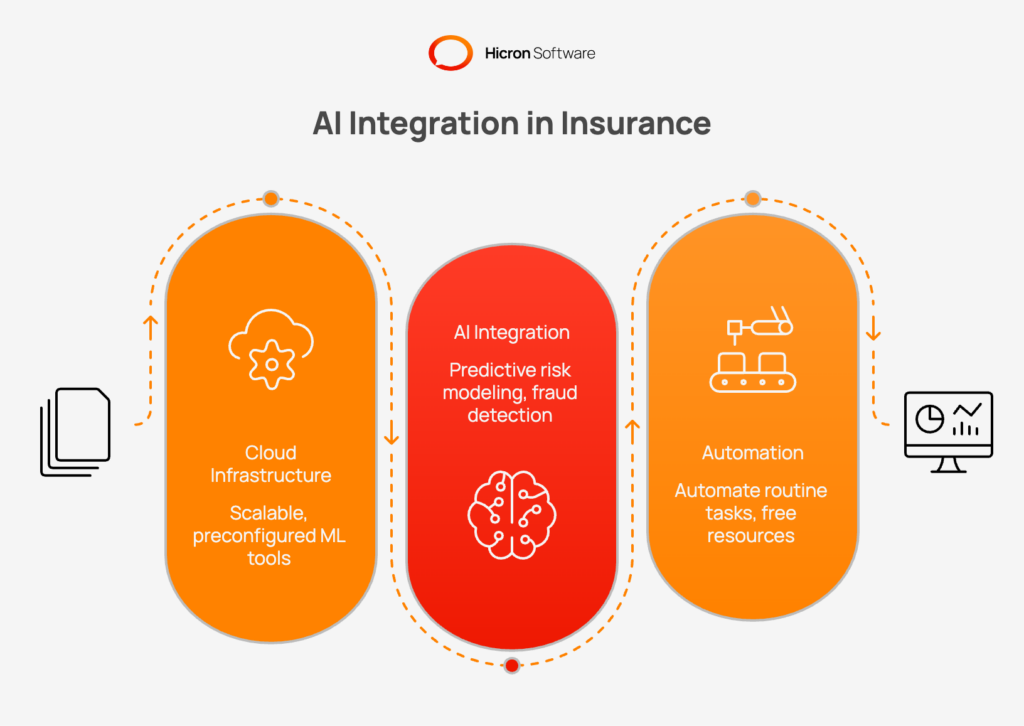
Artificial intelligence improves proactive decision making. The integration of AI allows for highly predictive risk modeling. Underwriters can assess complex variables faster using these intelligent tools. Real-time data processing enables rapid fraud detection. Systems flag suspicious patterns before payouts occur.
These advanced analytics automate routine tasks. Automation frees up resources for strategic activities. Staff members spend less time on manual data entry. Introducing the insurance industry to the 21st century requires the implementation of these smart tools. They provide the necessary speed to handle modern market dynamics.
Cloud-backed workflows improve processing times for policyholders. Faster responses lead to higher overall satisfaction rates. Scaling call center capacity manages peak times effectively. Customers experience shorter wait times during emergency situations. Handling large volumes of inquiries becomes much simpler.
Personalized customer interactions are powered by advanced data analytics. Agents access comprehensive profiles instantly during calls. They offer tailored solutions based on accurate historical records. Utilizing customer data properly helps enhance customer experiences. Responsive digital portals provide users with complete control.
Cloud insurance scalability remains central to future growth. The adoption of artificial intelligence driven platforms will increase. These platforms support proactive decision making across all departments. The emergence of serverless computing will simplify application development. Developers will launch new products faster than ever before.
The future of insurance operations depends on resilient frameworks. The ongoing need for digital transformation strategies is clear. Companies will expand their multi-cloud deployments. They will use Azure, Google Cloud, and AWS together. The future of cloud brings unprecedented flexibility to the sector.
Updating your applications brings immediate operational benefits. The core advantages include agility, cost reduction, and compliance assurance. We recommend auditing current core systems for API readiness first. This audit highlights exactly which components need attention. Evaluate your existing systems to plan a smooth transition.
Encourage your leadership to start their modernization project today. Contact our team to discuss your specific technical requirements. We help financial services navigate this complex transition safely. Let us streamline operations across your entire organization. Build a future proof foundation for your business.

Cloud platforms process large volumes of data instantly. They connect various departments through shared databases. This reduces the time required to settle claims. Adjusters access all necessary files remotely.
The main advantages include cost reduction and operational flexibility. Firms scale resources up or down based on immediate demand. This prevents paying for idle servers during quiet periods. It also improves disaster recovery capabilities.
Providers constantly update their security and analytics tools. They offer scalable solutions that grow with the business. This support helps companies drive innovation without hardware limitations. It allows firms to focus on delivering personalized services.
It means every process runs on cloud infrastructure. This includes customer portals and internal underwriting tools. A unified system improves data accuracy significantly. It eliminates isolated information silos within the company.
APIs connect different software applications together. They allow modern interfaces to communicate with older databases. This integration is vital for insurance software development. It enables a unified digital environment.
General platforms lack specific regulatory compliance features. Tailored solutions include built in data standards. They address the unique security needs of the insurance sector. This specialized approach reduces legal risks.
Migration requires a detailed audit of current applications. Companies often use a hybrid model during the transition. They move non critical workloads first to test stability. This phased approach minimizes disruption to daily operations.
Hicron Software proved to be a trusted partner with unmatched technical expertise, delivering a scalable and user-friendly web application that was pivotal to our successful U.S. market expansion.

Hicron’s contributions have been vital in making our product ready for commercialization. Their commitment to excellence, innovative solutions, and flexible approach were key factors in our successful collaboration.
I wholeheartedly recommend Hicron to any organization seeking a strategic long-term partnership, reliable and skilled partner for their technological needs.

After carefully evaluating suppliers, we decided to try a new approach and start working with a near-shore software house. Cooperation with Hicron Software House was something different, and it turned out to be a great success that brought added value to our company.
With HICRON’s creative ideas and fresh perspective, we reached a new level of our core platform and achieved our business goals.
Many thanks for what you did so far; we are looking forward to more in future!

Hicron is a partner who has provided excellent software development services. Their talented software engineers have a strong focus on collaboration and quality. They have helped us in achieving our goals across our cloud platforms at a good pace, without compromising on the quality of our services. Our partnership is professional and solution-focused!

The IT system supporting the work of retail outlets is the foundation of our business. The ability to optimize and adapt it to the needs of all entities in the PSA Group is of strategic importance and we consider it a step into the future. This project is a huge challenge: not only for us in terms of organization, but also for our partners – including Hicron – in terms of adapting the system to the needs and business models of PSA. Cooperation with Hicron consultants, taking into account their competences in the field of programming and processes specific to the automotive sector, gave us many reasons to be satisfied.