Why Legacy System Modernization in Insurance is Critical?
- May 27
- 17 min


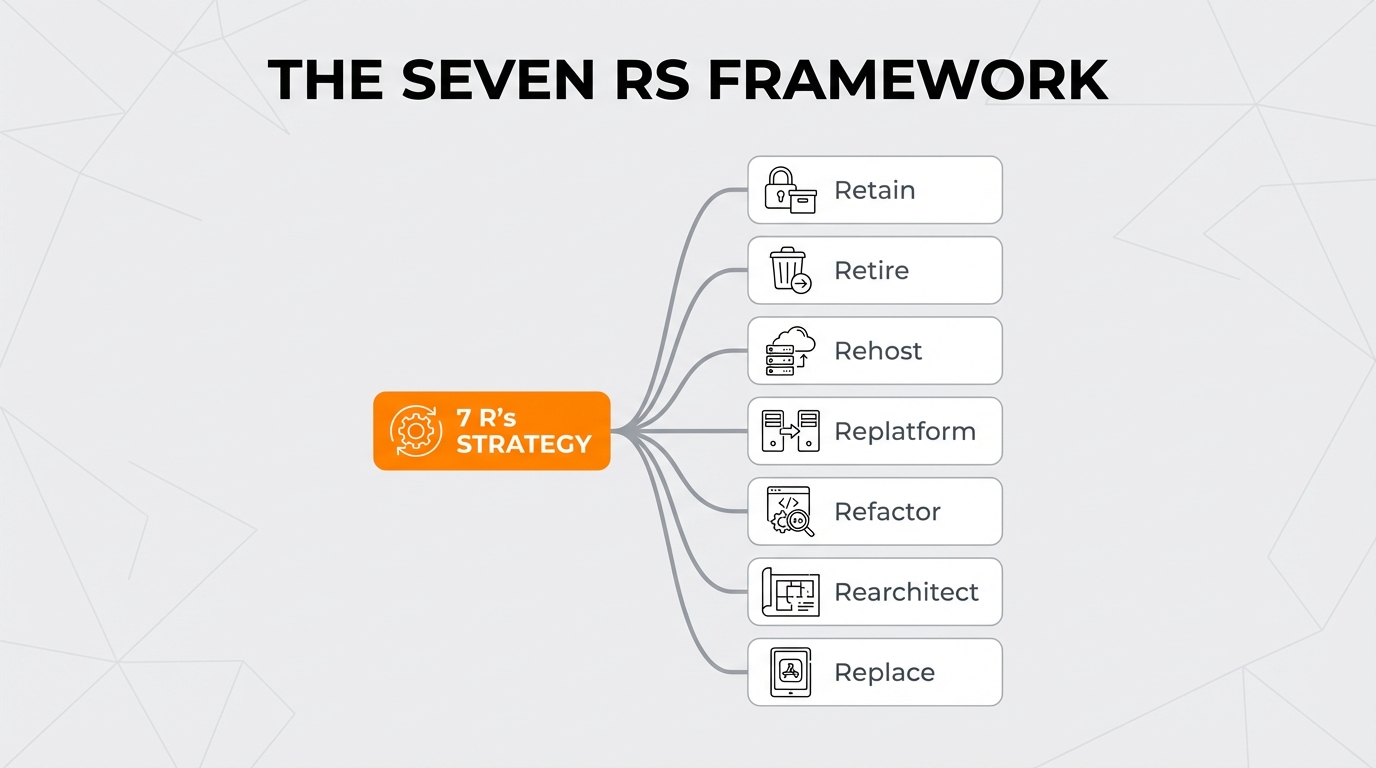
Are your outdated IT systems holding your business back? Legacy system modernization strategies transform these bottlenecks into systems that can deploy updates in minutes rather than months. Enterprise modernization categorizes these efforts using a structured 7 R’s framework:
A thorough technical audit evaluates the current state, strengths, and weaknesses of existing applications. The final strategy choice depends heavily on budget constraints, application state, and desired business outcomes, ensuring business continuity and mitigating risk during the transition. When an assessment reveals severe system limitations, organizations often choose legacy system replacement or a phased modernization approach to address specific technical debt. To accelerate this process, modern practices use AI-driven code analysis to map legacy dependencies or rely on automation to streamline regression testing.
|
Modernization Category |
Key Strategies & Frameworks |
Description & Business Impact |
|
Enterprise Modernization Framework |
|
Categorizes efforts into: Retain, Retire, Rehost, Replatform, Refactor, Rearchitect, and Replace. The final strategy choice depends heavily on budget constraints, application state, and desired business outcomes. |
|
Modernization Complexity Levels |
|
|
|
Transition Tactics |
|
Incremental modernization uses phased rollouts to limit the blast radius of potential failures and ensure business continuity. A Big Bang rewrite replaces the entire system in a single deployment, carrying the highest operational risk of extended downtime and catastrophic data loss. |
|
Architectural Patterns |
|
The Strangler Fig pattern replaces outdated functionalities incrementally through intercepting, routing, and decommissioning. Microservices provide dynamic scalability and structural isolation to prevent cascading failures. API Wrapping effectively breaks down data silos by connecting isolated legacy data stores. |
|
IT Modernization Roadmap |
|
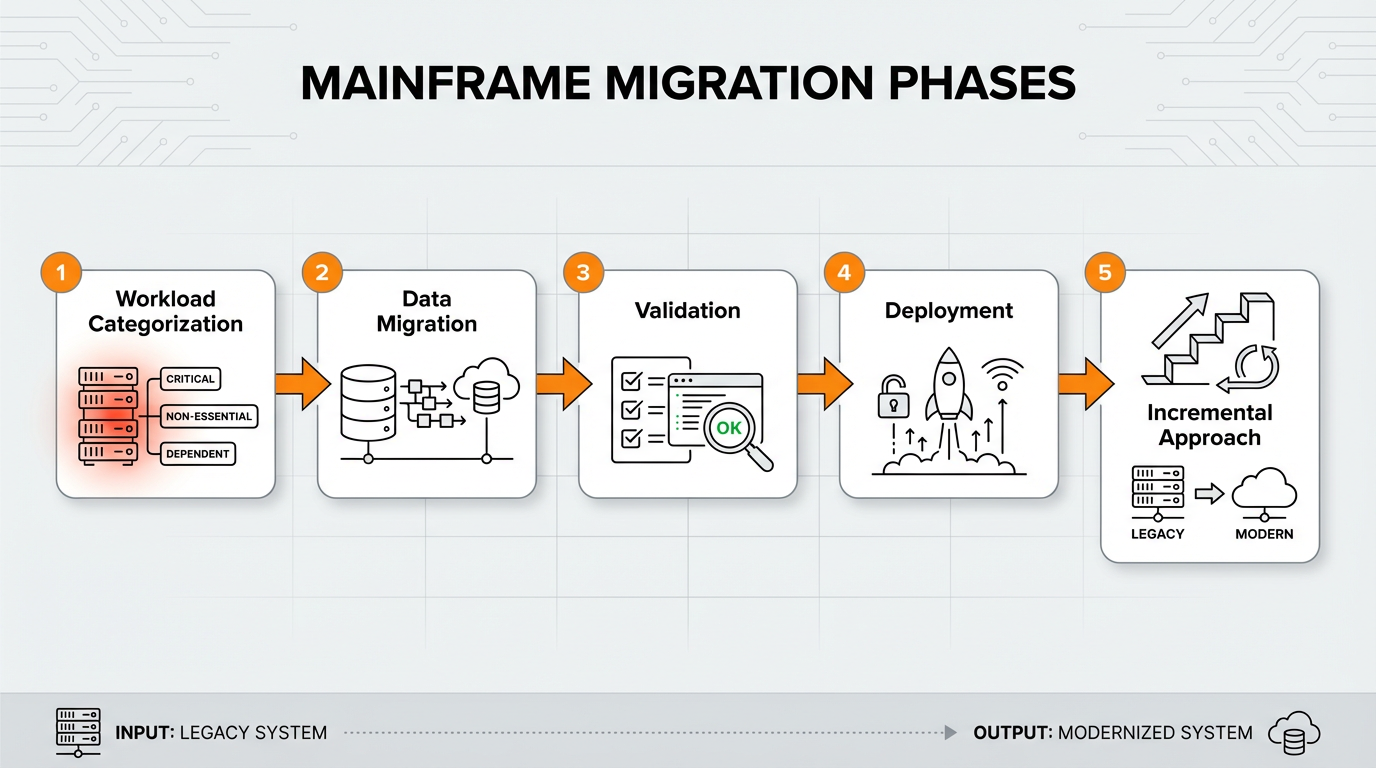
Core roadmap phases include conducting a technical assessment, developing a phased schedule, and executing incremental deployments. A phased mainframe migration follows a strict sequence: workload categorization, data migration, validation, and deployment. |
|
Security & Organizational Readiness |
|
DevSecOps embeds continuous vulnerability scanning and automated code analysis directly into the software development lifecycle. Change management mitigates operational risks by overcoming knowledge silos and capturing undocumented system logic from departing legacy experts. |
Outdated architecture and unsupported hardware cause legacy systems to accumulate technical debt. This debt grows over time through continuous quick fixes and temporary workarounds, such as hardcoded credentials and bypassed software integrations. When the original developers move on, they take critical system knowledge with them, leaving behind dangerous blind spots that modern software engineering teams struggle to maintain, which directly increases operational risk. I’ve seen firsthand how this loss of institutional knowledge becomes the silent killer of IT budgets.
Outdated hardware and software prevent organizations from meeting modern regulatory compliance and data protection standards. Because these older platforms lack contemporary security measures like multi-factor authentication and end-to-end encryption, they create severe security vulnerabilities that make legacy systems highly susceptible to ransomware attacks and unauthorized data breaches. Consequently, maintaining this outdated infrastructure directly threatens business continuity. If the existing architecture fails current regulatory audits, organizations must pursue enterprise modernization and legacy system replacement to reduce exposure.
Transitioning away from legacy systems requires more than just budget; it demands executive vision. The CTO drives this process, ensuring technology investments support the company’s main goals, such as expanding cloud infrastructure and automating deployment pipelines. As the central figure in this transition, the CTO selects, oversees, and executes these modernization initiatives. They approve the IT modernization roadmap to guarantee that technology expenditures directly build competitive advantage.
Validating the financial viability of upgrading outdated infrastructure requires a detailed ROI analysis during this approval process. To succeed, CTO digital transformation initiatives must prioritize risk mitigation and maintain uninterrupted business continuity. By driving essential cultural shifts across technical teams, such as adopting agile methodologies and embracing continuous integration practices, effective leadership ensures high organizational readiness. This proactive approach helps teams adapt to changes smoothly during the transition. If the existing architecture limits operational capabilities, the executive must guide software engineers through the complex modernization process.
A low-risk IT modernization roadmap is a plan that prioritizes risk mitigation and aligns technology upgrades with clear business outcomes. To build one safely, you need to follow a few core phases:
This strategic document outlines specific goals, timelines, and methodologies for enterprise modernization. To minimize operational disruption, organizations rely on phased rollouts and incremental updates, which allow engineering teams to perform continuous validation during the transition. A well-defined roadmap schedules these phased implementations, assessment, development, and deployment, ensuring that essential operations remain fully functional throughout the entire process. By following this structured approach, organizations can maintain high system stability while achieving a successful digital transformation.
A phased mainframe migration breaks down the complex transition of large-scale platforms into manageable steps to minimize operational risk and ensure business continuity. Organizations structure this process within an IT modernization roadmap. A successful migration typically follows this sequence:
Taking an incremental approach lowers the temperature when you’re dealing with high-stakes systems like core banking applications, inventory databases, and transaction processing engines. If you’ve ever held your breath during a major weekend deployment, you already know why this step-by-step method is an absolute lifesaver.
A technical assessment precedes the actual transition to identify system dependencies and isolate independent modules. Because phased rollouts act as a primary tactic for risk mitigation during legacy system replacement, these incremental deployments allow engineering teams to execute testing and validation at each stage. Teams proceed to the next phased modernization stage only if the current environment meets all performance benchmarks.
How do you prove the value of replacing an old system? It comes down to weighing upfront costs against long-term efficiency gains generated by eliminating technical debt. To secure executive funding, the Chief Technology Officer relies on a detailed ROI analysis during roadmap creation to validate the financial feasibility of these strategies.
By factoring in core cost-saving metrics, such as technical debt reduction and improved efficiency, this financial model justifies the upgrade. Once an in-depth audit quantifies the current risks versus potential savings, executives can confidently approve the investment.
Incremental modernization and phased rollouts provide the highest level of risk mitigation for mission-critical operations. By breaking the transition into manageable stages, organizations can limit the blast radius of potential failures and isolate issues before they affect the entire system. This approach also allows engineering teams to gather continuous user feedback and validate performance metrics at each step, ensuring that business operations remain stable throughout the process.
Rehosting, replatforming, and re-architecting represent distinct levels of modernization complexity within legacy system modernization strategies, ranging from simple infrastructure moves to complete code transformations. Rehosting is a fast approach that moves applications with minimal code changes, but this method merely changes the hosting location and doesn’t address underlying technical debt.
Replatforming introduces minor optimizations to existing software engineering frameworks. Organizations use this middle-ground approach to improve basic performance without extensive codebase alterations. Re-architecting substantially alters the code to take advantage of a scalable cloud-native architecture. You often need this level of change to actually get the benefits of the cloud. If the enterprise modernization project involves complete legacy system replacement, refactoring and re-architecting provide maximum scalability.
A Big Bang rewrite is a high-risk strategy that replaces an entire legacy system in a single, vulnerable deployment. This massive legacy system replacement carries the highest operational risk of significant business disruption, including extended system downtime and catastrophic data loss. To ensure business continuity, prioritize incremental modernization over this approach. It’s incredibly tempting to just scrap everything and start fresh, but I always warn teams that the ‘Big Bang’ approach rarely goes as smoothly as it looks on a whiteboard.
Incremental strategies keep legacy systems fully operational while engineering teams build new components, and this concurrent operation directly prevents business interruption. Furthermore, phased modernization introduces structural advantages within the IT modernization roadmap, such as continuous testing cycles and reliable fallback options. Because continuous validation at each stage of a phased rollout prevents operational disruption, teams rely on methods like automated regression testing, performance benchmarking, and security scanning.
Enterprise modernization relies on a thorough technical assessment to identify which system modules to transition first. An established IT modernization roadmap dictates the exact sequence of these gradual updates. Organizations successfully minimize operational risk by strictly adhering to this step-by-step transition model. Software engineering teams can modernize safely by implementing these gradual updates to keep mission-critical operations running smoothly during the transition.
If one part of your system crashes, you don’t want it taking down the whole company. Modern architectural patterns prevent this by isolating system components like databases, user interfaces, and processing logic modules. This structural isolation ensures that a failure in one specific area doesn’t cascade across the entire enterprise. Software engineering teams use architectural models to structure software into independent, domain-specific components: Self-Contained Systems (SCS), microservices, and service-oriented architecture (SOA).
Self-Contained Systems (SCS) limit cascading failures by ensuring that specific business domains operate independently. By decoupling architecture, teams limit the blast radius of potential system errors, such as database crashes and network timeouts. This separation not only simplifies routine maintenance operations but also accelerates continuous updates like security patches and new feature deployments. Adopting these modern architectural patterns protects a business from system-wide operational disruptions, allowing companies to maintain high business continuity and lower operational risk when they decouple their core systems effectively.
Think of the Strangler Fig pattern as building a new house around an old one, room by room, until you can tear the old one down. As a highly effective phased modernization technique, this pattern replaces outdated functionalities with modern services through distinct phases: intercepting, routing, and decommissioning. This incremental modernization builds new components, such as independent payment modules and user authentication portals, around the edges of an existing legacy monolith. As an architect, this is one of my absolute favorite patterns to implement because it allows you to show immediate value to stakeholders without risking the core business.
Teams execute this modernization through mechanisms like API wrapping, incremental traffic routing, and legacy module decommissioning. API wrapping intercepts external calls to redirect functionality from the old system to the new cloud-native architecture. The Strangler Fig pattern serves as a core strategy during legacy system replacement to avoid catastrophic ‘Big Bang’ failure risks. This allows companies to modernize safely by routing traffic to new services before turning off the old ones.
API wrapping and encapsulation effectively break down data silos by creating modern, accessible interfaces that connect isolated legacy data stores with the rest of the company’s applications. Software engineering teams typically do this by encapsulating legacy code within a new API layer and establishing standardized communication protocols.
Creating APIs connects modernized systems with existing applications to directly address the challenge of isolated departmental data silos. This integration technique allows data to move freely between departments and serves as a vital intermediary step toward modern architectural frameworks: microservices and service-oriented architecture (SOA). These legacy system modernization strategies unlock trapped legacy data to support uninterrupted operations and facilitate secure data migration. Implementing these encapsulation methods bridges old and new environments, effectively eliminating data silos and reducing technical debt.
Cloud-native architecture and microservices provide dynamic, on-demand scalability by breaking applications into autonomous, independently deployable services. This structural division allows systems to dynamically adjust to fluctuating workload demands. Software engineering teams model these specific microservices around distinct business domains, such as customer management and transaction processing. This changes everything for scalability. Moving to the cloud computing delivery model provides distinct advantages: enhanced flexibility, high resilience, and on-demand resource allocation.
This modern service-oriented architecture (SOA) works with cloud frameworks to deliver dynamic scalability for modern enterprises. Organizations maintain reliable business continuity during traffic spikes when they implement these distributed systems. Re-architecting into a cloud environment allows individual microservices to scale independently based on exact traffic metrics, rather than scaling the entire legacy monolith. This targeted resource expansion relies heavily on automation to provision server instances instantly. Adopting these frameworks allows companies to overcome traditional scaling limitations and adapt to market demands seamlessly.
Security can’t be an afterthought when you’re modernizing. DevSecOps solves this by embedding security practices directly into the automated software development lifecycle to ensure rapid and safe deployments. This methodology unites development, security, and operations to proactively address security vulnerabilities rather than treating protection as a secondary concern. Integrating these practices guarantees strict compliance during the complex transition to a modern cloud-native architecture. Modern software engineering teams rely on DevSecOps to effectively manage and deploy agile environments.
Take it from me: bolting security on at the very end of a modernization project is a recipe for delayed launches and exhausted engineering teams. To mitigate security threats during the modernization process, organizations rely on automated tools like continuous vulnerability scanning, automated code analysis, and real-time threat monitoring. Automating compliance checks allows companies to be highly agile and proactive in their defense strategies. High organizational readiness accelerates the adoption of these security protocols within broader legacy system modernization strategies. DevSecOps transforms security from a final gateway into a continuous, integrated process. Enterprises achieve better security and secure continuous deployments by embedding this automated methodology into their core IT operations.
Strong leadership drives organizational readiness and effective change management by aligning company culture, overcoming knowledge silos, and preparing technical teams for new ways of working. To manage cultural shifts and ensure the organization is fully prepared for modernized IT processes, leaders must focus on conducting a technical assessment, building necessary technical skills, and establishing cultural alignment before adopting new systems. Adopting DevSecOps frameworks succeeds only when the workforce possesses the exact technical competencies required for these advanced methodologies.
Managing the human element of CTO digital transformation is a critical component of broader legacy system modernization strategies. Because of this, leadership mitigates the operational risks associated with departing legacy experts by capturing undocumented system logic. By transferring this specialized knowledge to modern engineering teams, organizations maintain stable operations during the transition. Overcoming knowledge silos is a mandatory step for achieving true organizational readiness. These silos typically occur when only a handful of veteran engineers hold critical legacy information; breaking down these barriers is essential to protect the company. To address this, an established IT modernization roadmap outlines specific training programs to integrate automation tools smoothly into daily workflows. Companies achieve successful software deployments and high operational stability by executing structured change management throughout the entire transition.
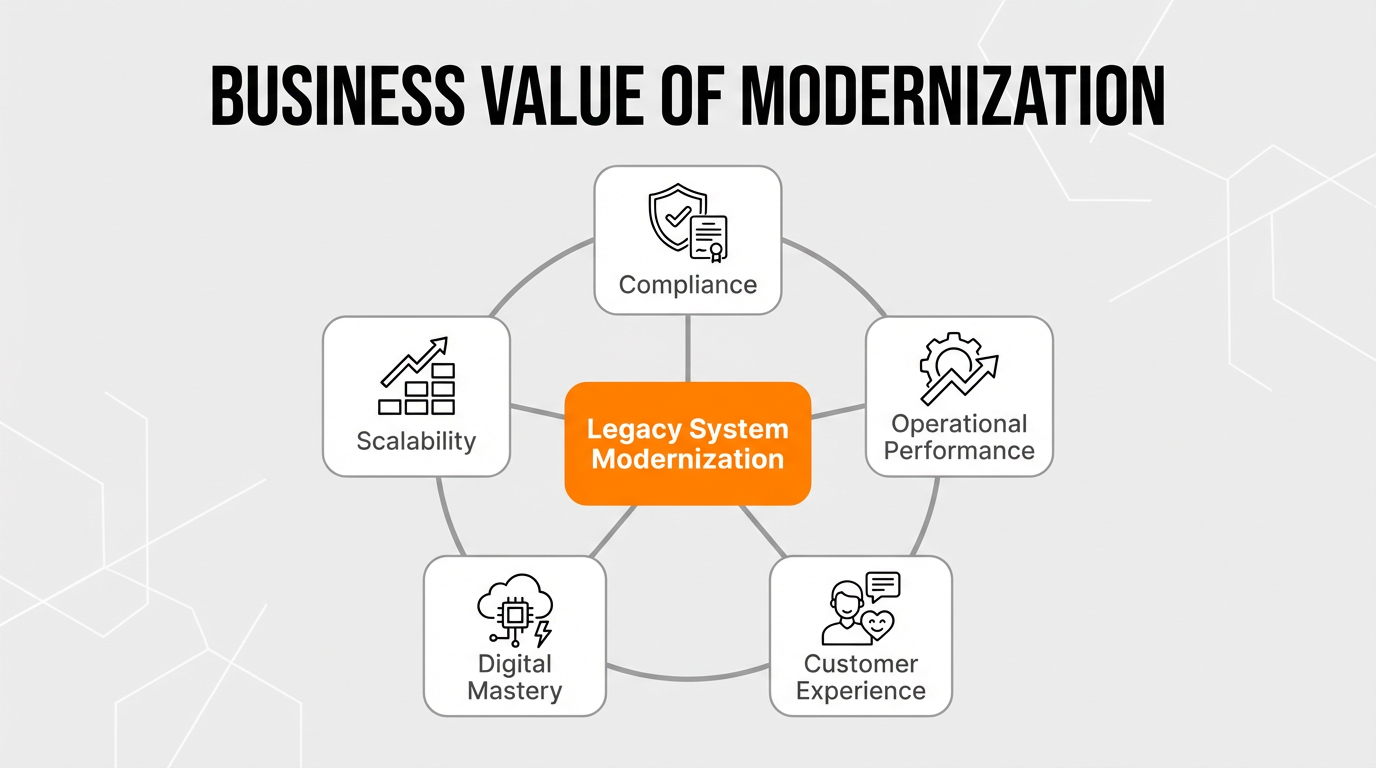
Insurance core system modernization transforms rigid legacy policy and claims platforms into systems that allow companies to process claims faster and launch new products easily. Insurance companies are modernizing for three main reasons: eliminating severe compliance risks, improving operational performance, and enhancing the overall customer experience. Updating mission-critical insurance operations directly targets the high operational risk associated with outdated data protocols and obsolete security standards. These outdated platforms lack the necessary frameworks to protect sensitive policyholder information effectively. Enterprise modernization replaces these vulnerabilities with secure architectures to ensure strict regulatory compliance.
Companies protect their operations by prioritizing the modernization of these core platforms. Achieving digital mastery allows insurance firms to use advanced tools for faster market response and accelerated product rollout, such as automated claims processing algorithms, dynamic pricing models, and real-time underwriting engines. These modern capabilities rely on careful data migration to transfer historical records into highly adaptable cloud environments. Modernized insurance platforms provide massive scalability to handle fluctuating transaction volumes during peak renewal periods. Integrating these agile technologies doesn’t just fix old problems; it positions insurance providers to lead in a competitive, customer-centric market.
Hicron Software proved to be a trusted partner with unmatched technical expertise, delivering a scalable and user-friendly web application that was pivotal to our successful U.S. market expansion.

Hicron’s contributions have been vital in making our product ready for commercialization. Their commitment to excellence, innovative solutions, and flexible approach were key factors in our successful collaboration.
I wholeheartedly recommend Hicron to any organization seeking a strategic long-term partnership, reliable and skilled partner for their technological needs.
After carefully evaluating suppliers, we decided to try a new approach and start working with a near-shore software house. Cooperation with Hicron Software House was something different, and it turned out to be a great success that brought added value to our company.
With HICRON’s creative ideas and fresh perspective, we reached a new level of our core platform and achieved our business goals.
Many thanks for what you did so far; we are looking forward to more in future!

Hicron is a partner who has provided excellent software development services. Their talented software engineers have a strong focus on collaboration and quality. They have helped us in achieving our goals across our cloud platforms at a good pace, without compromising on the quality of our services. Our partnership is professional and solution-focused!

The IT system supporting the work of retail outlets is the foundation of our business. The ability to optimize and adapt it to the needs of all entities in the PSA Group is of strategic importance and we consider it a step into the future. This project is a huge challenge: not only for us in terms of organization, but also for our partners – including Hicron – in terms of adapting the system to the needs and business models of PSA. Cooperation with Hicron consultants, taking into account their competences in the field of programming and processes specific to the automotive sector, gave us many reasons to be satisfied.