Exploring PropTech: Key Technologies & Software Solutions Transforming Real Estate
- December 09
- 12 min


A cloud-native and API-first approach in PropTech SaaS development is a modern way to build software applications. It means designing apps to run on cloud infrastructure, which makes them flexible and scalable. An API-first strategy ensures these applications can easily connect and share data with other software, which is vital for building a connected real estate ecosystem. This combination is transforming how the property industry operates, creating new efficiencies and opportunities.
This article explores the benefits of cloud-native and API-first architectures in PropTech. You will learn how these approaches enable scalability, cost efficiency, and future readiness for estate agencies.
A cloud-native approach involves building applications to exist and run in the cloud. Unlike traditional software that is built for a specific server, cloud-native apps are made of smaller, independent components. This structure offers great benefits. It allows for quick updates and scaling. If a property management platform experiences a surge in user activity, it can automatically scale up to handle the demand without slowing down. This approach also improves reliability and reduces operational costs.
An API-first approach means that the Application Programming Interface (API) is treated as a primary product. The API is the set of rules that allows different software applications to communicate with each other. By designing the API first, developers ensure that the platform can easily connect with other systems. For a PropTech company, this means your solution can integrate with accounting software, tenant screening services, or smart building devices, creating a more comprehensive offering for your clients.
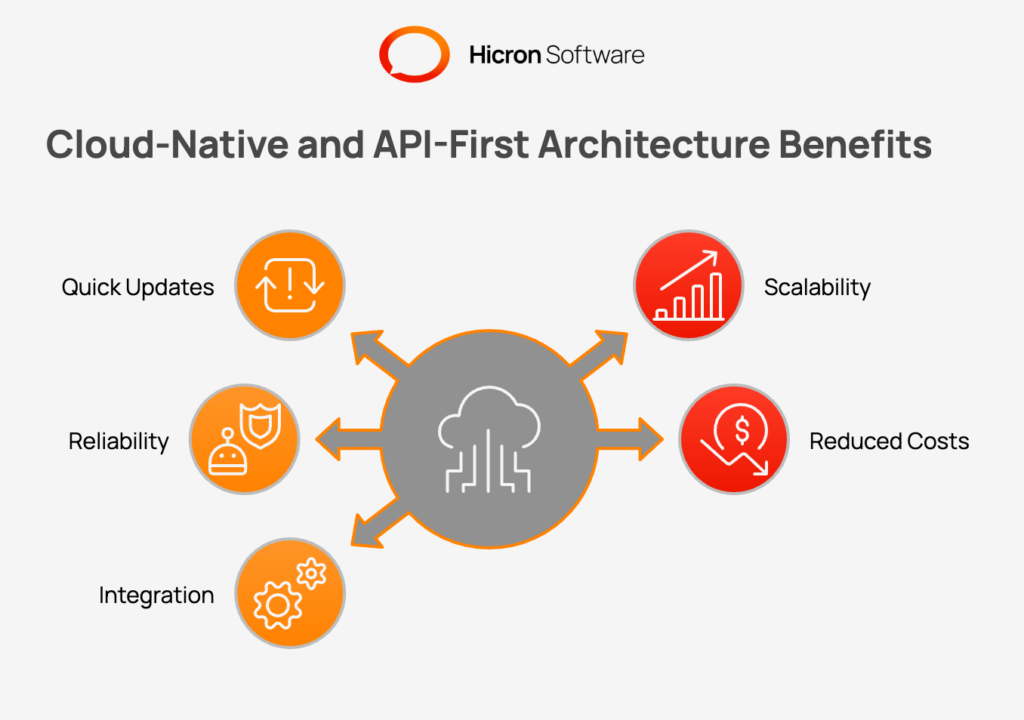
The real estate industry has historically faced challenges with technology. Many organizations rely on outdated systems that operate in isolation, creating data silos. This makes it difficult to get a complete view of operations, from property performance to tenant satisfaction. A lack of integration between different software tools leads to manual data entry, inefficiencies, and a poor user experience.
Cloud-native and API-first solutions directly address these problems.
Building API-first and cloud-native PropTech SaaS is essential in addressing the unique challenges and opportunities across different regions. Each market has distinct regulatory frameworks, trends, and adoption dynamics that require tailored solutions.
For instance, in the US, the diversity of state-level regulations like the CCPA and Fair Housing Act demands scalable platforms that can adapt to varying compliance needs, while API-first designs enable integration with compliance tools.
In the UK, strict data privacy laws such as GDPR and sustainability-focused regulations like MEES necessitate secure cloud storage and flexible APIs to meet evolving environmental standards.
The EU’s fragmented market, with its diverse laws and languages, benefits from modular, API-driven solutions that can integrate with country-specific systems and ensure data localization.
In the MENA region, rapid urban development and varying regulatory maturity call for cloud-native platforms that support quick deployment and localization, with APIs enabling integration with emerging compliance frameworks.
|
Region |
Characteristics |
Trends |
Key Regulations |
Impact on Adoption |
|
US Market |
Highly competitive with advanced tech adoption, especially in commercial real estate and multifamily housing. |
Smart property management platforms, broad IoT integration, and AI-driven analytics. |
California Consumer Privacy Act (CCPA), state-level landlord-tenant laws, Fair Housing Act, local building codes, SOC 2. |
The variation in state regulations requires scalable platforms that accommodate diverse compliance needs. An API-first approach helps adapt to changing laws and integrate with compliance tools. |
|
UK Market |
Mature PropTech sector with a strong emphasis on compliance, sustainability, and digital records. |
Adoption of green building tech, tenant experience platforms, and digital twins for asset management. |
General Data Protection Regulation (GDPR), Building Regulations 2010, Minimum Energy Efficiency Standards (MEES), Land Registration Act. |
Strict data privacy and sustainability rules demand secure, compliant cloud storage and detailed audit trails. API-first designs allow fast adaptation to evolving ESG standards. |
|
EU Market |
A fragmented landscape with diverse laws, languages, and standards across member countries. |
Growth in cross-border property management, smart cities, and blockchain-based real estate transactions. |
GDPR, Energy Performance of Buildings Directive (EPBD), and varied national property and tenancy laws. |
Providers need flexible, modular solutions to adapt to regulatory changes. Strong API frameworks enable integration with country-specific tools, and cloud-native platforms help manage data localization. |
|
MENA Market |
A surge in PropTech investment driven by new urban projects and digital transformation. |
Smart city initiatives (e.g., NEOM), e-government pushes (e.g., Dubai), and expansion in luxury real estate tech. |
Dubai’s Real Estate Regulatory Agency (RERA), UAE’s data protection laws, Saudi Arabia’s e-Transactions Law. Regulation is still developing in some areas. |
Regulatory diversity requires providers to localize solutions quickly. Cloud-native models support rapid deployment, while API-first platforms are key for integrating compliance modules as laws evolve. |
When evaluating a technology partner, PropTech companies should look for a platform built with the following essential features, each of which plays a critical role in long-term success:
We gathered the critical technology categories that are shaping the future of PropTech SaaS Development. It provides examples and insights into how these technologies are driving innovation and solving industry challenges.
|
Technology Category |
Examples |
Description |
|
Cloud Computing Platforms |
AWS, Microsoft Azure, Google Cloud Platform (GCP) |
Offer infrastructure for hosting, scaling, and managing cloud-native apps with services like VMs, storage, and serverless computing. |
|
Containerization & Orchestration |
Docker, Kubernetes |
Enable consistent app deployment across environments; Kubernetes automates deployment, scaling, and management of containers. |
|
Microservices Architecture |
Spring Boot, Micronaut |
Frameworks that support modular app design with independent, scalable services. |
|
API Management Tools |
Postman, Swagger (OpenAPI), Kong, Apigee, AWS API Gateway |
Tools for designing, testing, documenting, and managing APIs, including traffic, security, and monitoring. |
|
DevOps & CI/CD Tools |
Jenkins, GitHub Actions, GitLab CI/CD, Terraform, Ansible |
Automate build, test, deployment, and infrastructure provisioning for continuous integration and delivery. |
|
Databases |
PostgreSQL, MySQL, MongoDB, DynamoDB |
Relational and NoSQL databases for storing structured and unstructured property and user data. |
|
Messaging & Event Streaming |
Kafka, RabbitMQ |
Facilitate real-time communication and event-driven architectures between microservices. |
|
Security Technologies |
OAuth 2.0, OpenID Connect, TLS, SSL, WAF |
Provide secure authentication, data encryption, and protection from web vulnerabilities. |
|
Monitoring & Observability |
Prometheus, Grafana, ELK Stack (Elasticsearch, Logstash, Kibana) |
Monitor app performance, infrastructure health, and analyze logs and data. |
|
Front-End Technologies |
React, Angular, Vue.js, Progressive Web Apps (PWAs) |
Build user-friendly, web-based interfaces and deliver app-like experiences on browsers. |
|
IoT Integration |
AWS IoT, Azure IoT Hub |
Connect and manage data from smart building devices like sensors and cameras. |
|
AI & Machine Learning |
TensorFlow, PyTorch, Natural Language Processing (NLP) |
Enable predictive analytics, market insights, chatbots, and automated property valuations. |
|
Blockchain (Optional) |
Ethereum, Distributed Ledger Technology |
Use smart contracts and distributed ledgers for secure, transparent real estate transactions and records. |
Adopting cloud-native and API-first architectures offers significant advantages for PropTech platforms, including improved scalability, flexibility, and cost-effectiveness.
Shifting from traditional development methods requires careful planning, a change in mindset, and a clear understanding of the potential obstacles. For PropTech companies, navigating these issues is key to unlocking the full potential of their technology.
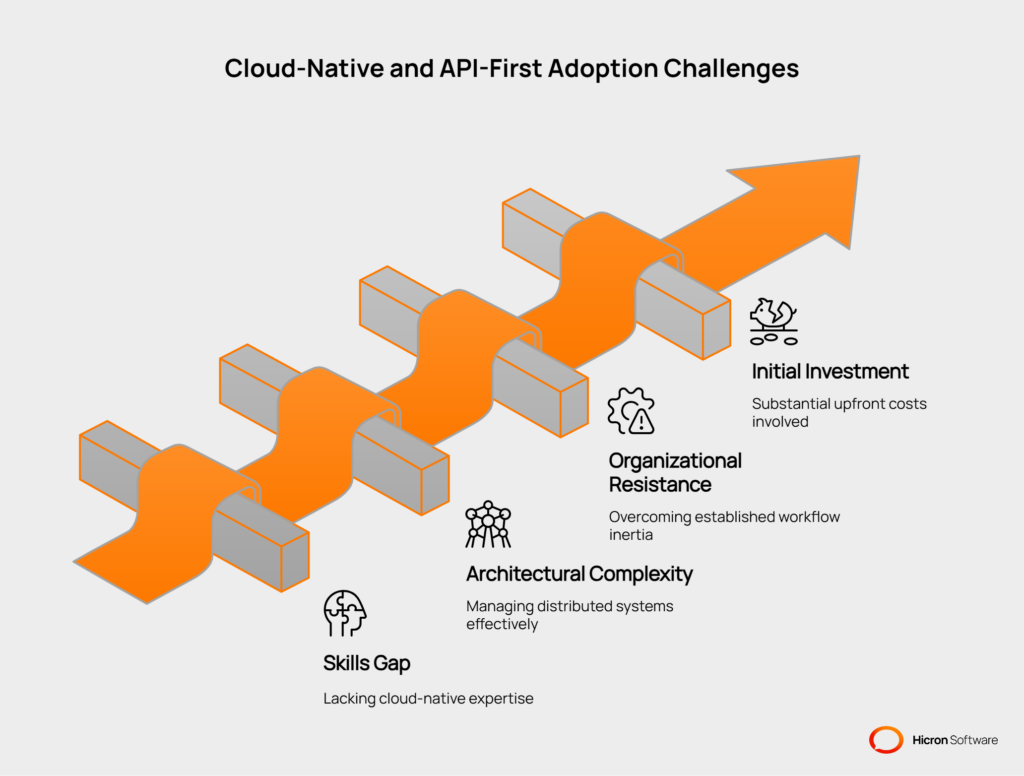
One of the most immediate challenges is the technical complexity associated with cloud-native technologies. Concepts such as microservices, containerization (utilizing Docker and Kubernetes), and serverless computing require specialized knowledge that many development teams lack. This skills gap can slow down development, introduce architectural mistakes, and increase initial project costs.
Similarly, an API-first design demands a new way of thinking. Developers must learn to design APIs as standalone products, focusing on consistency, documentation, and consumer experience before writing any application code. This shift from a code-first to a design-first mentality can be challenging to instill.
While cloud-native architecture can simplify individual components, it often increases the complexity of the overall system. A platform built on microservices consists of many independent, moving parts that need to communicate reliably. Managing this distributed system introduces new challenges:
Without a solid strategy for managing this complexity, a cloud-native platform can become more difficult to maintain than the monolith it replaced.
Technical hurdles are often easier to solve than cultural ones. A shift to cloud-native and API-first principles necessitates a fundamental change in how teams operate. It typically involves a shift toward a DevOps culture, where development and operations teams work closely together. It also necessitates breaking down traditional silos to create cross-functional teams organized around specific business capabilities.
Resistance can come from teams accustomed to established workflows. Developers might be hesitant to adopt new tools, while operations staff may be wary of managing a distributed cloud environment. Overcoming this inertia requires strong leadership, clear communication, and a compelling vision for the benefits of the new approach.
Although cloud-native architectures can be more cost-effective in the long run, the initial investment can be substantial. Costs include:
For a PropTech startup or a company with a tight budget, these upfront costs can be a barrier. The pressure to deliver features quickly may also conflict with the time needed to properly design and implement a robust API-first foundation.
Building a successful PropTech SaaS platform requires more than a great idea; it demands a development team with a specific blend of technical expertise, industry knowledge, and strategic foresight. The right team doesn’t just write code—they build a scalable, secure, and user-friendly product that solves real problems for estate agents and property managers. Assembling this group is one of the most critical investments you will make.
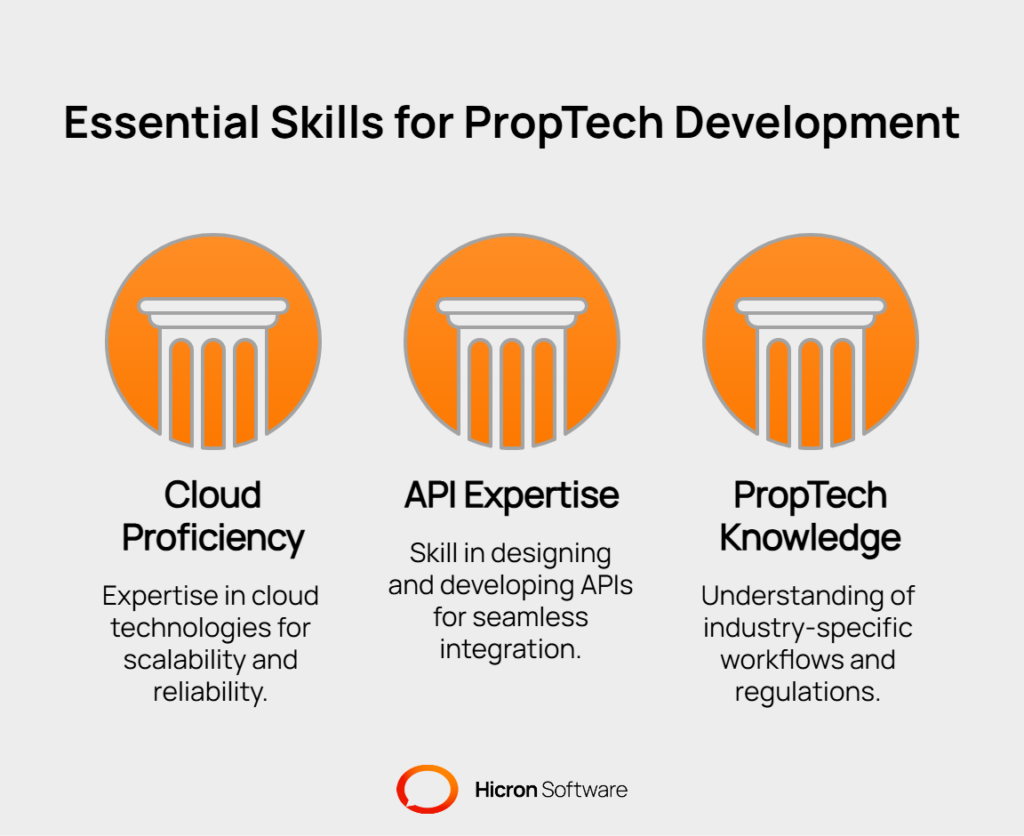
When evaluating potential team members, certain skills are non-negotiable for building a modern PropTech platform. Look for a foundation of technical excellence combined with a deep understanding of the industry’s unique demands.
A high-performing PropTech development team is a collaborative unit of specialists, each contributing a unique skill set. While the exact size and structure will vary, these core roles are essential for building a comprehensive and successful product.
| Role | Core responsibilities |
| Backend developers | Build scalable, secure, API-first architectures; manage databases; ensure performance under high load. |
| Frontend developers | Create intuitive, responsive web/mobile interfaces; translate designs into user-friendly applications. |
| DevOps engineers | Manage cloud-native deployments; maintain CI/CD pipelines; automate infrastructure for reliability. |
| Product managers | Define product vision; ensure alignment with market needs; translate business goals into development tasks. |
| UX/UI designers | Design user-centric workflows and interfaces; focus on real estate-specific user needs and visual clarity. |
Backend developers are the architects of your platform’s core logic. They build and maintain the server-side components, databases, and APIs. For a PropTech platform, their focus should be on building a scalable, secure, and API-first architecture. They are responsible for ensuring the system can handle large volumes of data and traffic, implementing robust security measures, and creating the API endpoints that power both your application and third-party integrations.
Frontend developers create the user interface (UI) that your customers interact with daily. Their goal is to build an intuitive, responsive, and user-friendly experience for estate agents and other users. They translate design mockups into functional web or mobile applications, ensuring the platform is easy to navigate and visually appealing. In PropTech, this means creating interfaces that simplify complex workflows, like managing listings, tracking leads, or scheduling viewings.
DevOps engineers bridge the gap between development and operations. They are experts in cloud-native deployments, CI/CD (Continuous Integration/Continuous Deployment) pipelines, and infrastructure automation. Their work ensures that new features can be released quickly and reliably. They manage the cloud infrastructure, monitor system performance, and implement automated processes for testing and deployment, which is critical for maintaining uptime and scalability.
A product manager acts as the voice of the customer within the development team. They are responsible for defining the product vision, prioritizing features, and ensuring the platform aligns with market needs. An effective product manager for a PropTech SaaS company should have experience in either PropTech or the broader SaaS industry. They conduct market research, gather user feedback, and translate business goals into actionable development tasks.
User experience (UX) and user interface (UI) designers are important for creating a product that people love to use. A UX designer focuses on the overall feel and flow of the application, conducting user research to understand pain points and design intuitive workflows that enhance user experience. A UI designer specializes in the visual aspects, creating a clean and consistent look. For PropTech, designers with expertise in real estate workflows can create interfaces that feel natural and efficient for agents.
Beyond specific roles, your team should embody certain principles and possess cross-functional skills that are vital for long-term success in the PropTech space.
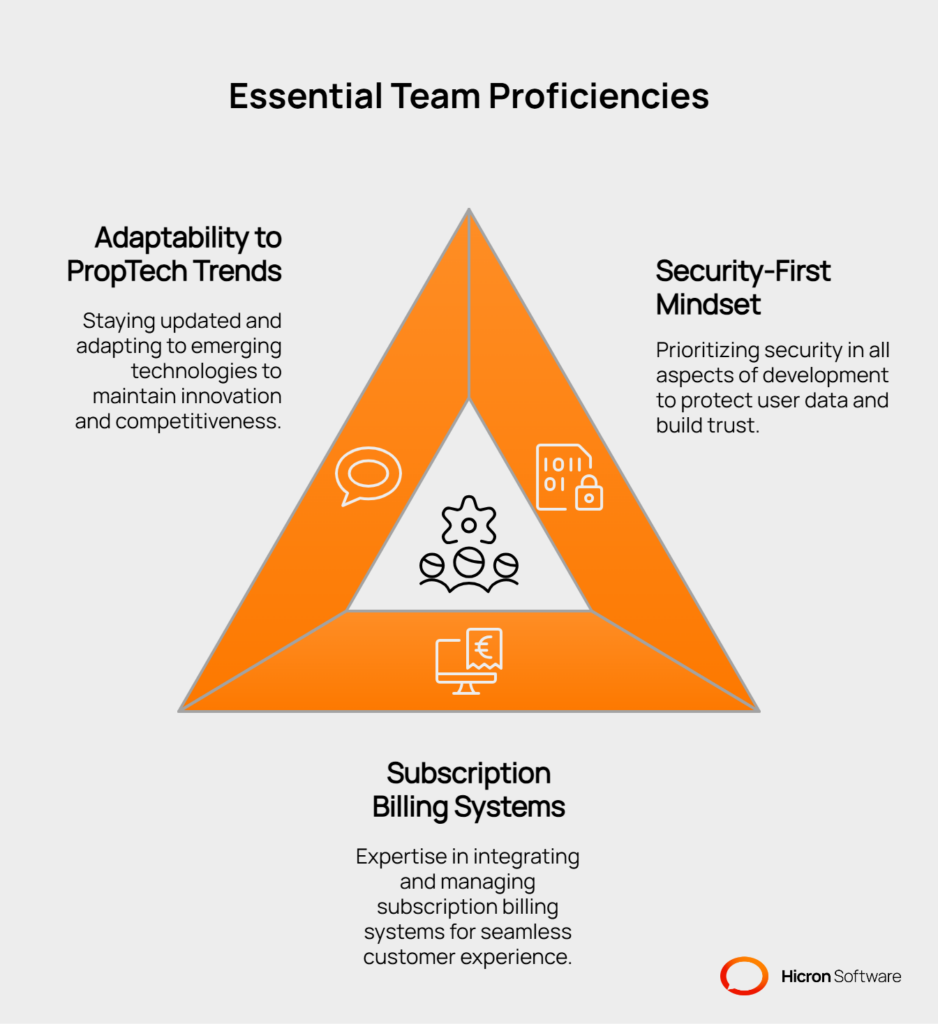
Assembling the ideal PropTech SaaS development team involves finding a balance of deep technical skills, specific industry knowledge, and a collaborative spirit. By focusing on key proficiencies in cloud-native technologies and API design, filling essential roles from backend to UX, and prioritizing a security-first mindset, you can build a team capable of creating a truly valuable product. This investment in people is the foundation upon which your platform’s success will be built, enabling you to deliver a solution that empowers real estate professionals and stands the test of time.
The architectural choices made today will determine a platform’s ability to innovate tomorrow. Cloud-native and API-first designs are the essential foundations for the future of PropTech SaaS.
A cloud-native architecture provides the raw power and scalability needed to run complex AI models and process massive datasets. The elastic nature of the cloud allows a platform to instantly access the computational resources required for intensive tasks, such as training a machine learning model, and then scale back down to save costs. This makes advanced technologies, such as predictive analytics, financially viable and operationally efficient for SaaS providers.
API-first design ensures that these new capabilities can be integrated seamlessly across an agency’s entire tech stack. As platforms develop AI-backed features, their APIs will become even more critical. An API could expose a predictive analytics endpoint, allowing an agency’s custom-built CRM to pull in forecasts about which leads are most likely to convert. This interoperability prevents data silos and ensures that innovations deliver value across the entire business, not just within a single application.
Together, these architectural principles create a flexible and future-proof foundation, enabling PropTech platforms to evolve rapidly and incorporate the next generation of technology.
Choosing the right technology partner is crucial for building a successful PropTech solution. You need a team that understands the technology and grasps the nuances of the global real estate market. An expert partner can help you build a platform that is scalable, secure, and ready for the future.
If you are looking to develop a powerful PropTech PropTech SaaS solution, it is vital to work with experts who specialize in cloud-native and API-first development. Let’s discuss how to build the right technology foundation for your business.
The architectural choices made today are fundamental to the future success of any PropTech platform. A cloud-native and API-first design delivers the essential benefits of scalability, flexibility, and cost-effectiveness needed to operate in the modern real estate market.
This approach provides robust security and seamless integration capabilities but also establishes the necessary foundation for future innovations. By leveraging these architectures, PropTech companies can unlock the potential of AI-driven property matching and predictive analytics, transforming data into a powerful strategic asset.
For long-term growth and a competitive edge, the path forward is clear. We encourage estate agencies to partner with technology providers who prioritize these modern architectural standards.
Cloud-native PropTech SaaS refers to real estate software built specifically to run in a cloud computing environment. It is important because this modern approach allows platforms to be highly scalable, reliable, and cost-effective. For estate agencies, it means their technology can easily grow with their business, handle high user traffic without slowing down, and operate efficiently across multiple regions.
An API-first strategy is important because it allows your PropTech solution to easily connect with other software systems. This integration capability is key to breaking down data silos and creating a connected, efficient ecosystem for managing properties.
Yes, a key benefit of cloud-native architecture is its ability to support multi-region deployments effortlessly. This allows a PropTech SaaS platform to deliver fast, reliable performance to users in different geographic locations, such as the UK, US, or Canada. It also helps agencies meet local data residency and compliance requirements like GDPR.
Yes, when built correctly. Major cloud providers offer advanced security features. A skilled technology partner will implement robust security measures, including encryption and access controls, to protect sensitive data and ensure compliance with regulations like GDPR.
A cloud-native, API-first platform provides the flexible and scalable foundation needed to integrate emerging technologies. Its ability to process large datasets and connect to other services makes it ideal for implementing AI-driven analytics
Look for a partner with proven expertise in both cloud-native development and the PropTech industry. They should understand the unique challenges of real estate and be able to guide you on building a scalable, secure, and compliant platform tailored to your target market.
Hicron Software proved to be a trusted partner with unmatched technical expertise, delivering a scalable and user-friendly web application that was pivotal to our successful U.S. market expansion.

Hicron’s contributions have been vital in making our product ready for commercialization. Their commitment to excellence, innovative solutions, and flexible approach were key factors in our successful collaboration.
I wholeheartedly recommend Hicron to any organization seeking a strategic long-term partnership, reliable and skilled partner for their technological needs.

After carefully evaluating suppliers, we decided to try a new approach and start working with a near-shore software house. Cooperation with Hicron Software House was something different, and it turned out to be a great success that brought added value to our company.
With HICRON’s creative ideas and fresh perspective, we reached a new level of our core platform and achieved our business goals.
Many thanks for what you did so far; we are looking forward to more in future!

Hicron is a partner who has provided excellent software development services. Their talented software engineers have a strong focus on collaboration and quality. They have helped us in achieving our goals across our cloud platforms at a good pace, without compromising on the quality of our services. Our partnership is professional and solution-focused!

The IT system supporting the work of retail outlets is the foundation of our business. The ability to optimize and adapt it to the needs of all entities in the PSA Group is of strategic importance and we consider it a step into the future. This project is a huge challenge: not only for us in terms of organization, but also for our partners – including Hicron – in terms of adapting the system to the needs and business models of PSA. Cooperation with Hicron consultants, taking into account their competences in the field of programming and processes specific to the automotive sector, gave us many reasons to be satisfied.