10 Real Estate Software Development Companies in 2026
- February 03
- 9 min


Real estate SaaS (Software as a Service) refers to cloud-based software designed for real estate companies, agents, and property managers to help manage operations, improve communication, and deliver better experiences for tenants and buyers. We will explore why real estate SaaS development matters, what features it should offer, and how technology and software services are reshaping how real estate businesses operate in an evolving digital landscape.
This article offers an in-depth look at the benefits of real estate SaaS development, the features that matter, and the way forward for organizations seeking a stronger, more reliable digital foundation. If you want to stay competitive and innovative in property management, sales, and investment, understanding these shifts is essential.
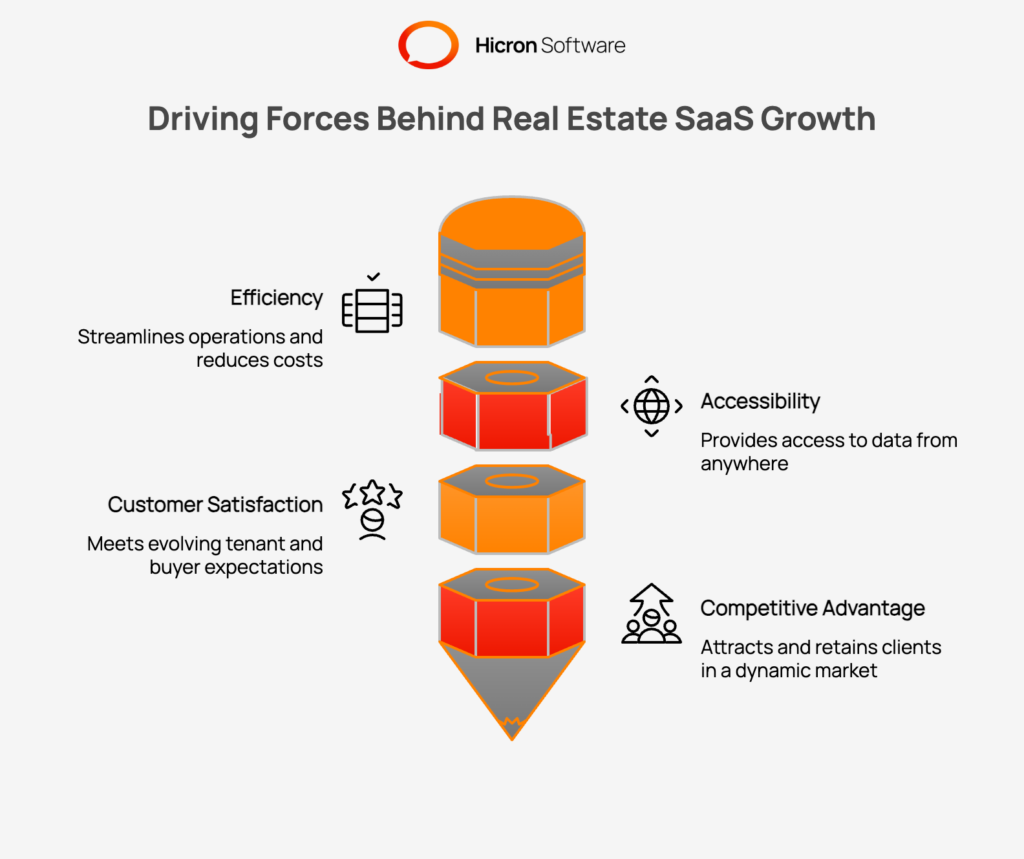
The primary driver behind the surge in real estate SaaS adoption is the urgent need to break free from the constraints of on-premise software. Traditional legacy systems often required expensive hardware, dedicated IT teams for maintenance, and worst of all, they chained data to a specific physical location. If a property manager needed to check a lease agreement or a maintenance log while on-site, they had to call the office or wait until they returned to their desk. This inefficiency is costly in a fast-moving market.
Cloud-based SaaS solutions have revolutionized this dynamic by offering ubiquitous access to critical data. By leveraging modern PropTech software development, real estate businesses operate with far greater agility. Teams can access real estate software from any device with an internet connection, enabling real-time collaboration between headquarters and field agents. This shift reduces IT overhead and ensures that decision-makers always have the most current data at their fingertips, whether they are in New York or Tokyo.
Tenant and buyer expectations are changing. People want to pay rent online, book viewings through apps, and track service requests digitally. Real estate SaaS development addresses these expectations by offering intuitive portals and mobile applications. Real estate companies that provide a friendly digital experience keep tenants satisfied and attract new clients in a competitive market.
Off-the-shelf products often fall short because every business operates differently. With custom PropTech software, developers work closely with real estate firms to map out daily workflows and decision points. Whether managing commercial leases or residential maintenance, custom-real estate SaaS helps automate these specific tasks, avoid duplication, and support your way of working.
|
Pitfalls of Generic SaaS |
Unique Needs of Real Estate Firms |
Advantages of Custom PropTech |
Impact on Operations |
|
Attempting to fit a unique business model into a generic product. |
Different real estate firms (e.g., commercial vs. residential) have vastly different workflows. |
Enables the design of bespoke workflows that align perfectly with operational strengths. |
Transforms software from a simple tool into a strategic asset. |
|
Offering a quick fix that doesn’t account for specific industry nuances. |
Requirement for specialized processes like complex CAM (Common Area Maintenance) reconciliations or specific tenant screening protocols. |
Allows for the automation of niche processes that generic software often overlooks. |
Enhances operational efficiency and supports unique value propositions. |
In the fragmented landscape of real estate technology, data silos are a major barrier to growth. A firm might use one platform for accounting, another for CRM, and a third for maintenance ticketing. Without proper integration, data must be manually re-entered across systems, leading to errors and a lack of holistic insight. Custom PropTech development prioritizes the ability to integrate these disparate systems into a unified ecosystem.
Building your own PropTech solution grants you total control over your data. Unlike renting a license where data access can be restricted or monitored by the SaaS provider, owning the PropTech platform ensures data sovereignty. This is crucial for large real estate entities that rely on proprietary data analytics to inform their real estate investment strategies. A custom development journey ensures that the architecture is built to serve the business’s long-term data strategy, not just its immediate functional needs.
|
Challenges with Data Silos |
Issues with Generic SaaS |
Benefits of Custom PropTech |
Impact on Real Estate Firms |
|
Disconnected platforms (CRM, accounting, maintenance) require manual data re-entry, leading to errors. |
Renting a license often means data access is restricted or monitored by the SaaS provider. |
Prioritizes integrating disparate systems into a unified ecosystem to eliminate silos. |
Provides holistic insight and eliminates manual errors, streamlining operations. |
|
Fragmented data landscapes act as a major barrier to growth and lack holistic insight. |
Generic architectures may only address immediate functional needs rather than strategic data goals. |
Grants total data sovereignty and ensures the architecture serves long-term data strategies. |
Critical for large entities using proprietary analytics to inform investment strategies. |
AI serves as the brain behind analytics, transforming how data is used in real estate SaaS. With AI-backed software, property managers and investors can access forecasts on property values, tenant turnover, and market trends. AI helps identify the best opportunities for real estate investment by analyzing large datasets and trends far faster than humans alone.
AI-powered chatbots and virtual assistants answer tenant questions around the clock, book appointments, and even process maintenance requests. This level of automation delivers faster responses, reduces the burden on staff, and ensures no query goes unanswered. In lease management, AI can automatically scan and track contracts, alerting property managers to upcoming deadlines and potential risks.
|
Core Functionalities for Management and Operations |
Features for Transactions |
Features for Communication |
Impact on Real Estate Firms |
|
High-Level Dashboard Analytics: Visualizes key metrics like occupancy rates, rent collection status, and open maintenance tickets for quick decision-making. |
Integrated Document Management: Digital storage and organization of all transaction-related documents. |
Centralized Inbox: Aggregates emails, SMS, and in-app messages to prevent missed inquiries or requests. |
Streamlined Operations: Reduces manual workload and improves efficiency in daily tasks. |
|
Financial Automation: Automates rent collection, invoice generation, and real-time expense tracking to improve cash flow visibility. |
E-Signature Capabilities: Enables secure, digital signing to remove physical paperwork bottlenecks and speed up closures. |
Verifiable Audit Trail: Keeps all communication within the platform, protecting both landlords and tenants. |
Enhanced Experience: Fosters transparency and trust, improving the customer journey for tenants and investors. |
|
Commercial Specific Tools: Includes automated CAM reconciliations and lease administration for complex tenant relationships. |
Remote Deal Facilitation: Supports remote closures, crucial for international investors and distance transactions. |
Lead & Tenant Management: Ensures no tenant request or sales lead falls through the cracks. |
Data-Driven Decisions: Provides the “cockpit” view needed for strategic oversight of portfolio health. |
A successful real estate SaaS platform offers dashboards with clear analytics, showing occupancy rates, maintenance status, and financial health at a glance. It should handle automated rent collection, expense tracking, and reporting without the need for manual work. These features help property management teams stay organized and spot issues early.
Real estate transactions increasingly take place online, so digital document storage, e-signature capabilities, and secure communication modules are vital. Good real estate SaaS platforms supply a centralized space for tenants and staff to message, collaborate, and resolve problems, adding transparency and improving trust on all sides.
|
Scalability Challenges |
Solutions for Performance Under Load |
Benefits of Modularity |
Impact on Real Estate Firms |
|
Handling future growth in data volume and user numbers. |
Build a cloud-native architecture using services like AWS or Azure. |
A modular (microservices) system allows for adding new features (e.g., IoT, VR) without a full system overhaul. |
Future-Proofing: Ensures the platform remains relevant and adaptable as new technologies emerge. |
|
Managing spiky traffic and high user activity (e.g., rent payment days) without crashes. |
Utilize auto-scaling to dynamically add computing resources during peak times and reduce them during quiet periods. |
Software can evolve alongside business operations, allowing for new integrations like payment gateways or management modules. |
Strategic Flexibility: Allows firms to pivot strategies quickly without being limited by their technology stack. |
|
Risk of frustrated users and lost revenue due to poor performance under load. |
Elastic architecture ensures consistent performance and cost efficiency. |
Contrasts with monolithic systems, which are difficult and costly to update. |
Long-Term Viability: Supports sustained business growth by handling increasing scale and adapting to market changes. |
As real estate companies grow, their platforms must keep pace. A scalable SaaS platform expands to accommodate new users, additional properties, and higher data volumes. Cloud-based infrastructure allows the system to adjust resources as workloads fluctuate, especially during busy periods like rent week.
A modular approach lets companies add or remove functions, like new payment tools or IoT device support, without major system overhauls. Real estate SaaS platforms designed for flexibility allow businesses to test innovations and adopt new technology as their needs evolve.
Mobile apps empower property managers and real estate agents to perform core tasks from any location. A robust proptech app empowers these professionals to perform their jobs from anywhere. Property managers can conduct move-in/move-out inspections on their phones, taking photos and uploading them directly to the database. Maintenance technicians can receive work orders, update status, and log hours in real-time from the field. This mobility streamlines workflows and significantly reduces the turnaround time for critical tasks.
For tenants and buyers, mobile apps make it easy to pay rent, submit maintenance requests, schedule viewings, and get updates. Features like camera integration and push notifications help keep everyone engaged and informed, leading to improved satisfaction and better retention.
App development can leverage native device features to enhance customer experience. GPS can be used for location-based property discovery, while the camera can be used for augmented reality furniture placement or scanning documents.
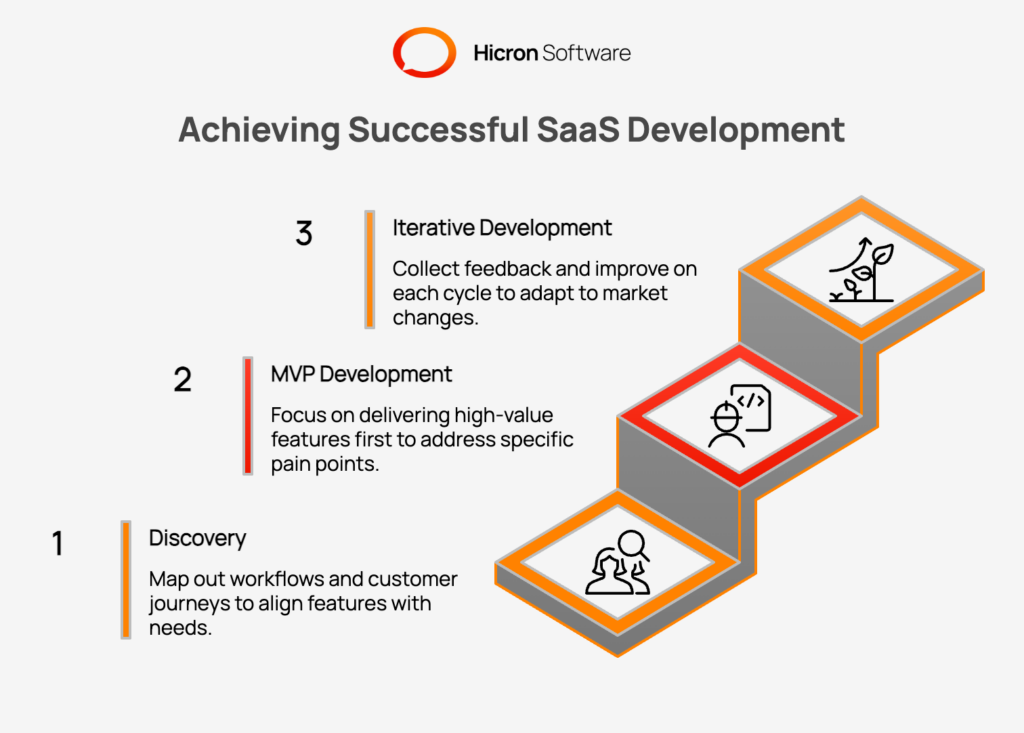
Effective real estate SaaS development begins long before coding. It starts with a discovery process, mapping out current workflows, challenges, and customer journeys. By aligning the platform’s features with real-world needs, development teams build products that truly help real estate professionals and tenants alike.
A development provider must work closely with the client to understand the specific pain points they are trying to solve. Is the goal to reduce vacancy rates? Is it to automate accounting? Or is it to improve tenant retention? Clarifying these goals early ensures that the MVP development (Minimum Viable Product) is laser-focused on delivering high-value features first.
Markets and technology change quickly. An agile approach means launching a minimum viable product (MVP), collecting feedback, and improving on each cycle. This process allows real estate companies to react to business needs, regulatory changes, or user input, delivering the most useful features without delay.
Choosing the right development partner is critical. A generalist software shop might have excellent technical skills, but if they lack expertise in proptech, they will struggle to understand the domain’s unique requirements. Real estate has complex logic regarding lease terms, pro-rations, zoning laws, and compliance.
A specialized proptech provider understands this language. They know that a commercial lease is fundamentally different from a residential one. They understand the intricacies of trust accounting in property management. This domain knowledge prevents costly misunderstandings and ensures that the software development services provided are relevant and effective.
A true development partner acts as a strategic consultant. They don’t just take orders; they challenge assumptions and offer guidance based on their experience with other successful PropTech SaaS projects. They advise on the best technology stack for scalability, the most effective UX patterns for increasing adoption, and the security protocols necessary to protect sensitive financial data.
This partnership extends beyond the launch. As the product grows, the partner helps the client navigate the roadmap, integrating new technologies like AI and IoT to keep the platform competitive. In the long run, this relationship is often the difference between a stalled project and a market-leading PropTech solution.
The Internet of Things (IoT) is the bridge between the physical asset and the digital SaaS platform. Modern buildings are becoming increasingly “smart,” equipped with sensors that monitor everything from HVAC performance and energy consumption to foot traffic and air quality.
Real estate SaaS development requires the capability to ingest and visualize this data. When IoT devices are integrated with PropTech software, property managers gain a real-time pulse on their buildings. They can see exactly where energy is being wasted or which areas of a facility are underutilized. This data transforms a static building into a dynamic asset that generates actionable insights.
The combination of IoT and AI enables a shift from reactive to predictive maintenance. Instead of waiting for a boiler to break down and cause a tenant emergency, IoT sensors can detect anomalies in vibration or temperature that signal an impending failure.
The PropTech solution can then automatically generate a work order for a technician to inspect the unit before it fails. This predictive approach saves money on emergency repairs, extends the lifespan of equipment, and significantly improves tenant satisfaction by preventing disruptions. Smart buildings that leverage this technology command higher rents and valuations, proving that innovation in property technology drives tangible ROI.
Affordable real estate SaaS models mean that even small firms can use advanced analytics, automation, and smart building technology. This wider adoption will fuel innovation across the industry and allow more real estate professionals to focus on growth and customer satisfaction.
Hyper-Connectivity and Comprehensive Platforms
The future of PropTech SaaS is rapidly converging toward hyper-connected “super-apps” that seamlessly integrate the entire property lifecycle with broader smart city ecosystems. By democratizing advanced tools like AI analytics and IoT management, affordable SaaS models are empowering smaller firms to compete with institutional giants on a level playing field. Ultimately, this universal adoption of sophisticated, scalable technology signals the maturation of a digital-first real estate industry driven by innovation and efficiency.
Ready to build the future of your real estate business? Partner with our expert development team to create a custom PropTech solution that streamlines your operations and provides a competitive edge. Contact us today to start building your scalable, high-performance real estate software.
Real estate SaaS development refers to creating cloud-based software platforms for real estate operations, allowing users to manage properties, tenants, sales, and data from any device and location.
AI provides analytics for better decision-making, automates routine tasks like tenant support, and helps predict property values and maintenance needs.
Look for a partner with real estate technology experience, a strong track record in SaaS, and the willingness to advise on design, security, and user experience beyond just the technical build.
Hicron Software proved to be a trusted partner with unmatched technical expertise, delivering a scalable and user-friendly web application that was pivotal to our successful U.S. market expansion.

Hicron’s contributions have been vital in making our product ready for commercialization. Their commitment to excellence, innovative solutions, and flexible approach were key factors in our successful collaboration.
I wholeheartedly recommend Hicron to any organization seeking a strategic long-term partnership, reliable and skilled partner for their technological needs.

After carefully evaluating suppliers, we decided to try a new approach and start working with a near-shore software house. Cooperation with Hicron Software House was something different, and it turned out to be a great success that brought added value to our company.
With HICRON’s creative ideas and fresh perspective, we reached a new level of our core platform and achieved our business goals.
Many thanks for what you did so far; we are looking forward to more in future!

Hicron is a partner who has provided excellent software development services. Their talented software engineers have a strong focus on collaboration and quality. They have helped us in achieving our goals across our cloud platforms at a good pace, without compromising on the quality of our services. Our partnership is professional and solution-focused!

The IT system supporting the work of retail outlets is the foundation of our business. The ability to optimize and adapt it to the needs of all entities in the PSA Group is of strategic importance and we consider it a step into the future. This project is a huge challenge: not only for us in terms of organization, but also for our partners – including Hicron – in terms of adapting the system to the needs and business models of PSA. Cooperation with Hicron consultants, taking into account their competences in the field of programming and processes specific to the automotive sector, gave us many reasons to be satisfied.