Exploring PropTech: Key Technologies & Software Solutions Transforming Real Estate
- December 09
- 12 min


PropTech web development involves creating digital platforms and tools that transform the real estate industry by enhancing efficiency, user experience, and data management. It powers innovations like virtual tours, smart property management, and AI-driven analytics, enabling businesses to meet modern demands. By integrating advanced technologies, PropTech web development modernizes real estate operations and drives sustainable growth.
The real estate industry is shaped by data, connectivity, and user experience. Today, the ways people buy, sell, and manage property have changed dramatically. Driving this transformation is PropTech web development.
Today’s tenants and buyers expect digital experiences that are effortless and reliable. Features like virtual tours, fast access to property data, and automated processes are now standard. For real estate businesses, keeping pace requires more than just an attractive website; it demands a solid technology foundation that boosts both efficiency and growth.
This article explores the transformative role of PropTech web development in the real estate industry, focusing on how digital platforms and tools enhance efficiency, user experience, and data-driven decision-making. It highlights the importance of custom solutions, advanced technologies, and strategic partnerships in building innovative, scalable, and competitive PropTech platforms.
PropTech (Property Technology) covers the digital tools and platforms transforming the real estate market. PropTech web development is the process of building and maintaining the online systems that power these innovations.
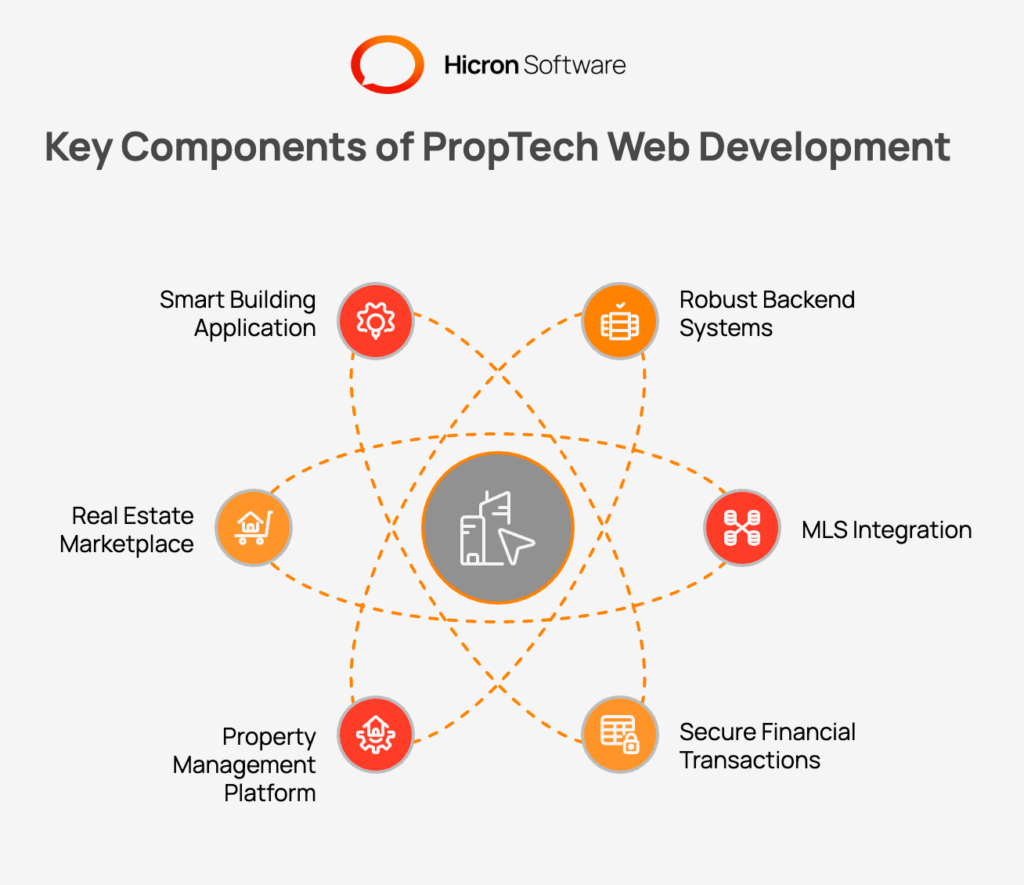
PropTech web development requires building robust backend systems capable of managing large property databases, integrating with MLS (Multiple Listing Services), and ensuring secure financial transactions. Whether you’re developing a property management platform, a real estate marketplace, or a smart building application, your web infrastructure is the engine driving innovation and reliability.
Modern web technologies can completely reshape the relationship between real estate businesses and their clients. Tools like AI-powered chatbots give round-the-clock support, quickly answering tenant questions. Meanwhile, user-friendly analytics dashboards help investors and property managers make smarter decisions with real-time data. These advancements mean companies can digitize more data efficiently, provide outstanding experiences, and stay ahead in an evolving market.
High-quality web development is essential for staying competitive in real estate. Building specialized PropTech solutions empowers modern real estate businesses to deliver better service, respond faster to market changes, and support sustainable growth.
A successful PropTech platform is built on a foundation of features designed to meet the needs of modern real estate professionals and their clients. High-performing websites combine functionality with a great user experience to deliver real value. Effective PropTech website development focuses on creating tools that are intuitive and secure, ensuring they can be relied upon for critical business operations.
|
Feature |
Description |
|
Advanced Property Search and Filtering |
An advanced search engine with detailed filters allows users to find properties quickly. Accurate results based on location, price, and amenities ensure users locate relevant listings efficiently without wasting time. |
|
Interactive Maps and Virtual Tours |
Interactive tools allow visitors to explore neighborhoods and view properties remotely. Virtual walkthroughs provide an immersive experience, saving time for both clients and agents while offering detailed local insights. |
|
Mobile Responsiveness |
Optimizing for mobile ensures a smooth experience on smartphones and tablets. With over half of web traffic coming from mobile devices, responsive design is critical for retaining user interest and securing business. |
|
Secure Payment Gateways |
Encrypted transactions ensure safety for rent payments and deposits. Implementing reputable gateways meets financial regulations, protects sensitive data, and establishes long-term trust with clients. |
Building reliable real estate technology solutions requires a strategic approach to overcoming specific industry hurdles. By recognizing these obstacles early, developers and businesses can address them proactively, setting their projects up for long-term success.
|
Challenge |
Description |
Solution |
|
Complex Data Integration |
Real estate platforms often need to pull data from multiple sources like MLS (Multiple Listing Services) and CRMs, which may use different formats. |
Use middleware and custom APIs to standardize data flow, ensuring accurate and automatic updates across systems. |
|
Scalability Issues |
Sudden traffic spikes or database growth can slow down or crash poorly designed platforms. |
Plan for scalability from the start by using cloud-based hosting and writing efficient, modular code. |
|
Regulatory Compliance and Security |
Platforms handle sensitive personal and financial data, requiring strict adherence to privacy laws like GDPR and CCPA. |
Integrate security measures at every development stage, including data encryption, regular audits, and compliance-focused design. |
|
User Experience Expectations |
Modern users demand fast, intuitive, and mobile-friendly platforms. |
Prioritize responsive design, user-friendly interfaces, and performance optimization to meet user needs. |
|
Adapting to Emerging Technologies |
Keeping up with advancements like AI, IoT, and blockchain can be overwhelming. |
Build flexible, future-proof architectures that can integrate new technologies as they emerge. |
Real estate platforms rarely operate in isolation. To provide value, they must aggregate data from disparate sources such as Multiple Listing Services (MLS), Customer Relationship Management (CRM) systems, and public records. The core challenge lies in the inconsistency of these sources; they often use different formats and standards, which can lead to synchronization errors, outdated information, and a fragmented user experience.
Solution and Technology:
To solve this, developers need a robust data integration strategy. Implementing middleware or an Enterprise Service Bus (ESB) can standardize communication between systems, while custom APIs (Application Programming Interfaces) can create a unified data pipeline.
PropTech platforms often experience unpredictable traffic surges. These might occur during peak market seasons, following a major marketing campaign, or when a high-profile property is listed. If the system architecture is poor, these surges can cause the website to slow down or crash. This downtime results in lost leads and damage to the brand’s reputation, especially as the user base and data volume grow over time.
Solution and Technology:
The most effective approach is designing a scalable architecture from the outset. A microservices-based approach is ideal, as it allows individual components of the application to scale independently rather than requiring the entire system to scale at once. Cloud-based infrastructure with auto-scaling capabilities is essential for dynamically adjusting resources based on real-time demand.
PropTech applications handle a significant amount of highly sensitive information, including personal identification documents, financial records, and transaction details. Adhering to complex regulations is not optional. Failure to comply with laws like GDPR (General Data Protection Regulation), CCPA (California Consumer Privacy Act), and fair housing laws can lead to severe legal and financial penalties.
Solution and Technology:
Security must be embedded into every phase of the development lifecycle, a practice often referred to as DevSecOps. This includes end-to-end data encryption, regular security audits, and strict role-based access control (RBAC) to restrict data visibility. Furthermore, algorithms used for pricing or tenant screening must be carefully designed to avoid bias and comply with fair housing standards.
Today’s users expect digital experiences to be seamless, intuitive, and highly responsive on any device. In the competitive real estate market, a slow-loading site, a complicated interface, or a lack of mobile-friendliness can quickly lead to user abandonment. Meeting these high expectations is critical for effectively engaging potential buyers, renters, and property managers.
Solution and Technology:
Prioritizing UI/UX design is essential. This involves conducting user research and creating prototypes before a single line of code is written. A mobile-first design approach ensures the platform is fully functional on smartphones and tablets, where many users begin their search. Performance optimization, such as image compression and browser caching, is also key.
The PropTech landscape is evolving rapidly, driven by innovations like Artificial Intelligence (AI), the Internet of Things (IoT), and blockchain. Integrating these advanced technologies can be complex and costly. However, businesses that fail to adapt risk falling behind competitors who offer more innovative features and operational efficiencies.
Solution and Technology:
The best defense against obsolescence is a flexible, modular architecture that simplifies the integration of new technologies. It is often wise to start with a Minimum Viable Product (MVP) to test a new technology’s impact before committing to a full-scale implementation.
A robust PropTech website development approach centers around designing web apps that deliver both usability and security for a diverse group of users in the real estate sector. To support daily operations, a high-quality PropTech platform must balance thoughtful data presentation with strong access controls.
The right PropTech web design helps property managers, owners, and tenants act on information quickly, while keeping sensitive data secure and easy to find.
Dashboards are the visual core of any effective PropTech web app. They transform complex data into clear visuals and simple charts, ensuring users can immediately grasp critical insights. By prioritizing user interface (UI) and user experience (UX) design best practices, developers make sure dashboards remain easy to use and navigate.
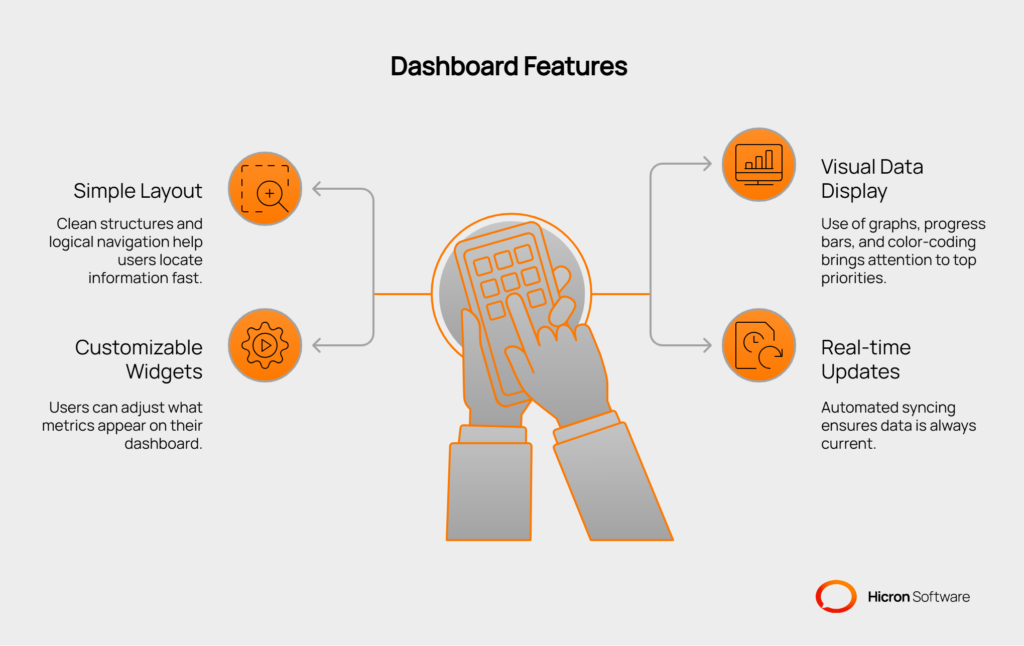
Key features of intuitive dashboards in PropTech website development include:
Strong security is essential in PropTech web app development, given the variety of users with different needs. Role-based access control (RBAC) gives every user a unique experience and protects confidential data by assigning permissions based on their job or relationship to the property.
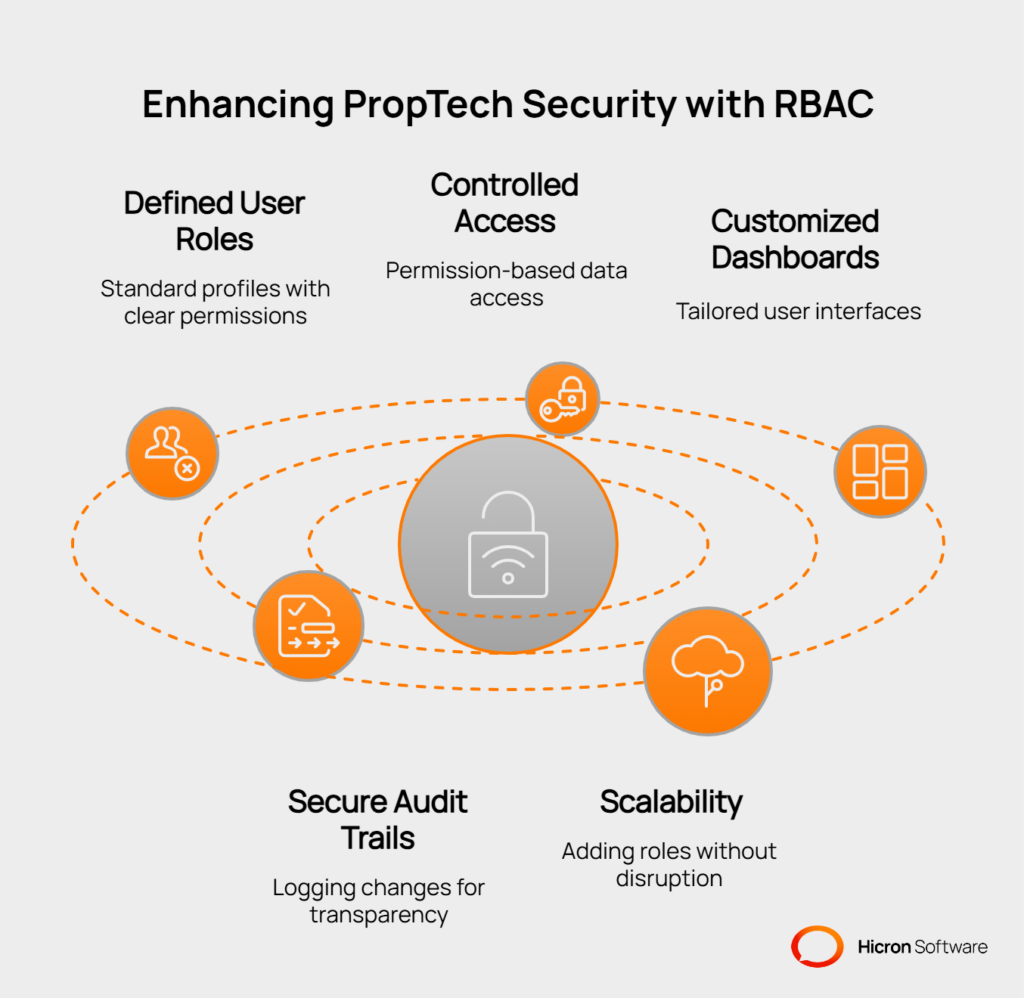
Elements of effective RBAC include:
Integrating intuitive dashboards and robust role management into PropTech website development is crucial for building platforms that support operational efficiency, protect privacy, and deliver a positive user experience for every stakeholder in the property cycle.
Selecting the right development partner is a critical step in building a successful PropTech platform. The company you choose will not only build your software but will also act as a strategic partner in bringing your vision to life.
A successful partnership depends on finding a team with the right technical skills, industry knowledge, and a forward-thinking approach. Evaluating potential partners on a few key factors can help ensure your project is a success.
When looking for a PropTech web development provider, it is important to assess their specific experience in the real estate sector.
A partner with deep industry expertise will understand the unique challenges and opportunities of the market, from regulatory compliance to user expectations. They can offer valuable insights that go beyond coding, helping to shape a product that truly meets the needs of real estate professionals and their clients.
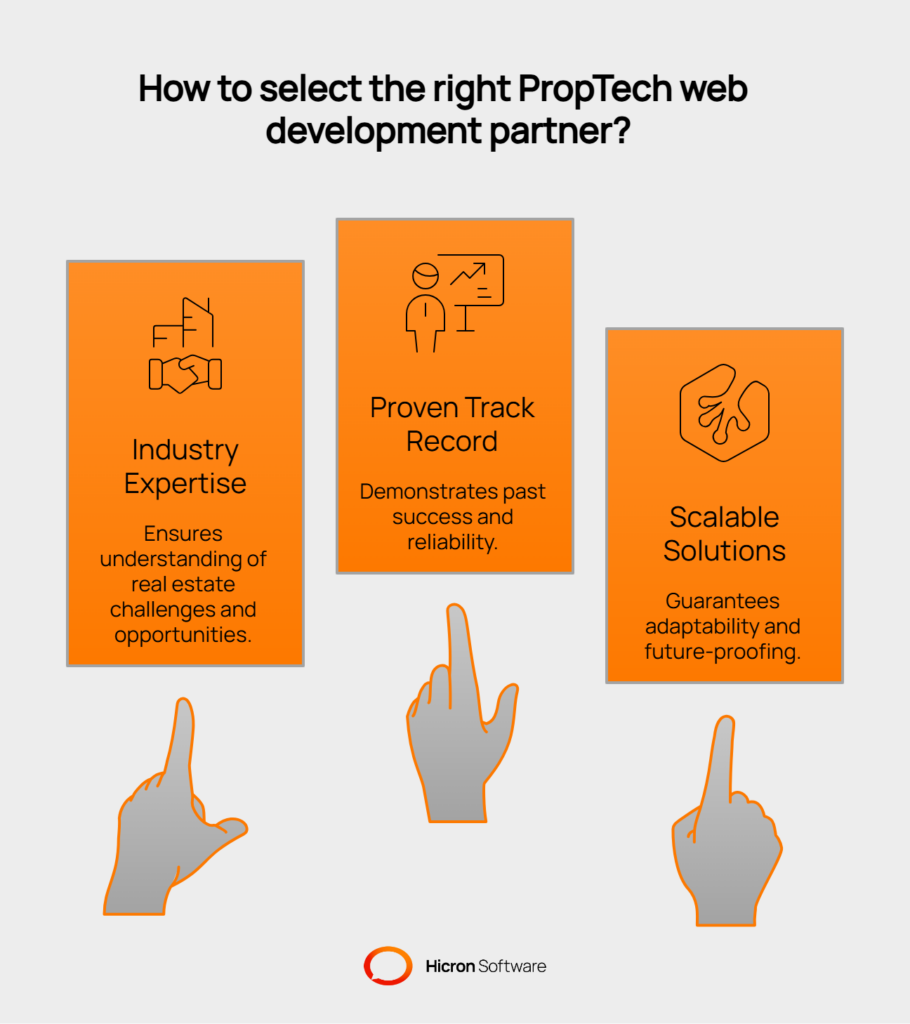
Key factors to consider when selecting a development company:
Collaborating with experienced PropTech consultants adds another layer of value to your development project. These experts can help you refine your strategy, identify the most impactful features to build, and ensure the final product aligns with your business goals.
For example, Hicron Software offers not just development services but also consulting to guide you through the entire process. Our experience in creating custom software solutions for various industries, including real estate, makes us a capable partner for turning complex requirements into functional and practical PropTech platforms.
A partnership with an experienced firm provides the support needed to build a truly competitive product.
The field of PropTech is continuously advancing, driven by technological progress and shifting market demands. PropTech website development is at the forefront of this change, with several key trends defining the next generation of real estate platforms.
These trends focus on creating more intelligent, connected, and user-friendly experiences for everyone involved in the property lifecycle. Staying aware of these developments is key for any business looking to build a competitive edge.
|
Description |
Key Benefits |
|
|
IoT-enabled Smart Property Management |
Connects physical building systems such as smart locks, cameras, and thermostats to a central web dashboard, allowing managers to monitor and control property functions remotely. |
Improves operational efficiency, reduces energy costs, enhances tenant security, and enables remote management of building access and climate control. |
|
Progressive Web Apps (PWAs) |
Combines website accessibility with native mobile app features, offering functionalities like offline access, push notifications, and home screen installation without requiring an app store download. |
Ensures reliable access to property data for agents with poor internet connections and provides timely alerts for rent payments or maintenance to tenants. |
|
Advanced Frontend Technologies |
Utilizes modern frameworks like React, Angular, and Vue.js to create dynamic, interactive interfaces that handle complex data and update in real-time without page reloads. |
Delivers faster, more responsive user experiences, supports high-performance features like 3D tours, and enables efficient management of large datasets. |
Investing in PropTech web development is no longer just an option; it is a fundamental step for any real estate business looking to thrive in a competitive market. From streamlining property management and sales to providing data-driven investment insights, custom digital solutions are reshaping the industry.
By embracing these tools, companies can improve operational efficiency, enhance client experiences, and unlock new avenues for growth. The potential for innovation in the real estate sector is immense, driven by technologies like AI, IoT, and advanced data analytics.
The journey to modernize your real estate operations begins with a clear vision and the right technical partnership. To truly capitalize on these opportunities, it is essential to work with a team that understands the specific needs of the property market.
Partner with experts like Hicron Software who can help you build cutting-edge PropTech web solutions tailored to your business goals. By doing so, you can create a platform that not only meets today’s demands but is also prepared for the future of real estate.
PropTech web development is the process of creating custom websites, platforms, and apps specifically for the real estate industry. It benefits businesses by streamlining operations through automation, enhancing the customer experience with digital tools like virtual tours, and providing data-driven insights to inform strategic decisions. Ultimately, this modern real estate technology leads to greater efficiency and market competitiveness.
A high-performing PropTech website must include a responsive, mobile-friendly design, advanced property search filters, and secure payment systems for transactions. Additionally, integrated real estate analytics for performance tracking and an intuitive user interface are crucial for delivering a platform that is easy to use for agents, managers, and clients.
In modern PropTech platforms, AI is used to create personalized property recommendations for users by analyzing their behavior and preferences. AI-powered chatbots also automate customer service, answering common questions 24/7. Furthermore, AI algorithms can analyze market data to predict trends, helping investors and agents make more accurate, data-driven decisions.
Smart property management uses Internet of Things (IoT) devices, such as smart locks, thermostats, and sensors, connected to a central web platform. This allows property managers to remotely monitor and control building functions, from granting access to maintenance staff to adjusting energy usage. This technology improves operational efficiency, enhances security, and can reduce overhead costs.
When choosing a PropTech web development partner, look for a company with a proven track record and specific expertise in the real estate sector. The right partner should understand the industry’s unique workflows and be able to build scalable web solutions that can adapt to future trends. A strong portfolio and the ability to offer strategic consulting are also key indicators of success.
Hicron Software proved to be a trusted partner with unmatched technical expertise, delivering a scalable and user-friendly web application that was pivotal to our successful U.S. market expansion.

Hicron’s contributions have been vital in making our product ready for commercialization. Their commitment to excellence, innovative solutions, and flexible approach were key factors in our successful collaboration.
I wholeheartedly recommend Hicron to any organization seeking a strategic long-term partnership, reliable and skilled partner for their technological needs.

After carefully evaluating suppliers, we decided to try a new approach and start working with a near-shore software house. Cooperation with Hicron Software House was something different, and it turned out to be a great success that brought added value to our company.
With HICRON’s creative ideas and fresh perspective, we reached a new level of our core platform and achieved our business goals.
Many thanks for what you did so far; we are looking forward to more in future!

Hicron is a partner who has provided excellent software development services. Their talented software engineers have a strong focus on collaboration and quality. They have helped us in achieving our goals across our cloud platforms at a good pace, without compromising on the quality of our services. Our partnership is professional and solution-focused!

The IT system supporting the work of retail outlets is the foundation of our business. The ability to optimize and adapt it to the needs of all entities in the PSA Group is of strategic importance and we consider it a step into the future. This project is a huge challenge: not only for us in terms of organization, but also for our partners – including Hicron – in terms of adapting the system to the needs and business models of PSA. Cooperation with Hicron consultants, taking into account their competences in the field of programming and processes specific to the automotive sector, gave us many reasons to be satisfied.