What is PropTech Industry & How it Reshapes the Real Estate Market
- December 06
- 15 min

PropTech UI/UX design focuses on creating intuitive, user-friendly interfaces that simplify complex real estate processes. Key considerations include accessibility, easy navigation, and personalized experiences to meet diverse user needs. Prioritizing these elements ensures higher user satisfaction and engagement with PropTech platforms.
In the dynamic realm of PropTech, where real estate meets modern technology, user experience (UX) plays a pivotal role in shaping success. A thoughtfully designed UX enhances user satisfaction and drives adoption, making it a critical factor in standing out in a competitive market.
This article explores actionable strategies and foundational principles for crafting exceptional UX in PropTech platforms. By focusing on clarity, usability, and user-centric design, we aim to equip developers, designers, and decision-makers with the insights needed to create meaningful and impactful digital experiences. Whether you’re looking to refine an existing platform or build one from the ground up, these strategies will help you deliver value and foster lasting engagement.
Key takeaways:
Understanding user needs is the cornerstone of creating successful PropTech platforms. Whether it is property managers using cloud-based tools or tenants exploring virtual property tours, every user faces unique challenges and goals. Conducting detailed user research is an essential first step to uncover these insights and build solutions that truly address their needs.
User research provides valuable insights into real-world problems and aspirations. By using interviews, surveys, and focus groups, PropTech companies can identify pain points and opportunities for improvement.
Examples of insights:
After gathering research, the next step is creating detailed user personas to represent key PropTech audiences. These personas include:
Understanding user needs is only the beginning. Applying those insights through empathy-driven design is what sets successful PropTech solutions apart.
Key benefits of empathy-driven design:
Examples of empathy in action:
By prioritizing empathy, PropTech tools effectively address user needs, fostering satisfaction and long-term loyalty.
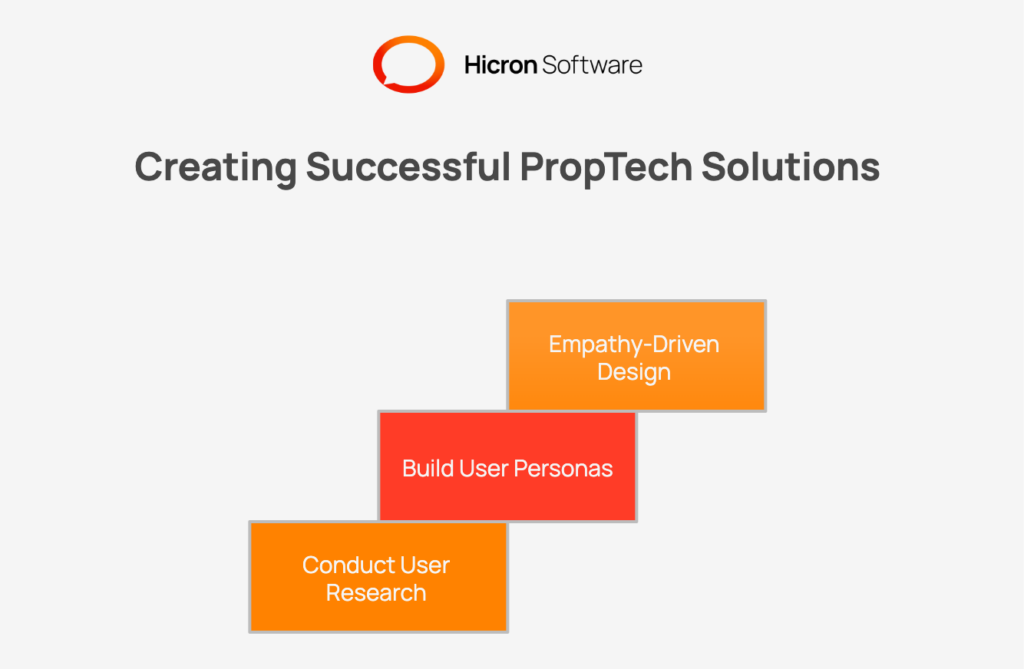
Understanding user needs is the first step to delivering outstanding solutions in a dynamic field like real estate and technology. By learning from the people who interact with your platforms daily and designing with empathy, you’ll have a much better shot at creating PropTech experiences that truly shine.
Creating engaging PropTech platforms requires a focus on key design principles that enhance user experience and functionality. These principles include:
|
Key Design Principle |
Description |
|
Simplicity and Clarity |
Intuitive interfaces and straightforward workflows help users navigate complex tasks with ease. |
|
Consistency in Design |
Harmonized user experience across web and mobile platforms ensures easy transitions between devices. |
|
Personalization Components |
AI-based insights enable tailored content and recommendations for tenants, landlords, property managers, and investors. |
|
Enhancing Speed and Performance |
Fast load times and responsive design create a friction-free browsing experience, keeping users engaged and satisfied. |
Intuitive interfaces and straightforward workflows are essential for helping users navigate complex tasks, such as property management or virtual property tours, with ease. Clear navigation and purposeful design reduce confusion and improve usability.
A harmonized user experience across web and mobile platforms ensures that users can switch between devices without needing to relearn navigation or adjust to different layouts. Consistent design fosters familiarity and builds trust in the platform.
AI-based insights enable tailored content and recommendations, catering to the unique needs of diverse users, including tenants, landlords, property managers, and investors. Personalization transforms generic features into meaningful, user-specific tools.
Fast load times and responsive design are critical for creating a friction-free browsing experience. Optimized performance ensures users remain engaged and satisfied, even during high-traffic periods or in areas with varying connectivity.
By focusing on these principles, PropTech platforms can deliver efficient, user-centric solutions that drive engagement, build loyalty, and stand out in the competitive real estate technology market.
PropTech platforms can elevate the user experience and move closer to becoming invaluable tools in real estate’s digital transformation. They can combine these design principles: simplicity, consistency, personalization, and speed. Through
real estate technology ventures can address user needs effectively while setting a standard for innovation in the industry. When design functions as both a tool and a bridge, it creates solutions and connections that users value deeply.
To keep growing, PropTech companies focus on making new technology easy for people to use. Advanced features must be simple to understand and offer real help to users. When platforms are clear and helpful, property managers, landlords, buyers, and tenants find real value and use the platform in their daily lives.
Adding technology does not make real estate platforms better unless it matches how people actually use them. The most helpful platforms truly solve problems that users face.
Today’s users want real estate platforms that are simple, quick, and smart. To make this happen, PropTech companies use technology that makes searching for a property faster and more personal.
|
Technology |
Description |
Benefits |
|
AI for Personalized Recommendations and Insights |
Artificial Intelligence analyzes user behavior and preferences to curate tailored search results. It also provides predictive analytics for investors, such as growth potential and risk assessment. |
• Relevance: Delivers search results that match specific user needs (e.g., specific home types or areas). |
|
Virtual Tours and Augmented Reality (Interactive Tools) |
VR enables remote, high-definition 3D property walkthroughs. AR allows users to visualize changes to a space, such as furnishing empty rooms or changing decor styles via their phones. |
• Accessibility: Allows property viewing from anywhere, anytime, overcoming travel and scheduling barriers. |
|
IoT Integration for Real-Time Updates |
The Internet of Things connects physical devices (sensors, smart locks, thermostats) to the internet, providing real-time data monitoring and remote control capabilities for properties. |
• Proactive Maintenance: Alerts property managers to issues like leaks or open doors immediately, preventing costly damage. |
New technology can add good features, but it can also make things hard to use. If there are too many choices, people might find the platform confusing or not fun to use. The main goal in PropTech design is to keep things clear and simple. By using easy layouts and only adding tools that really help, users can enjoy the platform more. When people can quickly learn and use new features, they get more out of the platform and do not feel upset.
Designers should always make the experience easy to understand and use. A platform should show only what is needed at the moment. Good PropTech user design uses simple layouts and clear steps. It lets users focus on processes. Showing main actions first and guiding people to more advanced features when they are ready makes the PropTech platform friendly and easy for everyone.
New features should be added reasonably, letting people get used to them one by one. Helpful hints that appear while you use the platform or keeping advanced tools hidden until they are needed can make learning easier. This makes sure users do not feel lost or confused. If someone struggles or feels upset using a tool, the design should be made even simpler, no matter how advanced the technology is.
A good PropTech platform should work well for more people and information as it gets bigger. To do this, it is important to plan for more users right from the start and build systems that do not slow down when more people join. By preparing for growth ahead of time, PropTech platforms make sure everyone, no matter how many users or properties there are, gets a fast and easy experience as the platform expands.
Many people think that growing a platform is only a technical problem. But it changes how users feel about using the platform. If the system gets slow when many people are online, users will not be happy.
To make sure the modern real estate platform works well as more people use it, designers and developers should work together. By thinking about what users need most, we can get ready for higher demand without making the platform slower or harder to use.
A PropTech platform that can grow without problems helps people trust it. Keeping real estate processes digitization fast and reliable is the key to long-term success.
By fostering inclusivity, PropTech platforms can reach broader audiences and build a stronger sense of trust and usability.
Ensuring accessibility and inclusivity in PropTech platforms is vital for granting equal access to the real estate market.
By prioritizing these inclusive strategies, real estate technology becomes a welcoming space for everyone, fostering trust and broadening market reach.
A data-driven approach is crucial for evaluating user experience in PropTech platforms. Effective measurement relies on three main pillars, as explained in the table below.
|
Aspect |
Description |
Key Insights |
|
Identifying Key Performance Indicators (KPIs) |
The process of selecting and monitoring specific metrics, such as user satisfaction scores, conversion rates, average session duration, and engagement levels, to evaluate how well the platform performs. |
• User Needs: Satisfaction scores reveal if the interface meets expectations. |
|
Collecting User Feedback |
Gathering direct input from users through continuous surveys and integrated feedback mechanisms to capture real-time thoughts, reviews, and suggestions. |
• Contextual Understanding: Qualitative data explains the “why” behind numeric metrics. |
|
Testing and Analytics |
Employing rigorous methods like A/B testing and behavior tracking (clicks, navigation patterns) to compare feature variations and monitor real-world interactions. |
• Optimization: A/B testing determines which designs lead to higher conversions and ease of use. |
Successfully navigating the challenges of PropTech UX design demands a multifaceted and carefully planned strategy tailored to the complex landscape of the real estate market. This approach must account for the wide spectrum of user expectations, technical skills, and workflows present within platforms that cater to renters, first-time buyers, real estate professionals, and property managers.
Designers and developers need to adopt user research techniques such as persona development, user journey mapping, and usability testing to fully understand and anticipate the priorities and pain points of each audience. By embracing flexibility in feature development, providing customizable dashboards and guided onboarding processes, and continuously gathering data-driven insights, PropTech teams can proactively identify and resolve obstacles before they hinder user adoption or satisfaction.
|
Challenge |
Approach |
Key Benefits |
|
Balancing Diverse User Needs |
Conduct deep research to identify specific goals for each user type, create tailored flows with modular interfaces, and enable role-based customization. |
• Inclusivity: Ensures updates do not favor one group over others. |
|
Simplifying Technology Adoption |
Implement intuitive navigation with step-by-step walkthroughs, provide jargon-free tutorials, and offer responsive human-centered support. |
• Confidence: Reduces friction and anxiety for non-tech-savvy users during onboarding. |
|
Addressing Technical Limitations |
Apply rigorous responsive design principles, optimize performance frequently, and ensure compatibility across all devices and operating systems. |
• Stability: Prevents lag and accessibility barriers regardless of the device used. |
By effectively overcoming these challenges, PropTech platforms can deliver truly accessible, efficient, and valuable experiences to all users. Ultimately, this commitment to thoughtful design and continual improvement results in property technology solutions that empower renters, buyers, agents, and property managers alike, creating a more connected, productive, and satisfying real estate ecosystem for everyone involved.
Creating intuitive and engaging design in PropTech requires a commitment to user-centric strategies that prioritize real-world needs.
This proactive approach ensures that platforms not only meet current demands but also anticipate future user behaviors.
Prioritizing user experience is fundamental for driving widespread adoption and scaling PropTech solutions in a competitive market. Technologies that drive the creation of intuitive interfaces while complementing robust backend functionality include:
|
Technology |
Description |
Examples |
|
Artificial Intelligence (AI) and Machine Learning (ML) |
Enables personalized user experiences by analyzing behavior and preferences. Powers interactive features like chatbots and recommendation engines. |
ChatGPT, TensorFlow, IBM Watson |
|
Responsive Web Design Frameworks |
Ensures interfaces adapt to various devices and screen sizes, providing a consistent user experience across platforms. |
Bootstrap, Foundation, Tailwind CSS |
|
User Interface (UI) Design Tools |
Allows designers to create visually appealing, user-friendly interfaces and build interactive prototypes for testing and validation. |
Figma, Sketch, Adobe XD |
|
Front-End Development Technologies |
Facilitates the creation of dynamic, fast, and responsive user interfaces that improve the overall user interaction. |
React, Angular, Vue.js |
|
Augmented Reality (AR) and Virtual Reality (VR) |
Enhances user engagement by offering immersive experiences, such as virtual property tours and interactive product visualizations. |
Matterport, Oculus, ARKit |
|
APIs and Middleware |
Ensures smooth communication between front-end and back-end systems, enabling real-time data updates and functionality. |
RESTful APIs, GraphQL, MuleSoft |
|
Cloud Computing |
Supports scalable and reliable backend infrastructure while ensuring fast data retrieval for responsive front-end interfaces. |
AWS, Google Cloud Platform, Microsoft Azure |
|
Data Visualization Tools |
Helps present complex data in an intuitive and visually engaging manner, making it easier for users to understand information. |
Tableau, D3.js, Power BI |
Designers and tech companies must invest in user-first strategies to ensure long-term platform success, recognizing that intuitive interfaces are just as crucial as backend functionality.
Continuous adaptation based on direct user feedback allows these platforms to evolve alongside changing market needs, ensuring they remain relevant and valuable. By committing to a collaborative approach, designers and tech firms can elevate standard practices, ultimately revolutionizing real estate operations and delivering exceptional experiences for every user.

Hicron Software proved to be a trusted partner with unmatched technical expertise, delivering a scalable and user-friendly web application that was pivotal to our successful U.S. market expansion.

Hicron’s contributions have been vital in making our product ready for commercialization. Their commitment to excellence, innovative solutions, and flexible approach were key factors in our successful collaboration.
I wholeheartedly recommend Hicron to any organization seeking a strategic long-term partnership, reliable and skilled partner for their technological needs.

After carefully evaluating suppliers, we decided to try a new approach and start working with a near-shore software house. Cooperation with Hicron Software House was something different, and it turned out to be a great success that brought added value to our company.
With HICRON’s creative ideas and fresh perspective, we reached a new level of our core platform and achieved our business goals.
Many thanks for what you did so far; we are looking forward to more in future!

Hicron is a partner who has provided excellent software development services. Their talented software engineers have a strong focus on collaboration and quality. They have helped us in achieving our goals across our cloud platforms at a good pace, without compromising on the quality of our services. Our partnership is professional and solution-focused!

The IT system supporting the work of retail outlets is the foundation of our business. The ability to optimize and adapt it to the needs of all entities in the PSA Group is of strategic importance and we consider it a step into the future. This project is a huge challenge: not only for us in terms of organization, but also for our partners – including Hicron – in terms of adapting the system to the needs and business models of PSA. Cooperation with Hicron consultants, taking into account their competences in the field of programming and processes specific to the automotive sector, gave us many reasons to be satisfied.