Exploring PropTech: Key Technologies & Software Solutions Transforming Real Estate
- December 09
- 12 min


PropTech mobile app development is the process of creating applications for mobile devices that use technology to improve how we buy, sell, manage, and interact with properties. These PropTech apps are changing the real estate industry by making it more efficient and user-friendly.
This article explores how these applications are modernizing property management and real estate transactions. We will discuss the key features of successful real estate apps and how they improve the user experience. You will also learn how this real estate technology boosts operational efficiency for businesses.
Readers will gain insight into current trends shaping PropTech mobile app development and discover tips for choosing the right development partner. The article is designed to provide practical advice and actionable information for anyone interested in real estate technology.
PropTech mobile app development refers to designing and building mobile solutions that address the needs of the real estate market. These applications help users perform tasks such as searching for properties, managing rentals, and communicating with agents directly from their phones.
Rather than relying on outdated manual processes, PropTech apps introduce simple, user-focused tools that support both individuals and real estate professionals.
This area of real estate technology connects people with property information and management features in real time. By integrating smart technology into daily operations, these apps help streamline decision-making, support faster transactions, and foster better engagement across the property market.
PropTech mobile apps offer substantial advantages for real estate businesses looking to modernize their operations and gain a competitive edge. This real estate technology allows companies to manage properties more effectively and improve interactions with clients. By adopting mobile solutions, businesses can streamline daily tasks and access valuable information, leading to better overall performance.
| Benefit | Who benefits? | Key features |
| On-the-go management | Landlords, property managers | Remote access to tenant requests, maintenance schedules, and property updates. |
| Improved engagement | Buyers, sellers, tenants | Intuitive interfaces, push notifications, and easy property browsing. |
| Streamlined communication | Buyers, sellers, agents | Centralized messaging and document sharing for transactions. |
| Enhanced data analytics | Real estate businesses, analysts | Insights into user behavior, market trends, and property performance. |
One of the primary benefits of PropTech mobile apps is the ability for landlords and property managers to handle their responsibilities from anywhere. These property management apps provide remote access to important information, from tenant requests to maintenance schedules.
Managers can update listings, respond to inquiries, and coordinate repairs without being tied to a desk. This flexibility increases efficiency and allows for faster response times, improving tenant satisfaction.
PropTech apps create a direct and engaging channel for communicating with clients. With intuitive mobile interfaces, customers can easily browse properties, schedule viewings, and access information at their convenience.
Features like push notifications keep them informed about new listings or status updates, maintaining their interest. This improved engagement helps build stronger relationships with buyers, sellers, and tenants, fostering loyalty and trust in your business.
Clear and efficient communication is vital in real estate. Mobile apps simplify interactions between buyers, sellers, and agents by centralizing all conversations in one place. Instead of relying on scattered emails and phone calls, everyone involved can use integrated messaging features to share updates, documents, and feedback. This streamlined approach reduces misunderstandings and delays, ensuring that transactions proceed smoothly.
PropTech mobile apps are excellent tools for gathering and analyzing data. They can track user behavior, property preferences, and market trends, providing businesses with valuable insights into their operations.
This information helps in making informed decisions, such as identifying popular property features or optimizing pricing strategies. By using data analytics, real estate companies can better understand their clients’ needs and tailor their services to meet market demands, driving business growth.
For a PropTech mobile app to deliver real value, it must include features that meet the needs of modern real estate professionals and their clients. The success of these applications depends on their ability to provide an efficient and secure user experience. Integrating the right functionalities is crucial for creating a tool that enhances property management, sales, and client interactions.
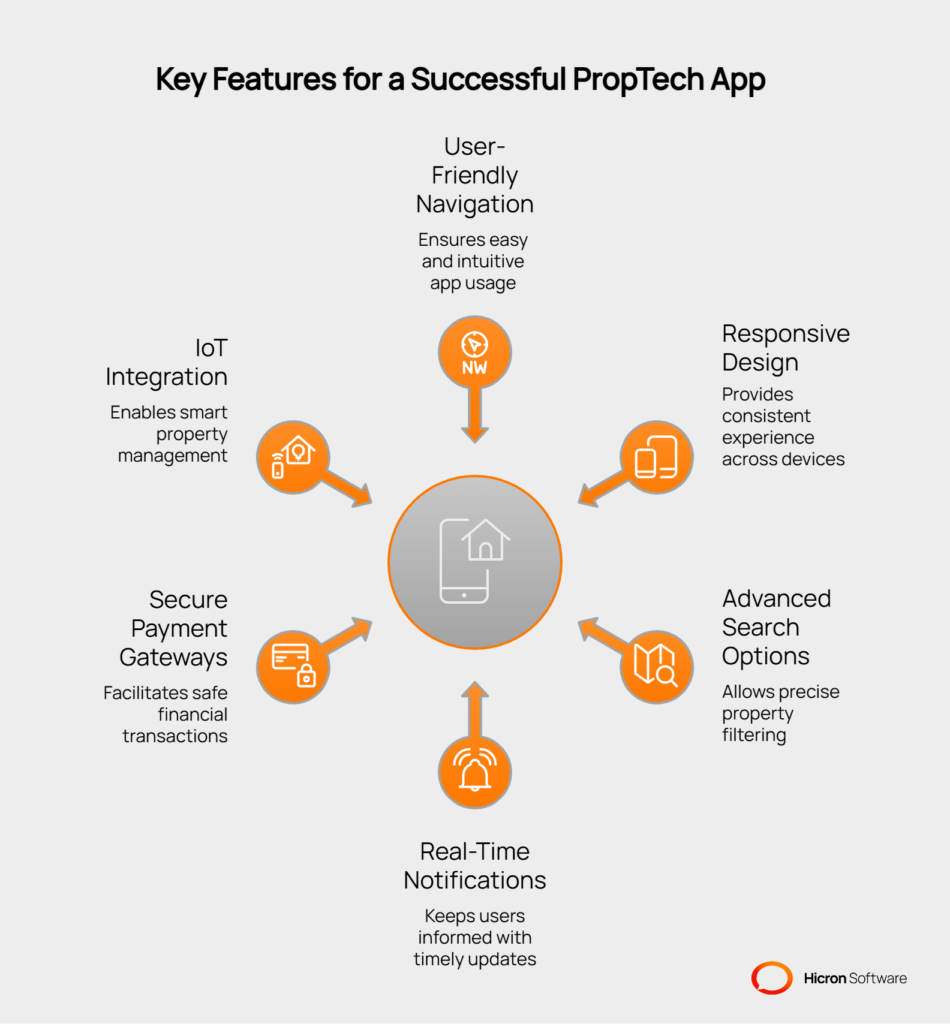
A successful PropTech app must be easy for anyone to use. A clean, intuitive interface ensures that users can find what they need without confusion, whether they are searching for a property or managing a maintenance request.
Responsive design is equally important, guaranteeing a consistent and functional experience across all devices, from smartphones to tablets. This focus on user experience drives adoption and keeps users engaged with the platform.
To serve buyers and renters effectively, a PropTech app needs robust search capabilities. Advanced filtering allows users to narrow down property listings based on specific criteria such as price, location, size, and amenities.
Features like map-based searches and the ability to save favorite properties make the discovery process faster and more personalized. This helps users quickly find properties that match their exact needs, improving customer satisfaction.
Timeliness is critical in the fast-paced real estate market. Real-time notifications keep all parties informed about important updates. Buyers can receive instant alerts about new listings or price drops, while sellers and agents are notified of new inquiries or viewing requests.
For property managers, these alerts can signal new maintenance issues or rent payments. This feature ensures that no one misses a critical opportunity or update.
Integrating secure payment gateways is essential for any PropTech app that handles financial transactions. This feature allows tenants to pay rent, buyers to place deposits, and service fees to be handled directly within the application.
Using trusted and encrypted payment solutions builds confidence and provides a convenient, cashless method for managing real estate finances, streamlining a traditionally cumbersome process.
The future of property management is smart. Integrating with Internet of Things (IoT) devices allows for advanced smart property management. Through the app, managers can remotely control smart locks for property access, adjust thermostats to save energy, and monitor security systems.
This connectivity not only adds a layer of convenience and security but also helps in preventative maintenance by monitoring the health of property systems.
Mobile apps are bringing fresh capabilities to PropTech, offering solutions that go beyond what web platforms typically provide. Their strength lies in harnessing smartphone features, like cameras, GPS, and push notifications, to create interactive and location-aware experiences.
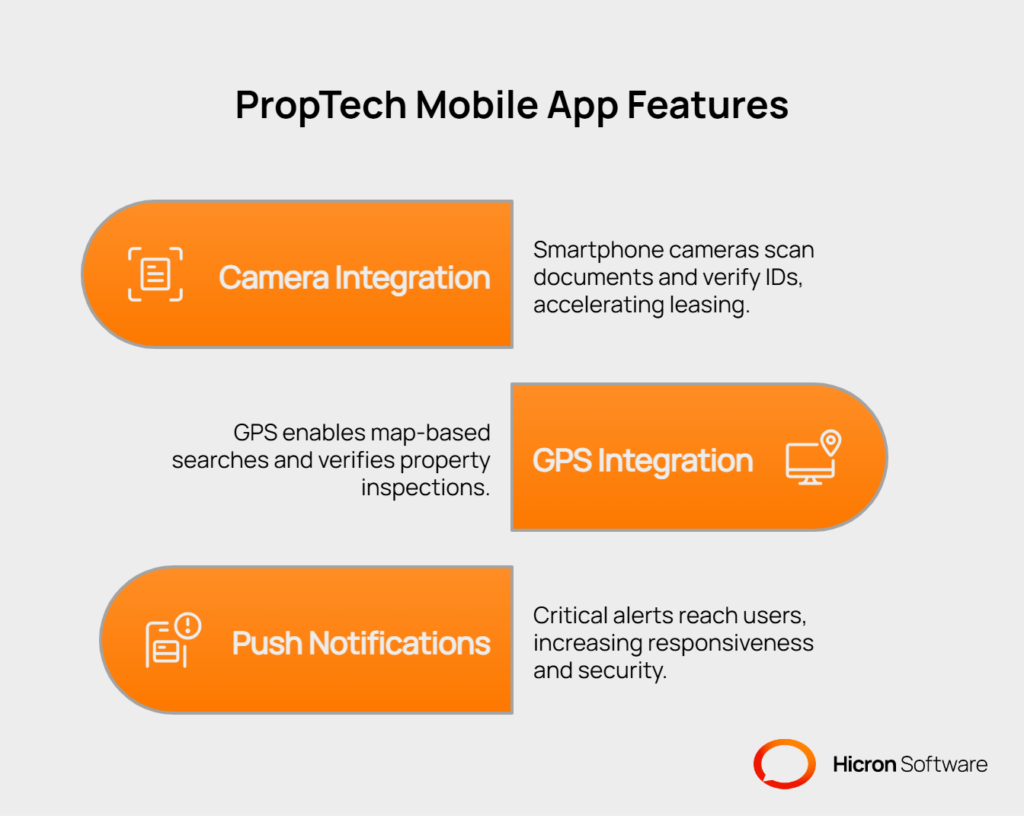
Mobile apps are also making property management more hands-on and immediate.
For example, residents can submit maintenance requests with photos directly through the app, while landlords receive real-time updates and status reports. Smart scheduling features allow for quick coordination of repairs or viewings, reducing downtime and boosting satisfaction for all parties.
By connecting deeply with mobile device tools, PropTech apps support fast, secure digital payments and even biometric authentication, making transactions safer and reducing fraud risk, features that are not always as easily accessed in a web-only environment.
AI and machine learning expand on this by allowing apps to adapt in real time: an app might suggest newly listed properties as soon as they hit the market or optimize rental pricing based on predictive models, all presented instantly to users who have opted in for updates.
These innovations highlight how mobile technology is not just supporting but actively redefining how property professionals and clients interact, manage, and make decisions in real estate.
Selecting the right development partner is a critical decision that directly impacts the success of your PropTech mobile application. The ideal partner brings more than just technical skills; they should function as a strategic ally who understands the real estate market’s unique challenges and opportunities. A thorough evaluation of potential partners is essential to ensure your project’s long-term viability and success.
| Factor | Description | Why it matters? |
| Industry & technical expertise | The partner has a proven portfolio in both PropTech and mobile app development. | Ensures they understand the real estate market’s specific needs and can build features that resonate with users, avoiding common industry pitfalls. |
| Scalability & security | The partner demonstrates the ability to build apps that can grow with the user base and handle sensitive information securely. | Protects user data and ensures the app remains stable and performant as your business expands, maintaining trust and reliability. |
| Emerging technology integration | The firm has experience implementing advanced technologies, including AI, machine learning, and blockchain. | Provides a competitive edge by building a future-proof application with innovative features that enhance user experience and efficiency. |
| Access to PropTech consultants | The partner offers strategic guidance from consultants who specialize in real estate technology. | Aligns business goals with a clear product roadmap, ensuring the final app provides tailored solutions and a strong return on investment. |
When evaluating potential development firms, focus on specific criteria that demonstrate their capability to deliver a high-quality, market-ready product.
Beyond the development team, consider the importance of working with experienced PropTech consultants. These specialists offer tailored guidance that aligns your business goals with the technological possibilities. They can help refine your app’s concept, define a clear product roadmap, and ensure the final solution provides a genuine competitive advantage. Collaborating with consultants ensures that your investment is directed toward features that deliver the impact and return.
The PropTech landscape is in a constant state of evolution, driven by technological advancements that redefine how we interact with property. To stay competitive, it is crucial to understand the emerging trends that are shaping the future of mobile app development in this sector.
These innovations are not just enhancing user convenience; they are creating new efficiencies, improving security, and delivering more immersive experiences for everyone, from homebuyers to property managers.
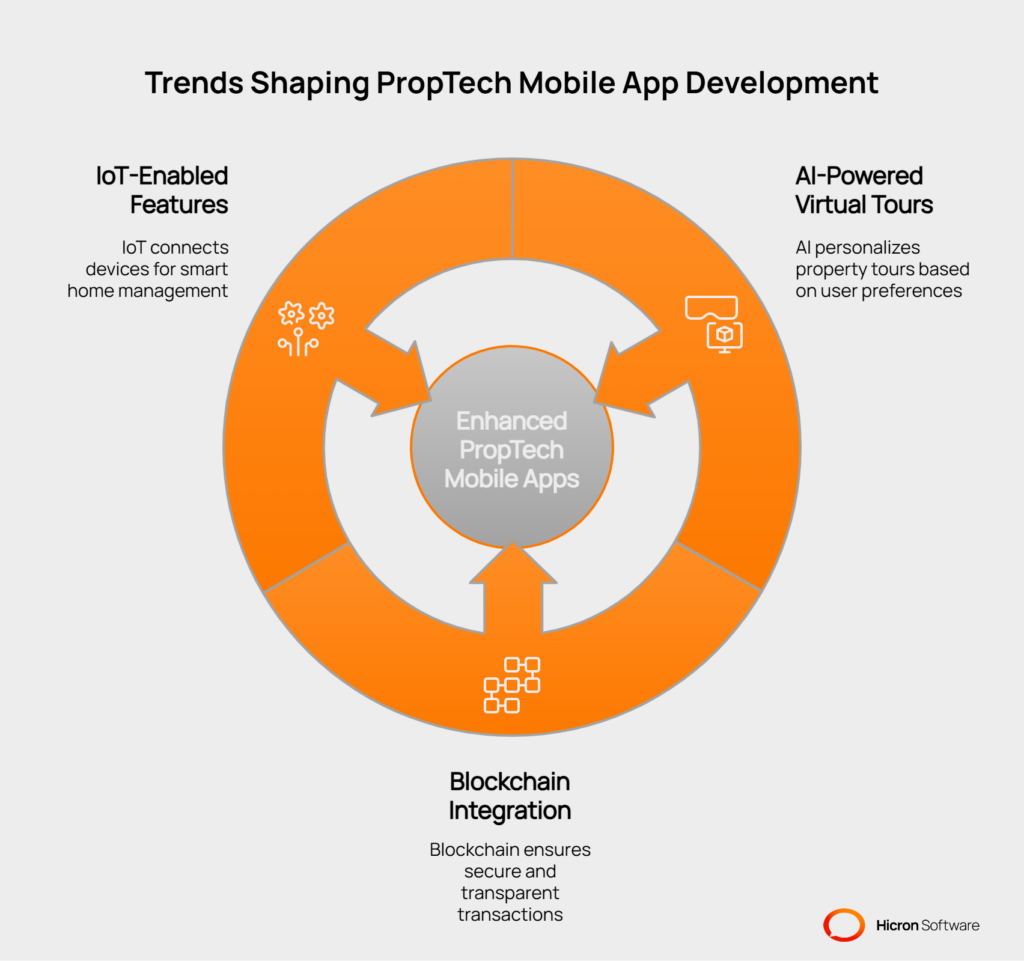
Virtual tours have become a staple in real estate, but the integration of artificial intelligence is taking them to a new level. AI-powered tours offer more than just a 360-degree view; they create interactive and personalized experiences. These systems can learn from user behavior to highlight features of a property that are most relevant to a specific buyer’s interests.
Security is a primary concern in real estate, where large financial transactions and sensitive data are commonplace. Blockchain technology offers a solution by creating a decentralized and unchangeable ledger for all transaction-related activities. Integrating blockchain into PropTech mobile apps can significantly enhance trust and transparency. Key applications include:
The Internet of Things (IoT) is connecting our physical world to the digital realm, and its impact on property management is profound. PropTech apps are increasingly serving as central hubs for controlling and monitoring IoT devices within a property. This provides immense value for both residents and managers.
For example, a property manager can remotely monitor energy usage, detect water leaks before they cause major damage, or grant temporary access to maintenance staff through smart locks. Residents, in turn, can use the same app to control their thermostat, lighting, and home security systems, adding a layer of convenience and efficiency to daily life.
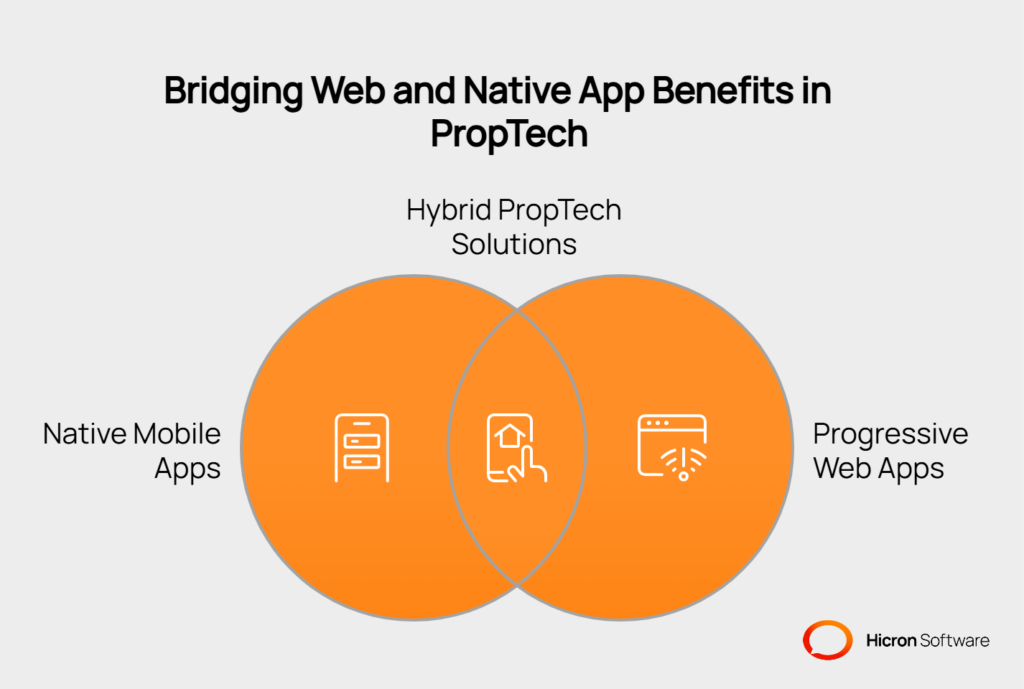
While native mobile apps offer a rich user experience, Progressive Web Apps (PWAs) are gaining traction in PropTech for their unique advantages. PWAs are web applications that look and feel like native mobile apps. They can be accessed through a web browser without needing to be downloaded from an app store. This hybrid approach offers several benefits:
Investing in PropTech mobile app development is essential for driving sustainable growth and remaining competitive in the rapidly evolving real estate industry. Mobile solutions empower real estate professionals to streamline operations, deliver user experiences, and leverage innovations such as AI, IoT, and blockchain for enhanced security and personalization. By adopting PropTech mobile apps, your business can better meet the demands of modern clients while unlocking new opportunities for efficiency and market expansion.
To fully realize these benefits, it’s vital to partner with PropTech development experts who understand both the technology landscape and the unique challenges of the property sector.
Collaborate with experienced professionals to build a secure, scalable, and feature-rich mobile app that positions your business for future success and sets you apart as an industry leader.
Start your journey toward digital transformation and elevate your real estate business with cutting-edge PropTech mobile app development. Contact us for more info about our services!
PropTech mobile app development involves creating applications that use technology to improve how properties are bought, sold, and managed. It modernizes the real estate sector by replacing manual processes with efficient, user-friendly digital solutions. These apps streamline communication, enhance property management, and provide data-driven insights, making transactions faster and more transparent for everyone involved.
PropTech mobile app development offers significant benefits, including improved operational efficiency through on-the-go property management and streamlined communication channels. It enhances customer engagement with features like advanced search filters and real-time notifications. Additionally, these apps provide valuable data analytics, helping businesses make smarter, more profitable decisions based on market trends and user behavior.
Successful PropTech mobile app development should focus on creating a user experience with intuitive navigation and a responsive design. Essential features include advanced property search and filtering, real-time notifications for important updates, and secure payment gateways for handling transactions. Integrating with IoT devices for smart home management is also a key feature for creating a competitive and modern real estate app.
Choosing the right development partner is crucial because they act as a strategic ally who understands the unique needs of the real estate market. An experienced partner with expertise in both PropTech and mobile development ensures your app is scalable, secure, and equipped with features that resonate with users. They provide valuable insights, help you avoid common pitfalls, and align technology with your business goals for a greater return on investment.
The future of PropTech mobile app development is being shaped by several key trends. These include the rise of AI-powered virtual property tours for immersive remote viewings, blockchain integration for secure and transparent transactions, and IoT-enabled features for smart home control. There is also a growing demand for Progressive Web Apps (PWAs), which offer app-like experiences without requiring a download from an app store.
Hicron Software proved to be a trusted partner with unmatched technical expertise, delivering a scalable and user-friendly web application that was pivotal to our successful U.S. market expansion.

Hicron’s contributions have been vital in making our product ready for commercialization. Their commitment to excellence, innovative solutions, and flexible approach were key factors in our successful collaboration.
I wholeheartedly recommend Hicron to any organization seeking a strategic long-term partnership, reliable and skilled partner for their technological needs.

After carefully evaluating suppliers, we decided to try a new approach and start working with a near-shore software house. Cooperation with Hicron Software House was something different, and it turned out to be a great success that brought added value to our company.
With HICRON’s creative ideas and fresh perspective, we reached a new level of our core platform and achieved our business goals.
Many thanks for what you did so far; we are looking forward to more in future!

Hicron is a partner who has provided excellent software development services. Their talented software engineers have a strong focus on collaboration and quality. They have helped us in achieving our goals across our cloud platforms at a good pace, without compromising on the quality of our services. Our partnership is professional and solution-focused!

The IT system supporting the work of retail outlets is the foundation of our business. The ability to optimize and adapt it to the needs of all entities in the PSA Group is of strategic importance and we consider it a step into the future. This project is a huge challenge: not only for us in terms of organization, but also for our partners – including Hicron – in terms of adapting the system to the needs and business models of PSA. Cooperation with Hicron consultants, taking into account their competences in the field of programming and processes specific to the automotive sector, gave us many reasons to be satisfied.