10 Real Estate Software Development Companies in 2026
- February 03
- 9 min

Structured data pools are centralized repositories that gather and organize information from multiple sources into a consistent, standardized format. By consolidating data from across a business portfolio, they enable comprehensive analysis and reporting. This article explains what structured data pools are, the problems they solve, and how they provide portfolio-wide insights for smarter, data-driven decision-making.
Key Takeaways:
Many businesses that manage multiple assets, such as real estate portfolios or construction projects, face a common problem: their data is scattered and inconsistent. Each property, project, or department often uses its own systems and methods for tracking information. Financials might live in one accounting system, operational data in another, and maintenance logs in a third. This creates isolated data silos.
When information is trapped in these silos, it is extremely difficult to get a clear picture of the entire business. Comparing the performance of one asset to another becomes a manual and frustrating task. For example, one property manager might categorize “repairs” differently than another, making it impossible to accurately compare maintenance costs across the portfolio. This lack of standardization prevents true apples-to-apples comparisons.
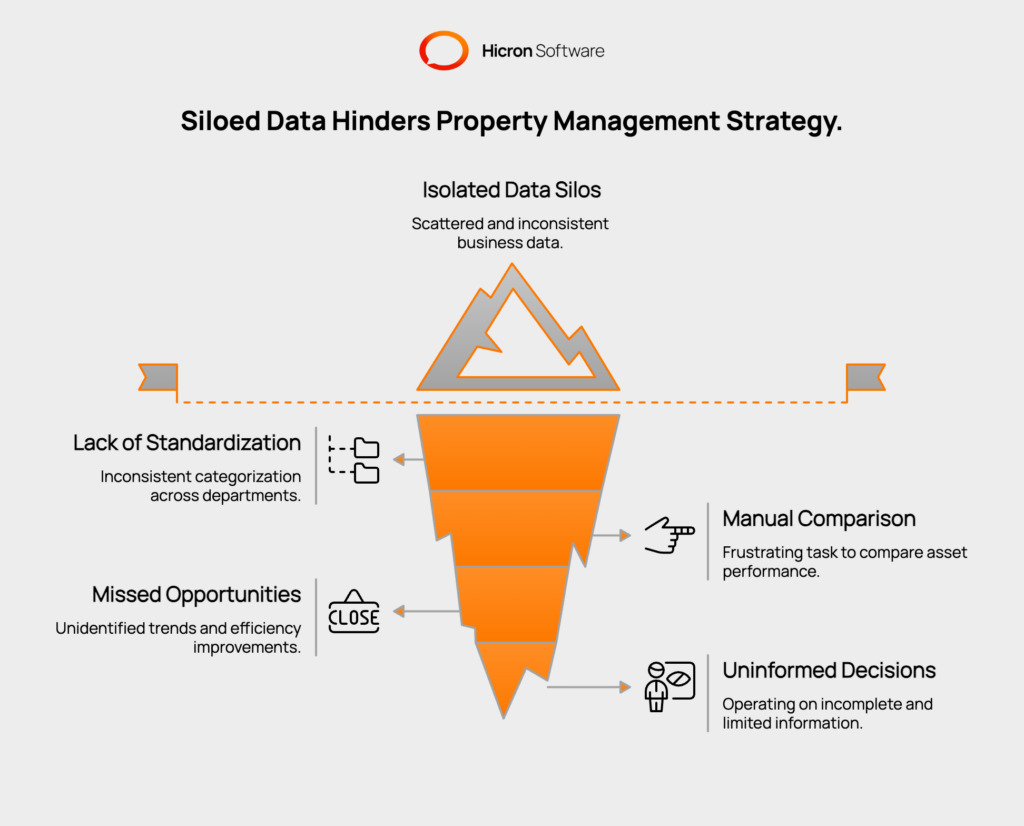
The result is missed opportunities and uninformed decisions. Without a unified view, leaders cannot easily spot portfolio-wide trends, identify underperforming assets, or find opportunities to improve efficiency. The business is forced to operate on incomplete information, which limits its potential for scalable growth and exposes it to unnecessary risks.
Structured data pools offer a powerful solution by creating a single source of truth for all business information. The process begins by connecting to the various systems across the portfolio where data is stored. It then pulls this information into a central repository. The most critical step is data standardization, where the system maps all the varied data points to a uniform chart of accounts or a consistent data model.
For example, if one property lists an expense as “HVAC Repair” and another lists it as “A/C Maintenance,” the structured data pool would map both to a single, standardized category like “Climate Control Systems.” This ensures that all similar data is grouped together, regardless of how it was originally labeled. This process cleans and organizes the information, making it reliable for analysis.
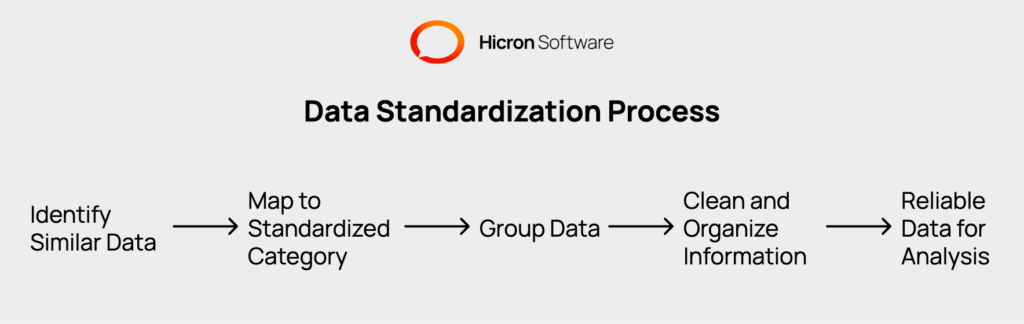
Once the data is standardized, it becomes possible to generate portfolio-wide insights. Analysts and decision-makers can now run reports that compare performance across every asset in the portfolio. They can benchmark properties against each other, analyze spending trends across different regions, or assess the profitability of various service lines. This comprehensive view turns disconnected information into a valuable strategic asset.
Creating a single, reliable source of truth from scattered data sources requires a robust technological foundation. Several key technologies work together to build and maintain structured data pools. These systems handle everything from data extraction and standardization to analysis, turning raw information into a valuable asset for portfolio-wide insights.
|
Technology |
Purpose |
Key Features/Benefits |
|
Data Integration & ETL Tools |
To gather raw data from diverse, disconnected systems and prepare it for analysis. |
Extract: Connects to sources like accounting software via APIs to pull data. Transform: Cleans, standardizes, and maps varied data into a consistent format. Load: Moves the processed data into a central repository. |
|
Data Warehouses & Data Lakes |
To provide a centralized repository for storing consolidated business information. |
Data Warehouse: Stores structured, filtered data optimized for fast analysis and reporting. Data Lake: Stores vast amounts of raw data in its native format, offering flexibility. |
|
Machine Learning & AI |
To automate and enhance the data standardization process, improving accuracy and efficiency. |
Automates the mapping of inconsistent data points to standardized terms. Identifies patterns and anomalies that humans might miss, improving data quality. |
|
BI & Visualization Tools |
To make the structured data accessible and actionable for decision-makers. |
Connects to the data warehouse to create interactive dashboards, reports, and charts. Allows non-technical users to explore data, identify trends, and generate insights. |
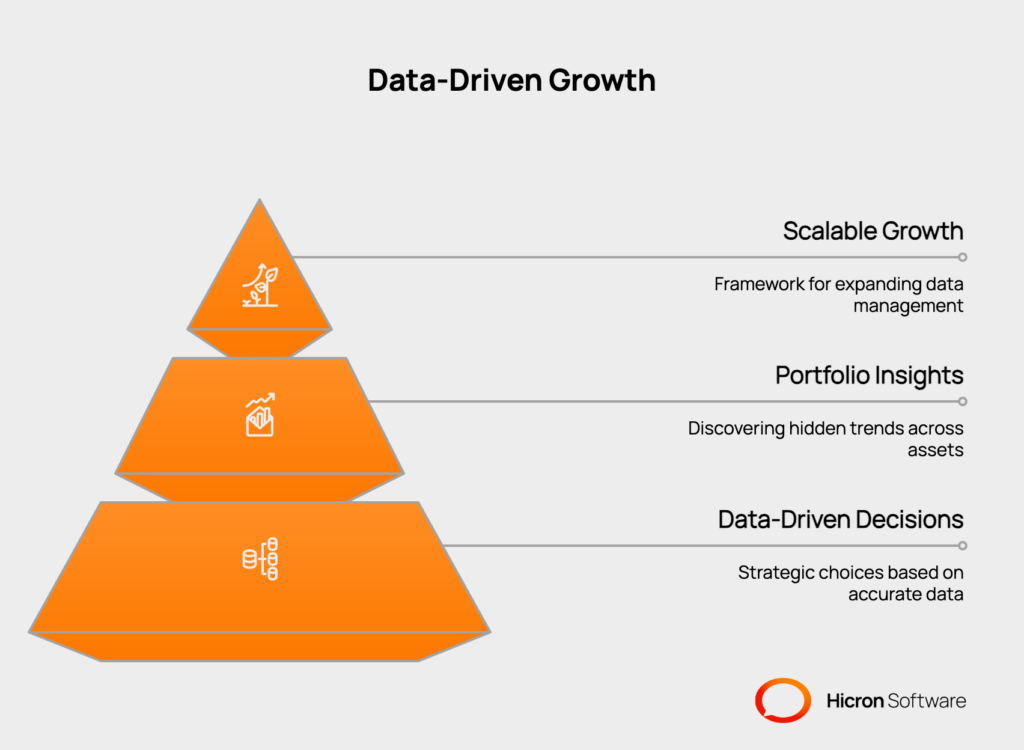
Implementing structured data pools provides clear advantages for any organization looking to leverage its information more effectively. The most direct benefit is the ability to make truly data-driven decisions. With access to clean, consolidated data, leaders can move away from guesswork and intuition. They can base strategic choices on a complete and accurate understanding of business performance, leading to better outcomes.
This approach also reveals deep, portfolio-wide insights that were previously hidden. By analyzing aggregated data, a company might discover that a specific type of maintenance issue is common across multiple properties, pointing to a systemic problem. Or it could identify which marketing channels are most effective across an entire portfolio, allowing for more efficient allocation of resources. These are the kinds of insights that only emerge from a holistic view.
Structured data pools are essential for scalable growth. As a business adds more assets to its portfolio, the complexity of managing data grows exponentially. A structured data pool provides a framework that can easily expand to include new data sources without creating more chaos. It ensures that as the company grows, its ability to analyze information and make smart decisions grows with it.
Structured data pools help organizations turn isolated information into useful insights. By collecting and organizing details from multiple sources, businesses develop a clearer and more complete understanding of their operations. This approach allows teams to improve efficiency, make stronger decisions, and drive better results.
|
Use Case |
Scenario |
Outcome |
|
Optimizing a Multi-Region Residential Portfolio |
A property firm with buildings in different regions has inconsistent operational data, making portfolio-wide analysis difficult. |
By standardizing utility data, the firm identifies underperforming buildings, leading to an energy-saving initiative that reduces costs. Combining lease data with market metrics allows for optimized rent pricing, increasing rental income. |
|
Enhancing Commercial Property Management |
A company managing diverse commercial properties struggles to forecast capital expenditures and relies on reactive maintenance. |
Analyzing maintenance requests reveals patterns, enabling a proactive strategy to predict and budget for future capital expenditures. Linking service response times to lease renewals leads to improved tenant retention strategies. |
|
Commercial Real Estate Portfolio Analysis |
An owner managing a large portfolio of office buildings compares utility consumption, tenant satisfaction, and leasing performance across all properties. |
Identifying best practices from high-performing buildings and applying them broadly helps improve asset value and operational standards. |
|
Construction Project Benchmarking |
A construction firm uses structured data from multiple project sites to analyze costs, timelines, and subcontractor performance. |
Benchmarking this data helps uncover reasons for delays, negotiate better vendor rates, and create more accurate, profitable project bids. |
The practical uses of structured data pools are found across many industries. In commercial real estate, an owner of a large portfolio of office buildings can use a data pool to compare utility consumption, tenant satisfaction scores, and leasing performance across all properties. This allows them to identify best practices from top-performing buildings and apply them to others, improving overall asset value.
In the construction sector, a firm managing multiple projects can use a structured data pool to analyze costs, timelines, and subcontractor performance. By comparing data from different job sites, the company can benchmark its projects, identify common reasons for delays, and negotiate better rates with vendors. This leads to more accurate bids and more profitable projects.
These examples show how centralizing and standardizing information empowers organizations. It allows them to move beyond managing individual assets in isolation and start optimizing the entire portfolio. This strategic approach to data management is a foundation for sustained operational excellence.
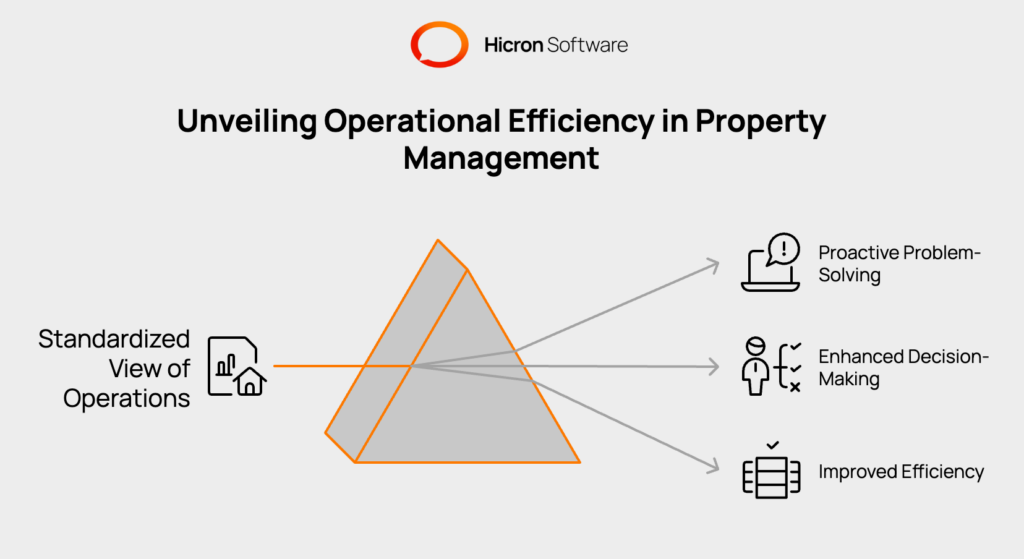
Managing properties across different locations often means dealing with information stored in separate, disconnected systems. This data isolation creates operational blind spots, making it difficult to compare performance, identify inefficiencies, or make informed portfolio-wide decisions. When expense reports, maintenance logs, and leasing data are not uniform, property managers are left with a collection of fragmented facts instead of a clear, comprehensive picture. This approach limits the ability to act strategically and hinders opportunities for improvement and growth.
Structured data pools offer a clear path forward, transforming this raw, jumbled information into a strategic asset. By creating a single, standardized view of all operations, these systems enable property managers to move beyond reactive problem-solving. They provide the foundation for true cross-portfolio analysis, allowing leaders to benchmark assets, uncover hidden trends, and identify best practices that can be applied everywhere. This shift turns data from a simple record-keeping tool into a source of genuine strategic insight.
Adopting a structured data approach is essential for any property management firm that wants to thrive. In a competitive market, relying on incomplete information is no longer a viable option. For firms aiming for scalable growth and smarter decision-making, building a unified data foundation is fundamental. It equips your organization with the clarity needed to optimize operations, improve tenant satisfaction, and drive long-term profitability. Contact us to learn more.

A structured data pool is a centralized system that collects data from many sources and organizes it into a single, standardized format for easier analysis.
While similar, structured data pools are often more focused on creating a unified data model for specific business operations, like property management, to enable direct, apples-to-apples comparisons across a portfolio.
The process requires expertise in data mapping and integration, but modern tools and platforms have made it more accessible. The key is defining a clear and consistent data model from the start.
The primary advantage is gaining portfolio-wide insights. It allows you to see trends and make comparisons that are impossible when your data is fragmented across different systems.
By providing a single, reliable source of truth, it gives leaders the confidence to make strategic decisions based on complete and accurate information rather than on partial data or intuition.
Hicron Software proved to be a trusted partner with unmatched technical expertise, delivering a scalable and user-friendly web application that was pivotal to our successful U.S. market expansion.

Hicron’s contributions have been vital in making our product ready for commercialization. Their commitment to excellence, innovative solutions, and flexible approach were key factors in our successful collaboration.
I wholeheartedly recommend Hicron to any organization seeking a strategic long-term partnership, reliable and skilled partner for their technological needs.

After carefully evaluating suppliers, we decided to try a new approach and start working with a near-shore software house. Cooperation with Hicron Software House was something different, and it turned out to be a great success that brought added value to our company.
With HICRON’s creative ideas and fresh perspective, we reached a new level of our core platform and achieved our business goals.
Many thanks for what you did so far; we are looking forward to more in future!

Hicron is a partner who has provided excellent software development services. Their talented software engineers have a strong focus on collaboration and quality. They have helped us in achieving our goals across our cloud platforms at a good pace, without compromising on the quality of our services. Our partnership is professional and solution-focused!

The IT system supporting the work of retail outlets is the foundation of our business. The ability to optimize and adapt it to the needs of all entities in the PSA Group is of strategic importance and we consider it a step into the future. This project is a huge challenge: not only for us in terms of organization, but also for our partners – including Hicron – in terms of adapting the system to the needs and business models of PSA. Cooperation with Hicron consultants, taking into account their competences in the field of programming and processes specific to the automotive sector, gave us many reasons to be satisfied.