What is PropTech Industry & How it Reshapes the Real Estate Market
- December 06
- 15 min


Commercial real estate data analytics is the practice of using data to guide strategic choices within the commercial real estate industry. This approach helps professionals understand market trends, evaluate property performance, and optimize operations.
This article explains how data analytics, enhanced by artificial intelligence, is changing how property managers and investors approach the market. We will cover the benefits, applications, and future of data and technology in CRE. You will learn how to use data for better decision-making, from improving tenant retention to managing a diverse portfolio. By the end, you will see how integrating these technologies can provide a competitive advantage in the Modern real estate leverages the power of technology to enhance property management. market.
Key Takeaways:
Commercial real estate data analytics involves the collection, examination, and interpretation of property data to derive actionable insights. It transforms raw numbers into a clear picture of market conditions, property performance, and tenant needs. For CRE professionals, this means moving from intuition-based choices to a more precise, data-driven approach. By analyzing everything from historical lease data to current occupancy rates, stakeholders can identify patterns and opportunities that were previously hidden. The goal is to use data to make smarter, more profitable decisions across a portfolio.
The integration of data analytics has become a standard practice for staying competitive. It allows property managers and investors to evaluate the valuation of commercial properties with greater accuracy. This process involves using various data sources, including public records, market reports, and internal performance metrics to provide valuable insights. The power of data analytics lies in its ability to synthesize this information, providing a comprehensive view that supports strategic planning and asset management. Ultimately, real estate data analytics turns information into a strategic advantage.
This analytical process provides the foundation for making informed decisions in a dynamic market. CRE professionals can use robust data to understand everything from micro-level tenant behavior to macro-level market trends. By systematically analyzing property data, teams identify areas for improvement and opportunities for growth. The power of data is in its ability to offer clarity and direction, helping to optimize every facet of managing commercial real estate.
Data analytics is essential in modern commercial real estate because it provides the clarity needed to navigate a complex market. Property managers and investors can use data analytics to gain a deep understanding of market dynamics and make informed decisions. For instance, analyzing historical data on rental prices and occupancy can help forecast future revenue and identify risks. This data-driven approach minimizes guesswork and helps teams allocate resources more effectively.
Furthermore, the use of analytics in commercial real estate extends to improving the tenant experience and identifying future trends in tenant preferences. By collecting and analyzing information about how a tenant uses a space, property managers can proactively address issues and offer amenities that increase satisfaction and retention. This detailed insight allows for the optimization of everything from building operations to marketing campaigns. Data and technology empower CRE professionals to not just react to the market, but to anticipate its movements and identify acquisition targets.
The commercial real estate industry benefits from a systematic approach to data analysis. It allows for a deeper market analysis, helping to spot trends before they become widespread. For any CRE organization, the ability to collect data and extract meaningful insight from it is a core competency. This practice ensures that real estate professionals can underwrite investments effectively. business strategies are based on evidence, not just assumptions.
|
Data Source |
Description |
Use in CRE Analytics |
|
Property Management Software |
Systems used to manage daily operations, including rent rolls, maintenance requests, and tenant information, leverage data to improve efficiency. |
Provides fundamental data on occupancy, lease terms, tenant history, and operational costs for performance analysis. |
|
Public Records |
Government-maintained data including property deeds, tax assessments, zoning regulations, and sales history. |
Used for property valuation, due diligence, ownership verification, and understanding local market regulations. |
|
Market Data Providers |
Third-party services that aggregate and sell data on listings, sales comps, rental rates, and market trends provide valuable insights for decision-making. |
Offers competitive intelligence, supports comparative market analysis, and helps in forecasting supply and demand. |
|
Economic Data |
Macroeconomic indicators such as employment rates, GDP growth, and interest rates from government or financial institutions. |
Helps in assessing market health, predicting investment risk, and understanding the broader economic context for a property can help predict future trends. |
|
Demographic Data |
Information on population trends, income levels, age distribution, and consumer behavior from census or private sources. |
Used to evaluate market demand, identify target tenant profiles, and inform location-based investment decisions. |
|
IoT and Building Sensors |
Devices within a property that collect real-time data on energy usage, foot traffic, and equipment performance. |
Enables optimization of building operations, predictive maintenance, and enhances the tenant experience through smart features. |
Artificial intelligence (AI) is profoundly changing commercial real estate data analytics by introducing automation and predictive capabilities. AI algorithms can process large volumes of data from various sources far more quickly and accurately than human analysis allows. For example, machine learning models can analyze market trends, demographic shifts, and economic indicators to predict future property values and market demand. This allows investors to identify promising opportunities before they become obvious to the broader market.
The impact of AI is also felt in day-to-day property management. AI-powered systems can optimize building operations by adjusting energy use based on occupancy patterns or predicting when equipment will need maintenance. This not only reduces operational costs but also improves the environment for every tenant. The combination of AI and robust data gives CRE professionals the tools to enhance decision making and gain a competitive edge. AI helps teams identify subtle patterns in tenant behavior, leveraging data to create more effective retention strategies and a better-managed portfolio.
The use of AI in data analytics provides a level of insight that was previously unattainable. It enables the processing of unstructured data, such as tenant feedback from surveys or social media, and turns it into structured, actionable information. This advanced analytical capability means CRE professionals can gain a more complete picture of their assets and the market. The fusion of AI with traditional data analysis is setting a new standard for the industry.
The commercial real estate landscape is aiming for a precision-focused, data-driven model to stay ahead in this competitive market. For modern firms, data analytics is a strategic asset that unlocks value across the entire property lifecycle.
One of the primary benefits of data analytics in commercial real estate is the ability to make more informed decisions. By analyzing market data, CRE professionals, owners and operators can better evaluate potential investments and understand the risks associated with them. Advanced analytics provides a deeper insight into property valuation, helping investors and property managers optimize their portfolio for better returns. This leads to more confident decision making, backed by solid evidence rather than speculation.
Data analytics also directly contributes to optimizing operations. For instance, by monitoring data from sensors within a commercial office building, property managers can adjust heating and lighting systems in real time to reduce energy costs. Analytics reveals where inefficiencies exist in building operations, allowing teams to make targeted improvements. This not only enhances the building’s financial performance but also supports sustainability goals. A data-driven approach ensures that commercial properties are run as efficiently as possible, reducing operating costs.
Finally, transaction data analytics offers a way to improve the tenant experience. Understanding tenant behavior and preferences through data analysis enables property managers to offer personalized services and amenities. For example, data might show that tenants in a particular building frequently work late, suggesting a need for extended hours for a cafe or gym. This focus on the tenant helps increase satisfaction and loyalty, which are crucial for maintaining high occupancy rates and a stable income stream.
Property teams can use data analytics to gain a detailed understanding of the tenant lifecycle, from initial lease to renewal. By analyzing demographic data, co-tenancy and tenant behavior patterns, managers can identify what makes a tenant likely to stay or leave. For instance, tracking maintenance requests can highlight recurring issues in a building that need a permanent solution. Addressing these problems proactively shows tenants their concerns are valued, which is a key factor in retention.
Furthermore, CRE analytics allows for the creation of highly targeted marketing campaigns and communication strategies based on data-driven insights and occupancy trends. Instead of generic newsletters, property managers can send customized information to a specific tenant based on their business type or lease terms. Analytics helps segment the tenant population, allowing for more personal and relevant interactions. This tailored approach builds a stronger relationship between the landlord and the tenant, fostering loyalty and increasing the likelihood of lease renewals.
This data-driven strategy directly impacts a property’s bottom line. High tenant turnover is expensive, involving costs for marketing, vacant periods, and preparing the space for a new occupant. By using data to improve retention, property managers can reduce these costs and ensure a more consistent revenue flow while conducting risk assessment. The insight gained from data analysis helps property managers make smarter choices that benefit both the tenant and the property owner.
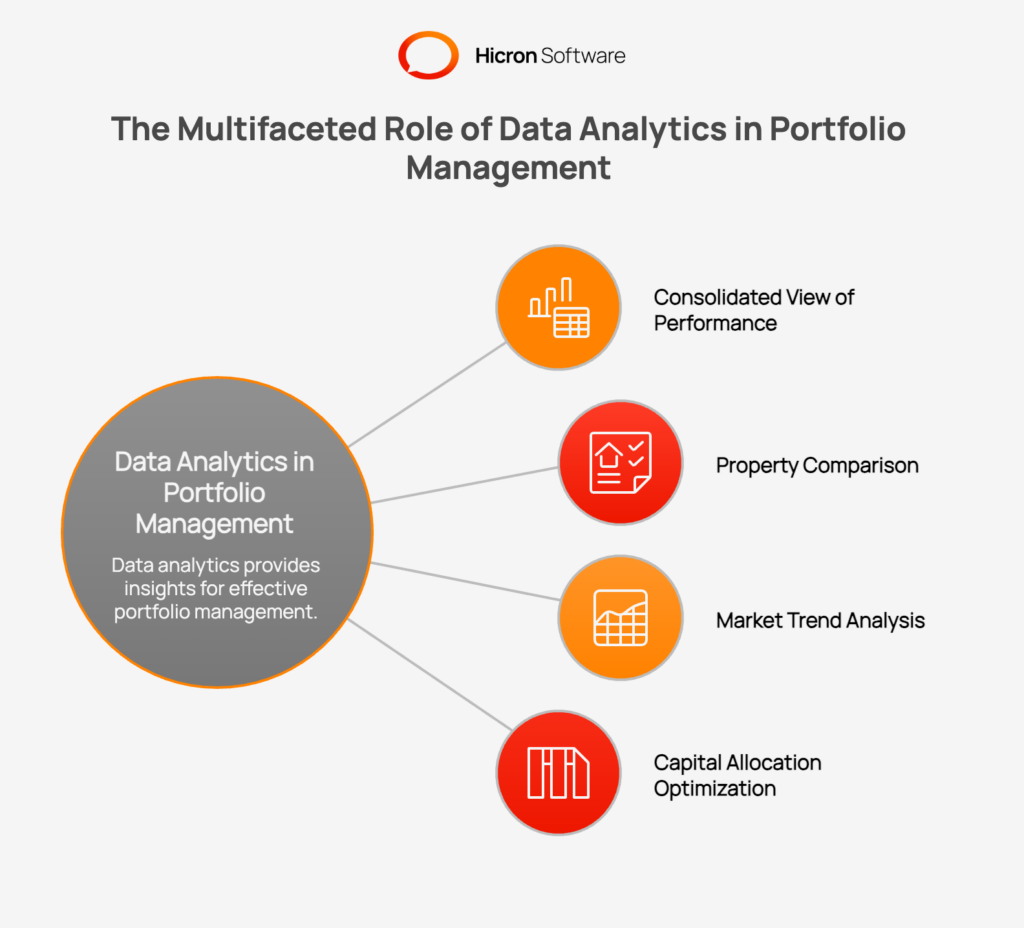
Data analytics is crucial for effective portfolio management in commercial real estate. It allows investors and asset managers to get a consolidated view of performance across all their commercial properties. Instead of looking at each property in isolation, real estate data and analytics can provide a comprehensive overview. property in isolation, analytics platforms can aggregate property data to provide a holistic insight into the entire portfolio. This makes it easier to evaluate which assets are performing well and which are underperforming, enabling strategic decisions about where to invest further or when to sell.
For CRE professionals managing a diverse portfolio, data analytics provides the tools to compare properties using a consistent metric, enabling better decisions and unlocking new opportunities. It helps in understanding market trends across different regions and asset classes, from commercial office spaces to retail centers. By analyzing large volumes of data, including economic indicators and demographic shifts, portfolio managers can forecast future performance and adjust their strategies accordingly. This proactive approach to portfolio management is essential for long-term growth and risk mitigation.
The integration of data analytics helps optimize the allocation of capital. For example, if data analysis shows a rising demand for smaller, flexible office spaces in a certain city, a portfolio manager might decide to invest in converting a larger floor plate to meet that market demand. These actionable insights, derived from data-driven insights, are crucial for real estate professionals. real estate data analytics, ensure that investment decisions are aligned with current market conditions and future opportunities.
Analytics tools enhance decision making by transforming raw data into clear, actionable insights. These platforms and analytics software are designed to process complex information from multiple data sources, presenting it in an easy-to-understand format like dashboards and reports. This allows CRE professionals to quickly assess key performance indicators such as occupancy rates, rental income, and operating expenses. With this information readily available, making timely and data-driven decisions becomes much simpler.
For example, when considering a new lease agreement, a property manager can use analytics tools to run a comparative market analysis. This helps to set a competitive rental rate that aligns with current market conditions, maximizing revenue while attracting a quality tenant. The tools can also model different lease scenarios to predict their financial impact on the property, helping to inform decisions and unlock future potential. This level of data analysis ensures that every decision is financially sound.
Advanced data analytics capabilities also empower teams to look beyond historical data and toward future possibilities. Predictive analytics, a component of many modern tools, can forecast trends like tenant turnover or rising operational costs. This foresight allows managers to take preemptive action, such as launching a tenant retention program or negotiating new service contracts. Analytics can help investors and managers not just respond to the market but actively shape their outcomes within it.
Data analytics plays a key role in helping to optimize building operations, leading to cost savings and improved efficiency. By connecting to building management systems and Internet of Things (IoT) devices, analytics platforms can collect real-time data on everything from energy consumption to elevator usage. Analyzing this data helps property managers identify patterns and anomalies, such as an HVAC system running at full capacity in an unoccupied area. This insight allows for immediate adjustments that reduce waste and lower utility bills.
This data-driven approach extends to maintenance as well. Instead of following a fixed schedule, property managers can use predictive maintenance models powered by AI. These models analyze data from equipment sensors to predict when a component is likely to fail. Maintenance can then be scheduled just before the failure occurs, preventing costly emergency repairs and minimizing downtime that could disrupt a tenant. This optimizes maintenance budgets and enhances the reliability of building systems.
Ultimately, optimizing building operations through data contributes to a better tenant experience and reduces operating costs. A well-maintained building with comfortable temperatures and reliable services is more attractive to current and prospective tenants. Using data to fine-tune building operations demonstrates a commitment to quality and modern management practices. It ensures that the property is not only cost-effective to run but also a desirable place to work.
In commercial real estate data analytics, certain key metrics are essential for measuring performance and guiding strategy. Occupancy rates are one of the most fundamental, indicating the percentage of leased space in a property. A low occupancy rate can signal issues with marketing, pricing, or the property itself. Tracking this metric over time helps property managers gauge the health of their asset and the effectiveness of their leasing efforts.
Another area of focus is the tenant. Metrics like lease renewal rates and tenant satisfaction scores provide direct feedback on how well the property is meeting the needs of its occupants. Analyzing the reasons behind non-renewals can provide valuable, actionable insight into areas needing improvement. Similarly, demographic information about tenants can help tailor amenities and services to better suit the occupancy trends of the building, increasing overall satisfaction.
Financial metrics are also central to CRE data analytics. Net operating income (NOI), cash-on-cash return, and capitalization rates are used to evaluate the profitability of commercial properties. Advanced analytics platforms can automate the calculation of these metrics, allowing for real-time performance tracking. By monitoring these financial indicators, property managers and investors can make smart decisions to maximize their return on investment.
|
Metric |
Definition |
Importance |
|
Occupancy Rates |
The percentage of leased space in a property compared to total leasable space. |
Indicates overall property performance and the effectiveness of leasing strategies; low rates signal potential issues. |
|
Lease Renewal Rates |
The percentage of existing tenants who choose to renew their leases upon expiration. |
Directly reflects tenant satisfaction and the success of retention efforts, impacting long-term revenue stability. |
|
Tenant Satisfaction Scores |
A qualitative metric derived from surveys and feedback regarding the tenant experience. |
Helps identify service gaps and areas for improvement, which is crucial for maintaining high retention rates. |
|
Net Operating Income (NOI) |
Total revenue from a property minus all necessary operating expenses. |
A fundamental measure of a property’s profitability and cash flow before financing and tax costs. |
|
Capitalization Rate (Cap Rate) |
The ratio of Net Operating Income (NOI) to the property’s current asset value serves as a benchmark for evaluating investment performance. It is one of the key metrics in CRE intelligence. |
Essential for assessing the return on investment and comparing the potential profitability of different properties. |
|
Cash-on-Cash Return |
The annual pre-tax cash flow divided by the total cash invested. |
Measures the annual return the investor made on the property in relation to the amount of mortgage paid during the same year, helping to inform decisions and unlock potential value. |
Developing and implementing custom analytics software for commercial real estate begins with a clear understanding of business objectives. The first step is to identify what problems the software needs to solve. This could be anything from automating rent collection to providing advanced market analysis, which is essential for real estate professionals. Involving key stakeholders, including property managers and asset managers, in this initial phase ensures that the final product will meet their specific needs.
Once the goals are defined, the next stage is data integration. A powerful analytics solution needs to pull data from various sources, such as real estate data and analytics. property management software, accounting systems, and external market data providers. The development process must focus on creating a unified data model that allows for analysis across these different datasets. This often involves working with experts in data integration to ensure the data is clean, consistent, and reliable.
The final phase is implementation and adoption of the new workflow. A successful rollout requires more than just installing the analytics software. It involves training CRE professionals on how to use the new tools and interpret the valuable insights they provide to stay ahead in this competitive field. Change management is key, as it encourages the team to embrace a more data-driven culture. Starting with a pilot program at a few properties can help refine the software and demonstrate its value before a full portfolio-wide implementation. Utilizing AI and machine learning capabilities can further enhance the software, providing predictive insights that give the organization a competitive edge.
|
Step |
Description |
Key Considerations for leveraging data analytics support in decision-making processes to stay ahead in this competitive environment. |
|
Define Objectives |
Using data across various departments, identify business goals and the specific problems the software needs to solve. |
Involve key stakeholders, such as property and asset managers, to ensure the software aligns with their needs. |
|
Data Integration |
Combine data from multiple sources like property management software and market data providers into a single, unified model. |
Focus on ensuring the data is clean, consistent, and reliable to support accurate analysis. |
|
Develop Features |
Build the core analytics tools and functionalities tailored to specific commercial real estate requirements. |
Include capabilities like predictive analytics and AI to generate advanced, actionable insights. |
|
Pilot Implementation |
Test the software with a small, focused user group or on a select number of properties. |
Use this phase to gather user feedback, identify bugs, and refine the solution before a wider release of the workflow. Pilot implementation of data analytics support is essential for success to stay ahead in this competitive landscape. |
|
Full Rollout |
Deploy the finished software across the entire portfolio for all intended users. |
Provide comprehensive training and support to encourage user adoption and ensure effective, organization-wide use. |
The future of commercial real estate data analytics is tied to the continued advancement of AI and machine learning. These technologies are making it possible to move from descriptive analytics, which explains what happened, to predictive and prescriptive analytics used in commercial real estate. Predictive analytics is a key area of development, as it forecasts future market trends, tenant behavior, and property performance with increasing accuracy. This allows CRE professionals to make more proactive and strategic decisions.
Real-time data will also become more prevalent. With the expansion of future trends in the industry, we can better anticipate market shifts. IoT devices in commercial properties, managers will have access to a constant stream of information about building operations and usage. This will enable dynamic adjustments to everything from energy use to space allocation. The ability to collect data and act on it instantly will become a differentiator in a competitive market.
Ultimately, the future of commercial real estate will see a deeper integration of data and technology into every aspect of the business. The organizations that successfully use data will be better positioned to optimize their portfolios, enhance tenant experiences, and navigate market fluctuations. As data becomes more accessible and analytics capabilities become more powerful, the The commercial real estate industry will continue to transform through the integration of real estate data and analytics., becoming more efficient, transparent, and responsive to the needs of the market.
To succeed in today’s commercial real estate market, embracing a data-driven approach is no longer optional. Data analytics, amplified by AI, provides the essential insight needed to optimize operations, improve tenant retention, and make informed investment decisions. From managing a portfolio to fine-tuning building operations, analytics offers a clear path to greater efficiency and profitability. The future belongs to those who can effectively use data to their advantage.
If you are ready to implement powerful software solutions to drive your commercial real estate operations are essential for leveraging cre intelligence. business forward, our experts can help. We specialize in developing custom analytics platforms tailored to the unique challenges of the CRE industry. Contact us today to learn how our software experts can help you build the tools you need to succeed.
The first step is to define your business goals and identify the key questions you want data to answer. This will guide your strategy for data collection and analysis.
It helps by providing insights into tenant behavior, satisfaction levels, and preferences, allowing property managers to address issues proactively and offer personalized services that encourage lease renewals.
Yes, many scalable analytics platforms and tools are available that can provide valuable insights for businesses of all sizes, helping them compete more effectively in the real estate market.
Key data includes property financials (rent, expenses), occupancy and lease information, tenant demographics, and market data (comparable sales, rental rates).
AI is used to automate data analysis, predict future trends through machine learning, optimize building systems, and provide actionable insights for better decision-making.
Hicron Software proved to be a trusted partner with unmatched technical expertise, delivering a scalable and user-friendly web application that was pivotal to our successful U.S. market expansion.

Hicron’s contributions have been vital in making our product ready for commercialization. Their commitment to excellence, innovative solutions, and flexible approach were key factors in our successful collaboration.
I wholeheartedly recommend Hicron to any organization seeking a strategic long-term partnership, reliable and skilled partner for their technological needs.

After carefully evaluating suppliers, we decided to try a new approach and start working with a near-shore software house. Cooperation with Hicron Software House was something different, and it turned out to be a great success that brought added value to our company.
With HICRON’s creative ideas and fresh perspective, we reached a new level of our core platform and achieved our business goals.
Many thanks for what you did so far; we are looking forward to more in future!

Hicron is a partner who has provided excellent software development services. Their talented software engineers have a strong focus on collaboration and quality. They have helped us in achieving our goals across our cloud platforms at a good pace, without compromising on the quality of our services. Our partnership is professional and solution-focused!

The IT system supporting the work of retail outlets is the foundation of our business. The ability to optimize and adapt it to the needs of all entities in the PSA Group is of strategic importance and we consider it a step into the future. This project is a huge challenge: not only for us in terms of organization, but also for our partners – including Hicron – in terms of adapting the system to the needs and business models of PSA. Cooperation with Hicron consultants, taking into account their competences in the field of programming and processes specific to the automotive sector, gave us many reasons to be satisfied.