AI Business Process Automation: The New Standard for Business
- November 13
- 15 min



AI consulting for small businesses involves partnering with experts to identify, design, and implement artificial intelligence technologies that improve operations and drive growth. A professional consulting service helps organizations move beyond the hype of AI tools and establish practical, high-impact strategies tailored to their specific needs. By analyzing current workflows and data infrastructure, an AI consultant identifies exactly where automation and machine learning can generate the most value.
For many owners, the idea of adopting sophisticated tech feels overwhelming. You might worry about costs, technical complexity, or disrupting your team. However, expert guidance ensures that you integrate AI in manageable steps that align with your budget and long-term vision. The goal is not just to use new tech, but to solve existing business problems more effectively. Whether you run a local retail store or a growing agency, the right AI strategy can create efficiencies that were previously available only to large corporations.
Key Takeaways:
Many small business owners assume that artificial intelligence is too expensive or complex for their operations. This misconception leaves them vulnerable as competitors start to use AI to work faster and smarter. AI consulting for small businesses bridges this gap by providing access to the same powerful insights and automation capabilities that industry giants use. Without expert guidance, you risk investing in the wrong software or failing to integrate tools effectively, which wastes time and money.
An experienced AI consultant acts as a partner who understands both technology and commerce. They assess your unique market position and identify where AI technologies can provide the quickest return on investment. By helping small businesses adopt these tools early, consultants ensure you stay relevant. If your competitors can process orders instantly or predict market trends using data, you need similar capabilities to maintain your market share.
The complexity of the current AI landscape requires specialized knowledge to navigate safely. There are thousands of AI systems available, and choosing the right one is difficult without technical expertise. Consulting helps you avoid costly experiments. Instead of guessing which tools might work, you get a clear roadmap that focuses on practical applications. This strategic support allows you to focus on running your company while experts handle the technical transition.
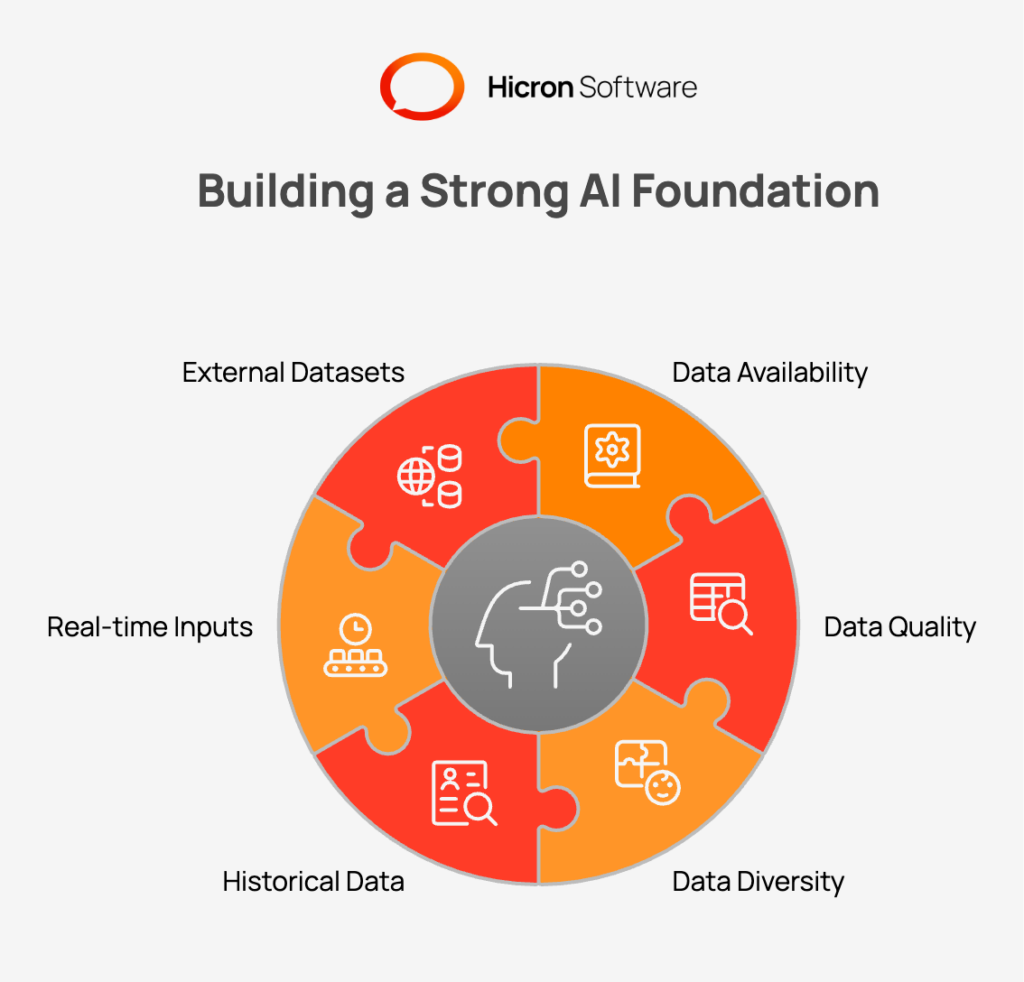
One of the primary benefits of AI is the reduction in operational costs. Small businesses and startups often operate with limited resources, making efficiency critical. How does an AI consultant maximize the benefits of AI? AI consultants help you identify repetitive, low-value tasks that software can handle, freeing up your human talent for creative and strategic work. When you automate these processes, you lower labor costs and reduce the risk of human error, which directly boosts your bottom line.
Beyond cost savings, consulting services help small businesses improve customer experiences. Personalization is key to winning loyalty today. An AI solution can analyze customer behavior patterns to recommend products, tailor marketing messages, and provide 24/7 support through intelligent chatbots. This level of service was once impossible for small teams to maintain around the clock. Now, with the right AI implementation, you can offer immediate responses and personalized attention that rivals major brands.
Data-driven decision-making is another area where businesses of all sizes see massive improvements. You likely have data sitting in your sales records, website analytics, and customer feedback that you aren’t fully using. AI systems can process this information to reveal trends and opportunities you might miss. An AI consultant helps you build AI models that turn raw data into actionable insights, allowing you to make smarter moves regarding inventory, pricing, and expansion.
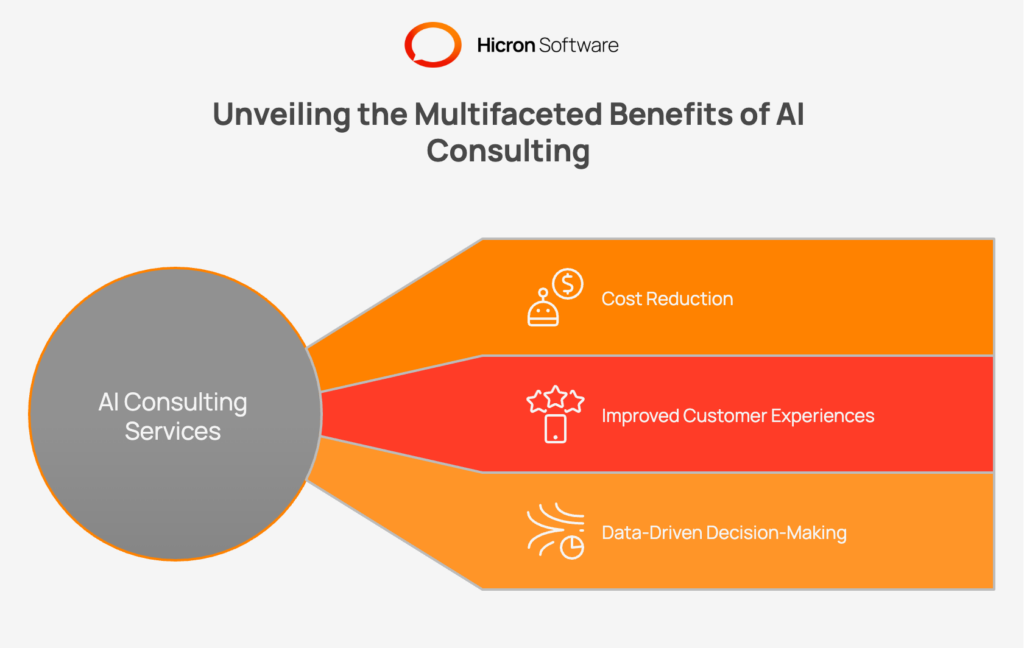
The foundation for implementing AI in small businesses lies in the availability and quality of data. AI systems rely on vast datasets to learn, adapt, and deliver meaningful insights. These datasets serve as the backbone for AI functionality, enabling it to identify patterns, make predictions, and automate processes effectively. The more diverse and comprehensive the data, the better the AI can perform, ensuring accurate and reliable outcomes.
For small businesses, this means prioritizing data readiness as a critical first step. Clean, well-organized, and representative data is essential for training AI models and aligning them with specific business goals. Additionally, leveraging historical data, real-time inputs, and external datasets can enhance the AI’s ability to provide actionable insights and drive decision-making. By focusing on building a strong data foundation, small businesses can maximize the value of AI solutions and ensure their successful implementation.
Adopting the right AI technologies can help your business address specific needs and open new opportunities that were previously unattainable. The main types of AI solutions available for small businesses include flexible, cost-effective cloud-based systems and secure, customizable on-premises setups. By learning about these options, you can make choices that align with your goals and help your business move forward.
Cloud-based AI technologies are hosted on external servers and accessed via the internet. They are cost-effective, scalable, and require minimal infrastructure, making them ideal for small businesses.
|
Cloud-Based AI Technology |
Description |
Use Case |
|
Machine Learning as a Service (MLaaS) |
Cloud platforms like AWS SageMaker, Google Cloud AI, and Microsoft Azure Machine Learning provide pre-built machine learning models and tools for training custom models. |
Predictive analytics, customer segmentation, and demand forecasting. |
|
Natural Language Processing (NLP) APIs |
Cloud-based NLP services like Google Cloud Natural Language, IBM Watson NLP, and OpenAI APIs enable text analysis, sentiment detection, and language translation. |
Automating customer feedback analysis and content generation. |
|
Generative AI Platforms |
Tools like OpenAI’s GPT models, Jasper AI, and DALL-E are cloud-based generative AI technologies for creating text, images, and even code. |
Content creation, marketing materials, and product design. |
|
AI-Powered CRM and Marketing Platforms |
Cloud-based CRMs like Salesforce Einstein and HubSpot use AI for lead scoring, customer insights, and personalized marketing. |
Enhancing customer relationship management and automating marketing campaigns. |
|
AI-Powered Data Analytics Platforms |
Platforms like Tableau with AI integrations or Google BigQuery ML provide advanced data visualization and analytics powered by machine learning. |
Business intelligence and decision-making. |
|
AI Cybersecurity Solutions |
Cloud-based AI tools like Darktrace and CrowdStrike use machine learning to detect and prevent cyber threats. |
Protecting sensitive data and ensuring compliance. |
On-premises AI technologies are deployed locally on a business’s own servers or hardware. They offer greater control, data security, and customization but require more upfront investment and technical expertise.
|
On-Premises AI Technology |
Description |
Use Case |
|
Edge AI Devices |
AI technologies embedded in hardware devices, such as NVIDIA Jetson or Intel Movidius, enable real-time processing at the edge without relying on cloud connectivity. |
Real-time video analytics, IoT device management, and robotics. |
|
Custom Machine Learning Models |
Businesses can develop and deploy their own machine learning models using frameworks like TensorFlow, PyTorch, or Scikit-learn on local servers. |
Proprietary data analysis and predictive modeling. |
|
AI-Powered ERP Systems |
On-premises enterprise resource planning (ERP) systems like SAP S/4HANA with AI capabilities provide automation and insights for business operations. |
Inventory management, supply chain optimization, and financial planning. |
|
AI for Manufacturing and Automation |
AI technologies like Siemens MindSphere or Rockwell Automation are deployed on-premises to optimize manufacturing processes and automate production lines. |
Quality control, predictive maintenance, and process optimization. |
|
AI-Powered Data Warehousing |
On-premises data warehousing solutions with AI capabilities, such as Snowflake (hybrid) or Oracle Exadata, enable secure and efficient data storage and analysis. |
Data-driven decision-making and compliance with strict data privacy regulations. |
|
AI Cybersecurity Appliances |
On-premises AI-powered security solutions like Fortinet or Palo Alto Networks use machine learning to monitor and protect local networks. |
Preventing unauthorized access and securing sensitive business data. |
|
On-Premises Generative AI Systems |
Deploying GPT models on local servers allows businesses to leverage advanced natural language processing capabilities while maintaining full control over their data. |
Real-time customer support, document summarization, and proprietary content generation. |
Cloud-based and on-premises AI solutions differ in several key areas.
|
Area |
Cloud-Based AI |
On-Premises AI |
|
Cost |
Subscription-based, lower upfront cost. |
Higher upfront cost for hardware and setup. |
|
Scalability |
Easily scalable as business grows. |
Limited by local hardware capacity. |
|
Data Security |
Relies on third-party providers for security. |
Greater control over sensitive data. |
|
Maintenance |
Managed by the cloud provider. |
Requires in-house IT expertise for maintenance. |
|
Customization |
Limited customization options. |
Fully customizable to specific business needs. |
|
Performance |
Dependent on internet connectivity. |
Real-time processing without latency. |
An AI Solutions Architect plays a pivotal role in your transformation. They are not just developers; they are strategists who bridge the gap between technical possibilities and business objectives. When you hire a consulting service, this architect designs the framework for how AI systems will interact with your existing technology. They ensure that the new AI solution doesn’t just work in isolation but integrates well with your current CRM, ERP, or marketing software.
The architect looks at your long-term business goals to ensure the AI infrastructure is scalable. You might start with a simple chatbot, but your roadmap may include predictive analytics next year. An AI Solutions Architect plans for this growth so you don’t have to tear down and rebuild your systems later. They assess technical feasibility and select the right AI technologies that fit your budget and technical maturity.
Furthermore, they manage the technical risks associated with AI development. This includes ensuring data security protocols are met and that the system is reliable. For small businesses, a failed IT project can be devastating. The architect mitigates this risk by rigorously testing solutions and overseeing the technical deployment. Their expertise ensures that the artificial intelligence you deploy is robust, secure, and capable of delivering the promised results.
Creating a tailored AI strategy begins with a deep dive into your current operations. We don’t believe in generic advice; we analyze your specific pain points.
Step1: Initial Assessment and Audit
Step 2: Defining Success Metrics
Step 3: Roadmap Development and Implementation
Our process starts with an audit of your data readiness and technical infrastructure. We identify where bottlenecks exist and where an AI consultant can introduce automation to clear them. This assessment phase is critical to ensure we build AI solutions that solve real problems rather than just adding tech for tech’s sake.
Once we understand your needs, we define clear metrics for success. You need to know exactly how the investment will pay off. We set benchmarks for time saved, revenue increased, or costs reduced. This focus on ROI ensures that every project we propose has a clear business justification. We help small businesses prioritize projects that offer the highest value with the lowest risk, ensuring quick wins that build momentum for further adoption.
The final piece of the strategy involves roadmap development. We lay out a timeline for implementation that minimizes disruption to your daily business operations. We also include plans for training your team, because the best AI systems are useless if your staff doesn’t know how to use them. By combining technical implementation with change management, we ensure your business creates sustainable value from the investment.
Training an AI solution is a critical step in ensuring its effectiveness and alignment with your business needs. Here’s what you need to know:
By focusing on these considerations, you can ensure your AI solution is well-trained, effective, and aligned with your business goals.
Generative AI has opened new doors for small businesses, offering capabilities that go beyond simple data analysis. Integrating AI that can generate text, images, and even code allows for rapid innovation. For instance, marketing teams can use generative AI to produce blog posts, social media captions, and ad copy at scale. An AI consulting service helps you set up these workflows so that the content remains on-brand and high-quality, requiring only human review rather than creation from scratch.
Integrating these tools requires careful planning. You need to ensure that the generative models are used safely and do not expose proprietary data. We help businesses integrate AI into their proprietary workflows securely. This might involve setting up private instances of large language models or connecting APIs that respect data privacy boundaries. This ensures you get the creative power of AI without the security risks.
Beyond content, generative AI can assist in coding and product development. Startups can use AI to write boilerplate code or test software modules, speeding up the development cycle. By leveraging AI in this way, small technical teams can output work at a pace that rivals larger engineering departments. We guide you on the best tools to use and how to weave them into your development lifecycle effectively.
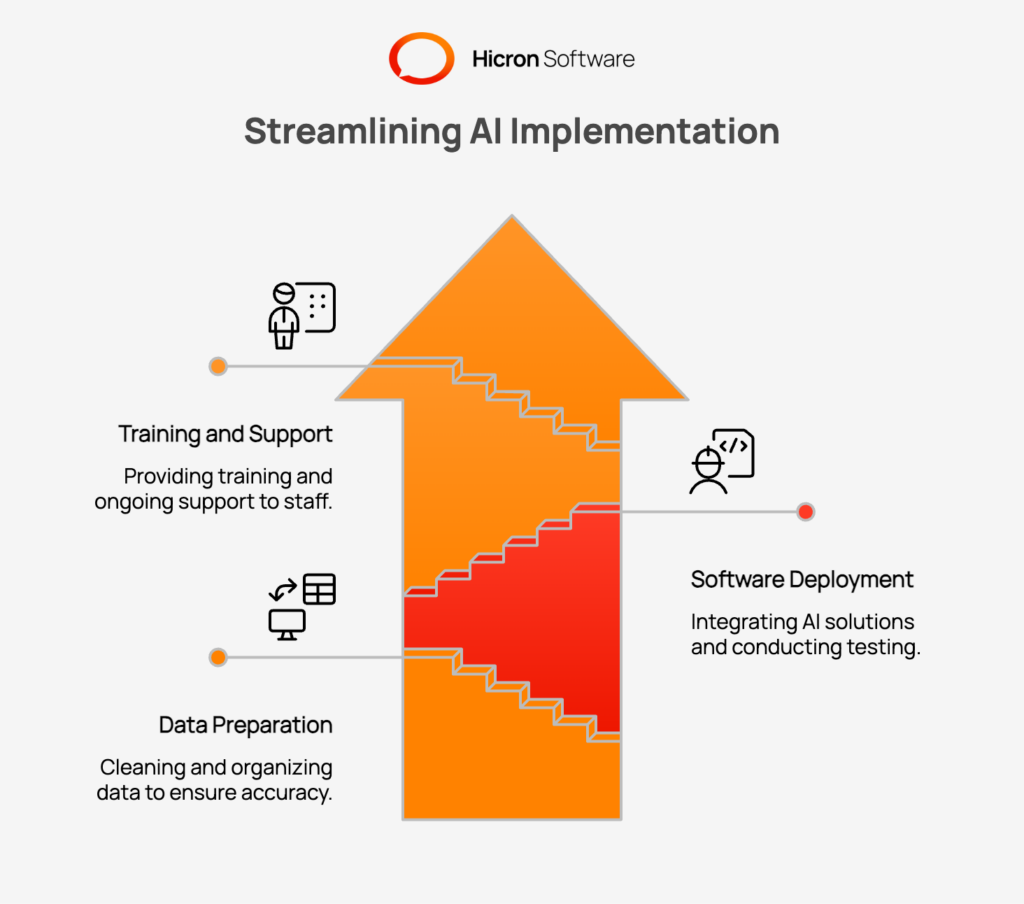
Implementing AI solutions is a critical phase where strategy turns into action. It starts with data preparation. AI needs clean, organized data to function correctly. We help you clean your databases and set up pipelines that feed accurate information into your AI models. Without this step, even the most advanced AI implementation will fail to deliver accurate results. We ensure your data foundation is solid before any algorithms are applied.
The next step is the actual deployment of the software. Whether it is a custom AI solution or an off-the-shelf tool, integration must be smooth. We manage the technical setup, ensuring APIs connect properly and systems talk to each other. During this phase, we also conduct rigorous testing to catch any bugs or logic errors. This quality assurance prevents disruption when the system goes live for your customers or employees.
Finally, training and support are essential. We don’t just hand over the keys and walk away. We provide training sessions for your staff so they feel confident using the new tools. Adoption is often a cultural challenge as much as a technical one. By supporting your team through the transition, we ensure that they embrace the change rather than resisting it. This human-centric approach to implementation is what separates successful projects from failed ones.
To succeed with AI, you must follow best practices that prioritize focus and clarity. Start small. It is tempting to try to overhaul everything at once, but the most successful small businesses start with a single, well-defined use case. Consulting for small businesses helps indicate AI use cases. This way, you can demonstrate value in one area, such as automating invoice processing, before expanding to other areas. This iterative approach minimizes risk and allows you to learn as you go.
Another best practice is to maintain transparency with your team. Employees often fear that AI will replace them. You should communicate that the goal of implementing AI tools and platforms is to augment their capabilities, not replace their roles. Show them how AI tools will remove the drudgery from their day and allow them to focus on more interesting work. When the team sees AI as a helper rather than a threat, adoption rates soar.
Finally, always prioritize data quality over algorithm complexity. A simple algorithm running on great data will outperform a complex model running on poor data every time. Invest time in governing your data and keeping it clean. Experienced AI consultants will always steer you toward foundational data hygiene as a prerequisite for advanced AI capabilities.
As you adopt AI, ethical considerations must be at the forefront of your strategy. Data privacy is a massive concern. When you use AI to automate and process customer data, you must ensure you are compliant with regulations like GDPR or CCPA. Small businesses are not exempt from these laws. We help you design systems that respect user privacy and secure sensitive information, ensuring that your use of AI builds trust rather than destroying it.
Bias in AI models is another critical issue. If the data used to train an AI is biased, the decisions it makes will be biased too. This can lead to unfair hiring practices or discriminatory loan approvals. An ethical AI consultant reviews your data and models to identify and mitigate these biases. We ensure that the potential of AI systems operates fairly and equitably, protecting your brand’s reputation.
Transparency is also vital. If you are using a chatbot to talk to customers, let them know they are speaking with an AI. If you use AI to make decisions about their accounts, be able to explain how those decisions were reached. Establishing these ethical guardrails early prevents legal issues and public relations disasters down the road.
The future of AI consulting lies in increasingly accessible and autonomous agents. We are moving toward a time where AI won’t just analyze data but will take independent action to resolve issues. For small businesses, implementing the right AI could mean autonomous supply chain agents automatically negotiating reorders with suppliers. Staying ahead of these advancements in AI allows you to prepare your infrastructure for the next wave of automation.
We also see a trend toward hyper-personalization. Integrating AI into business will allow you to offer unique product versions or service packages to every single individual customer based on their preferences. This level of customization was once logistically impossible. In the near future, it will be a standard expectation. AI consultants make sure you are building the data capabilities now to support this level of personalization later.
Finally, “AI as a Service” will continue to lower the barrier to entry. You won’t need to build AI from scratch; you will subscribe to specialized AI modules for specific tasks. The role of the AI consultant for small businesses will shift from building models to orchestrating these various services to work together. Understanding these trends helps small businesses plan their technology investments wisely.
Selecting the right AI consulting company is a critical decision. You need a partner who understands the specific challenges of small businesses, not just enterprise-level theory. Look for a firm with a track record of helping small companies achieve measurable results. Ask for case studies or references that show they can deliver projects on time and within budget.
Technical expertise is a given, but communication skills are equally important. You need an AI consultant who can explain complex concepts in plain English. If they cannot explain how the solution works or why it is necessary without using jargon, they might not be the right fit. The right partner acts as an educator as well as an implementer, empowering your team to own the technology.
Finally, check for flexibility. Your business needs will change, and you need a consulting service that can adapt. Avoid long-term lock-in contracts that don’t allow for pivoting strategy. The right AI consulting company works with you iteratively, adjusting the course as you learn more about what works for your unique market.
AI and data science are a present-day necessity for staying competitive. If you’re looking for AI and ready to streamline operations, reduce costs, and drive revenue. Now is the time to act. Don’t let technical uncertainty hold you back, AI strategy development is your starting point.
Our expert AI consultants are ready to help small businesses like yours navigate the complexities of digital transformation. We design custom AI solutions tailored to your unique challenges and budget. Contact us today to schedule a consultation and discover how good AI consulting helps small businesses thrive in a changing economy.
An AI consultant analyzes your business operations, identifies areas where artificial intelligence can add value, and designs a strategy to implement those solutions. They guide you through selecting the right tools, integrating them with your current systems, and training your team to use them effectively.
Costs vary, but many firms offer scalable services designed for smaller budgets. Investing in AI consulting often pays for itself quickly through cost savings and increased efficiency. A good consultant will focus on high-ROI projects that deliver immediate value to justify the expense.
No, you do not need an in-house technical team. The purpose of hiring an AI consultant is to gain access to technical expertise you don’t have internally. They handle the technical aspects of design and implementation while you focus on your business goals
The timeline depends on the complexity of the project. A simple chatbot integration might take a few weeks, while a comprehensive data analytics overhaul could take several months. Your consultant will provide a roadmap with clear milestones so you know what to expect.
Yes, AI has applications across almost every industry, from retail and healthcare to finance and manufacturing. Whether you need to automate scheduling, predict inventory needs, or personalize marketing, there is likely an AI application that can benefit your specific business model.
Hicron Software proved to be a trusted partner with unmatched technical expertise, delivering a scalable and user-friendly web application that was pivotal to our successful U.S. market expansion.

Hicron’s contributions have been vital in making our product ready for commercialization. Their commitment to excellence, innovative solutions, and flexible approach were key factors in our successful collaboration.
I wholeheartedly recommend Hicron to any organization seeking a strategic long-term partnership, reliable and skilled partner for their technological needs.
After carefully evaluating suppliers, we decided to try a new approach and start working with a near-shore software house. Cooperation with Hicron Software House was something different, and it turned out to be a great success that brought added value to our company.
With HICRON’s creative ideas and fresh perspective, we reached a new level of our core platform and achieved our business goals.
Many thanks for what you did so far; we are looking forward to more in future!

Hicron is a partner who has provided excellent software development services. Their talented software engineers have a strong focus on collaboration and quality. They have helped us in achieving our goals across our cloud platforms at a good pace, without compromising on the quality of our services. Our partnership is professional and solution-focused!

The IT system supporting the work of retail outlets is the foundation of our business. The ability to optimize and adapt it to the needs of all entities in the PSA Group is of strategic importance and we consider it a step into the future. This project is a huge challenge: not only for us in terms of organization, but also for our partners – including Hicron – in terms of adapting the system to the needs and business models of PSA. Cooperation with Hicron consultants, taking into account their competences in the field of programming and processes specific to the automotive sector, gave us many reasons to be satisfied.