What is PropTech Industry & How it Reshapes the Real Estate Market
- December 06
- 15 min

The integration of big data in property management is changing how real estate assets are handled, marking a shift in property management trends. The integration of big data in property management involves analyzing vast, complex datasets to uncover patterns, trends, and associations that inform strategic choices. As the industry evolves, there is a clear and growing demand for data-driven decision-making to optimize operations, enhance tenant experiences, and maximize profitability. By leveraging big data, property managers can move from traditional methods to more competitive edge in an increasingly complex market.
Big data is the backbone of property management in this modern, fast-changing world. With real estate software driving modern solutions and tech property management tools evolving daily, one thing is clear: the industry’s future will rely on harnessing the power of big data to unlock new growth opportunities.
Key takeaways:
Big data revolutionizes property managers’ and real estate professionals’ decisions by providing once-inaccessible insights. Here’s a closer look at the benefits of leveraging big data in property management.
|
Benefit |
Description |
Real-World Example |
|
Enhanced Decision-Making |
Turns vast information into actionable insights using advanced software and AI. It moves management from guesswork to precision in areas like pricing strategies and marketing campaigns. |
AI tools analyzing historical occupancy rates and local market conditions to help managers plan lease renewals or strategize rent adjustments. |
|
Optimized Operations & Efficiency |
Streamlines operations and minimizes reaction time through automation and visibility. Connected systems (IoT) monitor building performance to flag issues early. |
Corporate real estate technology centralizing information across portfolios; augmented reality tools simplifying inspections by providing remote views of maintenance needs. |
|
Cost Reduction & Resource Allocation |
Enables smarter financial decisions and effective resource allocation. data helps prioritize repairs, optimize staffing, and identify underperforming assets. |
Scheduling maintenance based on actual usage data rather than fixed intervals to reduce costs; using technology to predict unforeseen expenses and manage budgets. |
|
Increased Tenant Satisfaction |
Provides deeper insights into tenant preferences through behavioral data analysis. Facilitates tailored environments and seamless experiences via remote viewing tools. |
Automating custom notifications about building changes or maintenance, using IoT systems to track and adjust building temperatures to tenant preferences. |
Big data changes the way property managers understand information by turning huge volumes of data into clear and actionable insights. Advanced property management software and technology help managers spot market patterns and trends. For example, cloud-based platforms track important details such as tenant preferences, lease expirations, and maintenance history. These tools provide real-time analytics that guide better decisions. When artificial intelligence is part of the process, management relies less on guesswork and more on accurate information, improving results from pricing to marketing campaigns.
Big data gives property managers better ways to make their operations run smoothly. New technology, including the Internet of Things and property technology tools, gives a complete picture of building performance. Connected systems monitor everything from HVAC performance to utility usage and alert managers about potential problems before they grow. These technologies cut down reaction times and increase productivity by handling tasks like accounting and tenant communication automatically.
Having better data allows managers to make sound financial choices. With intelligent property management systems, resources are allocated more effectively. Big data helps managers find which assets are not performing, set proper staffing levels, and know which repairs need the most attention. Trends such as tokenization also support investment decisions by dividing assets into digital units that can be traded.
Tenants who are satisfied with their living or working space are more likely to stay longer. Big data tools give managers deeper understanding of tenant preferences through analysis of behavior and feedback. Property technology solutions enable prospective renters to explore spaces using tools like virtual reality tours. Additionally, IoT-enabled systems record preferences such as preferred temperatures and track patterns that help create a custom environment.
Understanding the main types of data used in property management is crucial for optimizing operations, maximizing returns, and sustaining tenant satisfaction over time. Each data category provides unique insights that enable property managers to take proactive, informed actions.
|
Type of Data |
Description |
Importance/Impact |
|
Tenant-Related Data |
Information regarding individual renter profiles, including preferences, behavior patterns, lifestyle needs, and feedback from satisfaction surveys. |
Personalization & Retention: Deep understanding of tenant habits enables managers to customize services and amenities. This directly boosts renewal rates and reduces turnover costs by fostering long-term tenant loyalty. |
|
Market Trends |
Macro-level real estate metrics such as fluctuation in pricing, shifts in rental demand, current vacancy rates, and competitor analysis. |
Competitive Positioning: Accurate market data allows owners to adjust rent strategies dynamically. Staying aligned with market shifts ensures properties remain attractive to prospective tenants while maximizing revenue potential. |
|
Operational Data |
Internal metrics tracking the daily function of the property, including maintenance request logs, energy usage patterns, and real-time occupancy rates. |
Efficiency & Cost Control: Monitoring operational performance identifies inefficiencies early. Predictive maintenance based on usage logs prevents costly repairs, while energy analysis leads to significant utility savings and greener building operations. |
|
External Factors |
Broader environmental and socioeconomic variables, such as local economic indicators, demographic shifts, and nearby urban development projects. |
Strategic Resilience: Understanding external pressures helps managers anticipate demand changes. It supports long-term investment decisions, ensuring asset strategies remain robust despite economic volatility or neighborhood changes. |
Tenant data forms the foundation for a personalized approach to service and retention. By collecting and analyzing
property managers can tailor amenities, adjust communication styles, and anticipate tenants’ needs.
For example, if surveys reveal a preference for digital payment options or automated maintenance requests, managers can implement these features to build loyalty and reduce turnover. This individual-level understanding also supports targeted marketing, renewal offers, and community-building initiatives.
Market trends in real estate highlight shifts in local pricing, rental demand, and vacancy rates, which are indispensable for setting competitive rents and forecasting occupancy. Real-time awareness of competing listings, seasonal fluctuations, and popular property features helps managers strategically adjust pricing or launch timely promotions.
For instance, by responding to a surge in demand for pet-friendly units or short-term leases, a property manager can remain agile and capitalize on emerging trends before competitors.
Operational data captures the ongoing performance of a property. Maintenance records, energy use, and occupancy rates help managers streamline workflows, schedule preventative upkeep, and identify cost-saving opportunities.
External factors shape the wider context in which property assets operate. Economic indicators, demographic changes, and new urban development projects provide the macro-level signals that guide strategic planning.
For example, tracking employment rates and population growth can help managers anticipate periods of higher rental demand or identify when to invest in property upgrades. Awareness of upcoming infrastructure, such as public transit expansions or commercial zones, helps managers position properties advantageously in the market.
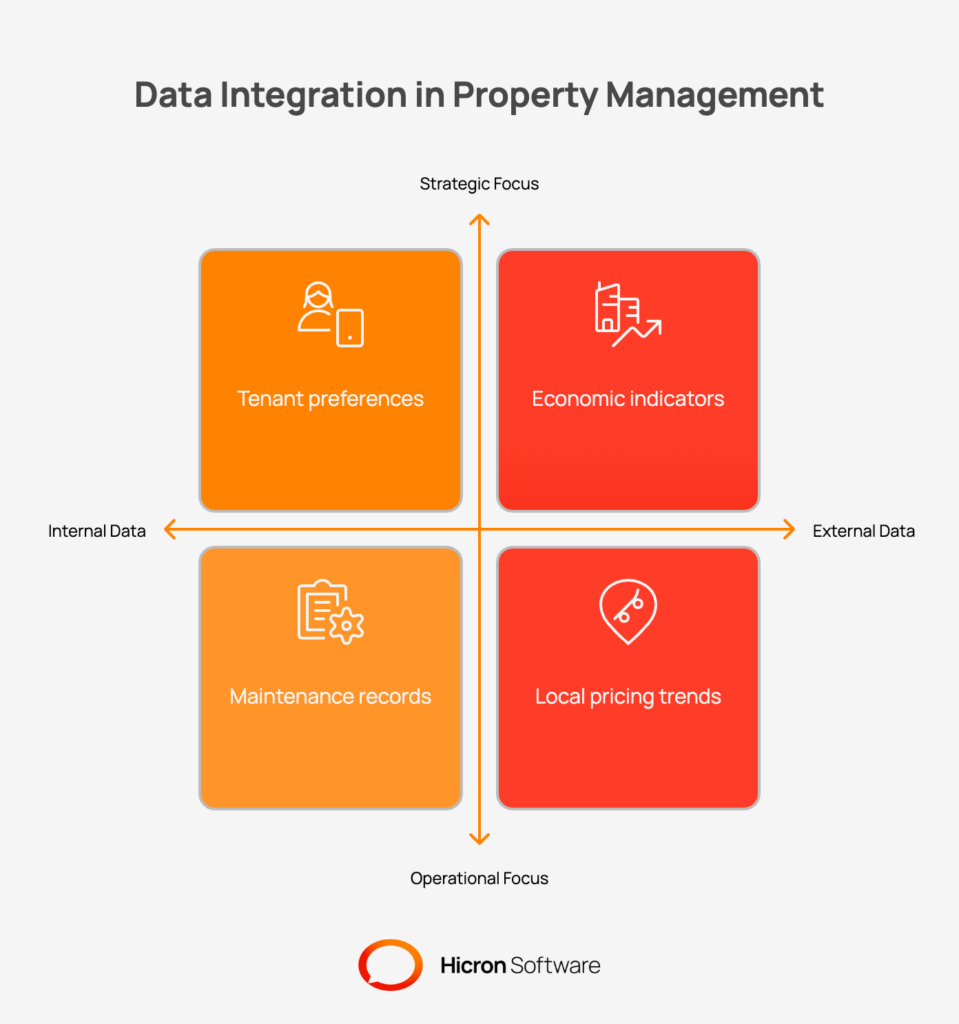
By integrating these types of data, property management professionals can make holistic decisions that balance immediate needs with long-term goals, adapt strategies to market shifts, and create value for both owners and tenants.
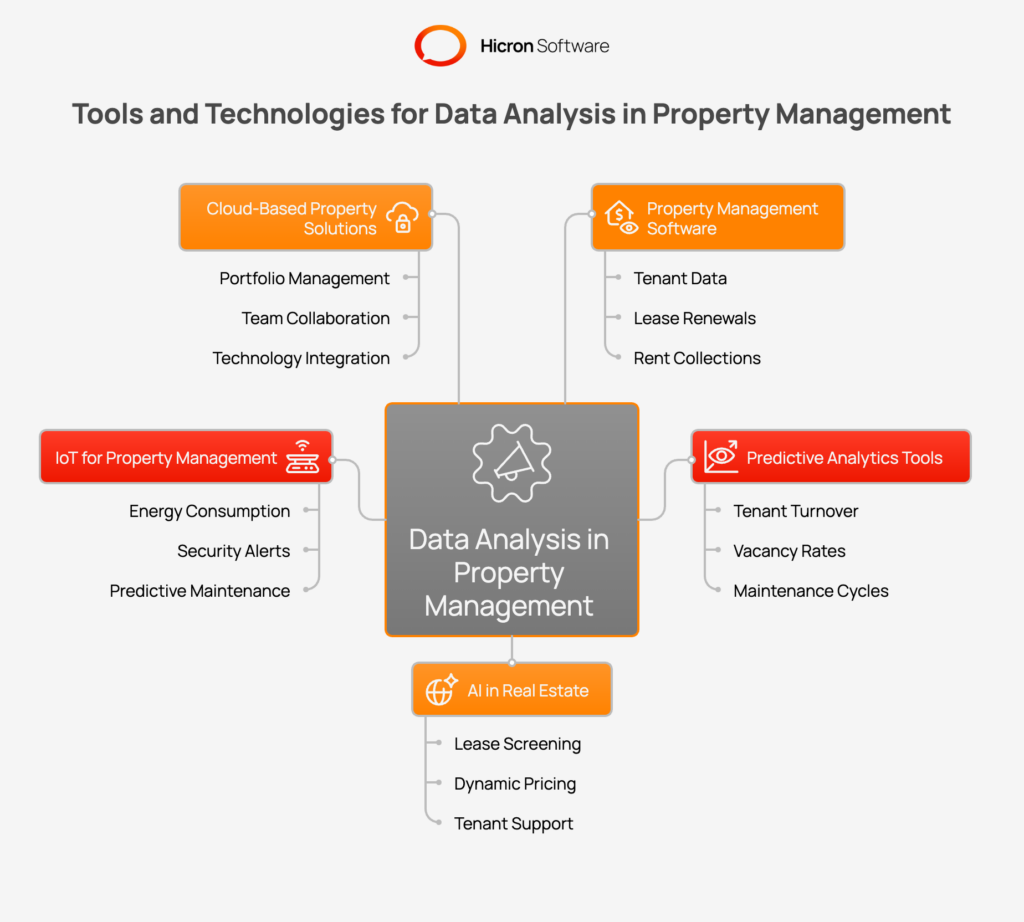
By strategically combining these technologies, property managers can build comprehensive solutions tailored to their portfolio’s needs. This approach streamlines management tasks while delivering actionable insights to maximize property performance and improve the tenant experience.
While leveraging data offers numerous advantages, it comes with its own set of challenges. Proactive strategies can help you navigate these obstacles and unlock the full potential of your property management data. In this section, we outline actionable solutions for common issues, from data privacy to integration complexities, helping you enhance your property management data analysis capabilities.
Managing sensitive tenant information demands strict compliance with regulations and robust data protection protocols to safeguard against breaches and unauthorized access. To overcome privacy and security challenges, implement a multi-layered security strategy.
The high initial costs of implementing advanced software, along with the need for ongoing staff training, can be a barrier for many property management firms. A phased and strategic approach can make the investment more manageable.
Integrating information from multiple sources into a unified system often presents technical and operational difficulties, requiring careful planning and the right technology stack. The key is to establish a central source of truth.
Reliable business decisions depend on accurate data and objective analysis. The insights from your analysis are only as good as the data you use. It’s essential to establish validation processes and regularly review data to eliminate errors and reduce analysis biases.
By strategically addressing these common challenges, you can build a robust and reliable property management data analytics framework. This foundation will empower you to make smarter, data-driven decisions that improve efficiency, profitability, and tenant satisfaction.
Future trends in big data for property management point toward a more automated, predictive, and interconnected industry. Key developments include:
Adopting data analytics in property management fundamentally transforms how a portfolio is managed. The impact on efficiency, cost savings, and tenant satisfaction is profound, creating a clear line between traditional methods and a more intelligent, responsive approach. By harnessing big data in property operations, managers can unlock new levels of performance that benefit the bottom line and the resident community alike.
|
Aspect |
Description |
Examples/Benefits |
|
Operational Efficiency |
Using data to move from a reactive to a predictive operational model, streamlining daily tasks and workflows. |
Predictive Maintenance: Analyzing equipment data (HVAC, elevators) to forecast failures and schedule repairs before breakdowns occur, reducing system downtime. |
|
Cost Savings |
Applying data analytics to make precise, evidence-based financial decisions that optimize spending and resource allocation. |
Energy Optimization: Using smart meter data to identify and reduce energy waste. |
|
Tenant Experience |
Leveraging data insights to deliver personalized, proactive services that anticipate and meet resident needs. |
Tailored Services: Analyzing amenity usage to adjust hours or add popular features. |
|
Competitive Advantage |
Utilizing data-driven strategies to outperform competitors in the market by optimizing pricing, reducing vacancies, and increasing profitability. |
Dynamic Pricing: Analyzing market trends to set competitive rental rates. |
One of the most immediate benefits of data analysis is the optimization of daily operations. Integrating big data in property operations allows managers to move from a reactive to a predictive model. For example, by analyzing data from HVAC systems, elevators, and other critical equipment, you can identify patterns that signal potential failures. This facilitates predictive maintenance, allowing you to schedule repairs before a breakdown occurs, which drastically reduces unexpected downtime and emergency repair costs. This proactive approach ensures that building systems run smoothly, minimizing disruptions for tenants and keeping operational workflows efficient.
Effective cost-saving strategies with data analytics go far beyond simple budget cuts. Data allows you to make precise, evidence-based decisions that optimize spending across your portfolio.
A superior resident experience is a cornerstone of high retention rates and a strong brand reputation. Data analytics provides the tools needed to create an elevated tenant experience through personalized and proactive service. By analyzing tenant feedback, service requests, and amenity usage patterns, property managers gain deep insights into resident preferences. This enables proactive management, where you can anticipate needs, such as adding a package locker system in response to increased deliveries or adjusting gym hours to match peak usage. When tenants feel that their needs are understood and met without them even having to ask, their satisfaction and loyalty soar.
In a crowded marketplace, property managers who effectively use data gain powerful data-driven competitive advantages. These firms can set more competitive rental rates by analyzing market trends, reduce vacancies by understanding what attracts and retains tenants, and operate more profitably by keeping costs low. This data-centric approach positions them as industry leaders who are not just managing properties, but optimizing assets for peak performance and creating communities where people truly want to live.
Big data has emerged as a vital force in property management, revolutionizing how properties are maintained, marketed, and managed. By harnessing the power of property and real estate management technology, property managers now have the tools to operate more efficiently, cut costs, and deliver tailored tenant experiences. The moment to adopt these data-driven strategies is now, and taking the first step is simpler than you might think.
As data-driven innovation continues to accelerate, property managers who leverage these insights will find themselves at the forefront of a smarter, more responsive real estate market. Ultimately, committing to these strategies positions forward-thinking professionals for enduring stability and long-term success in a competitive environment.
The future of property management belongs to those willing to innovate and adapt. Now is the time to stand out, build smarter operations, and secure your place as a leader in the era of real estate and technology.

Hicron Software proved to be a trusted partner with unmatched technical expertise, delivering a scalable and user-friendly web application that was pivotal to our successful U.S. market expansion.

Hicron’s contributions have been vital in making our product ready for commercialization. Their commitment to excellence, innovative solutions, and flexible approach were key factors in our successful collaboration.
I wholeheartedly recommend Hicron to any organization seeking a strategic long-term partnership, reliable and skilled partner for their technological needs.

After carefully evaluating suppliers, we decided to try a new approach and start working with a near-shore software house. Cooperation with Hicron Software House was something different, and it turned out to be a great success that brought added value to our company.
With HICRON’s creative ideas and fresh perspective, we reached a new level of our core platform and achieved our business goals.
Many thanks for what you did so far; we are looking forward to more in future!

Hicron is a partner who has provided excellent software development services. Their talented software engineers have a strong focus on collaboration and quality. They have helped us in achieving our goals across our cloud platforms at a good pace, without compromising on the quality of our services. Our partnership is professional and solution-focused!

The IT system supporting the work of retail outlets is the foundation of our business. The ability to optimize and adapt it to the needs of all entities in the PSA Group is of strategic importance and we consider it a step into the future. This project is a huge challenge: not only for us in terms of organization, but also for our partners – including Hicron – in terms of adapting the system to the needs and business models of PSA. Cooperation with Hicron consultants, taking into account their competences in the field of programming and processes specific to the automotive sector, gave us many reasons to be satisfied.