10 Real Estate Software Development Companies in 2026
- February 03
- 9 min


Multi-agent collaboration is the process where several estate agents work together to complete a property transaction. In off-market property deals, this cooperation is essential for matching the right buyer with the right property. Yet, traditional methods often lead to challenges. This article explains how PropTech platforms transform multi-agent collaboration by using workflow automation and activity logs to create more efficient and transparent processes.
Key Takeaways:
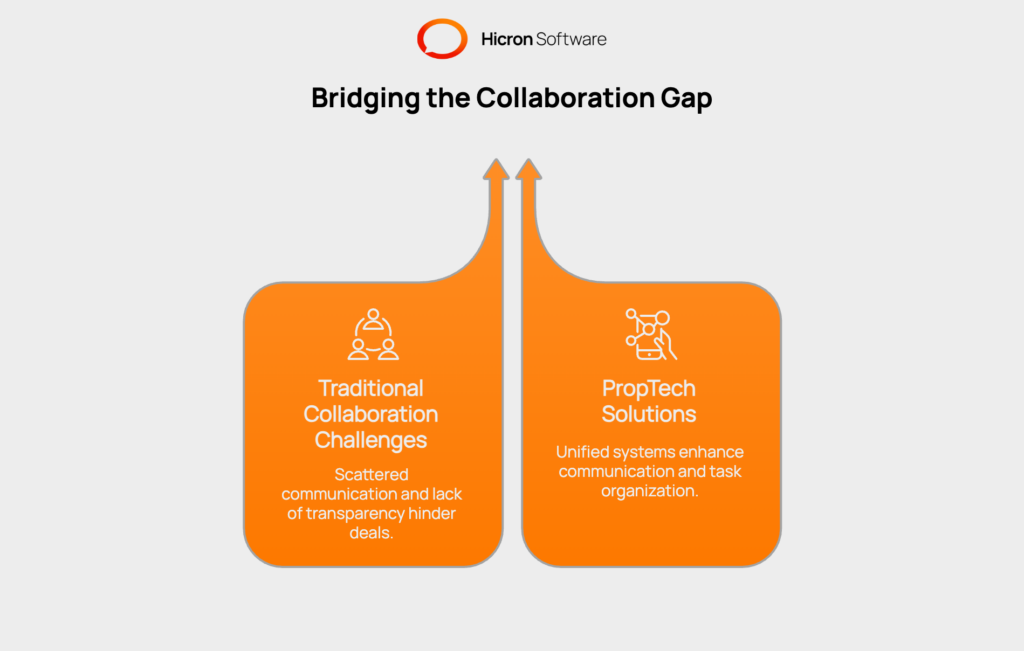
Off-market property transactions are private real estate deals that require a high degree of coordination between agents. Unlike public listings, these sales depend on networks and relationships. Estate agents often face challenges with traditional collaboration methods, such as scattered communication across emails and phone calls, which can lead to misunderstandings and delays. A lack of a central record-keeping system often results in duplicated efforts and a lack of transparency.
PropTech platforms are changing how agents work together on these exclusive deals. By providing a single, unified system, this technology helps streamline communication and organize tasks. These platforms introduce tools specifically designed for multi-agent collaboration, making the entire process more structured and reliable for everyone involved.
Workflow automation is the use of software to manage and execute a series of tasks based on predefined rules. In real estate, it helps organize the complex steps involved in a property transaction. For off-market deals, workflow automation is especially useful because it brings structure to processes that are often managed manually.
Workflow automation streamlines
which reduces the need for manual data entry and minimizes errors. With administrative tasks handled by the system, agents can focus their attention on building client relationships and closing deals. This efficiency leads to faster transaction times and improved satisfaction for both buyers and sellers.
Activity logs are digital records that track every action related to a property within a PropTech platform. For off-market transactions, they are essential for creating a transparent and accountable environment. These logs capture
in real time, providing a single source of truth for the entire team.
An effective activity log includes timestamped records that show who did what and when. This feature is vital for resolving any disputes and ensuring all collaborators are on the same page. By offering a clear and unchangeable history of a transaction, activity logs build trust among participating agents. They also provide clients with confidence that their deal is being managed professionally and transparently.
PropTech platforms come equipped with several key tools that support multi-agent collaboration. Shared property portfolios allow multiple agents to access and manage the same set of listings, ensuring everyone is working with the most current information. This feature eliminates the confusion that arises from using separate, outdated spreadsheets or documents.
Integrated messaging systems allow agents to communicate in real time directly within the platform. This keeps all discussions organized and linked to the specific property, rather than scattered across various apps. Additionally, many platforms offer automated commission-split workflows, which simplify how revenue is shared among collaborating agents. These tools help agents work together more effectively, leading to increased productivity.
|
Tool |
Features |
Benefits |
|
Shared Property Portfolios |
A centralized database where all off-market property listings are stored and accessible to authorized agents, including details, photos, documents, and status updates. |
Eliminates confusion from separate files, prevents duplicated efforts, and provides a single source of truth for the entire team to manage properties effectively. |
|
Integrated Messaging Systems |
A real-time communication tool built into the platform, allowing agents to send messages and share files. Conversations can be linked directly to specific property profiles. |
Centralizes communication, prevents information from getting lost in emails or other apps, and creates an auditable record of all discussions for improved transparency. |
|
Real-Time Activity Logs |
An automated, timestamped record of every action taken, including status updates, client communications, and document uploads. Provides a clear, chronological history for each property. |
Fosters a transparent working environment, builds trust among agents through accountability, and provides a reliable record to resolve disputes or answer client questions. |
|
Automated Commission-Split Workflows |
A tool that automates the calculation and management of commission sharing between agents based on pre-defined agreements. Generates a clear report upon deal completion. |
Simplifies complex financial administration, reduces payment disputes, prevents errors, and ensures all contributing agents are compensated fairly and accurately. |
|
Shared Calendars & Task Management |
Integrated calendars and to-do lists that allow agents to schedule viewings, set reminders, and assign tasks to other team members in a shared, visible space. |
Improves organization and coordination, helps ensure deadlines are met and appointments are not missed, and clarifies responsibilities for increased productivity. |
Every estate agency has its own way of operating. PropTech platforms with customizable workflows allow agencies to adapt the software to their specific needs. This flexibility is important because it lets teams automate their unique, repetitive tasks, such as property matching notifications or client follow-up reminders.
For example, an agency could create a custom workflow that automatically alerts a specific group of agents when a property matching their client’s criteria is onboarded. Another workflow might trigger a series of tasks for the legal team once a deal reaches a certain stage. By tailoring automation to fit their processes, agencies can make their operations even more efficient and effective.
|
Workflow Name |
Trigger |
Steps |
Benefit |
|
New Property Matching & Agent Notification |
A new off-market property is onboarded and set to “Available.” |
1. The system scans saved buyer requirements. |
Ensures agents are instantly aware of new opportunities, accelerating the matching process without manual effort. |
|
Client Interest & Follow-Up Reminder |
An agent logs a “Client Interested” status update on a property. |
1. The system schedules a follow-up task for the agent. |
Prevents potential leads from being forgotten and encourages proactive client communication to secure viewings or offers. |
|
Viewing Request & Confirmation |
A buyer’s agent submits a viewing request for a property. |
1. The listing agent receives an instant notification. |
Streamlines scheduling, reduces back-and-forth communication, and minimizes the risk of missed appointments. |
|
Offer Submission & Review Process |
An agent submits an offer on behalf of a buyer. |
1. The listing agent and agency manager are immediately notified. |
Creates a formal, trackable process for managing offers, ensuring transparency and timely responses. |
|
Legal & Compliance Task Assignment |
An offer is marked as “Accepted.” |
1. The system automatically assigns tasks to the compliance or legal team (e.g., drafting agreements, AML checks). |
Bridges the gap between deal agreement and legal processing, ensuring a smooth transition and prompt compliance. |
|
Post-Completion Commission Calculation |
A property’s status is changed to “Completed” or “Sold.” |
1. The automated commission-split workflow is initiated. |
Automates financial administration, reduces calculation errors, and ensures agents are paid correctly and on time. |
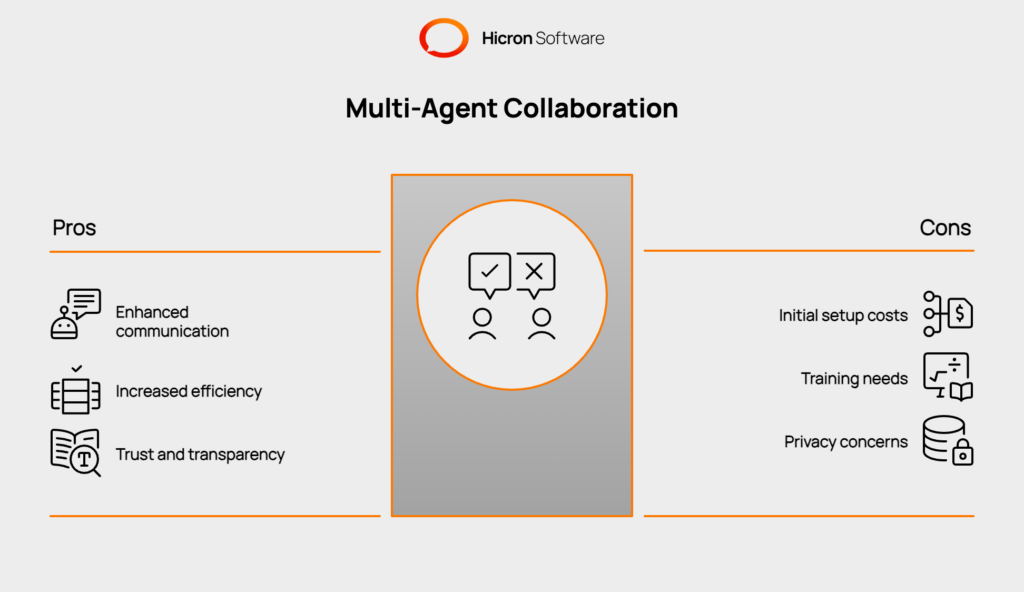
Collaboration tools within PropTech platforms bring clear benefits to estate agents managing off-market transactions.
The technology for multi-agent collaboration continues to advance. Future trends point toward more intelligent systems that use artificial intelligence to automate complex workflows and provide predictive analytics for property matching. Deeper integrations with other real estate software, like Customer Relationship Management (CRM) systems, will also create a more connected digital ecosystem for agents.
By adopting PropTech platforms, estate agents can prepare for these upcoming innovations. Familiarity with digital workflows and collaborative tools makes it easier to integrate new technologies as they become available. Embracing these tools now is a key step for any agent or agency looking to remain competitive and succeed in the evolving property market.
Multi-agent collaboration refers to the process where two or more estate agents work together on a single property transaction, sharing responsibilities and commissions.
Workflow automation reduces manual work by automating repetitive tasks, such as data entry and client notifications. This allows agents to focus on high-value activities like negotiation and client service, leading to faster deal closures.
Activity logs create a transparent, timestamped record of all actions taken on a property. This builds trust, ensures accountability among agents, and provides a clear history for compliance purposes.
A commission-split workflow is a feature in PropTech software that automatically calculates and manages the division of commission payments between collaborating agents based on predetermined agreements.
Shared property portfolios give all authorized agents access to the same centralized information. This eliminates confusion from using multiple versions of documents and ensures everyone is working from a single source of truth.
Hicron Software proved to be a trusted partner with unmatched technical expertise, delivering a scalable and user-friendly web application that was pivotal to our successful U.S. market expansion.

Hicron’s contributions have been vital in making our product ready for commercialization. Their commitment to excellence, innovative solutions, and flexible approach were key factors in our successful collaboration.
I wholeheartedly recommend Hicron to any organization seeking a strategic long-term partnership, reliable and skilled partner for their technological needs.

After carefully evaluating suppliers, we decided to try a new approach and start working with a near-shore software house. Cooperation with Hicron Software House was something different, and it turned out to be a great success that brought added value to our company.
With HICRON’s creative ideas and fresh perspective, we reached a new level of our core platform and achieved our business goals.
Many thanks for what you did so far; we are looking forward to more in future!

Hicron is a partner who has provided excellent software development services. Their talented software engineers have a strong focus on collaboration and quality. They have helped us in achieving our goals across our cloud platforms at a good pace, without compromising on the quality of our services. Our partnership is professional and solution-focused!

The IT system supporting the work of retail outlets is the foundation of our business. The ability to optimize and adapt it to the needs of all entities in the PSA Group is of strategic importance and we consider it a step into the future. This project is a huge challenge: not only for us in terms of organization, but also for our partners – including Hicron – in terms of adapting the system to the needs and business models of PSA. Cooperation with Hicron consultants, taking into account their competences in the field of programming and processes specific to the automotive sector, gave us many reasons to be satisfied.