How do Agile and DevOps Interrelate?
- January 16
- 9 min


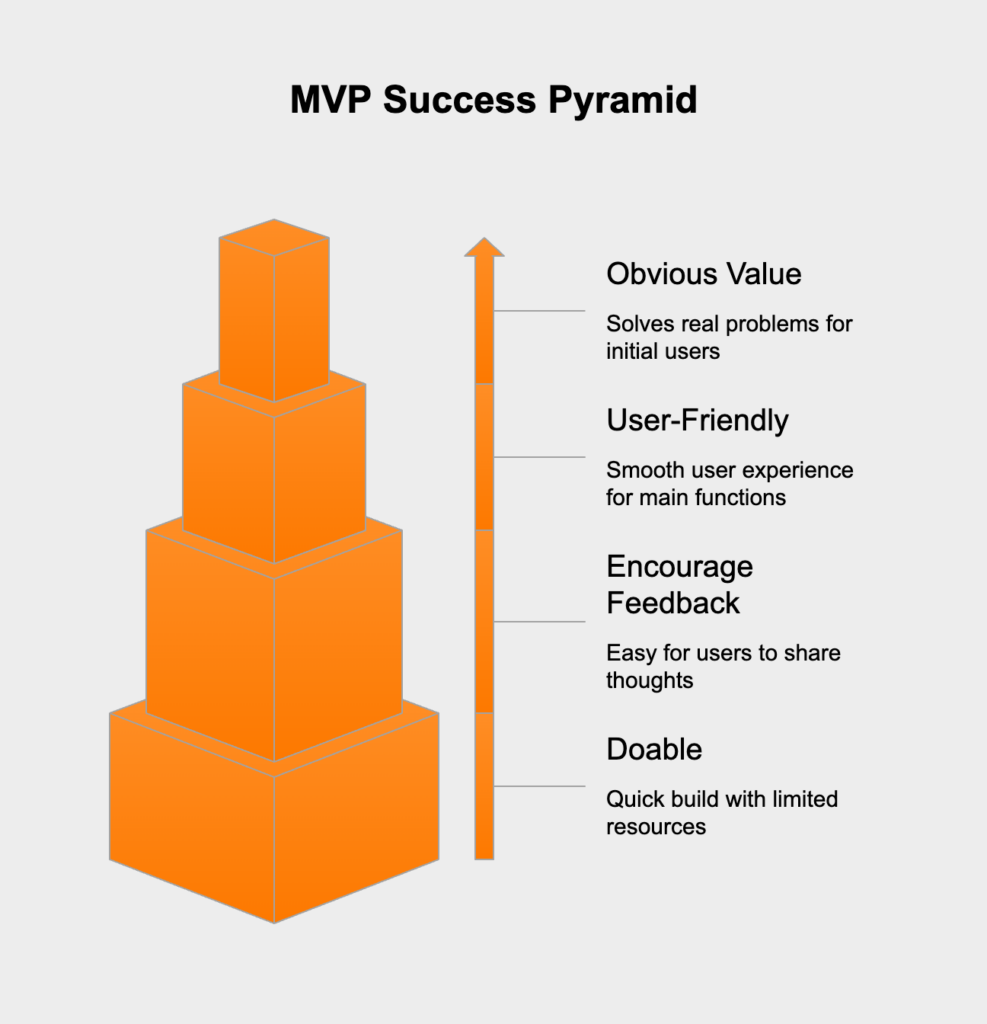
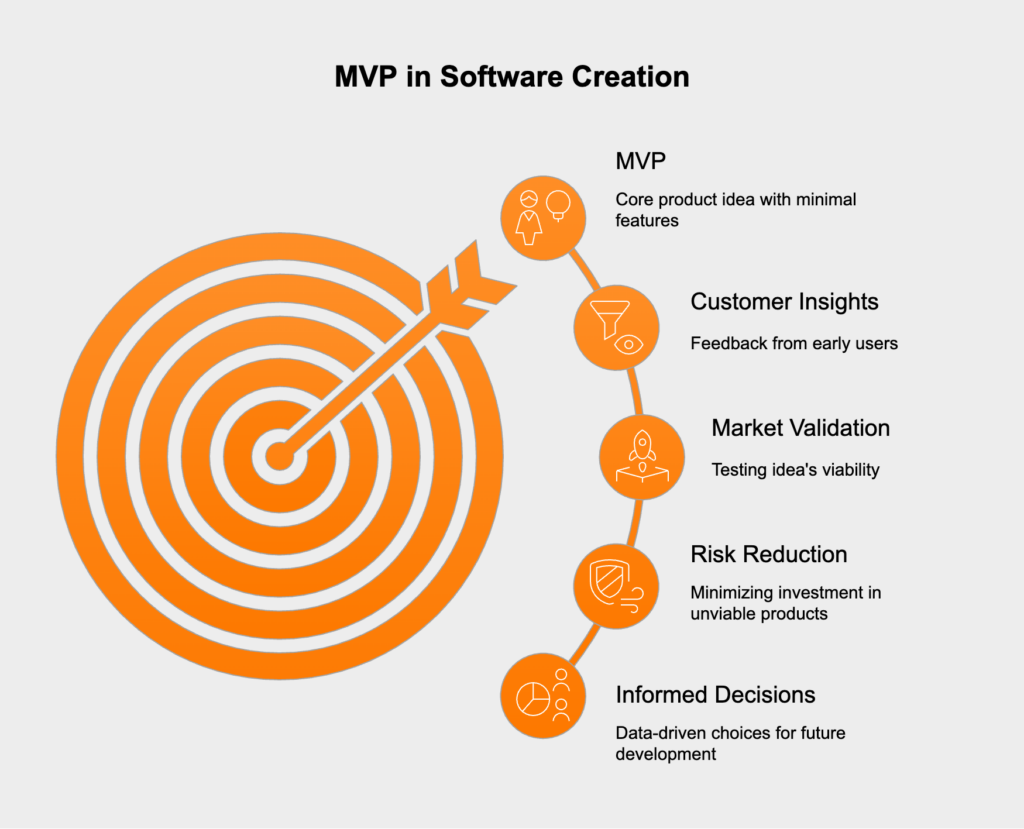
Minimum Viable Product (MVP) in software is a working first release that includes only the features required to test one core product hypothesis with real users and collect feedback for the next iteration.
Teams ship an MVP to learn whether a product idea holds up in real use before committing budget to a full build. The release stays narrow and tests one hypothesis with measurable pilot metrics. Product owners, project managers, and innovation leads use it to agree scope, run a time boxed pilot, and read results against success criteria from discovery. This article defines MVP in software projects, compares it with a prototype and a proof of concept, and walks through the steps from problem definition through pilot launch when planning a first release or reviewing a build not yet market-ready.
Key Takeaways:
An MVP in software development gives the team a validated answer to one question: do target users adopt the core workflow the product proposes? The release goes to real users in a real environment. Usage data and direct feedback feed the backlog for the next iteration or a stop decision.
Market research on failed launches points to the same learning goal. CB Insights analyzed 431 venture-backed startups that shut down since 2023 and found poor product-market fit cited in 43% of failure post-mortems (CB Insights, March 2026). McKinsey research across industries found more than 50% of product launches miss business targets, with average failure rates above 40% (McKinsey).
In project management, the MVP usually marks the first major delivery milestone after discovery. The project plan ties that milestone to success metrics agreed before build starts. Examples include pilot signup rate, task completion rate, or repeat use over two weeks. The steering group reads those metrics at a formal review before approving phase two funding.
Frank Robinson coined the term Minimum Viable Product in 2001 to describe the smallest release that still generates learning about customers and market response (SyncDev). Eric Ries popularized the Build-Measure-Learn loop in The Lean Startup, where each release produces data that informs the next build cycle (The Lean Startup).
The viable part matters as much as the minimum part. The release solves one defined problem for a named user group. Quality and reliability cover that scope only. A release that crashes on the core path or omits the main workflow produces noise instead of learning.
Sponsors often ask how MVP in project plans differs from a standard phase one delivery. The difference is the explicit hypothesis and the pilot exit criteria. A phase one build without those elements becomes a small product release, not an MVP. The project charter should name the hypothesis, the pilot cohort size, the review date, and the metric threshold for phase two approval.
Early product work uses three artifact types. Each sits at a different stage and produces a different kind of evidence.
|
Artifact |
Primary question |
Typical audience |
Production quality |
|
Proof of concept (PoC) |
Can we build this technically? |
Engineering, architecture review |
Often internal only |
|
Prototype |
How might it look and feel? |
Design review, limited user tests |
Visual or partial functionality |
|
MVP |
Will users adopt the core workflow? |
Early adopters in live use |
Working release for defined scope |
A proof of concept validates a technical risk. A team might prove that a device API, a payment integration, or a latency target is achievable before scoping a product around it. The artifact often stays inside the engineering organization.
A prototype supports design decisions. Clickable screens, wireframes, or a demo environment show layout and flow. Stakeholders react to the experience before commit to full backend work.
An MVP carries production code for the essential workflow. Users complete real tasks. The team measures behavior in analytics and support tickets, then prioritizes the next slice of work.
Project documentation should label each artifact clearly. A steering deck that calls a prototype an MVP creates false expectations about readiness and timeline.
Teams sometimes run a PoC and a prototype before an MVP in the same initiative. The PoC retires after the architecture decision. The prototype retires after design sign off. Only the MVP stays in production for pilot users. Keeping those boundaries visible in the project mvp meaning section of the charter prevents duplicate spend on throwaway code.
The MVP development process follows a fixed sequence. Skipping a step usually expands scope or blurs the hypothesis under test.
Step 1: Define the problem and users. Write the problem statement, the target user group, and the success metrics for the pilot. Project management owns alignment with sponsors before engineering starts.
Step 2: Set the core value proposition. Agree on the single outcome the first release proves. One sentence works: “Users can complete X without Y.”
Step 3: Prioritize features. List candidate features, then cut to essentials only. Everything else goes to a later backlog column labeled post pilot.
Step 4: Build and test. Development runs in sprints. QA covers the essential paths before any external user sees the build.
Step 5: Launch and learn. Run a time boxed pilot. Collect quantitative and qualitative feedback. Hold a review against the metrics from step 1.
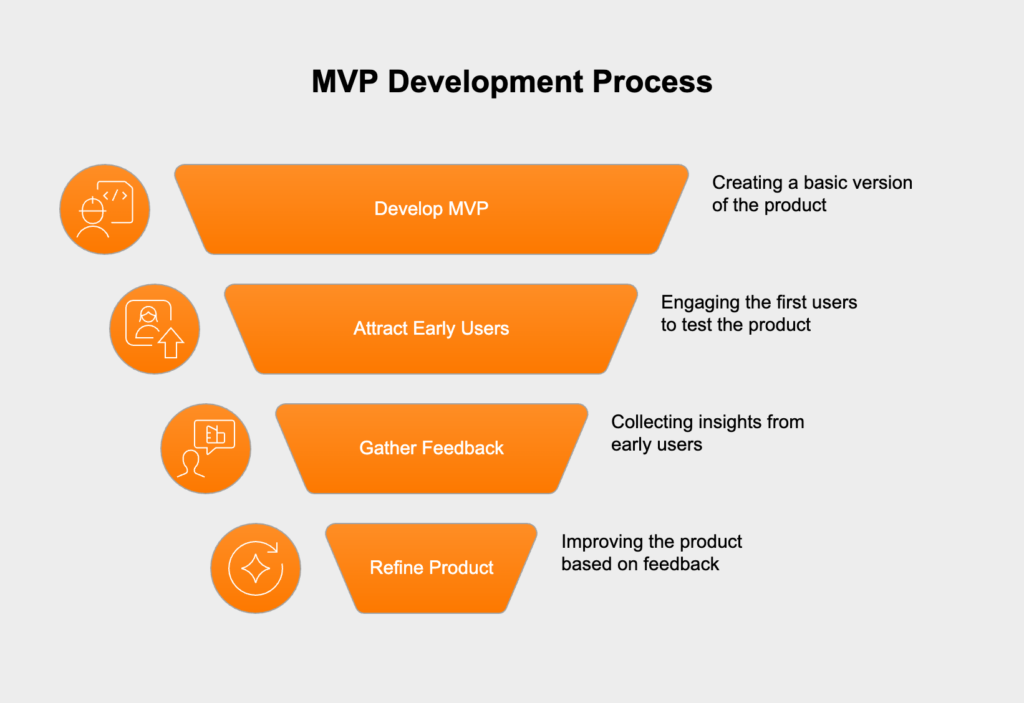
Eric Ries frames the loop after launch as Build, Measure, Learn: ship, read data, adjust the next scope (The Lean Startup). In enterprise and product company settings, the same loop appears as phase gates in the project plan.
Teams that need delivery support for these steps often engage an MVP software development partner for consulting, build, or a nearshore squad aligned to the pilot timeline.
The first release includes the shortest path through the core workflow and the instrumentation to measure it.
Include:
Defer:
Feature lists grow quickly when every stakeholder adds a preference. The product owner cuts scope against the hypothesis from step 2, not against a generic wish list. In project management terms, scope change after baseline requires a formal change request with impact on timeline and pilot date.
A practical scope test asks whether removing a feature still allows the pilot cohort to complete the core workflow. If the answer is yes, the feature belongs in post pilot backlog. If the answer is no, the feature stays in the MVP slice and receives QA priority ahead of secondary screens.
After pilot launch, feedback becomes the input for the next planning cycle. Teams combine usage analytics, support tickets, interviews, and survey responses into one review pack for sponsors.
Quantitative signals include completion rate on the core workflow, day seven retention, and time on task. Qualitative signals include recurring friction themes in interviews and tagged support issues.
The review meeting produces one of three outcomes:
Project managers document the decision, updated metrics targets, and the next milestone date. That record becomes the baseline for the following sprint or for a new RFP if the organization brings in external delivery capacity.
Pilot reviews work best on a fixed agenda: metrics against threshold, top three support themes, one decision on extend, expand, or stop, and assigned owners for each action item. That structure keeps the review under sixty minutes and produces a traceable log for audit or portfolio reporting.
Concrete examples show how narrow scope still produces useful learning.
Dropbox (2008). The team published a video that demonstrated file sync behavior before the full client shipped. Signups validated demand for the workflow. The artifact was marketing plus a technical demo, and it preceded the product millions of users later adopted.
tantum sana GmbH (2024). Hicron Software partnered with a MedTech product company in Germany on a medication management product: a dispensing device with web and mobile apps. Work started with technical assessment of an existing build that had defects and architectural gaps. The team delivered core automation features, ran QA across environments, and completed a two week pilot. The client extended the partnership for ongoing development. Read the case study
The pattern matches many regulated or hardware linked products. The MVP proves the connected workflow in pilot conditions before a commercial launch campaign.
Since 2006, Hicron Software has delivered product work for product companies, scale ups, and enterprise innovation teams in Healthcare, PropTech, Automotive, and Insurance. MVP engagements across those sectors repeat a few delivery patterns.
Assessment before new build. Many clients arrive with a release that already runs in pilot or pre launch conditions. The first step is a technical assessment: defects, unused components, architecture gaps, and a recommendation to refactor, rebuild, or apply targeted fixes. Consulting outputs include a prioritized feature list, pilot plan, and go/no go criteria tied to business metrics before full build spend.
Fixed pilot duration with a documented decision. Pilot work uses a time-boxed window and exit criteria agreed in discovery. The review produces extend, expand, or stop. The tantum sana engagement followed that path from February 2024: technical assessment of an existing MedTech build, core automation for a dispensing device with web and mobile apps, QA across test and production environments, DevOps on OpenTelecom Cloud, and a two week pilot. The client extended the partnership after validated results.
Prove value, then expand scope. Market entry and modernization projects often start with a narrow team and a defined first milestone. On iLOQ’s U.S. web platform expansion, delivery began with a focused front-end squad so the client could evaluate capability before backend, DevOps, and security work expanded. An early beta release ahead of plan supported a conference showcase and a wider mandate.
One accountable delivery lead through the pilot. An Agile Delivery Lead owns the team, delivery cadence, and client cooperation from discovery through pilot review. Product owners work with one contact for scope, blockers, and the pilot decision without adding a separate project management layer on the client side.
Teams that need a partner for consulting, build, or nearshore delivery on this path can scope work through custom MVP software development services.
An MVP approach fits when uncertainty sits on user adoption, workflow fit, or market response rather than on basic technical feasibility alone.
Survey data shows wide adoption outside early stage startups. GoodFirms queried 680 businesses in September 2024 and found 91.3% had already launched a product with an MVP approach, while 84.3% saw value for large organizations as well as startups (GoodFirms MVP survey). About 68.3% of those respondents named budget constraints as a major challenge, which aligns with a phased pilot before full scale build.
Strong fit:
Weaker fit:
Even in weaker cases, a phased release can still reduce risk. The label MVP matters less than the discipline: one hypothesis, essential scope, measured pilot, documented decision.
Organizations ready to move from definition to delivery can scope consulting and build through custom MVP software development services. Get in touch.
Related reading
External sources
In project management, MVP names the first release milestone that delivers a working product to pilot users. The project plan links that milestone to success metrics and a go/no go review before phase two funding or full scope build.
A prototype demonstrates look, flow, or partial interaction, often for design validation. An MVP is a working release in live use with early adopters. Prototypes inform design, while MVPs produce adoption and usage data.
Timeline depends on feature count, integrations, compliance, and team size. A focused essential feature list with one core workflow moves faster than a broad first release. Teams agree a pilot date during scope planning and track slippage through formal change control.
MVP stands for Minimum Viable Product. The term describes the smallest release that still tests a product hypothesis with real users in software projects.
In software, MVP means a minimum viable product: a live release with enough functionality for early users to complete the core workflow and generate measurable feedback for the next iteration.
Hicron Software proved to be a trusted partner with unmatched technical expertise, delivering a scalable and user-friendly web application that was pivotal to our successful U.S. market expansion.

Hicron’s contributions have been vital in making our product ready for commercialization. Their commitment to excellence, innovative solutions, and flexible approach were key factors in our successful collaboration.
I wholeheartedly recommend Hicron to any organization seeking a strategic long-term partnership, reliable and skilled partner for their technological needs.

After carefully evaluating suppliers, we decided to try a new approach and start working with a near-shore software house. Cooperation with Hicron Software House was something different, and it turned out to be a great success that brought added value to our company.
With HICRON’s creative ideas and fresh perspective, we reached a new level of our core platform and achieved our business goals.
Many thanks for what you did so far; we are looking forward to more in future!

Hicron is a partner who has provided excellent software development services. Their talented software engineers have a strong focus on collaboration and quality. They have helped us in achieving our goals across our cloud platforms at a good pace, without compromising on the quality of our services. Our partnership is professional and solution-focused!

The IT system supporting the work of retail outlets is the foundation of our business. The ability to optimize and adapt it to the needs of all entities in the PSA Group is of strategic importance and we consider it a step into the future. This project is a huge challenge: not only for us in terms of organization, but also for our partners – including Hicron – in terms of adapting the system to the needs and business models of PSA. Cooperation with Hicron consultants, taking into account their competences in the field of programming and processes specific to the automotive sector, gave us many reasons to be satisfied.