10 Real Estate Software Development Companies in 2026
- February 03
- 9 min


Internet of Things (IoT) integration for lighting and energy control involves connecting devices and systems to the internet, allowing them to collect and exchange data for automated management. This technology helps businesses reduce energy consumption and improve operational efficiency. Many companies face difficulties when trying to implement these systems, as standard solutions may not fit their specific needs.
This article explains the role of IoT in modern energy management. We will look at popular software options and discuss the common problems with pre-built platforms. You will learn about the benefits of PropTech software development and get advice on choosing the right approach for your business.
Key Takeaways:
The Internet of Things is changing how businesses manage their lighting and energy systems. By connecting devices to a central network, companies gain powerful tools for monitoring and control. This shift allows for smarter energy use and contributes to a more sustainable operation.
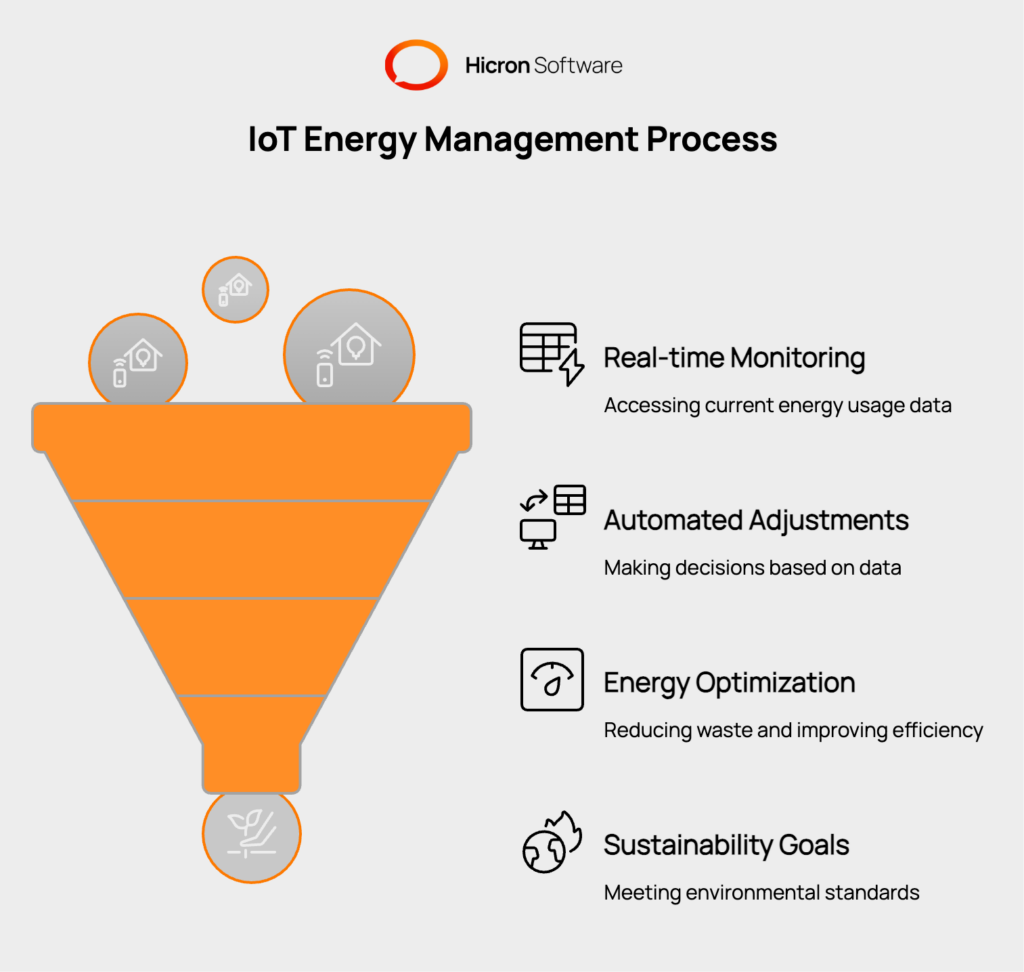
One of the main advantages is access to real-time information. Facility managers can see exactly how much energy is being used at any moment. This allows them to identify waste and make immediate adjustments. For example, sensors can detect when a room is empty and automatically turn off the lights, reducing unnecessary electricity use.
Automation is another key benefit. IoT systems can make decisions based on preset rules or live data. A building’s climate control can adjust automatically based on the time of day, occupancy levels, and even the weather forecast. This reduces manual effort and ensures the system operates at peak efficiency, lowering costs and improving the environment for occupants.
These smart systems also support broader sustainability goals. By optimizing energy consumption, businesses can lower their carbon footprint. Detailed reports from the IoT platform provide clear data on energy savings, helping companies meet regulatory requirements and demonstrate their commitment to environmental responsibility.
Several software platforms are available to help businesses manage their lighting and energy through IoT. These solutions offer a range of features designed for different environments.
While these platforms offer great tools, they are built to serve a broad market. This means they might not perfectly match the unique operational needs of every organization.
While ready-made IoT platforms provide a quick start, they often come with limitations that can hinder a business’s long-term goals. These challenges typically appear after the initial implementation, as a company’s needs evolve.
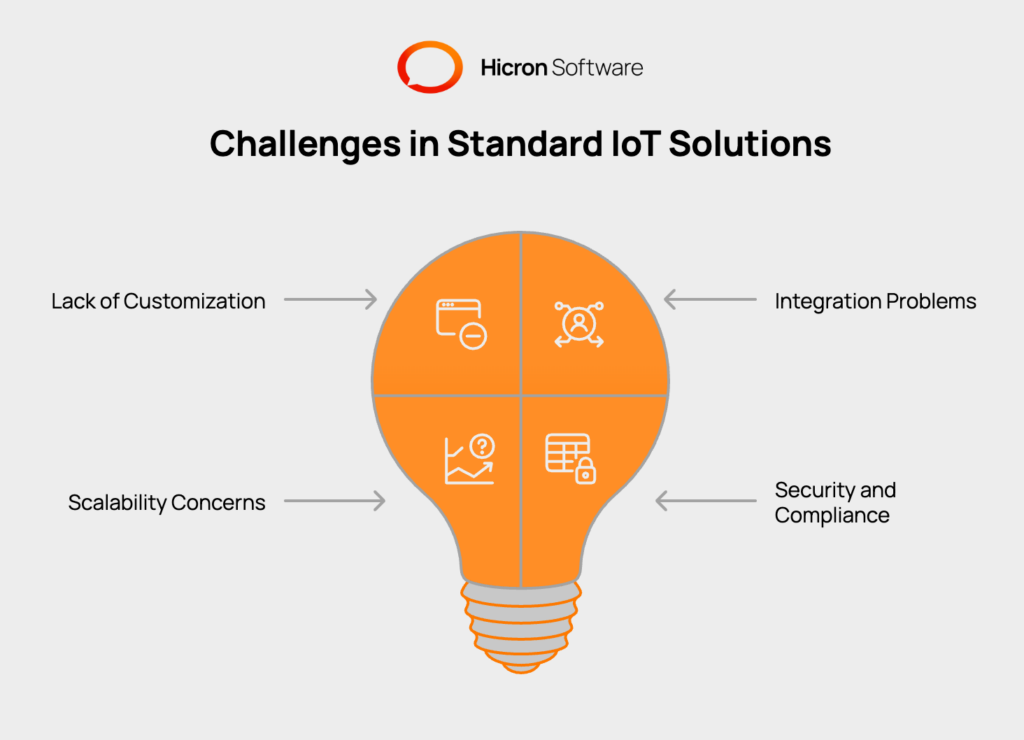
A primary issue is the lack of customization. Pre-built software is designed with a one-size-fits-all approach, which means it may not address the specific workflows or processes of your business. You might find yourself changing your operations to fit the software, rather than the other way around. This can lead to inefficiencies that a tailored solution would avoid.
Integration with existing systems is another common problem. Many businesses rely on a mix of modern and older software for their operations. An off-the-shelf IoT platform may not connect smoothly with these legacy systems, creating data silos and requiring manual workarounds.
Scalability can also become a concern. A solution that works well for a small-scale pilot project might struggle as your business grows and you add more devices or locations. The platform’s architecture may not support the increased data volume or complexity, forcing you to find a new solution down the line.
Security and compliance are critical considerations. A generic platform may not meet the specific security protocols or industry regulations your business must follow. This could expose your organization to risks or compliance violations.
Custom IoT software development directly addresses the limitations found in standard solutions. By building a platform specifically for your business you can create a system that aligns with your objectives and operational requirements. This approach is ideal when off-the-shelf products cannot meet your specific needs for lighting and energy control.
Here are some scenarios where custom solutions excel:
This table highlights the trade-offs between the two options, making it easier to evaluate which is the better fit for your business.
|
Aspect |
Off-the-Shelf Software |
Custom IoT Solutions |
|
Upfront Costs |
Lower initial costs; ready to use but may require licensing fees and add-ons. |
Higher initial investment for tailored development, including design, coding, and testing. |
|
Long-Term Costs |
Hidden costs from integration challenges, missing features, or switching platforms later. |
Designed to grow with your business, reducing the need for costly replacements or upgrades. |
|
Maintenance & Support |
Included in subscription but limited control over updates and features. |
Ongoing cost, but updates are fully customizable to align with your business needs. |
|
Scalability |
May struggle to scale with growing business needs, leading to future limitations. |
Built for scalability, ensuring it evolves with your business and handles increased demand. |
|
Integration |
May face challenges integrating with legacy systems or existing software. |
Seamlessly integrates with your current systems, creating a unified and efficient workflow. |
|
Security |
Standard security features that may not meet specific industry regulations. |
Advanced, multi-layered security tailored to your policies and compliance requirements. |
|
Value for Money |
Lower upfront cost but may lead to inefficiencies and higher operational costs over time. |
Higher upfront cost but offers long-term savings through efficiency, scalability, and reduced risks. |
When to Choose Custom Despite Higher Costs
Custom IoT solutions are worth the investment if:
While the upfront cost of custom development is higher, the long-term benefits often outweigh the initial expense.
Selecting the right IoT solution is a critical decision that will affect your operations for years to come. To make the best choice, you need a clear process for evaluating your options, whether you are considering an off-the-shelf product or a custom build.
First, perform a thorough assessment of your current needs and future goals. Document the specific problems you want to solve, such as reducing energy costs or automating building management. Think about where your business will be in five years and ensure the solution you choose can grow with you.
Next, evaluate the integration capabilities of any potential solution. Make a list of all the systems your new IoT platform will need to connect with, including
A solution that cannot integrate with your existing technology will create more problems than it solves.
Prioritize security and compliance from the start. Understand the specific security standards and government regulations that apply to your industry. The right solution must provide the necessary security features to protect your data and keep your business compliant. Adhering to them is not just a best practice; it is often a legal requirement.
Below are some key examples of regulations and standards that impact IoT deployments across different sectors.
|
Industry |
Security Standard/Regulation |
Description |
|
General |
GDPR (General Data Protection Regulation) |
A European Union law that protects the personal data of EU residents. Applies globally to organizations handling EU data; requires consent, secure storage, and transparent use. |
|
Healthcare |
HIPAA (Health Insurance Portability and Accountability Act) |
U.S. legislation that protects sensitive patient health information. Requires strong security measures for any IoT device handling health data. |
|
Energy & Utilities |
NERC CIP (North American Electric Reliability Corporation Critical Infrastructure Protection) |
North American standards to secure the power grid. IoT systems must follow strict cybersecurity protocols to prevent disruptions and manage incident responses. |
|
Consumer IoT |
NIST IR 8259 (U.S.), ETSI EN 303 645 (Europe) |
Establishes baseline security for consumer IoT devices, including secure passwords, software updates, and vulnerability reporting. Protects against common threats. |
Understanding and applying these industry-specific regulations is a crucial step in planning any IoT project. It ensures your solution is not only effective but also secure and compliant.
Finally, consider the total cost of ownership. This includes not just the initial purchase or development price but also ongoing costs for maintenance, subscriptions, support, and potential future upgrades. A custom solution might have a higher upfront cost but could offer a lower total cost over time by reducing manual work and improving efficiency.
Choosing the right technology partner is as crucial as selecting the right software. When looking for an IoT integration partner, seek a team that specializes in custom software development to solve complex business challenges. Their expertise should enable them to build solutions that are not only powerful but also perfectly suited to your operational needs.
A good partner will work closely with you to understand your goals and design a system that delivers measurable results. Look for a team with a proven track record of developing scalable, secure, and user-friendly IoT applications across various industries. They should guide you through every step of the process, from initial concept to final deployment and ongoing support. Partnering with such a provider ensures you get a solution built for your future.
Adopting IoT for lighting and energy control is a strategic move for any business aiming to improve efficiency, reduce operational costs, and advance its sustainability goals. While standard software provides a useful entry point, a custom-developed solution is often the key to addressing unique operational challenges and achieving the best results. A tailored platform ensures seamless integration, robust security, and the flexibility to scale as your business evolves.
If you are ready to explore how a custom IoT solution can transform your energy management strategy, we can help. Contact us today for a consultation to learn more about our specialized IoT services and discover what’s possible for your business.
IoT integration for lighting and energy control is the process of connecting lighting fixtures, sensors, and energy meters to the internet. This allows for remote monitoring, automation, and data analysis to optimize energy use, reduce costs, and improve building efficiency.
The primary benefits include significant cost savings through reduced energy consumption, real-time monitoring of energy usage, automated controls that adjust to occupancy and conditions, and improved sustainability reporting. It also enhances the comfort and productivity of building occupants.
A business should consider a custom IoT solution when it has unique operational requirements, needs to integrate with existing legacy systems, has strict security or compliance needs, or requires a highly scalable platform that can grow with the company.
The first steps are to clearly define your goals, assess your current infrastructure and systems, and determine your budget. Following this, you should research potential solutions or partners and develop a phased implementation plan, often starting with a smaller pilot project.
IoT systems provide detailed data on energy consumption, which helps companies track and reduce their carbon footprint. By automating lighting and climate controls to use energy only when needed, businesses can operate more efficiently and demonstrate a tangible commitment to environmental responsibility.
Hicron Software proved to be a trusted partner with unmatched technical expertise, delivering a scalable and user-friendly web application that was pivotal to our successful U.S. market expansion.
Hicron’s contributions have been vital in making our product ready for commercialization. Their commitment to excellence, innovative solutions, and flexible approach were key factors in our successful collaboration.
I wholeheartedly recommend Hicron to any organization seeking a strategic long-term partnership, reliable and skilled partner for their technological needs.
After carefully evaluating suppliers, we decided to try a new approach and start working with a near-shore software house. Cooperation with Hicron Software House was something different, and it turned out to be a great success that brought added value to our company.
With HICRON’s creative ideas and fresh perspective, we reached a new level of our core platform and achieved our business goals.
Many thanks for what you did so far; we are looking forward to more in future!

Hicron is a partner who has provided excellent software development services. Their talented software engineers have a strong focus on collaboration and quality. They have helped us in achieving our goals across our cloud platforms at a good pace, without compromising on the quality of our services. Our partnership is professional and solution-focused!

The IT system supporting the work of retail outlets is the foundation of our business. The ability to optimize and adapt it to the needs of all entities in the PSA Group is of strategic importance and we consider it a step into the future. This project is a huge challenge: not only for us in terms of organization, but also for our partners – including Hicron – in terms of adapting the system to the needs and business models of PSA. Cooperation with Hicron consultants, taking into account their competences in the field of programming and processes specific to the automotive sector, gave us many reasons to be satisfied.