10 Real Estate Software Development Companies in 2026
- February 03
- 9 min

CRE (Commercial Real Estate) Compliance with Real Estate Compliance Software refers to the use of specialized technology to ensure that commercial real estate operations adhere to legal, regulatory, and industry standards. This software streamlines processes like document management, identity verification, transaction monitoring, and reporting to mitigate risks and maintain accountability. By automating compliance workflows and safeguarding data, it helps organizations stay efficient, secure, and aligned with evolving regulations.
Staying on top of the intricate web of regulations in commercial real estate (CRE) is a major challenge for any brokerage, real estate firm, or property manager. For modern CRE professionals, managing compliance is a fundamental requirement for operational success and financial stability. This article will explore the difficulties of real estate compliance and show how specialized management software can change this difficult task into a streamlined, automated, and secure element of your workflow. We will cover how to centralize data, simplify real estate transactions, and choose the right compliance tool to support your business with regulatory requirements.
Key Takeaways:
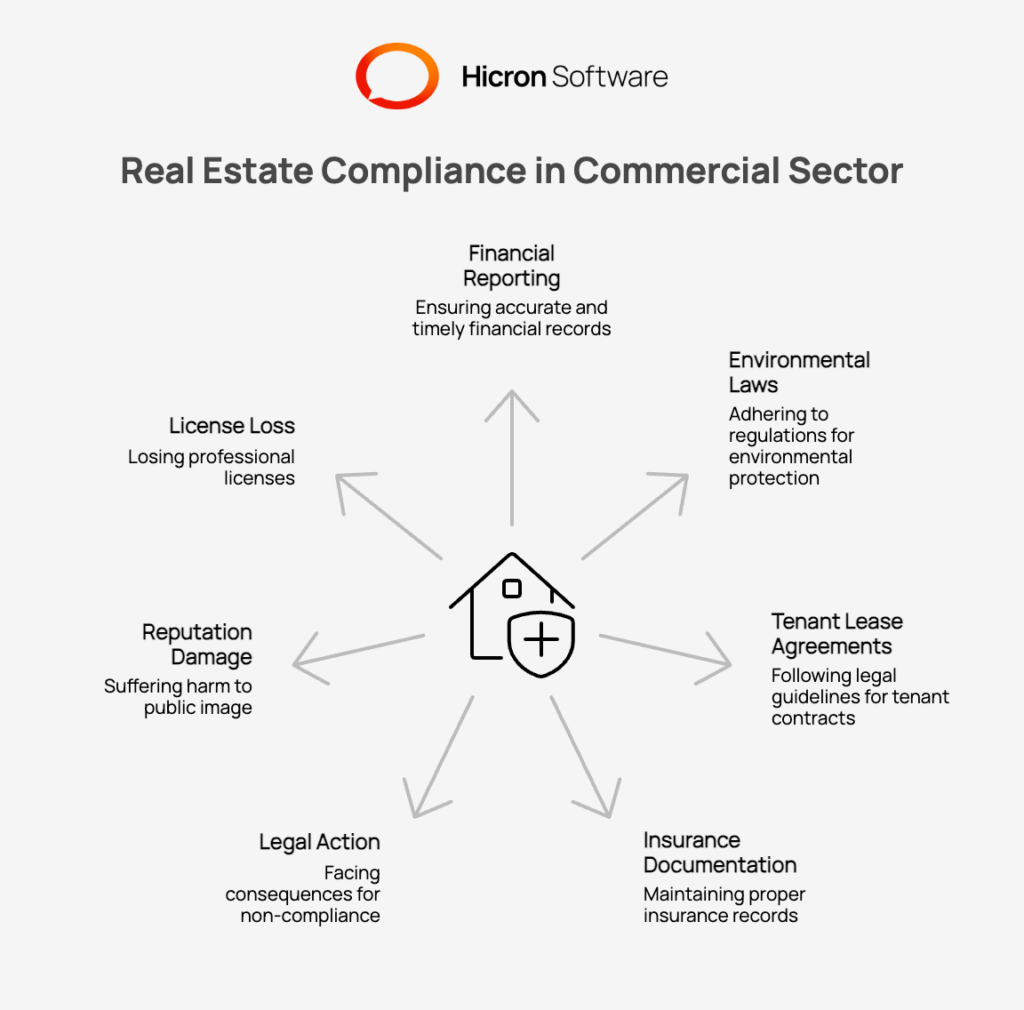
Real estate compliance involves following all the legal, regulatory, and internal policies that govern property management and transactions. This field covers financial reporting, environmental laws, tenant lease agreements, and insurance documentation. In the commercial real estate market, the stakes are elevated due to large investments, complex contracts, and numerous stakeholders. Failure to maintain compliance can result in significant fines, legal action, damage to your reputation, and the potential loss of professional licenses. Managing compliance is essential for the health of any CRE enterprise.
Effective compliance management is a proactive strategy to reduce risk and boost efficiency. When real estate firms handle compliance well, they foster a transparent and reliable environment for every stakeholder, including investors, tenants, and vendors. This creates a solid base for growth. A strong compliance framework ensures every transaction is conducted legally and ethically, which protects the assets and integrity of the entire portfolio. For any property management company or brokerage, excellent management and compliance processes are critical for success in the competitive real estate industry.
Real estate compliance software is a specific management tool created to automate and simplify the detailed work of regulatory adherence. Instead of using manual spreadsheets, scattered files, and continuous manual checks, this software centralizes all compliance activities on one accessible platform. It helps property managers and real estate firms automate regular compliance tasks, like tracking lease renewals, handling certificates of insurance (COI), and monitoring regulatory updates. This automation greatly lessens the administrative workload for your team and reduces manual errors.
The main advantage of these software solutions is their ability to simplify complex processes. By offering a clear, real-time dashboard view of your portfolio’s compliance status, you can quickly find and solve potential problems before they grow. Automated workflows direct your team through the required steps, making sure no important detail is missed during real estate transactions or daily property management. This organized approach improves accuracy and lets your team concentrate on more valuable activities, like client relationships and strategic planning. These compliance solutions are designed for real estate professionals who require efficiency.
When choosing a compliance tool for your commercial real estate business, certain features are essential.
|
Feature |
Description |
|
Document Management & Audit Trails |
|
|
Automated Workflows & Alerts |
|
|
Identity Verification (KYC/KYB) |
|
|
Transaction Monitoring |
|
|
Certificate of Insurance (COI) Tracking |
|
|
Reporting & Analytics |
|
|
Data Security & Privacy |
|
|
Standardized Processes |
|
Each feature is designed to address specific compliance challenges while enhancing operational efficiency. For instance, Document management and audit trails centralize critical records and create verifiable audit logs, simplifying audits and ensuring accountability.
Automated workflows and alerts help prevent compliance lapses by automating reminders for key dates and assigning tasks to the right team members. Identity verification (KYC/KYB) and transaction monitoring focus on fraud prevention and adherence to Anti-Money Laundering (AML) regulations, while Certificate of Insurance (COI) Tracking ensures continuous compliance with insurance requirements. Reporting tools and analytics provide actionable insights through customizable dashboards and detailed reports, catering to both management and regulatory needs.
To safeguard sensitive data, data security & privacy employs advanced encryption and role-based access controls, ensuring compliance with GDPR, CCPA, and other privacy regulations. Standardized processes promote fairness, inclusivity, and regulatory adherence through consistent workflows and accessibility features. This organized approach not only ensures compliance but also fosters trust and efficiency across real estate operations.
A significant challenge in commercial real estate is managing the huge amount of data related to properties, tenants, and transactions. Information is often spread across various systems, spreadsheets, and emails, which creates silos that heighten the risk of mistakes and non-compliance. A compliance platform addresses this by establishing a single source for all information. When you centralize all data, from lease details to vendor contracts, you ensure every stakeholder is using the most current and correct information.
This centralization directly helps to reduce risk. With all data in one place, conducting a thorough audit and proving regulatory compliance becomes much easier. The system can automatically flag missing documents or expiring certificates, which facilitates a proactive approach to real estate compliance management. This forward-thinking stance is vital for avoiding expensive fines and legal issues. A unified commercial real estate software also improves security. You can set access levels to make sure sensitive information is only seen by authorized personnel and create clear audit trails that track every action within the platform.
Specialized software makes it possible to automate these critical tasks. Managing Certificates of Insurance (COI) and tracking important lease dates are two of the most repetitive and error-prone compliance duties in property management. Real estate compliance software is built to automate these processes. For COI management, the software can automate collecting, verifying, and tracking insurance certificates from tenants and vendors. It can scan documents to check for compliance requirements, flag any that are not compliant, and send automated reminders for renewal. This automation of compliance tracking ensures your properties and portfolios are always protected.
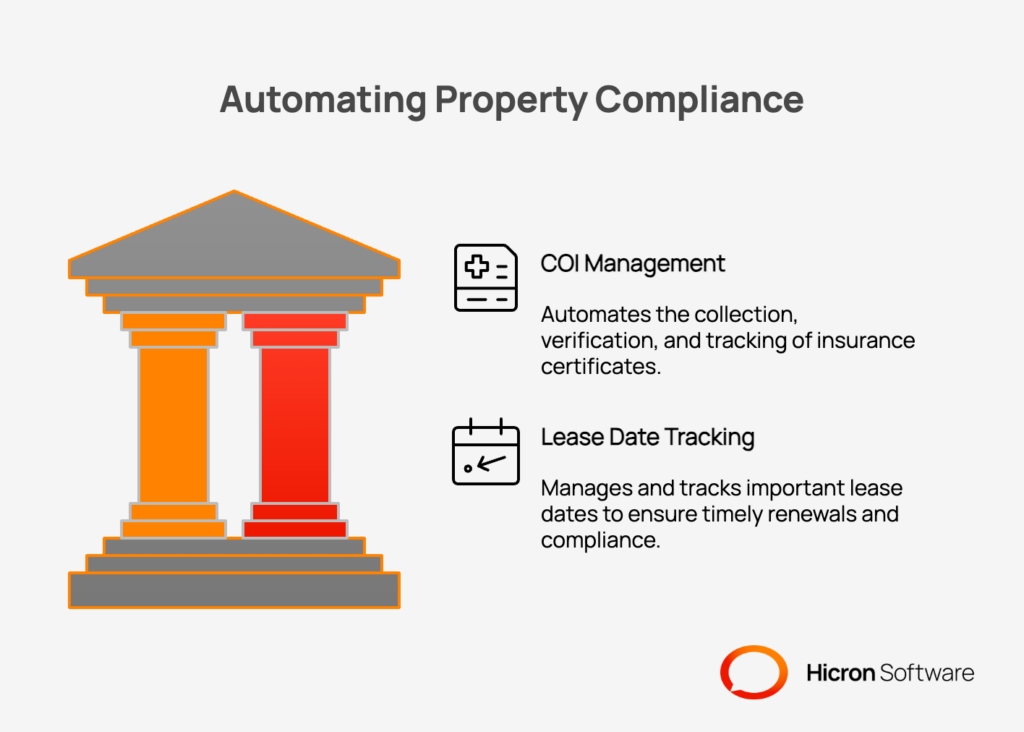
The software can also transform lease tracking. Instead of manually watching dates in a spreadsheet, a compliance platform can pull key dates and clauses from lease agreements. It will then automate notifications for events like rent increases, renewal options, and expiration dates. This process ensures you never miss a critical deadline, which can prevent financial loss and help maintain good tenant relationships. The ability to automate these crucial functions is a major benefit for any property management company. This focus on COI management and lease administration is a core function of modern compliance systems.
The dashboard is the control center for any effective real estate compliance software. It brings together complex data from your entire portfolio and shows it in a simple, visual format. For a busy property manager or broker, the dashboard gives an instant, real-time summary of their compliance program’s health. You can see which properties are compliant, which have tasks pending, and which have urgent issues needing attention. This high-level view is crucial for making strategic decisions and allocating resources effectively.
A custom dashboard makes data actionable. With customizable widgets and alerts, you can tailor it to show the metrics most important to your business. You might want to feature upcoming lease expirations, expiring COIs, or pending maintenance inspections. By clicking on any metric, you can investigate the details, see related documents, and assign tasks to your team. This software for real estate allows you to monitor compliance proactively and shift from a reactive to a strategic management style. This ultimately improves the performance of your real estate operations.
Commercial real estate transactions are intricate processes with numerous steps, deadlines, and parties involved. An oversight at any stage can delay or even derail a deal. Real estate compliance software introduces automated workflows to bring order and efficiency to this complexity. These workflows act as digital checklists, guiding your team through every step of a transaction, from initial due diligence to final closing. You can create templates for different types of transactions, ensuring that your firm’s best practices are followed consistently every time.
This automation helps streamline the entire process. For example, when a new deal is initiated, the system can automatically assign tasks to the relevant team members, set deadlines, and send reminders. As each task is completed, the workflow progresses to the next stage, and the dashboard is updated in real-time. This reduces manual coordination and eliminates the guesswork of who is responsible for what. Automated workflows also create comprehensive audit trails, documenting every action taken during the transaction. This level of transaction management not only accelerates closings but also strengthens risk management and ensures regulatory compliance.
The best real estate compliance software is not a one-size-fits-all solution. Leading software platforms understand that every commercial real estate firm has unique processes, compliance requirements, and business goals. Therefore, they offer a high degree of customization. You should be able to tailor the software to match your existing workflow, rather than being forced to change your operations to fit the software. This includes creating custom fields, building unique workflow templates, and designing reports that align with your specific KPIs.
If the provider cannot deliver a satisfactory level of customization, you can work with bespoke software experts. These experts help map your needs to technical requirements and prepare tailor-made solutions for you. Customization can include creating tailored fields, developing unique workflow templates, and designing reports that match your specific KPIs.
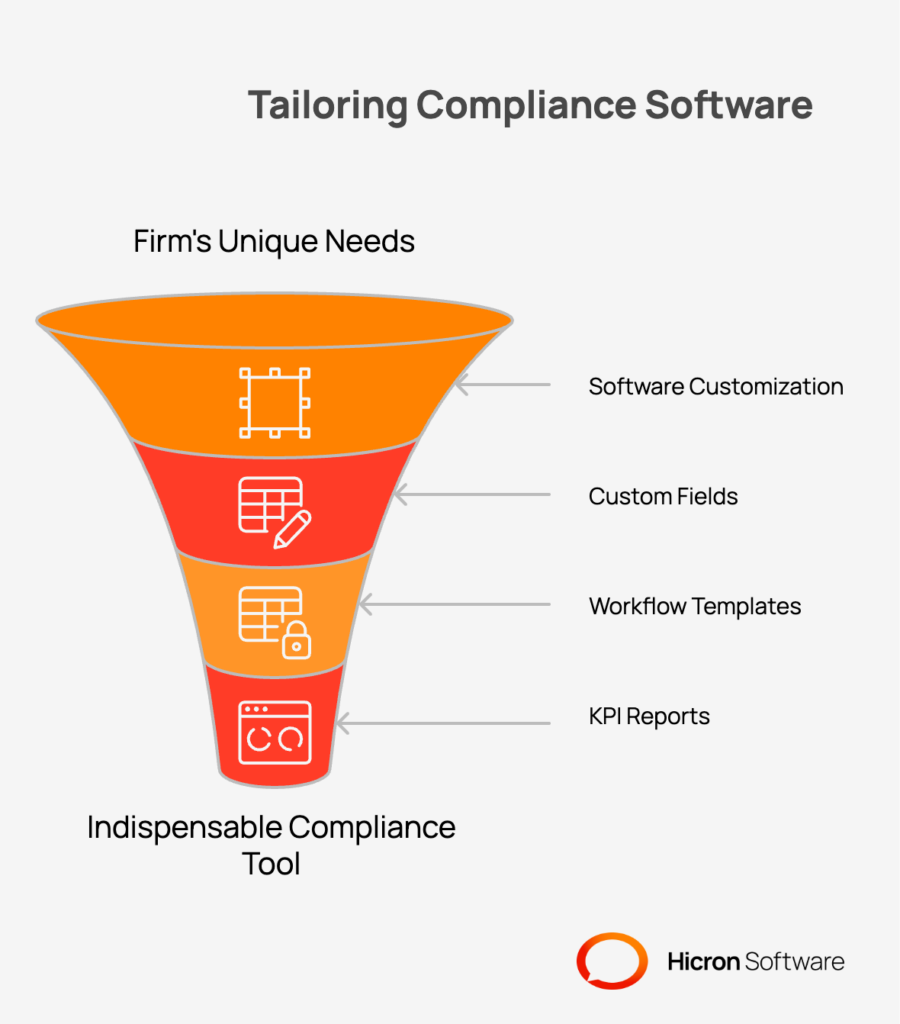
By working with software experts, such as Hicron Software specialists, you can go beyond standard features to develop or tailor custom functionalities that address your firm’s specific challenges. Whether it’s tracking local regulations, managing unique tenant requirements, or integrating advanced analytics, Hicron Software experts are ready to help you create a solution that fits seamlessly into your operations. This level of customization ensures the software becomes an indispensable tool for managing compliance effectively and driving business growth.
Selecting the right software is a significant decision for your firm’s future. Begin by outlining your main compliance challenges and business goals. Are you struggling with COI management, lease administration, or transaction management? Make a list of essential features. With a clear picture of your needs, you can research vendors. Look for software platforms designed for the real estate industry, as they will understand your challenges better than generic management systems.
When you evaluate your options, schedule demonstrations with your top picks. Focus on the user interface and ease of use; if the software is difficult to navigate, your team will resist using it. Ask specific questions about customization, integration with other software you use (like MRI software), and the level of customer support. Check reviews and request references from similar real estate companies. Think about the scalability of the platform. Choose the best software that can grow with your business and support more properties, tenants, and users as your portfolio expands. Finding the right software is a key step to simplify compliance.
In the fast-moving market for commercial real estate, a reactive approach to compliance can lead to significant problems. Waiting for an audit or a regulatory notice before taking action puts you in a difficult position. This leads to rushed work, expensive fixes, and business disruptions. A proactive approach, supported by modern real estate compliance tools, changes this dynamic. It involves constantly monitoring your compliance status, finding potential risks early, and solving them before they become serious compliance issues.
Being proactive helps you stay ahead of regulatory changes and makes compliance a smooth part of your daily workflow. It fosters a culture of accountability and shows clients, investors, and regulators your commitment to high standards. This helps reduce the risk of penalties and enhances your firm’s reputation, giving you a competitive edge. A proactive stance on management and compliance protects your assets, supports sustainable growth, and offers valuable peace of mind.

Hicron Software proved to be a trusted partner with unmatched technical expertise, delivering a scalable and user-friendly web application that was pivotal to our successful U.S. market expansion.

Hicron’s contributions have been vital in making our product ready for commercialization. Their commitment to excellence, innovative solutions, and flexible approach were key factors in our successful collaboration.
I wholeheartedly recommend Hicron to any organization seeking a strategic long-term partnership, reliable and skilled partner for their technological needs.

After carefully evaluating suppliers, we decided to try a new approach and start working with a near-shore software house. Cooperation with Hicron Software House was something different, and it turned out to be a great success that brought added value to our company.
With HICRON’s creative ideas and fresh perspective, we reached a new level of our core platform and achieved our business goals.
Many thanks for what you did so far; we are looking forward to more in future!

Hicron is a partner who has provided excellent software development services. Their talented software engineers have a strong focus on collaboration and quality. They have helped us in achieving our goals across our cloud platforms at a good pace, without compromising on the quality of our services. Our partnership is professional and solution-focused!

The IT system supporting the work of retail outlets is the foundation of our business. The ability to optimize and adapt it to the needs of all entities in the PSA Group is of strategic importance and we consider it a step into the future. This project is a huge challenge: not only for us in terms of organization, but also for our partners – including Hicron – in terms of adapting the system to the needs and business models of PSA. Cooperation with Hicron consultants, taking into account their competences in the field of programming and processes specific to the automotive sector, gave us many reasons to be satisfied.