10 Real Estate Software Development Companies in 2026
- February 03
- 9 min


Real estate compliance software is a specialized digital tool designed to help brokerages, property managers, and real estate firms adhere to legal regulations and industry standards. This technology automates the monitoring of transactions, ensures document accuracy, and maintains secure audit trails to reduce legal risks.
In the fast-moving world of real estate, staying on top of regulations is a massive challenge. Whether you run a bustling brokerage or a large property management firm, the risk of human error in handling sensitive data and financial transactions is real.
This article explores how specialized real estate compliance software can transform your operations. We dive into the must-have features, the benefits of automation, and how to choose a compliance management system that protects your business while boosting efficiency. Read on to discover how the right tools can turn a regulatory burden into a streamlined competitive advantage.
Key Takeaways:
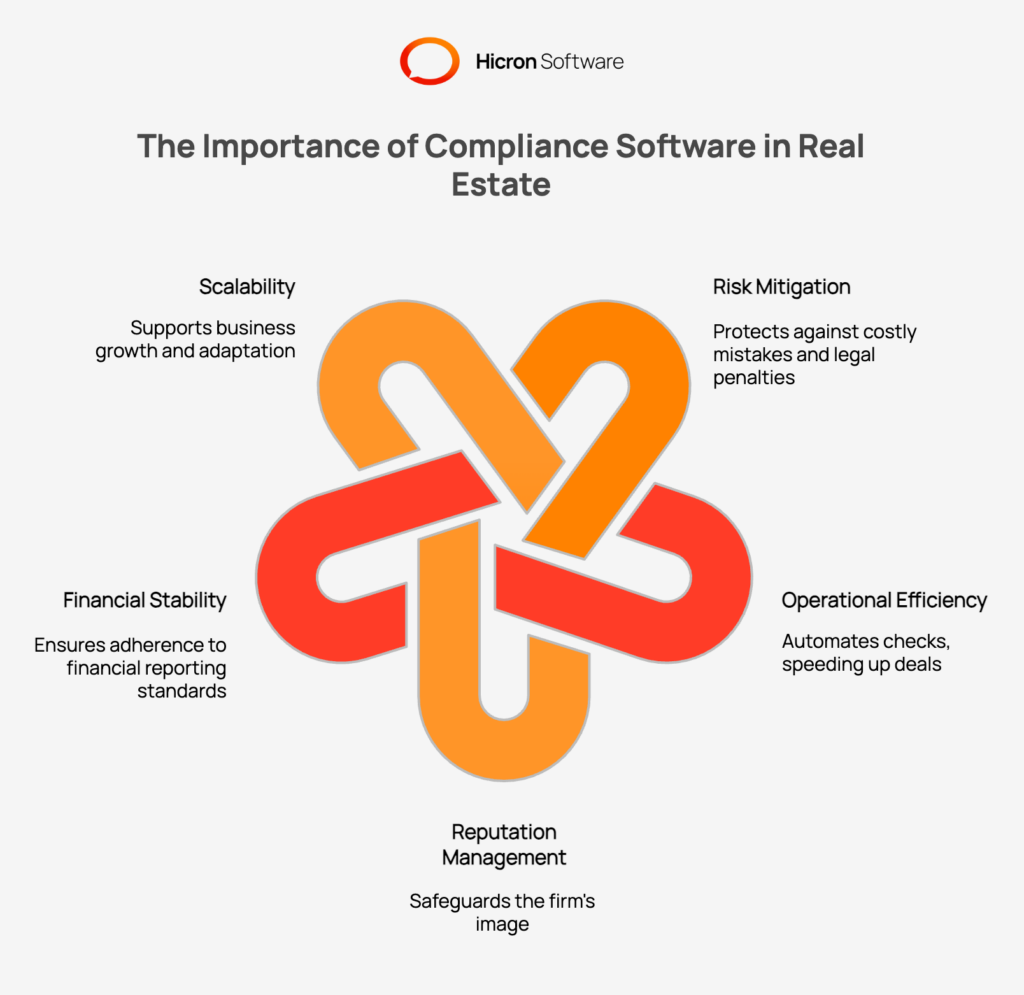
For any real estate business, the regulatory landscape is a minefield of local, state, and federal laws. From fair housing regulations to complex financial reporting, the margin for error is slim. Compliance software matters because it acts as a safeguard against costly mistakes and legal penalties. By integrating a dedicated compliance platform, agencies can move away from risky, manual processes and ensure that every transaction adheres to the latest legal standards. It provides a safety net that protects both the firm’s reputation and its bottom line.
Beyond risk mitigation, implementing robust compliance software improves operational efficiency. When compliance checks are manual, they become bottlenecks that slow down deals and frustrate clients. A modern management system automates these checks, allowing agents and property managers to focus on revenue-generating activities rather than paperwork. Ultimately, compliance software is about building a scalable, resilient business foundation that can withstand scrutiny and adapt to market changes.
One of the advantages of real estate compliance software is its ability to automate repetitive tasks. In a traditional setting, a workflow might involve manually verifying documents, checking dates, and sending reminders activities prone to human error. By using software to automate these processes, you streamline the entire operation. For example, the system can automatically flag missing signatures or expiring certifications, ensuring that nothing falls through the cracks without requiring constant human oversight.
Automation within a compliance platform ensures consistency across the board. Whether you have five agents or fifty, a standardized automated workflow guarantees that every file is treated with the same level of rigor. This integration of technology reduces manual data entry and speeds up transaction times. When you streamline these operations, you not only ensure compliance but also create a smoother experience for your team and your clients, making it easy to close deals faster and with greater confidence.
Essential features of a compliance management system in real estate:
When evaluating software for management and brokerages, identifying the essential features is critical. A top-tier compliance management system must offer more than just basic document storage. Look for compliance tools that offer comprehensive audit trails, which log every interaction within the system. This feature is vital for demonstrating due diligence during an external audit, as it provides an immutable record of who did what and when.
Another must-have feature is a centralized dashboard. This visual interface allows brokers and managers to see the compliance status of the entire brokerage at a glance. Real-time updates on compliance tasks help leaders instantly identify bottlenecks. Additionally, the system should support robust compliance through integrated checklists that guide agents through every step of a transaction. These essential features to look for ensure that your team adheres to company policies and legal requirements without needing constant supervision.
Transaction management and compliance go hand in hand. A standalone compliance solution can be helpful, but a transaction management platform with built-in compliance checks is far superior. When these two functions are integrated, data flows from the contract stage through to closing. This integration centralizes all documents and communications, making it easier to audit files and verify that every step of the real estate transaction meets regulatory standards.
An integrated management platform allows for real-time monitoring of deals in progress. If a critical document is missing, the system can prevent the transaction from proceeding to the next stage, effectively serving as a gatekeeper that ensures compliance before a problem escalates. This proactive approach reduces risk compared to reviewing files after a deal closes. By combining transaction management with compliance protocols, real estate firms can ensure a higher standard of operation and data security.
For property management, the sheer volume of lease agreements, maintenance requests, and financial records makes an audit trail indispensable. Real estate compliance software that automatically records every change to a file creates a layer of transparency that is essential for trust and legality. If a tenant dispute arises or a regulatory body conducts an inquiry, having a detailed digital history allows you to reconstruct events accurately and prove that you followed proper procedures.
Without a digital audit trail, property managers are left relying on fragmented paper trails or disjointed email threads, which is a recipe for disaster during an audit. Compliance software centralizes this history, ensuring that document versions, approvals, and user access logs are stored securely. This feature supports compliance and deters internal fraud and misuse of data. In the real estate sector, where large sums of money and sensitive data are handled daily, the accountability provided by an audit trail is non-negotiable.
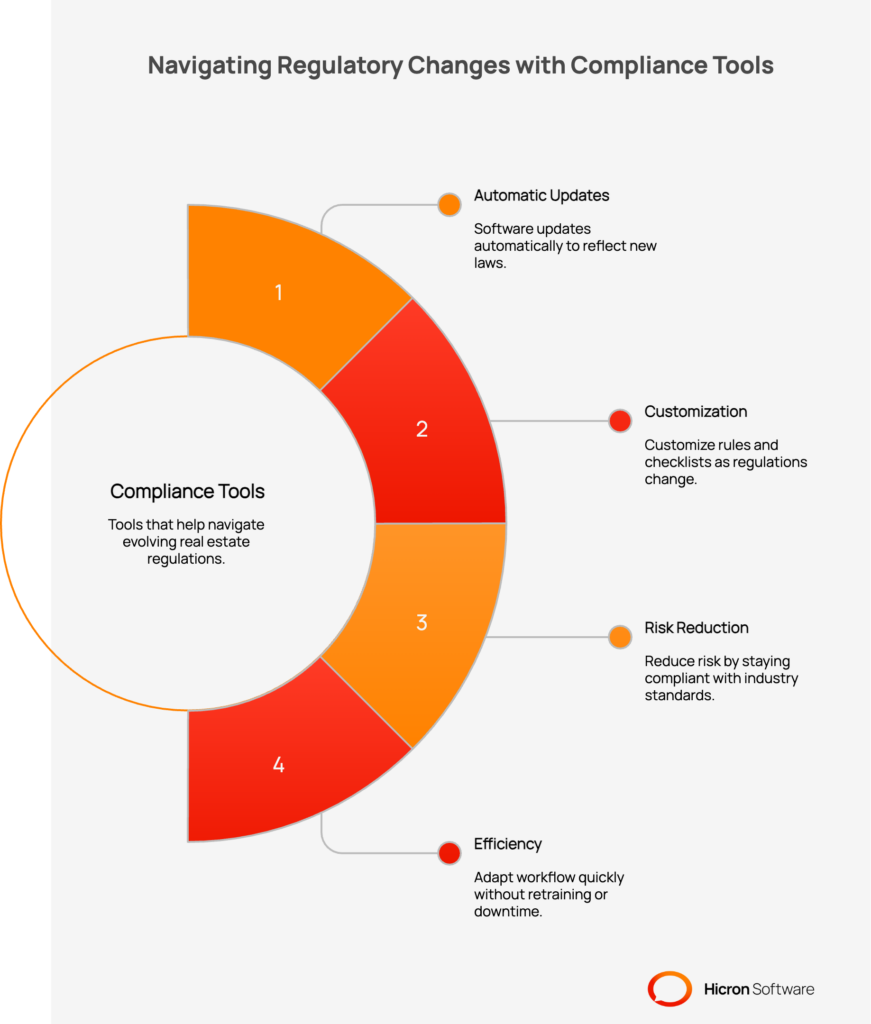
The rules governing real estate are never static; they evolve constantly. Keeping up with these changes manually is nearly impossible for busy professionals. Advanced compliance tools are designed to help you stay ahead of the curve. Many leading software solutions update their parameters to reflect new state and federal laws, effectively alerting you to compliance gaps before they become issues. This capability allows management companies and brokerages to adapt their workflow quickly without expensive retraining or operational downtime.
Additionally, flexible compliance software allows you to customize rules and checklists as regulations change. If a new disclosure form is required for commercial real estate transactions in a specific region, admins can update the system requirements globally in minutes. This agility ensures that your real estate business remains compliant regardless of how fast the legal landscape shifts. By using tools that evolve with the industry, you reduce risk and demonstrate a commitment to strong compliance standards.
Missing a critical deadline can have severe consequences in real estate, from voided contracts to heavy fines. A robust compliance system utilizes automated alerts to keep everyone on track. These notifications can be configured to remind agents of upcoming contract milestones, license renewals, or mandatory inspections. By automating these reminders, you remove the reliance on human memory and ensure that time-sensitive compliance tasks are completed punctually.
Alerts serve as an early warning system for managers. If a file remains incomplete as a closing date approaches, the dashboard can trigger an escalation alert to the broker or compliance officer. This real-time visibility allows for intervention before a delay impacts the client. Effective task management features within the software helps prioritize actions based on urgency, helping teams manage their workload while maintaining a perfect compliance status. This proactive reliance on technology transforms managing compliance from a reactive scramble into a controlled process.

Data privacy and data protection are top concerns for modern consumers and regulators alike. Real estate compliance software that operates in the cloud offers superior security measures compared to local servers or filing cabinets. Reputable providers invest heavily in encryption, firewalls, and regular security audits to protect sensitive client information. By moving to a cloud-based management platform, you ensure that data is accessible only to authorized personnel via secure logins, often with multi-factor authentication.
Cloud-based systems also facilitate secure document storage and sharing. Instead of emailing sensitive attachments, which is a major security risk, agents can share secure links to documents stored within the platform. This streamlines the workflow and maintains a strict chain of custody for data security. For real estate teams working remotely or from mobile devices, cloud access ensures that they can handle compliance documents securely from anywhere, minimizing errors associated with unsecured data transfer.
Choosing the right software is a strategic decision that impacts every level of your organization. The market is flooded with options, but not all are built specifically for real estate. Selecting a generic project management tool instead of specialized estate compliance software for management can leave you with functional gaps. You need a solution that understands the nuances of listings, trust accounting, and agent licensure. The right software aligns with your specific operational needs, whether you focus on residential leasing or commercial sales.
When selecting the right partner, consider scalability and support. As your real estate business grows, your compliance needs will become more complex. You need a platform that can scale with you, handling increased transaction volume without performance lag. Our advice? Look for software for management and brokerages that integrates well with your existing tech stack, such as your CRM or accounting tools. A cohesive ecosystem centralizes data, reduces manual duplication, and creates a unified source of truth for your entire organization.
For larger organizations with multiple offices or departments, maintaining consistency is a major hurdle. Compliance software acts as a unifying force, standardizing processes across teams. By establishing a master checklist and workflow within the system, you ensure that an agent in one branch follows the exact same procedures as an agent in another. This standardization is key to risk management and brand reputation.
Moreover, these platforms foster better collaboration. Compliance officers can review files remotely and leave comments directly within the document record, eliminating the need for back-and-forth emails. This transparency streamlines compliance efforts, allowing for faster approvals and quicker corrections. When everyone is working on the same transaction management platform, communication improves, confusion decreases, and the entire brokerage operates more efficiently. The software essentially bridges the gap between sales and operations, making it easy to achieve regulatory compliance together.
Implementing the right compliance-tracking software is essential for modern real estate companies. By leveraging technology, you can forget about managing compliance manually, protect your business, empower your agents, and deliver a superior client experience.
Real estate compliance software is a digital tool that helps property managers and brokerages adhere to laws and regulations by automating checks, managing documents, and tracking audit trails.
It automates lease tracking, ensures fair housing compliance, secures tenant data, and maintains detailed financial records to prevent legal issues.
An audit trail provides a permanent, time-stamped record of all actions taken within the system, which is critical for proving due diligence during legal disputes or regulatory inspections.
Yes, most modern compliance platforms integrate with CRMs, accounting systems, and transaction management software to create a unified data environment.
Reputable cloud-based software uses advanced encryption, secure servers, and strict access controls to ensure data privacy and protection against breaches.
Hicron Software proved to be a trusted partner with unmatched technical expertise, delivering a scalable and user-friendly web application that was pivotal to our successful U.S. market expansion.

Hicron’s contributions have been vital in making our product ready for commercialization. Their commitment to excellence, innovative solutions, and flexible approach were key factors in our successful collaboration.
I wholeheartedly recommend Hicron to any organization seeking a strategic long-term partnership, reliable and skilled partner for their technological needs.

After carefully evaluating suppliers, we decided to try a new approach and start working with a near-shore software house. Cooperation with Hicron Software House was something different, and it turned out to be a great success that brought added value to our company.
With HICRON’s creative ideas and fresh perspective, we reached a new level of our core platform and achieved our business goals.
Many thanks for what you did so far; we are looking forward to more in future!

Hicron is a partner who has provided excellent software development services. Their talented software engineers have a strong focus on collaboration and quality. They have helped us in achieving our goals across our cloud platforms at a good pace, without compromising on the quality of our services. Our partnership is professional and solution-focused!

The IT system supporting the work of retail outlets is the foundation of our business. The ability to optimize and adapt it to the needs of all entities in the PSA Group is of strategic importance and we consider it a step into the future. This project is a huge challenge: not only for us in terms of organization, but also for our partners – including Hicron – in terms of adapting the system to the needs and business models of PSA. Cooperation with Hicron consultants, taking into account their competences in the field of programming and processes specific to the automotive sector, gave us many reasons to be satisfied.