What is a Vendor Management System (VMS)? 2026 Guide
- October 03
- 12 min

Definition: Asynchronous communication is a method where system components exchange information without needing an immediate response, allowing processes to run independently. In modern business, the demand for high availability and reliability in Vendor Management Systems (VMS) has never been greater.
This article explores why asynchronous processes are vital for building a robust and scalable VMS. You will learn how this approach ensures module interaction and enhances system performance, making it a cornerstone for reliable vendor management systems. Discover the benefits of implementing an event-driven architecture and how it keeps your VMS fully operational, even when handling large volumes of data and complex workflows, ensuring your operations run smoothly without interruption.
In software systems, communication can occur in two primary ways: synchronously or asynchronously.
Synchronous communication is like a phone call; you ask a question and must wait in line for the other person to process your request and give you an answer before you can move on.
If they are busy, you are stuck waiting. This method can create bottlenecks, as the entire system depends on the immediate availability and speed of each component.
In contrast, asynchronous communication works more like sending a text message or an email. You send your request, and the system immediately confirms it has been received.
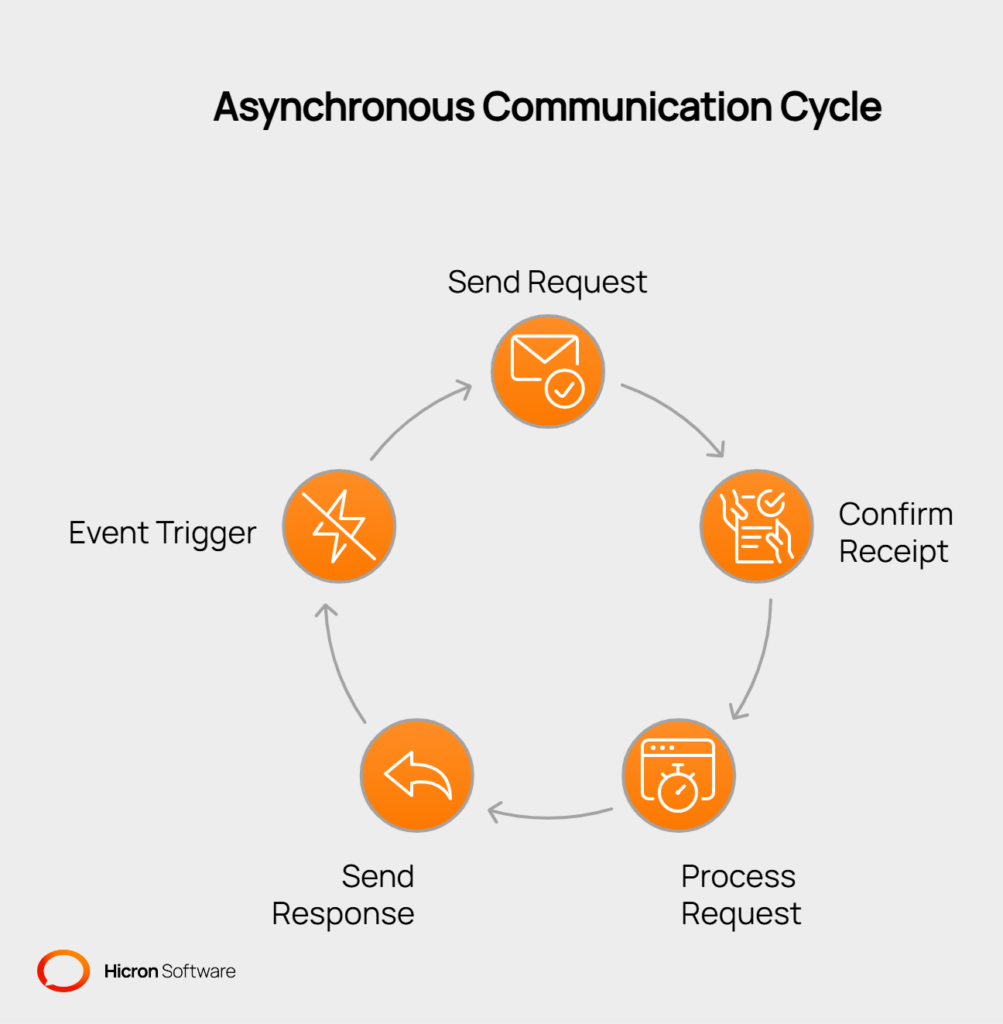
You can then move on to other tasks without waiting for the final response. The receiving component processes the request when it has the capacity and sends the result back later.
This “send and forget” model relies on a middleman, often a message queue, which acts as a temporary holding area for tasks.
For example, when you place an order on an e-commerce site, the system doesn’t make you wait while it checks inventory, processes payment, and confirms shipping all at once. Instead, your order is placed into a queue, and different services handle each step independently.
This approach makes the system more resilient and efficient, as a delay in one part does not halt the entire operation.
Another key concept in asynchronous system design is event-driven architecture. In this model, components of the system respond to events as they happen. When a new event, such as a completed payment or an inventory update, occurs, it automatically triggers specific processes or services.
Combining event-driven architecture with message queues allows for even greater flexibility and scalability, enabling systems to process large numbers of tasks without bottlenecks.
This pairing ensures each task or message is handled efficiently, supporting integration and rapid response to user actions across complex software environments.
Adopting asynchronous communication is a game-changer for vendor management systems. It transforms a rigid, interconnected system into a flexible, resilient, and high-performing platform. By allowing different parts of the system to work independently, it directly addresses the core challenges of modern vendor management, from uptime to data processing. Let’s explore the key benefits.
For any business, system downtime means lost productivity and revenue. Asynchronous communication is fundamental to building a high-availability vendor management system (VMS). It allows individual modules to function independently.
If one component, like the reporting module, goes offline for maintenance, the rest of the system continues to operate without interruption. This is possible because tasks are placed in message queues. These queues act as a buffer, safely storing requests and forwarding them to the relevant module once it’s back online. This design ensures your platform remains one of the most reliable vendor management systems, minimizing disruptions to your operations.
| Challenge | Solution | Benefit |
| Module downtime | Use of message queues | Ensures tasks are processed when ready |
| System-wide failures | Independent module operation | Keeps the system operational |
| Temporary unavailability | Task buffering in queues | Minimizes disruptions |
In a complex VMS, different modules constantly need to exchange information. Asynchronous communication facilitates this by “decoupling” them. This means modules can send data without waiting for an immediate response from the receiver.
For example, an order management module can send an update to the quality control module and immediately move on to its next task. The quality control module processes the update when it’s ready.
This decoupling enables smooth, non-blocking interaction and significantly improves the system’s scalability and flexibility, making it easier to update or replace individual modules without overhauling the entire system.
| Scenario | Asynchronous approach | Advantage |
| Order updates to QC module | Decoupled communication | No delays in processing |
| Module upgrades | Independent module interaction | Easier scalability and flexibility |
| Data exchange between modules | Non-blocking communication | Proper integration |
Businesses with complex supply chains and numerous suppliers generate enormous amounts of data, from purchase orders to compliance documents. Synchronous systems can crumble under this pressure, as they try to process everything in real-time.
Asynchronous systems excel here by queuing tasks and processing them efficiently in the background. This allows the VMS to handle massive volumes of data without slowing down the user-facing experience. Tasks are processed systematically, ensuring that the system remains responsive and stable even during peak operational periods.
| Data challenge | Asynchronous solution | Outcome |
| High data volume | Task queuing and background processing | System remains responsive |
| Complex supply chains | Efficient task distribution | Handles peak loads effectively |
| Real-time processing bottlenecks | Background task execution | Stable system performance |
System bottlenecks are a primary cause of crashes and downtime. Asynchronous processes distribute workloads evenly across different modules, preventing any single component from becoming overwhelmed.
If a task fails due to a temporary glitch, the system doesn’t crash. Instead, built-in retry mechanisms can attempt the task again after a short delay.
If a message consistently fails to be processed, it can be moved to a separate “dead-letter queue” for manual inspection, ensuring no data is lost. This intelligent error handling and load distribution significantly reduce system downtime and create a more robust, fault-tolerant VMS.
| Issue | Asynchronous feature | Impact |
| Bottlenecks | Distributed workloads | Prevents system crashes |
| Task failures | Retry mechanisms | Ensures task completion |
| Persistent errors | Dead-letter queues | No data loss |
Selecting the right technologies is crucial for implementing effective asynchronous communication in a vendor management system. These tools and frameworks provide the backbone for a reliable, scalable, and efficient architecture. They work together to ensure that messages are handled correctly, allowing different parts of your system to communicate without being tightly coupled.
Here are some of the most popular technologies used to build a modern, scalable VMS:
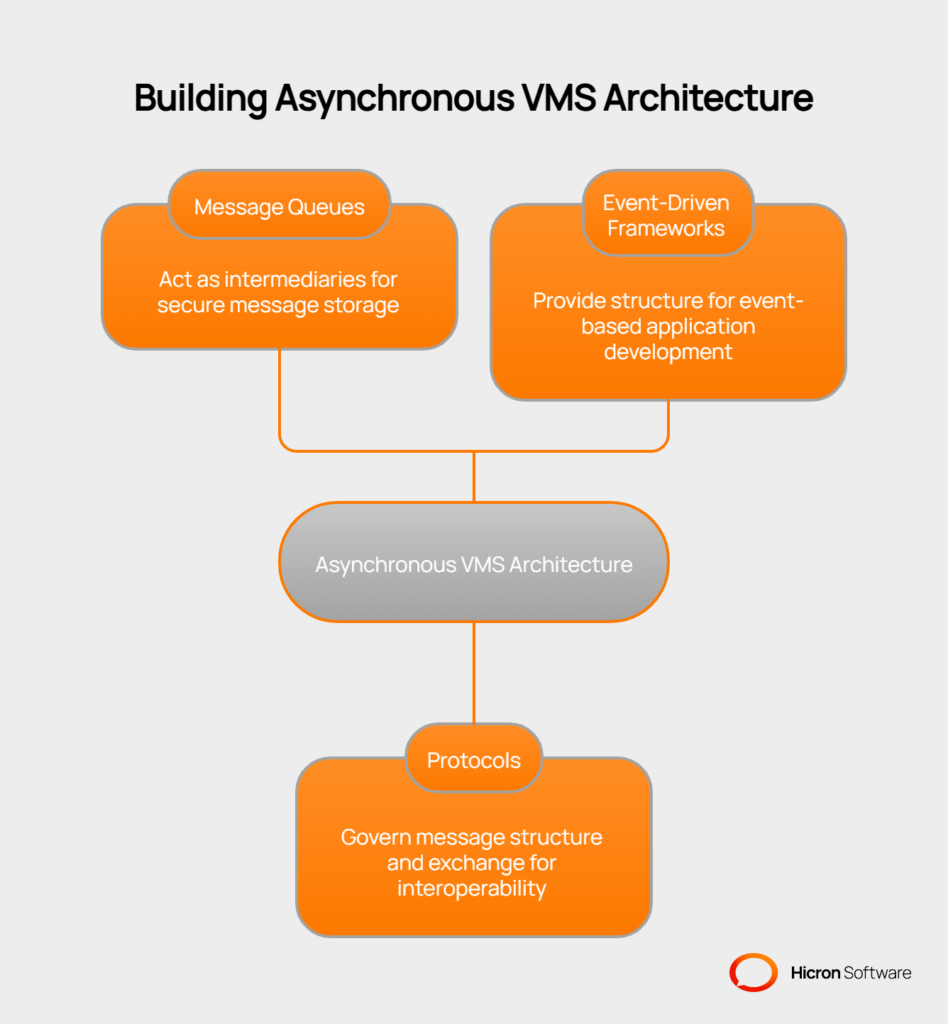
1. Message queues: At the heart of asynchronous systems are message queues, which act as intermediaries for communication. They store messages securely until the recipient service is ready to process them, preventing data loss and ensuring reliability.
2. Protocols: Standardized protocols govern how messages are structured and exchanged between different components, ensuring interoperability and consistency across the system.
3. Event-driven frameworks: These frameworks provide the structure and tools needed to build applications based on an event-driven architecture, where the production, detection, and consumption of events guides system behavior.
Understanding the theory is one thing, but seeing how asynchronous communication solves real-world business challenges is where its value truly becomes clear.
In complex vendor management systems, this approach provides practical solutions that enhance efficiency and reliability across various functions. By decoupling processes, a VMS can handle daily operational hurdles without interrupting workflow, ensuring business continuity.
Imagine a customer places a large order. In a synchronous system, the order process would have to wait for the inventory module to confirm stock availability before proceeding. If the inventory system is slow or temporarily offline for an update, the entire order process halts, creating a poor user experience and potential lost sales.
With asynchronous communication, the order is accepted immediately and placed into a queue. The user gets instant confirmation, and the system processes the inventory check when the module is available, ensuring orders are never missed due to temporary system bottlenecks.
Timely communication with suppliers is essential for a smooth supply chain. A VMS needs to send out various alerts, such as purchase order confirmations, shipping requests, or compliance updates. Instead of waiting for a supplier’s system to acknowledge receipt of each message, an asynchronous VMS sends the notification and moves on.
The message is reliably queued and delivered, ensuring suppliers receive critical information without delaying internal processes. This ensures all stakeholders are informed promptly, even if their systems aren’t immediately responsive.
When a quality issue is identified on the production line, it needs to be logged and tracked. In a rigid, synchronous system, the employee logging the issue might have to wait for the system to process the entry, potentially causing delays in the production line.
Asynchronous communication allows the quality issue to be logged instantly. The information is sent to a message queue, and the employee can immediately return to their work. The VMS then processes the quality log in the background, routing it to the correct department for review without disrupting other critical operations.
While asynchronous communication offers significant advantages for vendor management systems, implementing it effectively requires careful planning. Designing a resilient asynchronous system means anticipating and addressing potential issues arising from its decoupled nature.
By understanding these challenges and applying proven best practices, you can build a robust VMS that is both reliable and efficient.
In a distributed system, network interruptions or service restarts can sometimes cause a message to be sent more than once. If this is not managed, it may result in duplicate actions, such as processing the same invoice twice.
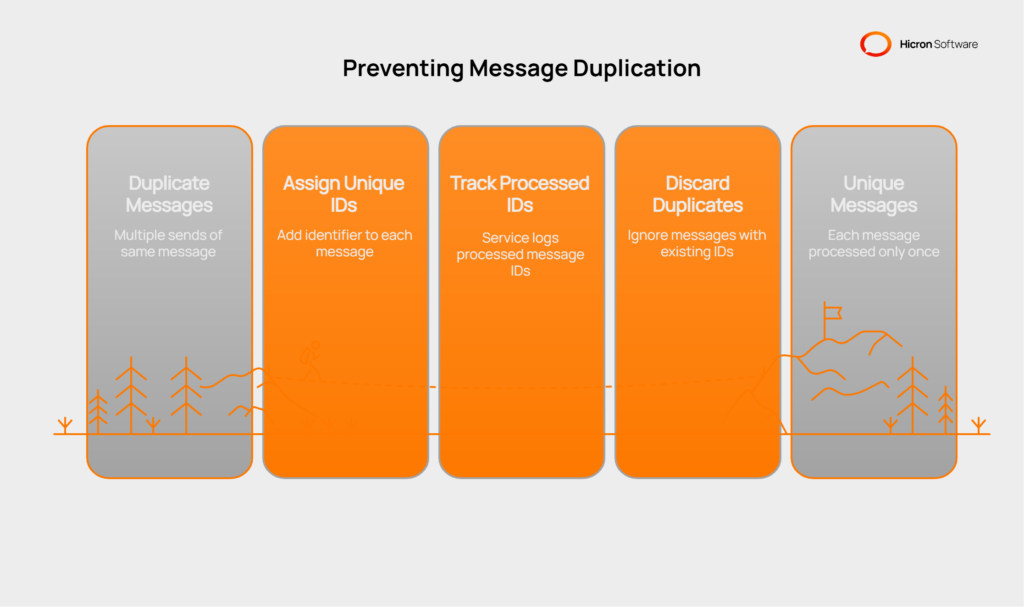
The solution: Assign a unique identifier (ID) to each message. The receiving service keeps track of processed message IDs and discards any duplicates that arrive, ensuring each action occurs only once.
Some operations need to happen in a specific order (for example, an order confirmation before shipment). Since asynchronous messages are handled independently, there’s no built-in guarantee that they will be processed in the correct order.
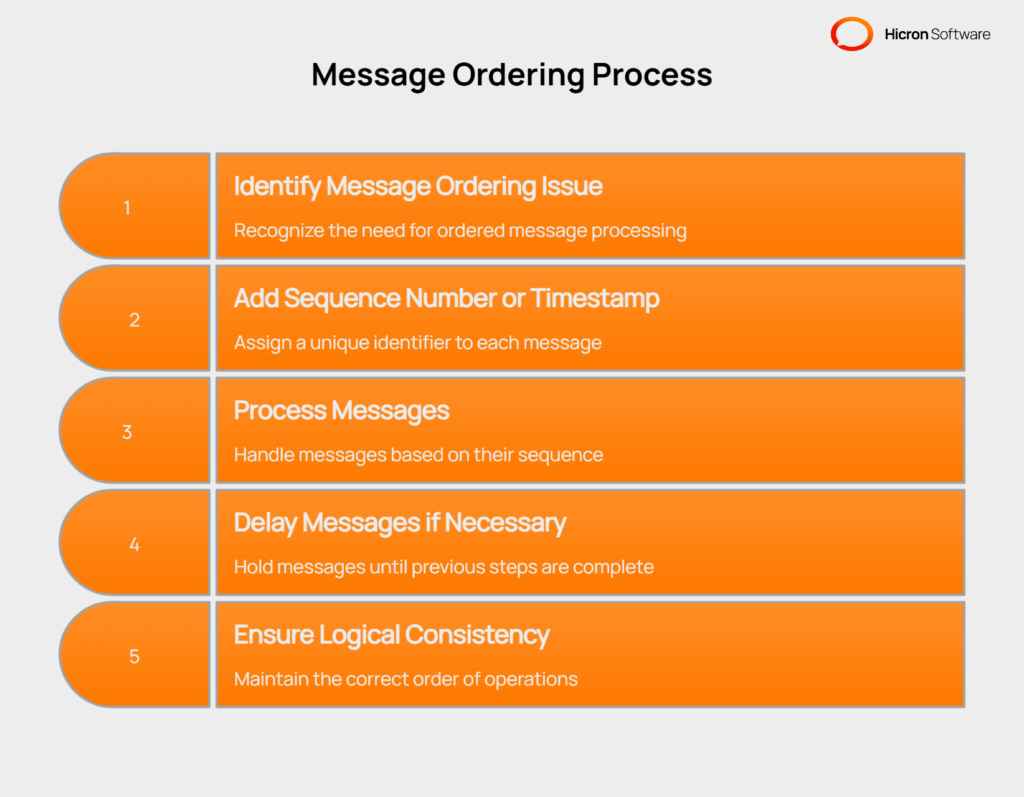
The solution: Add a sequence number or timestamp to each message. The processing system can then organize messages in the correct order or intentionally delay a message until previous steps are complete, ensuring logical consistency in your workflows.
When a service fails to process a message, there’s a risk that the message could be lost, causing data gaps or inconsistency.
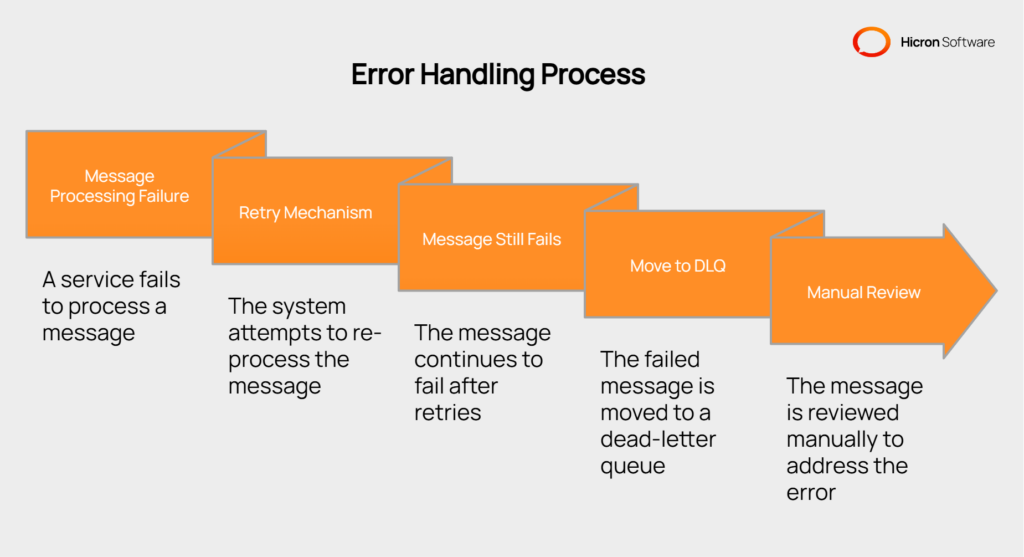
The solution: Implement retry mechanisms to re-process failed messages a set number of times. If the message still fails, move it to a dead-letter queue (DLQ) for manual review. This approach ensures that no important data is lost and errors can be addressed systematically.
The evolution of asynchronous communication continues to push the boundaries of what vendor management systems can achieve. As businesses demand even greater efficiency and resilience, emerging trends promise to make VMS platforms more intelligent, scalable, and robust.
These advancements are key to building systems that not only meet today’s needs but are also prepared for tomorrow’s challenges, ensuring high availability and peak performance.
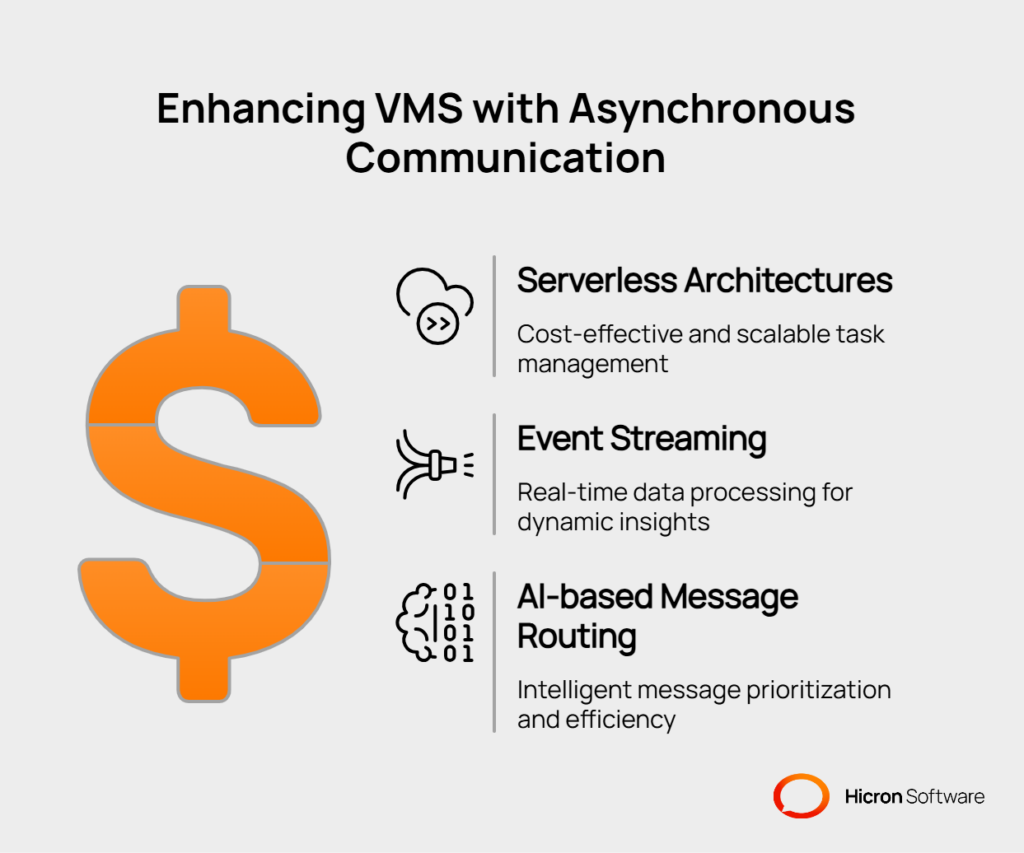
Serverless computing is transforming how asynchronous tasks are managed. Instead of maintaining dedicated servers to handle background processes, a serverless model allows developers to deploy functions that are executed in response to specific triggers, such as a new message arriving in a queue. Cloud providers automatically manage the underlying infrastructure, dynamically allocating resources as needed.
For a VMS, this means you only pay for the computation time you use, leading to significant cost savings. This approach also offers incredible scalability, as the system can instantly scale up to handle sudden spikes in activity and scale back down just as quickly, ensuring consistent performance.
While traditional message queues are excellent for handling discrete tasks, event streaming takes real-time data processing to the next level. Platforms like Apache Kafka can process continuous streams of events as they happen, allowing a VMS to react instantly to new information.
For example, a stream of inventory updates from multiple warehouses can be processed in real-time to provide an always-accurate view of stock levels. This shift from batch processing to real-time streaming enables a more responsive and dynamic VMS, where decisions are based on the most current data available.
Artificial intelligence and machine learning are beginning to play a role in optimizing message routing within an asynchronous system. By analyzing historical data and communication patterns, AI algorithms can predict the most efficient path for a message to take, identify potential bottlenecks before they occur, and even prioritize messages based on urgency or business impact.
This intelligent routing ensures that critical tasks are handled with priority and that system resources are used as effectively as possible. AI-driven routing will further enhance the reliability and efficiency of vendor management systems, creating a smarter and more self-optimizing platform.
Adopting asynchronous communication is fundamental to creating a modern, high-performing Vendor Management System. By enabling module interaction and distributing workloads, this approach ensures your platform remains reliable, efficient, and highly available.
Implementing asynchronous processes allows your VMS to handle complex workflows and large data volumes without compromising performance. This results in a truly scalable VMS that supports your business as it grows. This architecture is the key to minimizing downtime and building one of the most reliable vendor management systems on the market.
Ready to build a high-availability VMS that can withstand the demands of your supply chain? Contact us today to explore how our expertise in asynchronous architecture can benefit your business.

Asynchronous communication is a method where system components can exchange information without needing an immediate response. This is crucial for creating a high-availability VMS because it allows different parts of your system, like order processing and inventory management, to run independently. This ensures that a delay or failure in one module doesn’t cause the entire system to crash, making your VMS more reliable and resilient.
Asynchronous processes make a VMS highly scalable by using message queues to manage workloads. Instead of processing every task in real-time, requests are placed in a queue and handled as resources become available. This event-driven architecture allows the system to efficiently manage sudden spikes in data or user activity, ensuring your scalable VMS performs smoothly as your business grows.
While asynchronous communication inherently processes tasks independently, you can ensure correct sequencing. Strategies like adding sequence numbers or timestamps to messages allow the system to organize and process them in the correct order. This ensures module interaction for critical workflows, such as processing an order payment before confirming shipment.
Message queues act as a buffer or temporary storage for tasks and data exchanged between different system modules. They are fundamental to creating reliable vendor management systems because they prevent data loss if a component is temporarily offline. The queue holds the message until the recipient module is ready, guaranteeing that important information is processed securely.
An event-driven architecture is a design approach where the system responds to “events,” such as a new order being placed or a supplier updating their information. This model, central to asynchronous communication, decouples services so they can react to events independently. This results in a high availability VMS that is more responsive, flexible, and resilient because system-wide failures are minimized.
Hicron Software proved to be a trusted partner with unmatched technical expertise, delivering a scalable and user-friendly web application that was pivotal to our successful U.S. market expansion.

Hicron’s contributions have been vital in making our product ready for commercialization. Their commitment to excellence, innovative solutions, and flexible approach were key factors in our successful collaboration.
I wholeheartedly recommend Hicron to any organization seeking a strategic long-term partnership, reliable and skilled partner for their technological needs.

After carefully evaluating suppliers, we decided to try a new approach and start working with a near-shore software house. Cooperation with Hicron Software House was something different, and it turned out to be a great success that brought added value to our company.
With HICRON’s creative ideas and fresh perspective, we reached a new level of our core platform and achieved our business goals.
Many thanks for what you did so far; we are looking forward to more in future!

Hicron is a partner who has provided excellent software development services. Their talented software engineers have a strong focus on collaboration and quality. They have helped us in achieving our goals across our cloud platforms at a good pace, without compromising on the quality of our services. Our partnership is professional and solution-focused!

The IT system supporting the work of retail outlets is the foundation of our business. The ability to optimize and adapt it to the needs of all entities in the PSA Group is of strategic importance and we consider it a step into the future. This project is a huge challenge: not only for us in terms of organization, but also for our partners – including Hicron – in terms of adapting the system to the needs and business models of PSA. Cooperation with Hicron consultants, taking into account their competences in the field of programming and processes specific to the automotive sector, gave us many reasons to be satisfied.