Choosing between managed IT services and in-house IT depends on your enterprise's needs. Managed services offer scalability and cost savings, while in-house IT provides direct control. Evaluate factors like budget, expertise, and long-term goals to decide the right model.
AI agents revolutionize enterprise operations by autonomously reasoning, planning, and executing workflows. They go beyond traditional automation, managing complex logic and decision-making. However, successful integration requires governance, HITL oversight, and modernized infrastructure to mitigate risks.
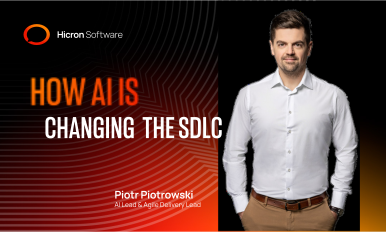
For decades, engineers and developers approached coding by translating intent into syntax. Their traditional development practices connected business needs and working software. Today, spec-driven development and AI coding tools change this dynamic. Teams now have options like open source toolkits and advanced GitHub integrations. These tools shift control from manual coding to automated, spec-driven models. The result is a new workflow powered by AI and clear, written specifications as the foundation.
Legacy system modernization strategies revamp outdated IT systems into agile and efficient architectures, leveraging frameworks like the 7 R's to guide the process. Incremental modernization and patterns such as the Strangler Fig ensure a phased, low-risk transition while maintaining business continuity. By addressing technical debt and adopting scalable solutions, organizations enhance performance and prepare for future growth.
AI software modernization uses intelligent tools to update outdated legacy systems. This process makes old infrastructure more agile, secure, and efficient. Discover how to use staged rollouts and manage risks for a smooth transition.
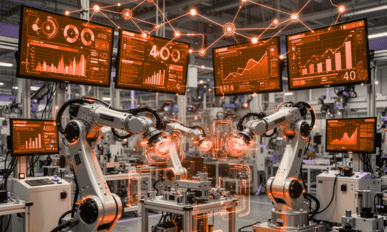
OPC UA and MQTT are two leading communication protocols driving Industry 4.0 advancements. While OPC UA excels in interoperability and complex data modeling, MQTT is lightweight and ideal for fast, efficient data transmission. This article compares their strengths, use cases, and suitability for modern industrial environments to help you choose the right protocol for your needs.
Implementing and configuring an OPC UA server in an Industrial Internet of Things (IIoT) environment is crucial for ensuring communication between devices and systems. This guide covers the essential steps, from initial setup to security configurations, to help you optimize data flow and interoperability. Learn how to leverage OPC UA for a scalable, secure, and efficient IIoT infrastructure.
Explore how the OPC UA standard simplifies MES and ERP integration, the key benefits it offers, and practical steps to implement it effectively. From real-time data exchange to enhanced system interoperability, discover how leveraging OPC UA can transform your manufacturing operations and streamline your digital transformation journey.
Choosing between Avalonia UI and .NET MAUI depends on your project needs. Avalonia UI excels in cross-platform desktop applications with a focus on flexibility and customization, while .NET MAUI is ideal for building cross-platform mobile and desktop apps within the Microsoft ecosystem. This article explores key factors to help enterprise teams make the right choice.
Replacing legacy systems without disrupting operations is a challenge many organizations face. The Strangler Fig Pattern offers a strategic approach by gradually introducing new system components while phasing out the old ones. This article explores how to implement this pattern effectively, ensuring a seamless transition and uninterrupted business continuity.
ISA-95 and OMAC PackML Companion Specifications play a crucial role in enhancing OPC UA interoperability. By standardizing data models and communication frameworks, they bridge the gap between enterprise and manufacturing systems, enabling seamless integration and improved efficiency in industrial automation.
Learn how to enhance the security of your cross-platform desktop applications by applying OWASP guidelines. This guide covers essential practices to mitigate vulnerabilities and protect your applications from potential threats. Discover actionable steps to integrate OWASP principles into your development process.
Monika Stando
January 30
27 min
Testimonials
What our partners say about us
Hicron Software proved to be a trusted partner with unmatched technical expertise, delivering a scalable and user-friendly web application that was pivotal to our successful U.S. market expansion.
Mikko Hyvärinen
Director of Software Portfolio at iLOQ
Hicron’s contributions have been vital in making our product ready for commercialization. Their commitment to excellence, innovative solutions, and flexible approach were key factors in our successful collaboration.
I wholeheartedly recommend Hicron to any organization seeking a strategic long-term partnership, reliable and skilled partner for their technological needs.
Günther Kalka
Managing Director, tantum sana GmbH
After carefully evaluating suppliers, we decided to try a new approach and start working with a near-shore software house. Cooperation with Hicron Software House was something different, and it turned out to be a great success that brought added value to our company.
With HICRON’s creative ideas and fresh perspective, we reached a new level of our core platform and achieved our business goals.
Many thanks for what you did so far; we are looking forward to more in future!
Jan-Henrik Schulze
Head of Industrial Lines Development at HDI Group
Hicron is a partner who has provided excellent software development services. Their talented software engineers have a strong focus on collaboration and quality. They have helped us in achieving our goals across our cloud platforms at a good pace, without compromising on the quality of our services. Our partnership is professional and solution-focused!
Phil Scott
Director of Software Delivery at NBS
The IT system supporting the work of retail outlets is the foundation of our business. The ability to optimize and adapt it to the needs of all entities in the PSA Group is of strategic importance and we consider it a step into the future. This project is a huge challenge: not only for us in terms of organization, but also for our partners – including Hicron – in terms of adapting the system to the needs and business models of PSA. Cooperation with Hicron consultants, taking into account their competences in the field of programming and processes specific to the automotive sector, gave us many reasons to be satisfied.
Peter Windhöfel
IT Director At PSA Group Germany
Get in touch
Say Hi!cron
This site uses cookies. By continuing to use this website, you agree to our Privacy Policy.