What is PropTech Industry & How it Reshapes the Real Estate Market
- December 06
- 15 min

Digital accessibility in PropTech platforms ensures that digital tools and services, such as tenant portals, property management systems, and virtual tours, are usable by everyone, including people with disabilities. It involves designing and developing platforms with features like screen reader compatibility, keyboard navigation, and clear interfaces to promote inclusivity. By embedding accessibility, PropTech companies enhance user experience, meet compliance standards, and create more adaptable and inclusive digital environments.
Digital accessibility remains essential for PropTech platforms. This article explores how digital accessibility shapes user experience, legal compliance, and platform value. Readers will find practical ways to embed accessibility features in PropTech software development, meet the needs of users with disabilities, and improve digital environments. By adopting clear standards and building accessibility from the start, teams can deliver products that serve everyone and ensure long-term success. The content provides actionable guidance for creating inclusive, high-performing PropTech platforms.
Key Takeaways:
Digital accessibility is the practice of designing digital platforms, apps, and experiences so people with disabilities have equal access to all features and services. In PropTech, this includes adding accessibility features like assistive technology compatibility, clear navigation, and adaptable layouts. These measures make property management tools, tenant portals, and smart building interfaces more usable for everyone. Prioritizing digital accessibility supports inclusivity, enhances user experience, and helps platforms meet legal standards.
Accessible design removes barriers from digital services. In PropTech, this means making property management software, tenant portals, and smart building tools usable for all users. Digital accessibility ensures interfaces are simple, adaptable, and compatible with assistive technology. Features like clear navigation and readable layouts support inclusion and help platforms stay compliant. This approach increases organizational value by creating dependable, easy-to-use interactions for everyone. When accessibility is prioritized in design and development, PropTech companies reach wider audiences, reduce legal risk, and demonstrate a strong commitment to inclusivity.
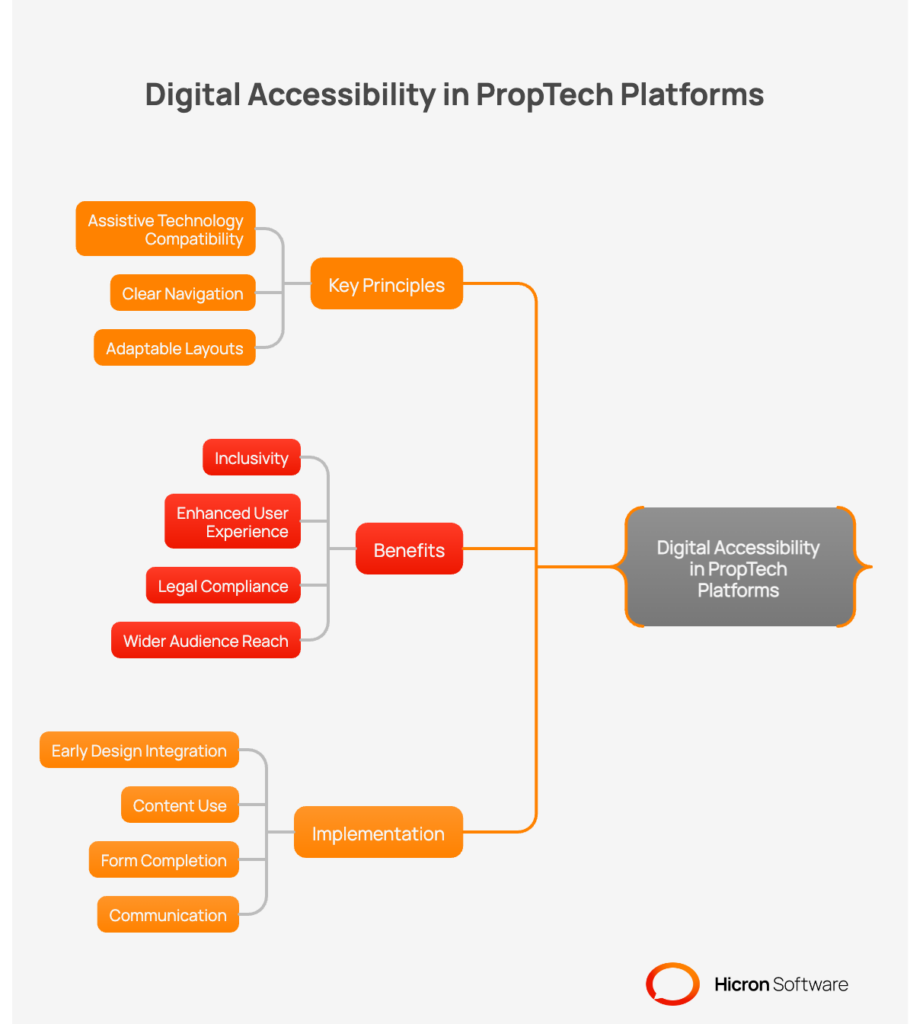
Prioritizing accessibility lets organizations create better user experiences for all audiences. Embedding accessibility early lowers legal risk, boosts compatibility with assistive technology, and supports efficient content use, form completion, and communication. Inclusive design opens platforms to a wider user base and reduces exclusion. This approach builds resilience, helps prepare for future requirements, and strengthens a company’s position in markets where inclusivity and compliance matter.
Accessibility improves product quality for real estate platforms by ensuring clear layouts, readable text, and consistent interactions. Essential features such as keyboard support and intuitive navigation enable people with disabilities to use digital experiences equitably. Integrating accessibility throughout design and development makes platforms easier to maintain and helps meet legal standards, reducing risks like lawsuits or complaints. Digital accessibility supports adaptable, usable, and inclusive platforms, aligning with business goals and strengthening user experience for all.
For PropTech companies, accessibility is fundamental for growth and inclusion. Adding accessibility features to platforms increases adoption among diverse users, including people with disabilities. Digital accessibility ensures that platforms
This focus builds client, investor, and partner confidence, while reducing legal risks and accessibility issues. Enhancing accessibility addresses regulatory needs, supports inclusion, and results in better outcomes for all users. Organizations that prioritize accessibility build resilience and a more competitive PropTech market.
Aligning development in PropTech software projects from the start facilitates global market expansion. This early planning helps developers avoid costly reworks later in the project lifecycle. For this reason, we integrate accessibility into our engineering process from the very beginning.
We implement WCAG 2.1 Level AA accessibility standards across our PropTech applications. This structured approach complies directly with both US and European inclusivity directives. Building applications with these standards prepares the software for broader user adoption. It eliminates the need for expensive code modifications after the initial release.

Accessibility is a core element in product quality and operational efficiency for proptech platforms. Embedding accessibility during design and development improves digital accessibility and user experience for all users, including those with disabilities. This results in fewer errors, smoother operations, and higher satisfaction among diverse audiences.
Accessibility features include clear navigation, intuitive interfaces, and assistive technology compatibility to support people with disabilities.
Inclusive design helps platforms serve everyone, while also improving reach and reputation in the proptech industry.
Compliance with digital accessibility standards lowers legal risk and builds trust. Accessible products support regulatory needs in both the public and private sectors. Embedding accessibility addresses digital issues, ensures adaptability, and prepares platforms for evolving user requirements. Meeting compliance helps avoid lawsuits and protects reputation.
Prioritizing accessibility supports SEO, strengthens brand reputation, and improves digital experiences throughout the platform. Embedding accessible design and inclusive features increases user engagement, broadens visibility in search results, and brings operational benefits beyond compliance.
Accessible PropTech platforms integrate digital accessibility from design to deployment. By focusing on user experience, platforms become adaptable and inclusive, meeting a wider range of needs while improving usability for all. Prioritizing accessibility early creates resilient systems, extends audience reach, and ensures that real estate technology works for everyone.
Accessible features allow users with disabilities to interact independently with real estate technology. This approach leads to usable, dependable platforms and ongoing improvement.
By integrating accessibility from the beginning, PropTech teams support inclusivity, optimize performance, and meet compliance in digital environments.
Digital accessibility and inclusive design help real estate technology reach more users by making products and services usable for everyone. Prioritizing accessibility features and planning for compliance early supports adoption among people with disabilities and those using assistive technology.
Accessibility also lowers business risk on every platform. By following accepted standards in design and development, teams avoid costly rework and late-stage complaints related to accessibility issues. When accessibility is part of the planning phase, digital experiences are ready for diverse audiences, compliance obligations are met, and exposure to legal problems is reduced.
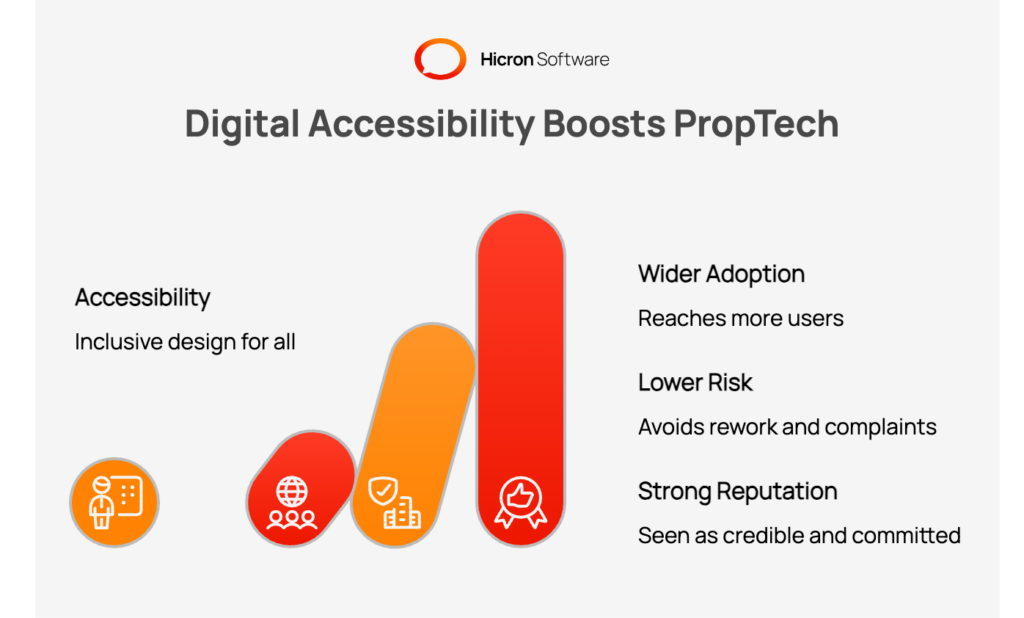
A strong brand reputation in the PropTech sector is closely tied to accessibility. Companies prioritizing digital accessibility across all platforms are seen as credible and committed to inclusive digital experiences. This boosts confidence among clients, users with disabilities, and partners, supporting enterprise contracts and public sector opportunities. Accessible design and inclusive features make products adaptable, intuitive, and compatible, reducing risks of accessibility issues and lawsuits. Embedding accessibility from the start demonstrates organizational commitment, fosters inclusivity, and results in better user experience, broader adoption, fewer complaints, and improved SEO in a competitive market.
Many PropTech platforms face accessibility issues because accessibility is not prioritized early in design and development. These gaps include the
Teams may lack understanding of accessibility standards, leading to misconceptions about design limitations. Budget constraints, limited resources, and insufficient usability testing also limit progress. Outdated components and non-compliant features in apps further contribute to barriers.
Failing to focus on digital accessibility during updates or new releases increases the risk of legal challenges and reduces usability for all. To address these issues, organizations need
Consistently prioritizing accessibility throughout each stage results in adaptable platforms, stronger compliance, and a more inclusive PropTech sector.
|
Barrier |
Description |
Solution |
|
General Prioritization Gaps |
Many PropTech platforms lack clear navigation or intuitive user interfaces. Development teams misunderstand compliance standards or use outdated application components. |
Organizations perform regular accessibility audits and actively educate their development teams. Taking a proactive approach early improves overall compliance and usability. |
|
Low Awareness |
Teams treat accessibility as optional or believe it limits design. This oversight creates inconsistent features and increases potential legal risks. |
Organizations build a culture of accessibility from the very start. This ensures digital experiences are effective for all user groups. |
|
Budget Constraints |
Smaller teams delay accessibility because they view it as costly. Limited project funds slow usability testing and necessary compliance work. |
PropTech companies prioritize inclusivity during the early software planning stages. This allows teams to deliver highly competitive and accessible solutions. |
|
Technical Complexity |
Custom features and outdated components fail to support assistive technology. Complex dashboards and virtual tours often present major usability barriers. |
Developers apply a methodical approach during the initial building phase. Embedding accessibility early creates highly usable and intuitive user interfaces. |
Low awareness of accessibility requirements is a common challenge in PropTech platforms. Teams often treat accessibility as optional, leading to inconsistent features and weak support for assistive technology. When digital accessibility is not established from the start, PropTech platforms risk legal exposure and harm reputation.
Some mistakenly believe accessibility limits design, but accessible and inclusive design actually improves usability for all. Building a culture of accessibility ensures digital experiences are adaptable and effective for everyone. By making accessibility a priority, organizations expand their reach, support compliance, and improve user experience.
Budget and resource limits are common barriers for PropTech platforms. Smaller teams may delay accessibility, seeing it as costly or complex. Efficient PropTech software projects benefit from accessibility features. A lack of budget can slow
This makes accessibility challenges grow over time. When ignored in early planning, platforms often fail to meet the needs of people with disabilities, leading to less usable products. Prioritizing accessibility and inclusivity from the start enables PropTech companies to deliver more competitive solutions.
Technical complexity is often behind accessibility issues in PropTech platforms. Many digital platforms use outdated components or custom features that do not support assistive technology well. This is common in dashboards, booking tools, and virtual tours, where poor design or missing accessibility features create barriers for users with disabilities. Solving these challenges late requires more work and resources. A methodical approach during development ensures interfaces are usable, intuitive, and inclusive.
Some teams mistakenly believe accessibility features weaken design quality or limit platform capabilities. Adding digital accessibility features leads to stable interactions, reduces risks, and supports inclusion for people with disabilities.
To embed digital accessibility in PropTech platforms, integrate accessibility into every phase of design and development. Start with initial planning, code for accessibility features, and use usability testing to confirm compatibility with assistive technology and clear navigation. Inclusive design ensures platforms are intuitive, adaptable, and meet the needs of people with disabilities. This approach results in digital products that support compliance, reduce risk, and create better user experiences for everyone.
Accessibility features like screen reader support, keyboard navigation, and intuitive layouts need to be integrated from the start. Usability testing with users with disabilities ensures these platforms remain adaptable and usable for all. By embedding accessibility early, organizations reduce legal and compliance risks, create better user experiences, and deliver products that meet evolving standards. This proactive approach positions PropTech platforms for lasting inclusivity and strategic advantage.
|
Step |
Description |
Key Benefits |
|
Audit current platforms |
Review all platforms to find and fix accessibility barriers. |
Identifies issues and sets priorities for inclusivity. |
|
Follow accepted standards |
Use WCAG criteria in development and design. |
Improves compatibility and reduces legal risk. |
|
Build accessibility into design |
Add accessible features and clear structure from the start. |
Boosts user satisfaction and ensures compliance. |
|
Work with specialists |
Involve accessibility experts in review and guidance. |
Supports compliance and addresses technical issues early. |
|
Test with real users |
Test with people using assistive technology. |
Uncovers hidden barriers and validates usability. |
Conducting an accessibility audit is the first key step for improving digital accessibility in PropTech platforms. The process reviews all websites, property management portals, apps, and internal tools to identify barriers for people with disabilities. Teams examine forms, menus, media, navigation, and dynamic content for accessibility issues, inclusivity, and compliance with standards. An effective audit highlights user experience gaps, establishes remediation priorities, and guides integration of accessibility features. This method supports intuitive, adaptable services and prepares platforms to serve diverse audiences, including users who rely on assistive technology.
WCAG is the industry standard for accessibility in digital platforms. The guidelines set clear criteria for digital accessibility across structure, contrast, keyboard access, text alternatives, and error handling. Using WCAG supports inclusion, improves user experience, and ensures compatibility with assistive technology. Applying these standards reduces legal risk and helps teams address accessibility issues across the design and development lifecycle. By focusing on compliance and adapting to user needs, organizations build accessible platforms prepared for long-term success in the proptech industry.
Building accessibility into design means integrating digital accessibility and inclusive design from the earliest stages. Platforms and apps should include features like readable text, clear labels, logical structure, contrast, keyboard access, and assistive technology support. Intuitive navigation and adaptable layouts make digital experiences usable for people with disabilities and adaptable to varied needs. Teams need usability testing with users who require accessibility to identify issues and ensure compliance with standards. Prioritizing accessibility at every design and development phase increases user satisfaction, addresses compliance, and strengthens digital services in PropTech.
Accessibility specialists provide expertise on digital accessibility for PropTech platforms. They review design, code, and workflows to identify accessibility issues affecting users with disabilities. Their input helps improve accessibility features in both general platforms and complex solutions such as AI adoption and smart building tools. Early involvement ensures compliance and reduces legal risk. Specialists guide teams through technical challenges, prioritize accessibility, and support better user experience, platform compatibility, and adaptability for diverse users.
Technical testing finds some accessibility gaps, but user testing with people with disabilities is crucial for real insight. Testing with users who depend on assistive technology, such as screen readers, reveals barriers missed by automated tools. This process identifies problems with navigation and compatibility and ensures accessibility features like keyboard access and clear interfaces work for all needs. Involving a diverse user group improves accessibility, meets standards, and creates platforms that are intuitive and inclusive. Embedding real-user feedback during design and development enables organizations to address challenges early, lower legal risks, and deliver a better, more usable experience for everyone in PropTech.
Accessibility regulations set clear requirements for digital platforms in real estate. The Americans with Disabilities Act and Section 508 establish standards to ensure technology is usable for people with disabilities. WCAG provides the main guidelines for digital accessibility. Following these standards reduces legal and reputational risk, aligns with compliance, and improves user experience.
Routine usability testing and accessibility features support compliance while making platforms more robust and adaptable. Failing to meet accessibility expectations and digital accessibility standards can lead to complaints, legal challenges, lost procurement opportunities, and reputational damage. For PropTech, accessibility and compliance are essential for public websites, customer portals, and regulated software. Lacking accessibility exposes organizations to legal risk and barriers for users with disabilities.
Compliance is only one aspect of accessibility for digital platforms. Demonstrating a strong commitment to accessibility shows an organization values equal access for all users, including those with disabilities. Meeting digital accessibility requirements builds trust with enterprise clients and public sector partners. By embedding accessibility features from the start, companies address compliance, perform better in procurement, and increase organizational resilience. Focusing on real accessibility challenges in existing digital products leads to better user experiences and lasting value in PropTech.
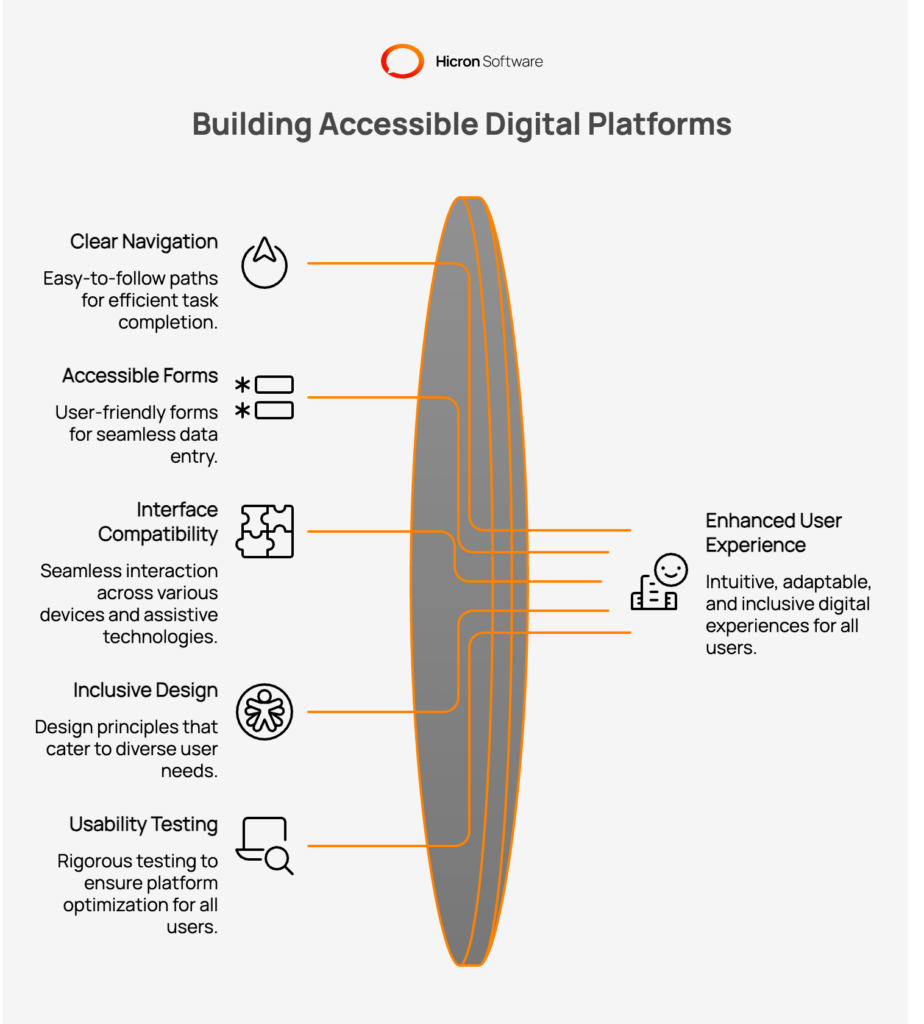
Accessibility enhances user experience on digital platforms by making digital experiences intuitive, adaptable, and inclusive. Features like
help users with disabilities complete tasks efficiently. Accessible content leads to quicker decisions and lower frustration, resulting in more reliable, usable platforms for everyone.
In real estate, accessibility ensures digital platforms serve users efficiently, helping them review listings, submit documents, and report maintenance with accessible navigation and assistive technology support. Prioritizing features like clear interfaces and adaptable layouts allows people with disabilities (including those who are blind, deaf, or have mobility or cognitive challenges) to use digital services independently.
Platforms designed with inclusive design principles and accessibility features improve user experience for everyone. Accessibility supports internal teams by reducing errors, support requests, and legal risks. Usability testing and compatibility with assistive tools help ensure platforms remain optimized for all users and organizational needs. By focusing on accessible design from the start, real estate companies deliver better digital services, encourage wider adoption, and build trust across audiences.
Accessibility drives innovation and AI adoption in digital proptech platforms by building adaptable systems that serve diverse audiences. Inclusive design ensures digital experiences are usable and efficient, even as new AI-driven features and automation become more common in property management and smart buildings.
Early integration of accessibility helps identify challenges, optimize digital services, and prepare platforms for future advancements.
PropTech platforms that add accessibility features throughout design and development can more easily adopt new technologies, such as AI and automation, especially in property management.
Accessibility will continue to be a core requirement in the development of digital products for the PropTech industry. As artificial intelligence becomes more common, these platforms will use AI to personalize interfaces, improve navigation, and better support the needs of people with disabilities. Smart building systems and virtual property tours will depend on accessible controls, keyboard support, captions, and alternative interaction methods to maintain inclusion for a wide range of users.
AI adoption in real estate automates accessibility checks, recommends compliance improvements, and helps platforms adapt to users’ needs. As property technology evolves, digital accessibility and inclusive design will address ongoing challenges and improve user experience. Organizations that prioritize accessibility features, intuitive design, and strong compliance deliver reliable, usable digital experiences for everyone.
As digital services become central in real estate, digital accessibility and inclusive design will shape the future of PropTech platforms. Built-in accessibility features and AI adoption will help automate checks, support adaptation, and provide intuitive, compliant platforms for a broad range of users.
Accessibility shapes the future of PropTech by making platforms inclusive and usable for everyone. Applying accessibility in property management, tenant portals, and smart building interfaces delivers clear navigation and strong assistive technology compatibility.
For teams building or updating PropTech products, accessibility begins with a thorough audit of current platforms to identify barriers affecting people with disabilities. Applying WCAG standards ensures compliance and inclusivity. Embedding accessibility in design and development addresses navigation and compatibility with assistive technology. Usability testing with users with disabilities gives direct insight into experience and adaptability. Ongoing review and optimization of accessibility features help keep platforms usable, intuitive, and compliant for everyone.
Accessible real estate technology addresses the needs of people with disabilities by integrating accessibility features like clear navigation, intuitive interfaces, and assistive technology compatibility at every stage. These efforts reduce exclusion, ensure legal compliance, and support a wide range of user needs.
Hicron Software helps companies build inclusive digital experiences for all users. Our team provides technical expertise to develop accessible PropTech solutions. We integrate accessibility compliance standards into your core platform architecture. This structured approach improves digital usability for diverse user groups. Reach out to our specialists to discuss your project requirements.
Hicron Software proved to be a trusted partner with unmatched technical expertise, delivering a scalable and user-friendly web application that was pivotal to our successful U.S. market expansion.

Hicron’s contributions have been vital in making our product ready for commercialization. Their commitment to excellence, innovative solutions, and flexible approach were key factors in our successful collaboration.
I wholeheartedly recommend Hicron to any organization seeking a strategic long-term partnership, reliable and skilled partner for their technological needs.

After carefully evaluating suppliers, we decided to try a new approach and start working with a near-shore software house. Cooperation with Hicron Software House was something different, and it turned out to be a great success that brought added value to our company.
With HICRON’s creative ideas and fresh perspective, we reached a new level of our core platform and achieved our business goals.
Many thanks for what you did so far; we are looking forward to more in future!

Hicron is a partner who has provided excellent software development services. Their talented software engineers have a strong focus on collaboration and quality. They have helped us in achieving our goals across our cloud platforms at a good pace, without compromising on the quality of our services. Our partnership is professional and solution-focused!

The IT system supporting the work of retail outlets is the foundation of our business. The ability to optimize and adapt it to the needs of all entities in the PSA Group is of strategic importance and we consider it a step into the future. This project is a huge challenge: not only for us in terms of organization, but also for our partners – including Hicron – in terms of adapting the system to the needs and business models of PSA. Cooperation with Hicron consultants, taking into account their competences in the field of programming and processes specific to the automotive sector, gave us many reasons to be satisfied.