What Is Cloud Native and How Does It Change Enterprise Architecture?
- May 18
- 20 min


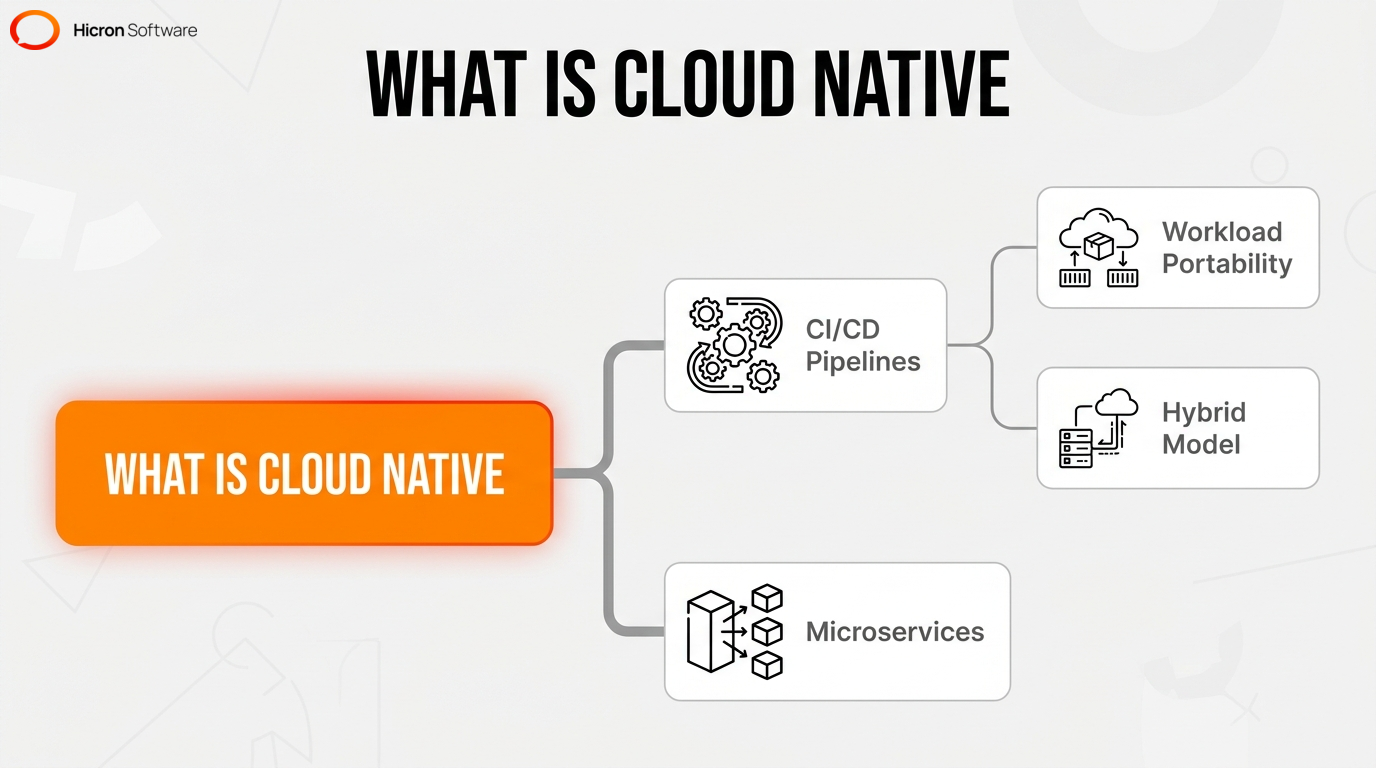
Cloud-native application development is a methodology for building, deploying, and managing modern software to ensure applications scale seamlessly and maintain high availability during outages. The approach relies on a stack of microservices, containers, and CI/CD pipelines which DevOps teams manage. Through software-defined infrastructure, a cloud-native application operates independently of specific hardware, and developers package code and dependencies into containers to ensure applications run consistently across any platform.
This decoupling enables workload portability and supports a build once, run anywhere” deployment strategy. Adopting cloud computing technologies doesn’t require a complete migration to public servers. If the thought of moving everything to the cloud overnight makes you nervous, you can breathe a sigh of relief. Enterprises frequently implement a hybrid model that combines on-premises infrastructure with cloud resources to save money. Cloud-native principles apply just as effectively to private environments when organizations prefer to keep data local.
Developers purpose-build cloud-native applications for cloud computing environments. Meanwhile, cloud-enabled apps are legacy systems adapted for the cloud, and monolithic architectures function as tightly coupled single units. The cloud-enabled model represents a “lift and shift” migration strategy rather than a complete software re-architecture. This approach limits an organization’s ability to maximize modern infrastructure benefits like speed and flexibility.
Monolithic architectures lack the flexibility of microservices. Cloud-native functionalities operate as smaller, independent services that developers package into containers. These modular components consume minimal computing resources and provide greater resilience than heavy monolithic structures.
|
Architecture & Concepts |
Description |
Key Components & Characteristics |
|
Cloud-Native Architecture |
Methodology for building, deploying, and managing modern software to ensure applications scale seamlessly and maintain high availability. |
|
|
Cloud-Enabled Apps |
Legacy systems adapted for the cloud rather than undergoing a complete software re-architecture. |
|
|
Monolithic Architecture |
Heavy structures that function as tightly coupled single units. |
|
|
Cloud-Native Stack |
A collection of tools that build applications capable of handling high traffic and adapting easily to updates. |
|
|
Hybrid Cloud Model |
Combines on-premises infrastructure with cloud resources to balance performance with strict security concerns. |
|
|
Infrastructure as Code (IaC) |
Automates the provisioning of software-defined infrastructure through code instead of manual, error-prone configuration. |
|
|
System Complexity & Observability |
The operational challenges and solutions associated with managing highly distributed microservices. |
|
The cloud-native stack is a collection of tools that build applications capable of handling high traffic and adapting easily to updates. Building a cloud-native architecture requires 6 core foundational elements:
CI/CD platforms and configuration management tools automate the building, testing, and deployment procedures regardless of the underlying infrastructure. Meanwhile, a service mesh handles internal communications and security protocols between distributed microservices. Serverless computing executes specific application functions on demand without requiring manual server provisioning.
These 3 components function together to make applications faster to update:
This combination gives container orchestration platforms the power to automate cloud-native environments.
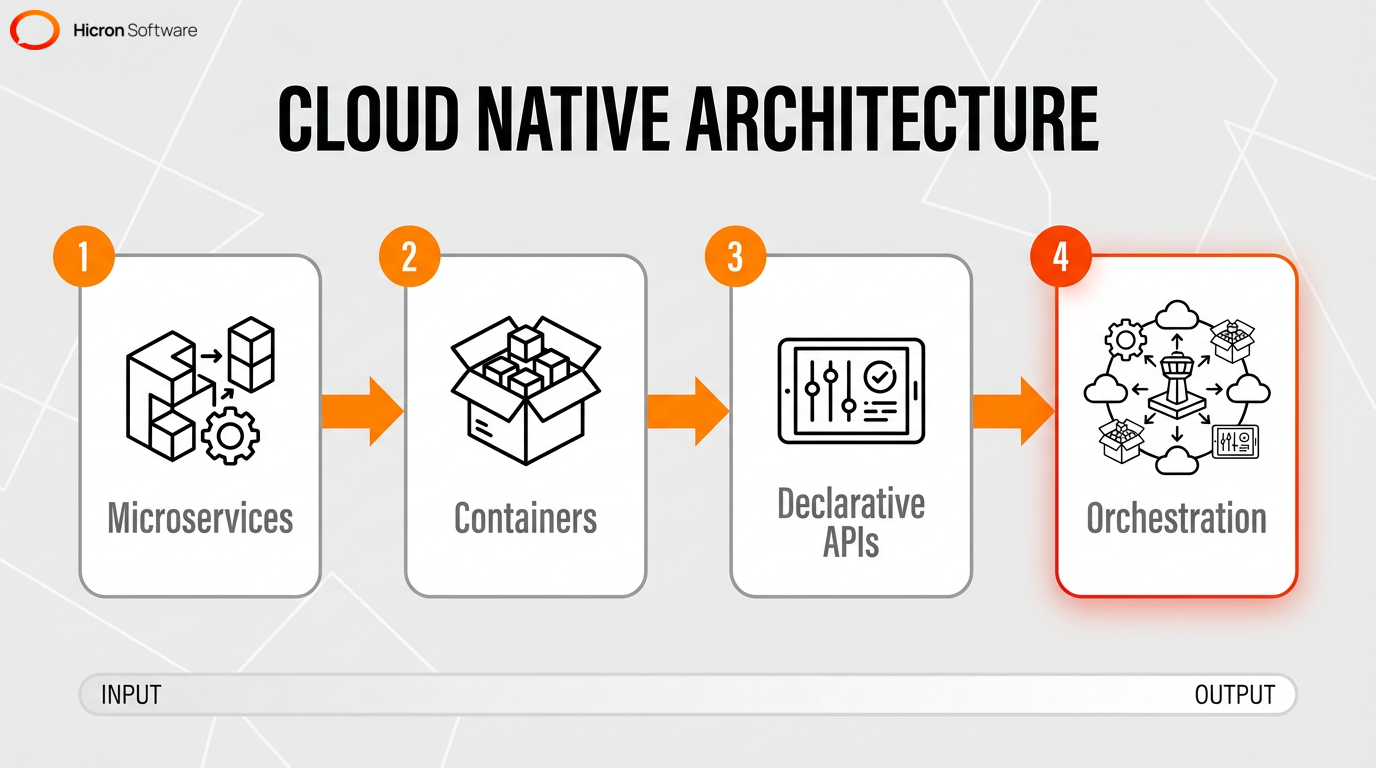
In a cloud-native ecosystem, Docker creates containers, while Kubernetes manages them. Docker builds container images that encapsulate applications, such as web servers and databases. Kubernetes then steps in to automate how these containers are deployed across clusters.
Kubernetes automates horizontal scaling by adding or removing container instances based on real-time demand. This dynamic scaling keeps the app running smoothly even if an individual server crashes within your cloud or on-premises environment.
DevOps methodologies combined with CI/CD pipelines automate the software release lifecycle to enable faster, more reliable delivery. Continuous integration and continuous delivery reduce the time to market for new software features, such as microservice updates and security patches. They do this by automating code building, testing, and deployment. DevOps aligns development and operations teams, breaking down barriers between teams with shared responsibilities to accelerate release cycles. From what I’ve seen in the field, this cultural shift is often where teams experience the biggest leap in productivity.
Companies increase development speed by using software tools to automate procedures, regardless of the underlying software-defined infrastructure. This automation supports cloud-native applications by allowing teams to push updates instantly. Container orchestration platforms integrate directly with these pipelines to manage deployments efficiently.
Infrastructure as code (IaC) automates the provisioning of software-defined infrastructure to enable immutable infrastructure. IaC manages an environment through code instead of manual, error-prone configuration, and once deployed, a server remains completely unchanged. If a system requires modifications, such as security patches or version updates, developers build a new server from a common image to replace the old unit.
Immutable infrastructure is critical for predictable cloud-native deployments. It provides two main benefits: preventing configuration drift and ensuring strict consistency. This significantly reduces the risk of deployment failures caused by environment inconsistencies. Take it from someone who has spent hours tracking down bugs caused by undocumented server tweaks, this consistency is an absolute lifesaver.
Cloud-native application development doesn’t require a full cloud migration. An organization can operate as a cloud-native entity while maintaining local data centers. By adopting modern technologies like containers and microservices, enterprises can avoid moving all workloads to the public cloud. Selective cloud migration allows organizations to balance software modernization with existing infrastructure constraints. Companies typically migrate only specific systems to public servers, such as essential customer-facing applications and dynamic high-traffic platforms.
Organizations keep other sensitive workloads on-premises to manage maintenance costs and address strict security concerns. This strategic distribution creates a practical hybrid setup. Developers apply cloud-native principles directly to private environments to allow systems to grow on demand.
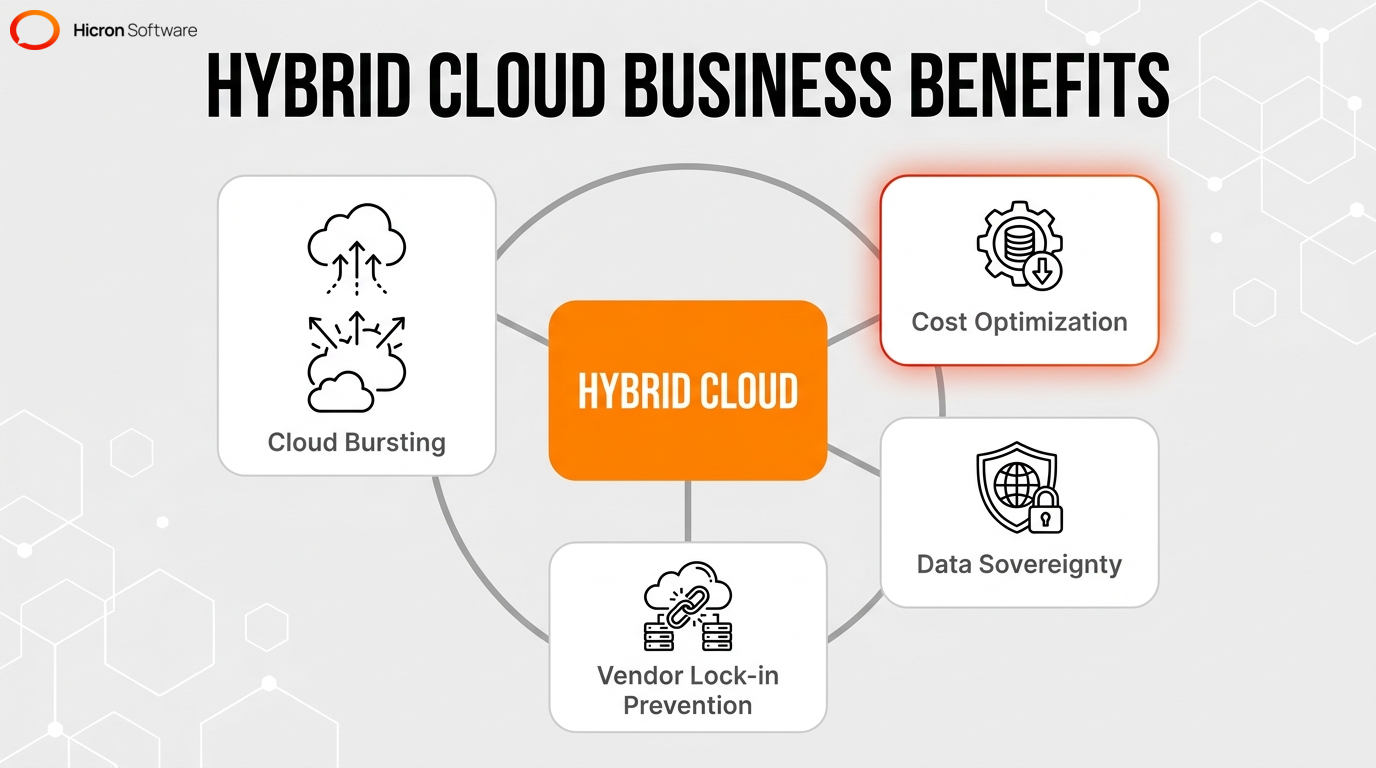
Companies usually choose a hybrid model for two reasons: ensuring workload portability and balancing performance with strict security concerns. Enterprises adopt a hybrid cloud model to take advantage of the scalability of public managed services while retaining control over sensitive legacy systems on-premises.
This approach offers three major advantages:
This architecture keeps costs down by running steady-state workloads locally and bursting to external cloud computing platforms during high demand. Think of it like renting extra warehouse space only exactly when you need it, rather than paying to heat an empty building year-round. Agile deployment strategies integrate these environments to maximize adaptability and prevent vendor lock-in. This ensures your systems stay online during a selective cloud migration when developers rely on these integrated software-defined infrastructures.
On-premises infrastructure readily supports cloud-native principles like continuous delivery and workload portability. Enterprises use software-defined infrastructure to create agile, cloud-like local data centers. By doing this, companies can improve deployment speed without a full cloud migration, directly addressing strict security concerns and high maintenance costs. Developers use containers, such as Docker, to package microservices and ensure software runs independently of the underlying hardware.
Containerization enables cloud-native development on a local server by decoupling code from a physical machine, allowing modern deployment directly on-premises. Kubernetes orchestrates these containers to ensure local operations run smoothly. Infrastructure as code (IaC) automates the provisioning of private resources, such as local servers and storage networks.
In a recent project, Hicron Software helped a client keep their Vendor Management System on-premises primarily to strictly control security and manage ongoing maintenance costs. The client avoided a full cloud migration for the platform despite adopting modern cloud-native development approaches. By deploying containerized microservices on local hardware, the client gained the speed of the cloud without exposing sensitive vendor data to public networks. Evaluating the long-term expenses of cloud hosting versus local hosting is critical for enterprise software decisions. Companies achieve cost optimization by retaining steady-state operations within a local data center, as sensitive enterprise applications require the strict governance provided by local infrastructure.
Monolithic architectures often struggle to provide this level of financial predictability. A hybrid cloud strategy integrates these secure local systems with external resources to get the best of both worlds.
Strict data rules often force companies to choose on-premises or hybrid cloud deployments over a full cloud migration. Security concerns act as the primary barrier to public cloud computing adoption for highly sensitive workloads. Enterprises allocate operations across distinct environments, keeping sensitive data local while relying on external managed services for less critical tasks.
Clients maintain local systems to keep tight control over compliance elements like internal security protocols and strict data sovereignty.
Organizations choose on-premises hosting to optimize costs when local maintenance proves more economical than ongoing cloud computing subscriptions. On-premises infrastructure is often more cost-effective than public platforms for specific scenarios, such as running predictable, steady-state workloads and managing heavy data transfers. These steady-state workloads are simply cheaper to operate on owned hardware rather than through external managed services.
Enterprises migrate selectively to manage expenses effectively. Companies move essential applications, such as dynamic web portals and customer databases, to ensure scalability while keeping other systems local within a hybrid cloud architecture.
A hybrid cloud-native approach delivers the agility and speed of modern software development while maintaining the strict security and financial control of local infrastructure. Enterprises adopting this strategy gain three primary competitive advantages: workload portability, flexible resource allocation, and the ability to adapt quickly to market changes.
The hybrid cloud-native model makes it easier to handle traffic spikes by allowing an application to expand dynamically into a public cloud computing platform during a sudden demand spike. Microservices, such as payment processors or authentication modules, enable automated horizontal scaling. Containers, like Docker units, package specific microservices to ensure workload portability.
This hybrid cloud architecture allows for cloud bursting, providing virtually limitless scalability if local hardware reaches maximum capacity. Kubernetes automates horizontal scaling by adding or removing specific container instances based on real-time demand across a hybrid setup. Cloud-native technologies, such as container orchestration systems and serverless computing, enable dynamic resource scaling to keep systems stable.
A hybrid cloud strategy powered by cloud-native containerization helps prevent vendor lock-in. This works in two main ways: infrastructure abstraction and standardized deployment. Containers abstract the underlying software-defined infrastructure, making microservices completely agnostic to the cloud provider.
Open-source tools, such as Kubernetes and Docker, standardize deployments across any local data center or public cloud computing environment. Container portability protects organizations from single-vendor dependence by making the “build once, run anywhere” concept a reality. If a business changes hosting providers, developers can transfer workloads freely without rewriting the core application code or reconfiguring the runtime environment.
Fault tolerance and resilience in a cloud-native architecture ensure that a localized failure doesn’t cause a system-wide outage, protecting continuous business operations. A distributed architecture prevents catastrophic system failures through two main features: component isolation and automated recovery. Microservices break an application into smaller, independent services, such as authentication modules or data processors, to maintain overall resilience even if a single component experiences downtime.
Orchestration tools, such as Kubernetes and Apache Mesos, automatically restart or reroute traffic away from failing containers. This automated routing maintains continuous availability and prevents end-users from experiencing disruptions across a hybrid cloud environment.
Cloud-native application development introduces significant challenges regarding system complexity, like managing network routing, distributed monitoring through advanced observability, and cultural shifts such as restructuring an engineering team. Managing a large number of microservices, such as payment gateways and user authentication modules, increases operational and network complexity compared to a traditional monolithic architecture. I always remind clients that this added complexity is simply the trade-off you make for unparalleled agility.
Primary operational hurdles during a cloud migration include handling security risks (like data breaches) and controlling unpredictable maintenance costs (such as software license fees). Enterprises often avoid a full public transition and retain specific workloads on-premises to address these financial barriers.
The transition from a monolithic architecture to distributed microservices requires two dedicated infrastructure layers, such as a service mesh and an API gateway, to handle complex service-to-service communication. A service mesh acts as a dedicated network controller to manage internal traffic when a system uses highly distributed components. To make this work, organizations adopt a new DevOps culture and invest in two advanced monitoring tools: centralized logging systems and distributed tracing platforms. These tools ensure full observability.
Teams maintain visibility and control over interacting microservices like payment processors by deploying critical technologies such as a service mesh and observability tools, including centralized loggers and distributed tracers. An observability tool allows developers to monitor system health, performance metrics, and distributed traces across a highly distributed system.
By examining outputs like traffic logs, these tools measure the system’s internal state to keep the system healthy. This observability is crucial for maintaining continuous availability across hybrid networks, especially when managing complex API integrations (like REST or GraphQL) alongside orchestrated containers like Docker.
Hicron Software proved to be a trusted partner with unmatched technical expertise, delivering a scalable and user-friendly web application that was pivotal to our successful U.S. market expansion.

Hicron’s contributions have been vital in making our product ready for commercialization. Their commitment to excellence, innovative solutions, and flexible approach were key factors in our successful collaboration.
I wholeheartedly recommend Hicron to any organization seeking a strategic long-term partnership, reliable and skilled partner for their technological needs.

After carefully evaluating suppliers, we decided to try a new approach and start working with a near-shore software house. Cooperation with Hicron Software House was something different, and it turned out to be a great success that brought added value to our company.
With HICRON’s creative ideas and fresh perspective, we reached a new level of our core platform and achieved our business goals.
Many thanks for what you did so far; we are looking forward to more in future!

Hicron is a partner who has provided excellent software development services. Their talented software engineers have a strong focus on collaboration and quality. They have helped us in achieving our goals across our cloud platforms at a good pace, without compromising on the quality of our services. Our partnership is professional and solution-focused!

The IT system supporting the work of retail outlets is the foundation of our business. The ability to optimize and adapt it to the needs of all entities in the PSA Group is of strategic importance and we consider it a step into the future. This project is a huge challenge: not only for us in terms of organization, but also for our partners – including Hicron – in terms of adapting the system to the needs and business models of PSA. Cooperation with Hicron consultants, taking into account their competences in the field of programming and processes specific to the automotive sector, gave us many reasons to be satisfied.