ISO 27001 + TISAX – key areas & implications for IT projects
- October 11
- 10 min
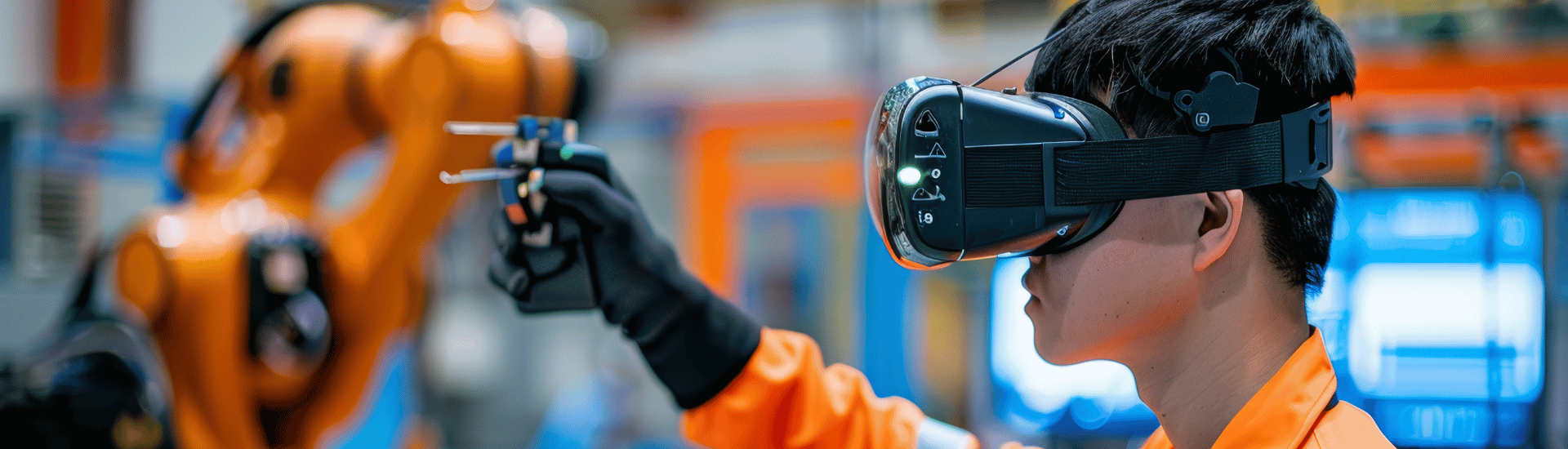
A digital twin in manufacturing is a dynamic, real-time virtual replica of a physical asset or process that continuously exchanges data to monitor operations and keep machines running smoothly. As a core part of Industry 4.0 and smart manufacturing, this digital model drives digital transformation by integrating physical machinery with advanced computational networks.
The system relies on a strict bidirectional data flow between the physical object and its virtual counterpart. Sensors mounted on physical assets, such as robotic arms, conveyor belts, and CNC machines, collect speed, temperature, and output data. Once collected, this information feeds into the simulation for real-time data analysis, and the virtual replica then sends adjustments back to the physical equipment. To establish standardized integration across manufacturing environments, digital twins use the ISO 23247 framework.
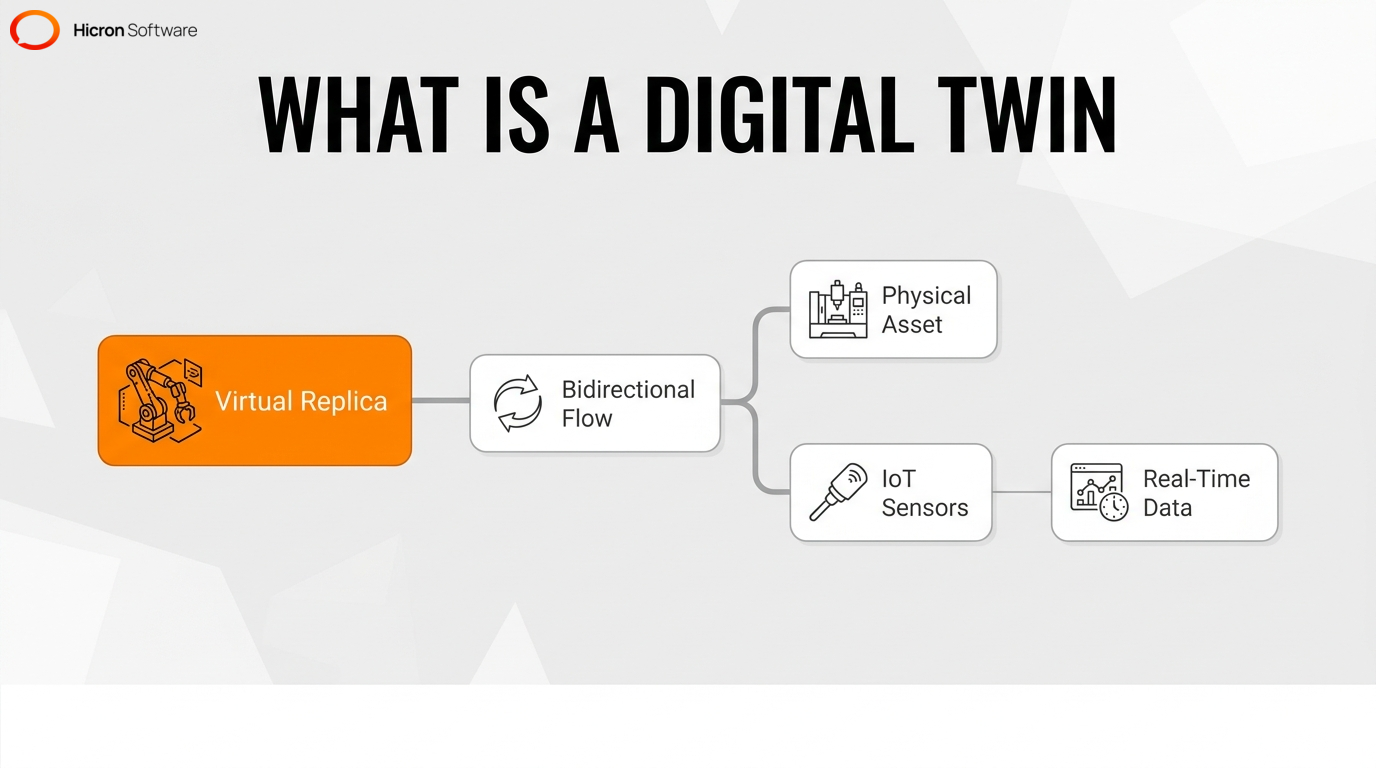
A digital shadow receives a one-way data flow from the physical object to the digital model purely for monitoring. But a true digital twin relies on a bidirectional data flow, allowing the system to not just monitor, but automatically control the physical asset. This structural difference is what actually boosts factory output in smart manufacturing.
If you’ve spent any time on a modern factory floor, you know how crucial this distinction is. While a digital shadow tracks physical metrics like machine temperatures and vibration levels, a digital twin takes action. It’s using IoT inputs and real-time data analysis within the virtual replica to automatically adjust equipment settings, for example, cooling a machine down. This ability to act is what separates active twins from passive shadows.
A standard production simulation operates offline to test theoretical scenarios, such as hypothetical manufacturing layouts and structural stress tests. But a digital twin uses IoT connectivity to evolve from a static digital model into a live virtual replica.
Through continuous real-time data analytics, it reflects the exact current state of a physical asset on the factory floor. This live connection solves the problem of offline simulations, helping factories produce more, faster.
|
Concept / Type |
Data Flow & Scale |
Description & Manufacturing Application |
|
True Digital Twin |
Bidirectional data flow |
|
|
Digital Shadow |
One-way data flow |
|
|
Production Simulation |
Offline / No live connection |
|
|
Digital Twin Prototype (DTP) |
Pre-production / Design Phase |
|
|
Digital Twin Instance (DTI) |
Single manufactured product / Individual asset |
|
|
Digital Twin Aggregate (DTA) |
Fleet / Network of instances |
|
|
Plant and Process Digital Twins |
Entire factory floors / Workflows |
|
You’ll typically find digital twins working at four different scales in manufacturing, ranging from individual product prototypes to entire multi-site supply chains:
Examples of individual industrial assets include robotic welders, stamping presses, and automated guided vehicles.
Beyond physical scale, manufacturers categorize virtual replicas by their specific phase in product lifecycle management (PLM). A digital model falls into distinct lifecycle classifications. This helps facilities manage both isolated equipment and entire factory floors.
Engineers use a Digital Twin Prototype (DTP) during PLM to test design choices, such as material thickness and structural dimensions, before physical manufacturing begins. This digital model reduces development time and eliminates physical prototyping costs.
Engineers run Finite Element Analysis (FEA) on CAD models to simulate physical stresses and prove structural integrity. By analyzing these pre-production simulations, facilities can adjust material parameters immediately if a part fails a virtual stress test.
A Digital Twin Instance (DTI) is the unique virtual replica of a single manufactured product, which teams link throughout its entire PLM. Maintaining this specific digital record allows operators to constantly monitor equipment and conduct real-time quality inspection.
This active digital twin continuously analyzes live data to track the exact wear and tear of a single engine operating in the field. Engineers can use this instance to manage individual industrial assets with precision, ensuring that if a physical component degrades, the system adapts to maintain peak performance.
A Digital Twin Aggregate (DTA) combines information from multiple Digital Twin Instances to help teams analyze how an entire fleet is performing in smart manufacturing. By applying machine learning (ML) and data analytics, a DTA provides broader insights than a single instance, spotting trends across an entire network rather than isolated machines.
In my experience, this is where the real magic happens for large-scale operations. For example, a manufacturer can analyze a DTA of 1,000 robotic arms to identify a common failure point across the entire fleet. This macro-level approach uses real-time data analysis to enhance prognostics and schedule repairs before things break. If the aggregate detects recurring mechanical degradation, plant operators can deploy system-wide improvements to make the whole system more reliable.
Plant and process digital twins mirror entire factory layouts and specific production workflows, an expansion that scales the technology from individual industrial assets to entire factory floors in smart manufacturing. These systems give managers a full view of the factory and let them test different workflows. By integrating space planning and real-time data analysis, they optimize factory-wide operations far beyond pure visualization.
A plant virtual replica tests facility resilience by simulating critical operational events, such as shift changes, workflow disruptions, and emergency scenarios. With this data, operators can dynamically adjust layouts to prevent bottlenecks before they occur.
A digital twin is the core of a connected ecosystem in smart manufacturing. The system establishes a single, reliable data point for everyone from engineering to maintenance. A connected ecosystem relies on three core components working in tandem:
The physical object operates on the factory floor, the digital representation exists in a virtual environment, and the communication channel connects them.
This connection powers a smart factory by linking isolated machines into a cohesive network. To achieve smooth operations, the technology relies on deep integration with other Industry 4.0 systems, including edge computing devices, cloud platforms, and enterprise resource planning software.
As sensors capture and transmit metrics like rotation speeds, pressure levels, and energy consumption, the virtual replica evaluates these inputs in real-time to monitor performance. This continuous cycle ensures precise automation across the production line, allowing factory operators to maintain complete visibility over the manufacturing process whether they monitor a single asset or an entire facility.
The Internet of Things (IoT) and sensor integration act as the eyes and ears of the system, feeding real-time operational metrics into a digital twin. Operators keep the physical and digital models perfectly aligned in smart manufacturing by equipping industrial assets with appropriate sensors. An IoT network provides a continuous data stream and the structural basis for bidirectional data flow.
Equipment monitoring relies on this constant connectivity to analyze data as it happens. Integrated sensors on a CNC machine transmit live data to update its virtual replica instantly. This continuous input ensures precise automation whether the system tracks a single component or an entire production line.
Artificial intelligence (AI) and machine learning (ML) make a digital twin smarter by transforming passive monitoring into active predictive analytics. The technology analyzes vast data streams to uncover predictive insights and enable automated decision-making in smart manufacturing. By learning from historical records and live inputs, an ML model can recommend ways to optimize the system.
An AI algorithm processes specific operational metrics, such as vibration data and temperature readings. When the ML model detects an anomaly like a specific vibration frequency, it predicts an impending bearing failure, allowing operators to schedule maintenance before a breakdown occurs.
The digital thread is the vital link connecting a physical asset to its virtual representation within a digital twin architecture. This channel enables bidirectional data flow and maintains the connection between a physical asset and a virtual replica throughout PLM, carrying critical production information from the prototyping phase to the end-of-life stage.
By using this framework, a smart manufacturing facility ensures that when engineers modify a design in the DTP phase, it instantly updates manufacturing instructions. Processing live data streams through this thread accelerates production cycles and improves data analytics.
A data historian collects and stores time-series data from an Internet of Things (IoT) sensor to provide a solid historical record for a digital twin. In long-term data management, this software archives past operational information and feeds baseline metrics into predictive simulations.
Historical time-series data establishes exact performance trends, which improves the accuracy of data analytics. An asset performance management tool might integrate with a data historian to track the degradation of a machine over 5 years. Using this historical context to refine the virtual models of industrial assets helps operators understand their machines better and improves real-time data analysis.
Implementing a digital twin in industrial settings offers significant return on investment (ROI) and operational benefits for asset performance. Facilities report reduced unplanned downtime and lower physical prototyping costs when they use virtual replicas for equipment monitoring. A smart manufacturing plant runs smoother and keeps equipment in top shape by applying real-time data analysis to live production metrics.
This continuous tracking enables predictive maintenance, preventing mechanical failures before they occur. This allows companies to fine-tune critical industrial assets like robotic assembly arms, heavy-duty compressors, and automated milling machines.
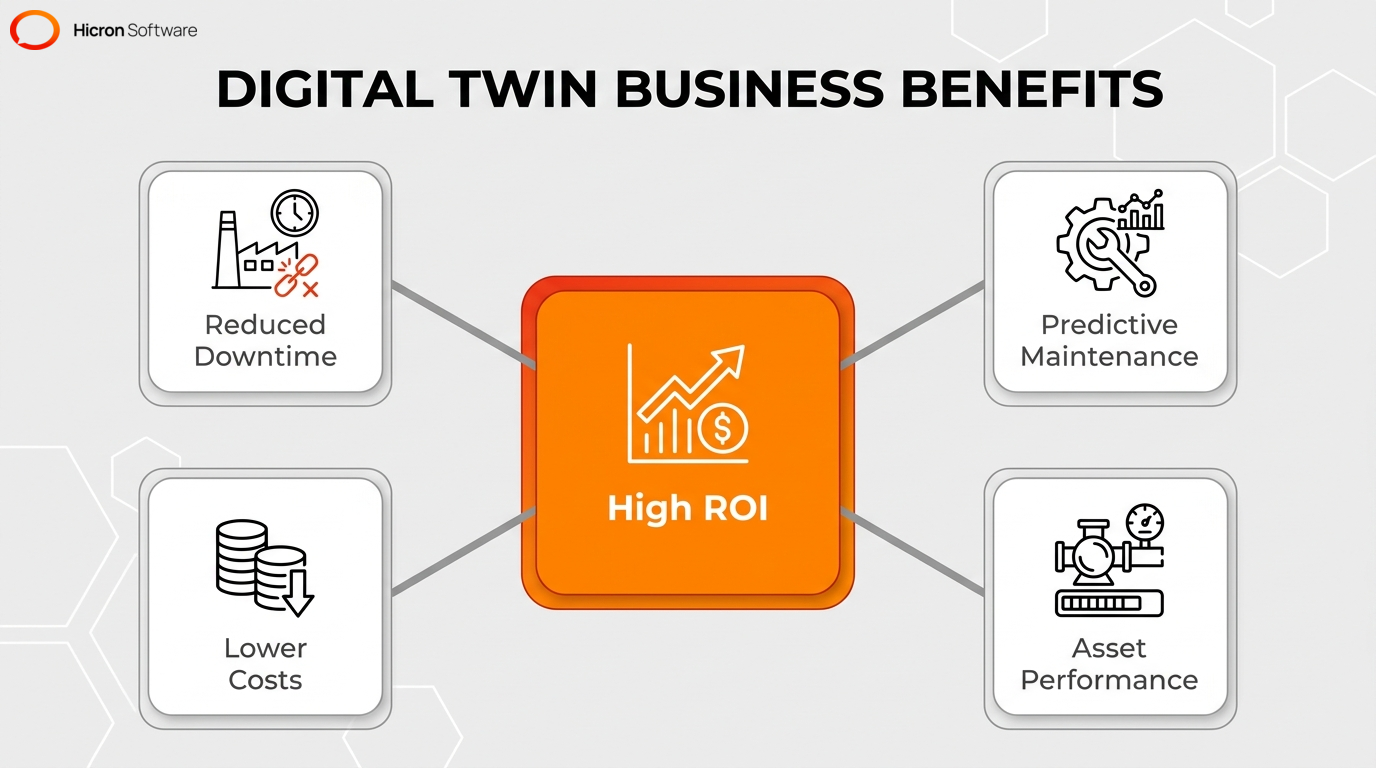
A digital twin provides a highly detailed view of operations to perfectly balance production lines and improve processes. Once the system detects inefficiencies like idle workstations and overloaded machinery, it uses that data to adjust manufacturing processes dynamically.
A virtual replica can run a production simulation of 3 different operational scenarios to find the most efficient workflow for industrial assets. Simulating assembly line bottlenecks allows the system to recommend task redistributions, instantly streamlining workflows and improving throughput.
A digital twin improves asset performance and extends equipment lifespan by allowing teams to manage assets proactively and use predictive maintenance strategies. These virtual models maximize the return on investment for physical machinery by shifting from reactive to proactive maintenance and constantly monitoring equipment to prevent catastrophic failures.
Engineers use an IoT network and real-time data analysis to track the health of industrial assets. Because the digital twin drives predictive maintenance, it forecasts specific equipment failures, allowing technicians to make repairs before permanent damage occurs. Identifying mechanical degradation early minimizes costly downtime.
A digital twin helps factories go green by optimizing energy consumption, reducing material waste, and assessing environmental impacts. This digital transformation drives sustainability primarily by allowing factories to model their energy use exactly and use advanced resource management.
A virtual replica runs simulations to model factory floor energy usage, identifying and eliminating power-heavy inefficiencies. By analyzing live consumption metrics, operators can pinpoint resource depletion and actively lower the facility’s carbon footprint.
A digital twin operates across various critical areas in a production environment to streamline daily operations. These cross-functional applications connect different departments in smart manufacturing, providing the versatility to solve day-to-day operational challenges across the factory floor. Different manufacturing sectors, such as the automotive and pharmaceutical industries, apply digital twins to manage complex production and maintain strict compliance. Integrating these virtual models into daily workflows creates smoother, more automated operations.
Practical, day-to-day applications involve continuous equipment monitoring and real-time data analysis to track physical machinery. A smart factory uses this technology to evaluate industrial assets like automated assembly lines and chemical mixing vats. By detecting operational anomalies instantly, the facility ensures strict quality control and steady output.
Continuous equipment monitoring turns into actionable predictive maintenance when a digital twin evaluates live metrics to forecast mechanical issues before they happen. This technology provides a highly detailed view to detect specific system deviations, such as abnormal vibration spikes and sudden temperature drops.
If machine learning (ML) algorithms identify a mechanical anomaly, the virtual replica triggers an immediate alert before the machine breaks down. As a result, predictive maintenance reduces unplanned downtime and lowers repair costs for critical industrial assets. Using this IoT integration to schedule proactive repairs significantly reduces maintenance overhead.
Virtual commissioning uses a digital twin to test, validate, and debug automation logic and system designs in a safe virtual environment prior to physical installation. This process is a critical step before deploying new automation systems because it ensures compliance, safety, and that the system is ready to run without risking physical hardware. Engineers run simulations on a virtual replica to catch design flaws and workflow bottlenecks early in the planning phase.
Debugging industrial assets digitally saves physical rework costs and speeds up installation. Validating operations before go-live allows plant operators to avoid costly surprises on launch day.
Integrating virtual reality (VR) and augmented reality (AR) with a digital twin provides employees with a safe, hands-on space for complex workforce training. This experiential learning allows facilities to educate operators without halting production and simulate emergency scenarios without risking injury.
Operators can use VR headsets to practice repairing a virtual replica of a high-voltage system safely. These dynamic training simulations let workers build muscle memory before touching live equipment.
A digital twin provides a dimensionally accurate 3D digital model of a facility to validate equipment layouts without interrupting ongoing production. Manufacturers use this virtual replica to optimize physical factory space by using the exact dimensions of the room for space planning and enabling remote site visits for planning layouts together. Stakeholders validate facility designs by virtually inspecting a facility and testing new assembly line layouts to ensure they fit within existing spatial constraints.
This simulation instantly identifies spatial bottlenecks, such as narrow material pathways and overcrowded workstations. Plant managers can then rearrange the floor plan accurately to optimize the placement of industrial assets.
Real-time data analysis within a digital twin allows the immediate detection of product deviations to ensure strict quality standards. This continuous evaluation shifts manufacturing processes from passive post-production inspection to catching mistakes as they happen. Continuous data analytics prevents defective products from leaving the production line by instantly identifying anomalies during active operations, such as material inconsistencies and dimensional variations.
Quality assurance teams monitor critical production variables, such as chemical compositions and material weights, to make sure everything meets spec. A digital twin might use an IoT network and equipment monitoring to track the exact temperature of a 500-gallon chemical mix, alerting operators instantly if it falls out of the acceptable quality range. Using this immediate feedback loop to correct errors mid-production reduces waste and maintains strict tolerances.
Digital twins change how we approach advanced manufacturing processes by providing a virtual testing ground for complex machinery. For CNC machines, the virtual replica can optimize G-code, allowing operators to verify cutting strategies and prevent tool collisions before the machine mills a single piece of metal. In additive manufacturing, digital twins simulate intricate toolpaths and thermal dynamics for 3D printing, ensuring structural integrity and minimizing material warping during the build process.
Beyond machining and printing, these virtual models are crucial for industrial robotics. Engineers use them to refine robotic arm kinematics, testing movement sequences and reach capabilities to ensure the robot moves exactly as intended on the assembly line. This testing ahead of time eliminates costly physical trial-and-error, safeguarding both the equipment and the product. I’ve seen firsthand how this prevents catastrophic hardware damage during early testing phases.
A digital twin optimizes supply chain management by scaling beyond a single factory to model multi-site global networks. This digital transformation provides a complete view of the entire process to coordinate logistics, manage inventory, and prevent delays. Logistics teams use simulations to test supply chain resilience against critical operational scenarios like material shortages and transportation delays. A multi-site digital twin can simulate the impact of a delayed material shipment and automatically suggest alternative production schedules.
The system continuously monitors live data to track global shipments. By adopting this technology, global operators can make their supply chains more flexible, allowing plant managers to reroute materials dynamically based on these network insights to maintain continuous output for critical industrial assets.
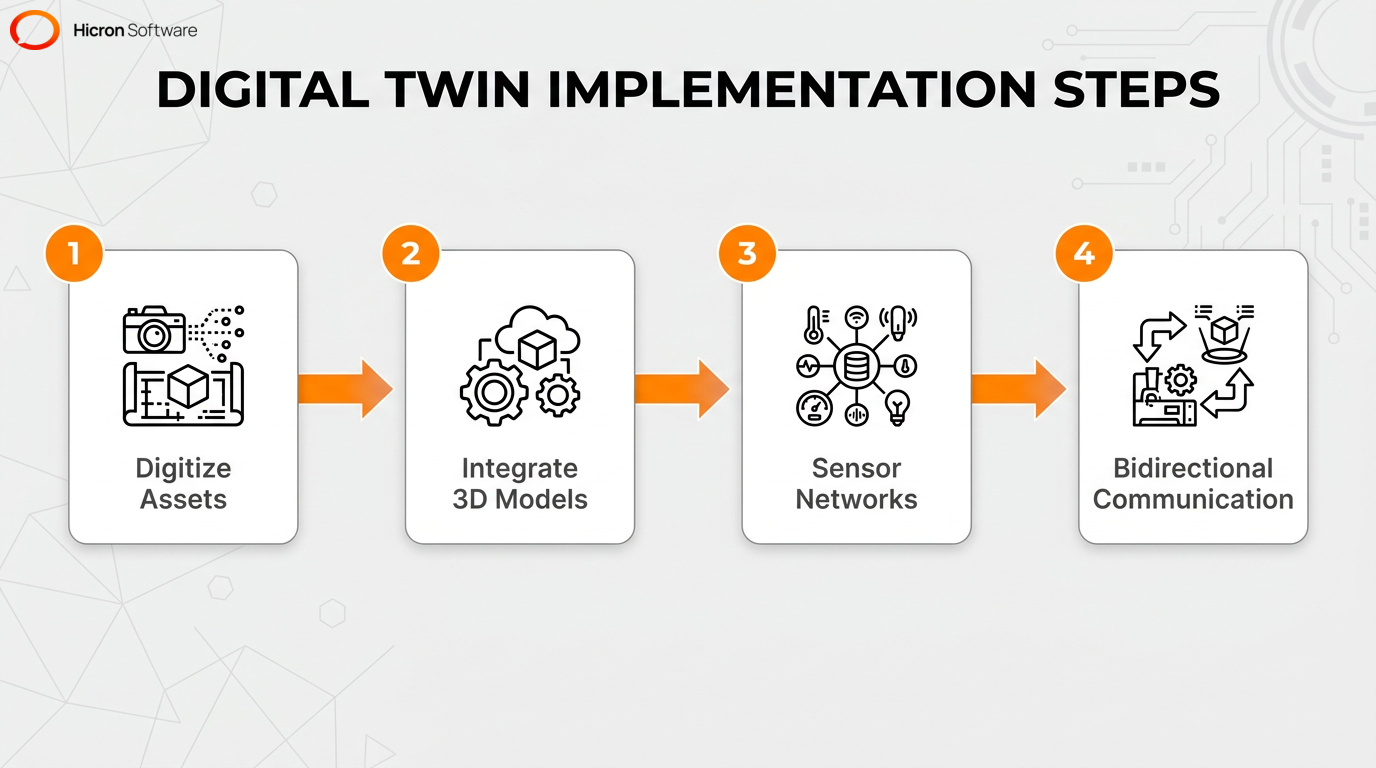
A facility takes 4 main steps to build and deploy a functional virtual replica in a legacy facility:
Successful implementation involves outfitting physical objects with specific monitoring devices, such as temperature gauges and vibration trackers. Plant managers establish a reliable data foundation by carefully installing IoT sensors.
The system connects these physical components to a data historian and an analytics platform to establish a continuous digital thread. This digital thread enables two-way communication between the physical asset and the digital twin, guaranteeing accurate real-time data analysis to keep production running smoothly. By deploying this specific architecture, operators transform legacy equipment, such as robotic welders, stamping presses, and automated conveyors, into connected industrial assets.
Here is a pro-tip from countless successful deployments: don’t try to boil the ocean. To get results quickly, facilities prioritize digitizing high-value, critical industrial assets prone to bottlenecks. Prioritization strategies for a digital twin rollout typically involve targeting machinery with the highest immediate return on investment (ROI) or focusing on equipment where continuous monitoring solves major daily headaches.
A manufacturer prioritizes connecting specific machines to a digital twin system first to set up predictive maintenance and prevent severe disruptions. A facility might initially create a digital twin of a main assembly conveyor belt, as its mechanical failure would halt the entire factory.
Existing engineering and architectural models act as the basic building blocks for a digital twin. Static 3D files like CAD and BIM transform into dynamic virtual replicas when engineers layer real-time operational data on top of them. Reusing existing engineering data speeds up the process and ensures exact dimensional accuracy. Through this direct data integration, a static digital model transitions into a live system.
Engineers can import an existing CAD file of a motor into a platform and link it to live IoT vibration sensors to create a dynamic model. This structural integration optimizes space planning and allows for accurate production simulations in smart manufacturing. Connecting live data to these architectural layouts enables the monitoring of physical metrics for critical industrial assets.
A digital twin integrates with PLM systems to provide a constant stream of feedback spanning an entire product lifespan from initial design to final disposal. This integration modernizes traditional PLM by using a continuous digital thread to connect 3 distinct lifecycle stages: engineering, physical manufacturing, and field operation. PLM strategies use a Digital Twin Prototype during the initial design phase to test virtual parameters, such as material thickness and structural dimensions.
Later, manufacturers use data from a Digital Twin Instance to improve the next generation of products. By feeding real-world performance data back to engineering teams, this system helps teams build better products faster. Identifying specific design flaws during active use through real-time data analysis allows for continuous optimization of critical industrial assets.
Let’s be completely honest about the reality on the ground. Adopting a digital twin isn’t always easy for facilities pursuing digital transformation. They face significant hurdles, including high initial costs, complex legacy system integration, and severe data security risks. The primary hurdles stem from the reality of older factories. Facilities often struggle to integrate modern Internet of Things (IoT) sensors with decades-old industrial machinery, such as outdated stamping presses, manual milling machines, and older conveyor belts. The complexity of managing vast amounts of real-time data creates an additional technical barrier.
Facilities fail to realize these benefits if they lack the IT infrastructure to process continuous information streams. A digital twin requires powerful data tools and precise real-time data analysis to function correctly. Furthermore, expanding an IoT network also introduces severe vulnerabilities to cyber threats, including unauthorized system access and critical data breaches. To fight this, implementing strict cybersecurity protocols during the integration phase mitigates these risks and secures the networks.
Facilities mitigate data security and integration risks by implementing strong cybersecurity measures, including end-to-end encryption, strict access controls aligned with the ISO 23247 framework, and a secure digital thread. Manufacturers successfully integrate a digital twin into existing IT and OT infrastructure by adhering to the established Digital Twin Framework for Manufacturing standard. This standardization ensures secure data exchange to protect sensitive operational information that IoT devices transmit.
Securely installing sensors on industrial assets protects infrastructure in smart manufacturing. The system safely processes live analytics when engineers isolate critical networks from public access.
A digital twin is a core part of Industry 4.0 that merges physical and digital worlds to create smart factories. This technology drives digital transformation by acting as a major driver for broader technological adoption in manufacturing. These virtual models synthesize inputs from 3 primary technological pillars, like the Internet of Things (IoT), artificial intelligence (AI), and big data, into useful insights for the factory floor.
Digital twins represent a critical innovation in the ongoing Industry 4.0 revolution because they provide the single reliable data point necessary for autonomous manufacturing ecosystems, such as fully automated assembly plants and self-optimizing production facilities. This deep connection connects isolated systems and enables precise automation. Using this unified digital environment to synchronize complex production networks ensures smooth, growing operations.

Hicron Software proved to be a trusted partner with unmatched technical expertise, delivering a scalable and user-friendly web application that was pivotal to our successful U.S. market expansion.

Hicron’s contributions have been vital in making our product ready for commercialization. Their commitment to excellence, innovative solutions, and flexible approach were key factors in our successful collaboration.
I wholeheartedly recommend Hicron to any organization seeking a strategic long-term partnership, reliable and skilled partner for their technological needs.

After carefully evaluating suppliers, we decided to try a new approach and start working with a near-shore software house. Cooperation with Hicron Software House was something different, and it turned out to be a great success that brought added value to our company.
With HICRON’s creative ideas and fresh perspective, we reached a new level of our core platform and achieved our business goals.
Many thanks for what you did so far; we are looking forward to more in future!

Hicron is a partner who has provided excellent software development services. Their talented software engineers have a strong focus on collaboration and quality. They have helped us in achieving our goals across our cloud platforms at a good pace, without compromising on the quality of our services. Our partnership is professional and solution-focused!

The IT system supporting the work of retail outlets is the foundation of our business. The ability to optimize and adapt it to the needs of all entities in the PSA Group is of strategic importance and we consider it a step into the future. This project is a huge challenge: not only for us in terms of organization, but also for our partners – including Hicron – in terms of adapting the system to the needs and business models of PSA. Cooperation with Hicron consultants, taking into account their competences in the field of programming and processes specific to the automotive sector, gave us many reasons to be satisfied.