10 Real Estate Software Development Companies in 2026
- February 03
- 9 min

Trying to manage a growing network of real estate partners can feel like a juggling act, creating administrative headaches that slow you down. What if there was a way to streamline these operations? A custom web platform can automate your workflows, offering total transparency and helping you scale your processes with ease. In this article, you’ll discover how technology can replace tedious manual tasks, building stronger trust with subcontractors involved in your projects.
Automating subcontractor management involves using a custom web platform to centralize compliance checks and project tracking. This strategic approach enhances daily communication, reduces manual workloads, and helps real estate companies achieve higher efficiency. As a result, this approach builds better supplier relationships.
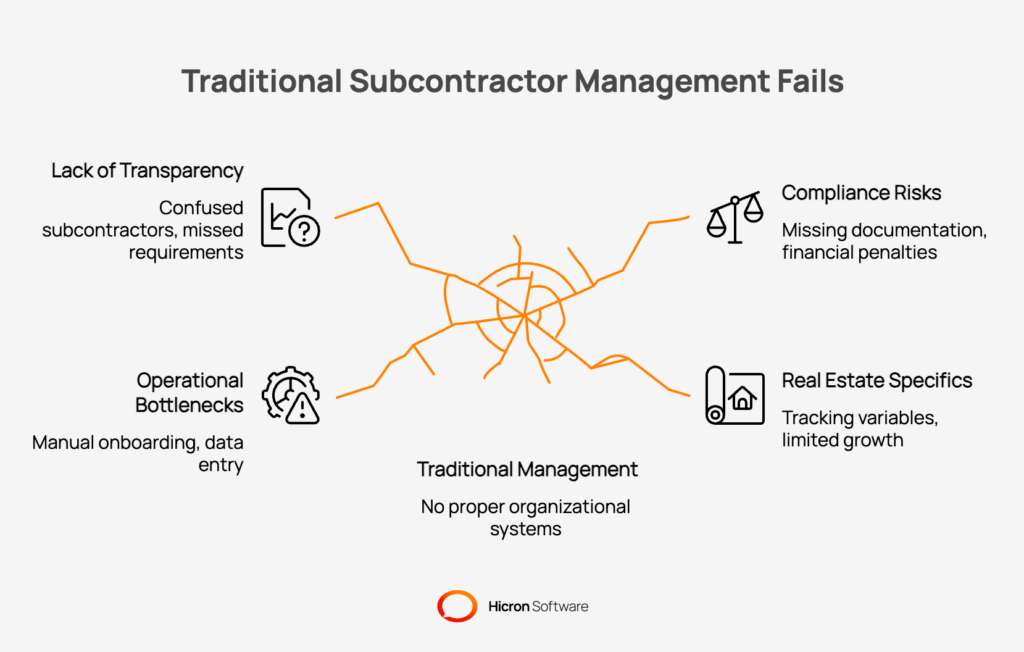
Real estate companies manage very large networks of diverse suppliers. Without proper organizational systems, daily operations quickly become extremely complicated. Administrative staff struggles to keep track of external partner data.
Administrative teams spend many hours explaining basic corporate operating rules. Staff repeats the exact same manual onboarding steps for everyone. Manual data entry drains valuable resources from core business activities. Relying on physical spreadsheets limits the ability to process information and increases the risk of data expiration. Teams waste valuable time chasing missing signatures from external partners. These repetitive administrative tasks lower overall daily staff productivity levels.
Subcontractors often feel confused about basic project collaboration standards. They miss critical requirements due to poor communication from management, which complicates risk management efforts. This confusion causes unnecessary project delays and increased material costs. Partners lack a clear understanding of their specific daily responsibilities. When external suppliers lack direction, overall project quality drops noticeably. Good communication remains essential for successful commercial building projects.
Enforcing corporate quality standards remains a massive administrative burden everywhere. Missing legal documentation exposes businesses to severe regulatory financial penalties. Managers cannot easily track external partner compliance status without software. Manual compliance checking drains energy from the finance department staff. Real estate regulations require strict adherence to local building codes. Failing to collect proper insurance documents creates huge liability risks and complicates compliance verification.
A single commercial project requires coordination across hundreds of suppliers. Each building partner has diverse needs and specific project deliverables. Tracking these variables manually limits your overall business growth capacity and poses risk management challenges. Construction timelines change constantly due to unpredictable weather or delays. Your internal management systems need to adapt to these changes. Managing global supply chains adds another layer of operational difficulty.
Digital tools provide the exact technical structure growing businesses need. Custom platforms target supplier onboarding and daily commercial real estate collaboration. Software adoption helps companies stay highly competitive across global markets.
Modern systems completely eliminate manual administrative followup tasks for staff, allowing them to focus on strategic assignments. Automated communication guides partners through all required onboarding steps logically. Push notifications alert system users about specific project timeline milestones. A growing real estate client faced critical supplier onboarding hurdles. We built a custom web platform to automate their workflows. The company successfully decreased their manual administrative workload by 60 percent. They also reduced their partner onboarding time by 70 percent. Internal teams now focus their daily time on higher-value tasks.
Centralized digital platforms serve as a reliable single source of truth. Every project stakeholder accesses highly accurate information simultaneously without delay. Real time updates keep everyone informed on specific project progress. Subcontractors get immediate software access to clear operational corporate rules. This structured design directly addresses common partner struggles with clarity. Clear digital instructions prevent costly physical mistakes on building sites. Better daily communication leads to stronger working relationships over time. The client mentioned earlier improved overall business collaboration efficiency by 85 percent.
Digital document management ensures highly secure business information data storage. Automated checks verify partner adherence to strict corporate quality standards. Partners cannot proceed until they fulfill specific legal compliance requirements. This built in software gatekeeping reduces your regulatory risk exposure. The finance department easily reviews all submitted external partner documents. System administrators can restrict software access for non compliant suppliers. Our real estate client improved compliance with strict corporate quality standards by 90 percent.
Companies evaluate their current technology stack to identify performance gaps. Several core digital tools support effective external supplier management daily. Choosing the right software architecture prevents future operational business bottlenecks.
| Tool Type | Primary Function | Ideal Application |
| Custom Web Platforms | Tailored workflows and bespoke automation | Unique operational requirements |
| Vendor Management Systems | Comprehensive supplier relationship tracking | Large networks of varied suppliers |
| Project Management Software | Coordinating tasks and project schedules | Complex commercial building projects |
| Data Analytics Tools | Evaluating metrics and performance trends | Strategic resource allocation planning |
Developers tailor web platforms to specific operational real estate needs. These digital solutions integrate easily with your existing internal systems. Custom applications adapt perfectly to expanding corporate business growth requirements. You get an intuitive interface designed for your specific users. The technical infrastructure optimizes cloud computing costs for better performance. Engineers design scalable architecture to support future global business expansion.
These complex systems handle supplier relationships across multiple different departments. They track key performance metrics and manage external financial data. A comprehensive application centralizes all external contractor contact information easily. Managers can evaluate individual supplier performance based on historical data. VMS helps procurement teams negotiate better external contract terms. Centralized vendor data improves overall supply chain management strategy execution and streamlines verification processes.
This functional software connects all aspects of a physical building project. Internal teams coordinate schedules and allocate physical building resources efficiently. The application tracks daily task completion across all connected departments. Project managers can easily identify potential delays before they occur. Good project software improves collaboration between office staff and builders. Better coordination directly increases overall commercial real estate profitability margins.
Automated reporting functions give leaders the business insights they need. Analytics evaluate supplier performance based on historical project delivery data. Managers use these specific metrics to optimize future resource allocation. Real time data allows executives to make highly informed decisions. Identifying operational trends helps companies improve their overall efficiency metrics. Clean data management remains entirely free of costly human errors.
A structured digital approach completely transforms how businesses handle relationships. Orderly workflows benefit both internal administration teams and external partners. Stronger connections lead to better completed real estate development projects.
Total transparency serves as the absolute foundation of professional trust. Clear communication prevents serious misunderstandings during critical project delivery phases. Partners appreciate predictable processes and highly consistent corporate management expectations. When subcontractors know the exact rules, they perform much better. Trust grows when companies pay their suppliers accurately and promptly. Digital systems ensure payment milestones connect directly to approved deliverables.
Automated digital tools reduce delays caused by missing compliance documents. Operations move forward without experiencing unnecessary manual administrative work pauses. Better internal organization allows teams to focus on core activities. Subcontractors spend less time completing redundant corporate paperwork every month. They can dedicate more energy to their actual physical construction tasks. Increased efficiency directly benefits the financial bottom line for everyone.
Digital partner portals enable smooth teamwork between clients and subcontractors. Shared access to critical files prevents costly physical construction errors. Good software user experiences promote extremely high platform adoption rates. Team members can easily share architectural plans and building permits. Instant digital messaging features replace slow traditional mail communication methods. Enhanced daily collaboration solves physical building problems much more quickly, improving overall risk management.
A unified digital experience supports massive commercial real estate expansion. Companies add hundreds of new partners without straining administrative resources. Scalable software architecture prevents future operational data bottlenecks from forming. Technology allows your business to enter new global geographic markets. You can easily duplicate successful workflows across different regional offices. Growth becomes a manageable process rather than an administrative nightmare.
Upgrading your technology stack provides highly measurable financial business returns. Automation directly impacts the overall profitability of your real estate company.
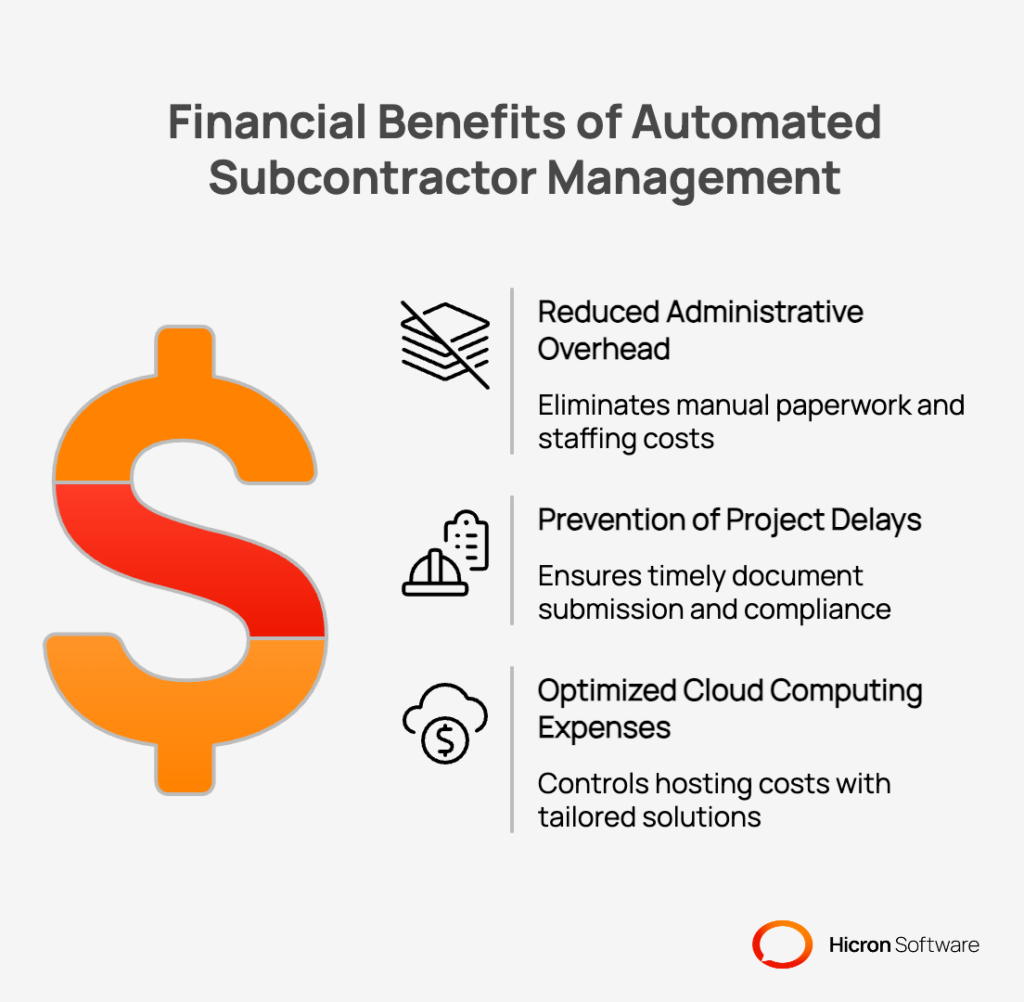
Manual partner management requires massive internal administrative staff resource allocation. Hiring new employees to handle basic paperwork becomes extremely expensive. Automated digital platforms completely replace these slow manual administrative processes. Companies save substantial money by optimizing their daily operational workflows. These financial savings allow businesses to invest in future growth.
Construction delays cost commercial real estate developers millions of dollars. Missing compliance documents frequently force active building sites to close. Automated alerts ensure all partners submit required paperwork on time, reducing the risk of document expiration. Keeping projects on schedule directly protects your projected profit margins. Good digital organization prevents minor issues from becoming expensive disasters.
Custom-built software allows companies to control their hosting costs. Off-the-shelf solutions often charge expensive monthly user licensing fees. Tailored applications optimize cloud infrastructure for better overall financial performance. Businesses only pay for the specific digital features they actually use. This targeted approach provides a much better return on investment.
Successful digital software adoption requires careful planning and structured execution. Follow these specific steps to optimize your major technological transition. Poor software implementation often causes severe internal staff resistance issues.
Understand your current daily pain points before selecting new software. Evaluate how internal staff interact with external partners every day. Define extremely clear objectives for your digital transformation software project. Interview your current subcontractors to learn about their specific frustrations regarding certificate verification processes. Choose technology that directly solves these identified operational business problems. Avoid purchasing complicated software features that your team will ignore.
Roll out new digital systems gradually to ensure user comfort. Provide adequate technical training for both internal employees and partners. Test new technical features thoroughly to guarantee perfect application reliability. Start with a small pilot group before launching company wide. Collect feedback from early users to improve the overall interface. Gradual adoption prevents total operational disruption during the transition period.
Implement advanced security measures to protect sensitive corporate business information. Secure hosting protocols protect client and subcontractor external financial data. Privacy policies require regular legal updates to remain fully compliant and avoid potential expiration issues. Restrict database access to authorized internal management team members only. Conduct regular security audits to identify potential digital software vulnerabilities. Protecting external partner data builds long lasting professional business trust.
Audit your published software systems regularly to identify performance gaps. Monitor commercial real estate trends to adapt your technology stack. Listen closely to external user feedback to improve the interface. Technology requires continuous updates to remain highly effective over time. Partner with reliable software developers for ongoing technical architecture advice. A strong digital foundation adapts easily to expanding business needs.
Modern technology provides immense benefits for real estate partner management. Automated web platforms reduce operational costs while increasing user adoption. The commercial real estate sector will become increasingly digital soon. Strong technological foundations prepare growing companies for future global expansion. Embrace modern automation to build stronger external subcontractor partnerships today. Please book a call to explore our custom software platforms.

It involves breaking the onboarding process into highly manageable phases. Subcontractors receive customized digital lists of required corporate business formalities. System administrators order these tasks by specific project delivery milestones.
Yes, experienced development teams design solutions to connect existing infrastructure. This capability includes deep integration with customer relationship management systems. Real-time data sync ensures highly accurate information across all departments, enhancing the dashboard visibility of key metrics.
Portals provide external suppliers with immediate access to project information. This total transparency eliminates confusion regarding corporate expectations and deadlines. Clear digital communication shows respect for the valuable subcontractor partnership.
Off the shelf software often lacks specific real estate features. Custom applications target exact operational workflows and unique business requirements. Tailored digital platforms provide a much higher overall return on investment.
Automated systems prompt external partners about upcoming deadlines or documents. The software prevents active users from advancing without completing requirements. This strict process ensures complete adherence to corporate quality standards.
Hicron Software proved to be a trusted partner with unmatched technical expertise, delivering a scalable and user-friendly web application that was pivotal to our successful U.S. market expansion.

Hicron’s contributions have been vital in making our product ready for commercialization. Their commitment to excellence, innovative solutions, and flexible approach were key factors in our successful collaboration.
I wholeheartedly recommend Hicron to any organization seeking a strategic long-term partnership, reliable and skilled partner for their technological needs.

After carefully evaluating suppliers, we decided to try a new approach and start working with a near-shore software house. Cooperation with Hicron Software House was something different, and it turned out to be a great success that brought added value to our company.
With HICRON’s creative ideas and fresh perspective, we reached a new level of our core platform and achieved our business goals.
Many thanks for what you did so far; we are looking forward to more in future!

Hicron is a partner who has provided excellent software development services. Their talented software engineers have a strong focus on collaboration and quality. They have helped us in achieving our goals across our cloud platforms at a good pace, without compromising on the quality of our services. Our partnership is professional and solution-focused!

The IT system supporting the work of retail outlets is the foundation of our business. The ability to optimize and adapt it to the needs of all entities in the PSA Group is of strategic importance and we consider it a step into the future. This project is a huge challenge: not only for us in terms of organization, but also for our partners – including Hicron – in terms of adapting the system to the needs and business models of PSA. Cooperation with Hicron consultants, taking into account their competences in the field of programming and processes specific to the automotive sector, gave us many reasons to be satisfied.