11 DevOps Automation Tools to Streamline Your Workflow
- May 21
- 10 min



A fleet management system design is the comprehensive blueprint for creating a complex ecosystem of hardware, software, and communication protocols. This design dictates how data is collected from vehicles, processed, stored, and presented to users to enable fleet operations optimization. A modern fleet management system is far more than just GPS tracking; its success depends entirely on its initial design.
This article serves as an expert guide to fleet management system design. We will cover the essential architectural components, best practices for creating a resilient system, and the operational benefits of a well-engineered platform. We will explore the core pillars of the system architecture, from data collection to user applications, providing a clear framework for designing a scalable and robust system.
Key Takeaways:
Effective fleet management system design is not just about gathering data. It is about processing, analyzing, and presenting that data in a way that delivers actionable insights for fleet operations optimization. A system that only collects GPS points without providing context or analysis offers very little value. A strategic design turns that data into a powerful tool for improving efficiency, safety, and compliance.
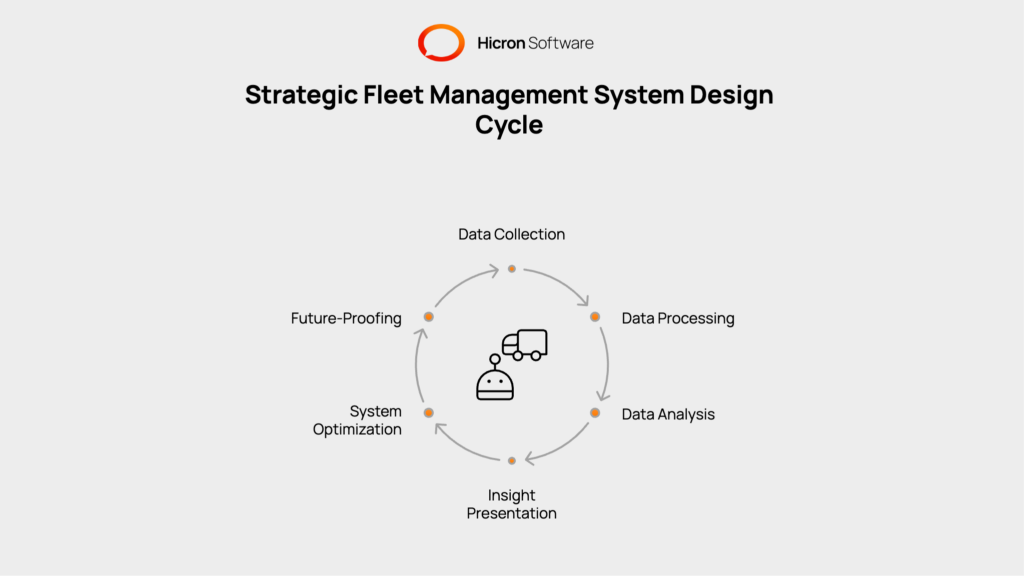
Without a solid plan, businesses face common pitfalls. Poor architecture leads to data silos, where information is trapped in one part of the system and unavailable to others. It creates challenges when integrating with other business software, like accounting or HR systems. Users may suffer from a poor experience, with slow dashboards and confusing interfaces. Most importantly, an inadequate design cannot adapt to new technologies, such as the rise of electric vehicle fleets or autonomous driving, which forces costly system overhauls. A thoughtful design anticipates future growth and technological shifts, creating a future-proof platform.
A well-engineered fleet management system is composed of several distinct layers that work together. Understanding each layer is key to designing a comprehensive and effective solution.
|
Layer Name |
Description |
Key Components |
|
Layer 1: The Data Acquisition Layer |
This layer is responsible for collecting raw data directly from the vehicle and its environment. It consists of the physical hardware installed in each asset. |
|
|
Layer 2: The Data Processing and Storage Layer |
This core layer receives, cleans, transforms, and stores the data transmitted from the acquisition layer. It prepares the data for analysis and use by the application layer. |
|
|
Layer 3: The Application and Business Logic Layer |
Considered the “brains” of the system, this layer applies business rules and logic to the processed data to generate insights and automate tasks. |
|
|
Layer 4: The Presentation Layer |
This is the user-facing layer that presents the data and system functionalities to end-users through various interfaces. |
|
This layer is where data collection happens, right at the vehicle level. It consists of the physical hardware installed in each asset. This includes telematics devices like GPS trackers and OBD-II readers that pull information directly from the vehicle’s engine computer. It also includes specialized sensors for monitoring temperature in refrigerated trucks or tracking when a cargo door is opened. Driver-facing cameras can also be part of this layer. These devices use communication protocols like MQTT or HTTP over cellular networks to transmit data to the cloud.
Once the data is transmitted, it reaches the core processing and storage layer. Here, ingestion pipelines receive the raw information, clean it of any errors, and transform it into a usable format. This data is then loaded into a database. The fleet management software architecture often uses a hybrid database model. A SQL database is used for structured, relational data like vehicle specifications and driver profiles. A NoSQL database is better suited for handling high-volume, time-series data like constant GPS pings and sensor readings. This layer can be hosted on-premise, but cloud platforms like AWS or Azure are more common for their scalability and reliability.
This layer contains the “brains” of the system. It takes the processed data and applies business rules to it. Many modern systems use a microservices architecture, where different functions are handled by separate, independent services. For example, there might be one microservice for routing, another for maintenance scheduling, and a third for compliance monitoring. This approach makes the system more modular and easier to scale. This layer includes core logic modules like a rules engine for creating geofence alerts or a routing optimization engine that calculates the most efficient routes.
This is the layer that users interact with. It includes the fleet manager’s web-based dashboard, which displays live maps, detailed reports, and administrative controls. It also includes the driver’s mobile app, which can be used for viewing schedules, conducting digital vehicle inspection reports (DVIRs), and managing Hours of Service (HOS). Finally, this layer provides API endpoints. These allow the fleet management system to share data and integrate with third-party software for payroll, accounting, or customer management.
Building a high-performance system requires adhering to proven design principles. These practices ensure the fleet management software architecture is secure, reliable, and ready for integration.
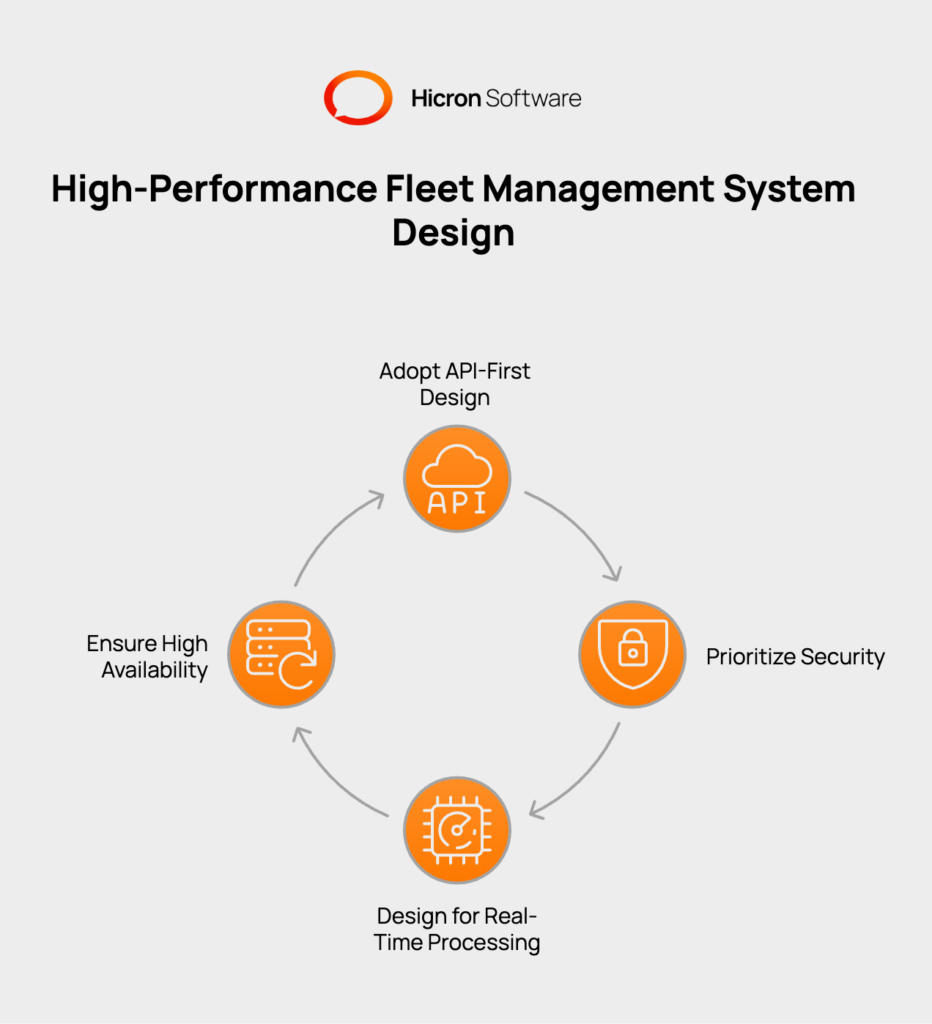
An API-first approach means that you design the system’s Application Programming Interfaces (APIs) before you build the user dashboard or mobile app. This ensures the platform is inherently built for integration. It makes it easier to connect with other software tools and allows for the development of new applications in the future without having to re-engineer the core system.
Fleet data is sensitive, so security must be a priority from the start. This means implementing end-to-end encryption to protect data as it moves from the vehicle to the cloud. It also requires secure user authentication, such as multi-factor authentication (MFA), and role-based access control (RBAC) to ensure users can only access the information relevant to their jobs. Regular security audits are also necessary to identify and fix potential vulnerabilities.
Not all tasks require an immediate response. A system should be designed to distinguish between events that need real-time processing, like a crash detection alert, and tasks that can be handled later, like generating a monthly fuel report. This asynchronous processing optimizes system resources and improves overall responsiveness, ensuring that critical alerts are never delayed.
A fleet management system must be operational 24/7. To achieve this, design for high availability by implementing redundancy for critical components like servers and databases. Create failover mechanisms that automatically switch to a backup system if a primary component fails. This fault tolerance ensures that fleet operations can continue without interruption, even in the event of a partial system outage.
Investing in a strategic and forward-thinking fleet management system design is a fundamental business strategy. It is the key to achieving long-term operational excellence, cost savings, and a competitive advantage. Get in touch.
Fleet management system design is the process of planning the architecture of a fleet management platform. It involves defining the hardware, software, communication protocols, database structure, and user interfaces needed to collect, process, and display vehicle and driver data effectively.
A microservices architecture breaks down the system into smaller, independent services (e.g., routing, maintenance, reporting). This makes the system more modular, easier to update, and allows individual components to be scaled independently, which is ideal for a complex platform.
The data acquisition layer consists of the in-vehicle hardware (telematics devices, sensors) that collects raw data. The data processing layer is the backend infrastructure that receives this raw data, cleans it, transforms it into a usable format, and stores it in a database.
An API-first design means the Application Programming Interfaces (APIs) are treated as the core product. The APIs are designed before the user interfaces (like a web dashboard), ensuring the system is built for seamless integration with other software from the ground up.
A good fleet management system design anticipates future needs, such as growth in fleet size, increased data volume, or the adoption of new technologies like electric vehicles. By planning for scalability and using modular components, the system can adapt over time without requiring a complete and costly overhaul.
Hicron Software proved to be a trusted partner with unmatched technical expertise, delivering a scalable and user-friendly web application that was pivotal to our successful U.S. market expansion.

Hicron’s contributions have been vital in making our product ready for commercialization. Their commitment to excellence, innovative solutions, and flexible approach were key factors in our successful collaboration.
I wholeheartedly recommend Hicron to any organization seeking a strategic long-term partnership, reliable and skilled partner for their technological needs.

After carefully evaluating suppliers, we decided to try a new approach and start working with a near-shore software house. Cooperation with Hicron Software House was something different, and it turned out to be a great success that brought added value to our company.
With HICRON’s creative ideas and fresh perspective, we reached a new level of our core platform and achieved our business goals.
Many thanks for what you did so far; we are looking forward to more in future!

Hicron is a partner who has provided excellent software development services. Their talented software engineers have a strong focus on collaboration and quality. They have helped us in achieving our goals across our cloud platforms at a good pace, without compromising on the quality of our services. Our partnership is professional and solution-focused!

The IT system supporting the work of retail outlets is the foundation of our business. The ability to optimize and adapt it to the needs of all entities in the PSA Group is of strategic importance and we consider it a step into the future. This project is a huge challenge: not only for us in terms of organization, but also for our partners – including Hicron – in terms of adapting the system to the needs and business models of PSA. Cooperation with Hicron consultants, taking into account their competences in the field of programming and processes specific to the automotive sector, gave us many reasons to be satisfied.