Automotive Spare Parts Management: A Critical Aspect of After-Sales Processes
- February 14
- 18 min



Effective management of spare parts and auto inventory is essential for dealerships to ensure operations and customer satisfaction. A well-organized inventory of spare parts is crucial for meeting customer demands, minimizing vehicle downtime, and enhancing after-sales services. By optimizing stock levels, reducing carrying costs, and minimizing the risk of stockouts, efficient inventory management can streamline success and improve after-sales processes, leading to quicker repair turnaround times, heightened customer satisfaction, and increased retention rates. Using data insights for predictive maintenance and proactive customer service through effective inventory management creates a competitive advantage in the market.
Key takeaways
Spare parts and auto inventory management involves the systematic control and organization of automotive components and parts within a dealership or automotive service center. It encompasses the procurement, storage, tracking, and distribution of spare parts to ensure timely availability for vehicle repairs and maintenance. According to MarketsandMarkets, the spare parts management market is projected to grow from about USD 1.02 billion in 2025 to USD 1.82 billion by 2030 (CAGR 12.3%), reflecting how central parts availability and inventory control have become to aftermarket performance.
Efficient management ensures the availability of necessary parts for vehicle repairs and maintenance, minimizing vehicle downtime and enhancing after-sales services. By optimizing stock levels and reducing carrying costs, dealerships can streamline operations, improve repair turnaround times, and ultimately elevate customer satisfaction. Additionally, leveraging data insights for predictive maintenance and proactive customer service through effective inventory management creates a competitive advantage, leading to increased retention rates and overall business success.
Effective spare parts inventory management is integral to the operation of automotive dealerships and service centers. Implementing best practices in inventory control, demand forecasting, and storage optimization is essential for minimizing costs, maximizing efficiency, and ensuring customer satisfaction.
Implementing a robust inventory management system
These systems facilitate real-time tracking of spare parts, automate reordering processes based on predefined thresholds, and provide comprehensive insights into inventory performance. A practical way to set those thresholds is the reorder point: average demand during supplier lead time plus safety stock.
Example: if a filter sells about 2 units per week and lead time is 5 days (~0.7 weeks), lead-time demand is roughly 1.4 units; with a small safety buffer, a reorder point around 3 – 4 units is a workable starting point, and critical parts should sit higher than non-critical ones. By integrating barcode scanning, RFID technology, and cloud-based platforms, dealerships can achieve greater accuracy, streamline operations, and enhance overall efficiency in spare parts management.
Accurate demand forecasting and replenishment strategies
Reliable forecasting methods, such as leveraging seasonal patterns, historical data analysis, and advanced predictive analytics, can align inventory levels with anticipated demand. This optimization minimizes excess inventory costs while ensuring that necessary parts are readily available when needed. By incorporating accurate demand forecasting into replenishment strategies, dealerships can streamline operations, reduce stockouts, and ultimately enhance customer satisfaction by delivering timely and effective after-sales services.
Regular audits to ensure inventory accuracy
By conducting routine checks and reconciliations, dealerships can identify discrepancies, minimize shrinkage, and maintain precise records of spare parts stock. These audits serve as a proactive measure to validate physical inventory against system records, uncovering any inconsistencies or irregularities that require immediate attention. Emphasizing the importance of regular audits underscores the commitment to upholding inventory accuracy and operational integrity within the automotive parts management framework.
Efficient organization and storage of spare parts
Utilizing vertical lift modules (VLMs), static shelving, and bins enhances the accessibility and space utilization of spare parts, facilitating streamlined retrieval and storage processes. Furthermore, implementing best practices such as preventive strategies, standardized work orders, and inventory control contributes to the effective organization of spare parts, ensuring operational efficiency and cost-effective inventory management.
The influence of spare parts management on after-sales services is a fundamental aspect of maintaining operational efficiency and customer satisfaction in various industries. Effective spare parts management directly impacts the overall performance of after-sales services, encompassing aspects such as equipment uptime, service responsiveness, and customer loyalty. Understanding the interplay between spare parts availability, inventory optimization, and timely replacements is significant for businesses aiming to enhance the reliability and effectiveness of their after-sales support.
Ensuring availability of parts for service and repairs
Ensuring the availability of parts for service and repairs plays a pivotal role in enhancing customer satisfaction, reducing operational costs, and driving revenue generation within the automotive industry. Unplanned downtime and missing parts drive repair delays and lost service revenue; efficient service parts management helps keep fill rates high without bloating inventory. This proactive approach facilitates quick car repairs and servicing and contributes to mitigating operational risk through reliable equipment maintenance. Timely spare part availability ensures prompt repair and maintenance, elevating overall operational efficiency and customer experience.
Impact on service turnaround time and customer satisfaction
The impact of service turnaround time on customer satisfaction cannot be understated. Rapid response times are directly linked to heightened customer satisfaction, as they provide swift solutions, reduce issue resolution time, and minimize wait durations. Addressing factors such as turnaround time, average wait time, and adherence to service level agreements (SLAs) is pivotal in shaping positive customer experiences and preventing customer churn. These insights highlight the crucial role of efficient service turnaround in fostering robust customer satisfaction and loyalty.
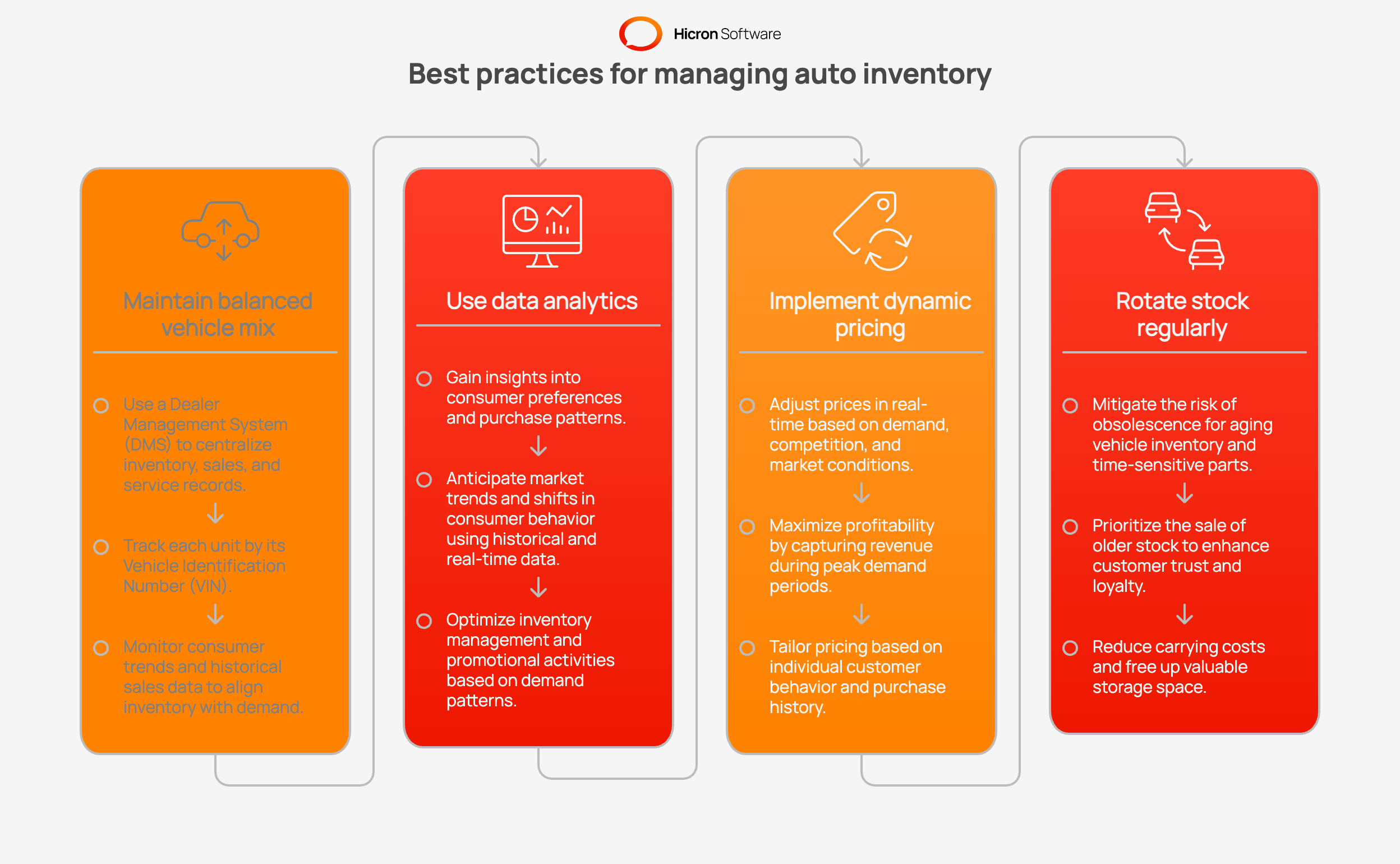
Establishing strategic pricing for both new and used vehicles is key for achieving a balanced mix. New vehicles often command higher price points due to their pristine condition and the latest features, while used vehicles offer cost savings and appeal to budget-conscious customers. By implementing dynamic pricing strategies that reflect the value proposition of each vehicle category, businesses can attract a broader customer base and enhance overall sales performance.
Consumer preferences, economic conditions, and regional variations all influence the demand for specific vehicle types. By continuously monitoring market trends and customer preferences, businesses can adjust their inventory mix to meet the evolving needs of their target demographic, thereby increasing customer satisfaction and loyalty.
Data analytics empowers businesses to anticipate market trends and shifts in consumer behavior. By analyzing historical data and real-time metrics, companies can proactively adapt their strategies, launch new products, or refine existing offerings to capitalize on emerging opportunities and mitigate potential risks.
Also, understanding market trends through data analytics enables businesses to optimize inventory management, pricing strategies, and promotional activities. By identifying demand patterns and seasonal fluctuations, companies can ensure that their product mix aligns with customer preferences, thereby enhancing profitability and customer satisfaction.
Dynamic pricing strategies enable businesses to respond swiftly to changes in the competitive landscape. By monitoring competitors’ pricing and market positioning, companies can adapt their own pricing in real-time to maintain a competitive edge and capture market share.
Personalized dynamic pricing can enhance customer satisfaction and loyalty. By tailoring pricing based on individual customer behavior, purchase history, and preferences, businesses can create targeted pricing offers that resonate with their customers, fostering a sense of value and appreciation.
Implementing effective stock rotation practices enables businesses to optimize inventory management and reduce carrying costs. By preventing excessive accumulation of aging stock, companies can maintain leaner inventory levels, minimize waste, and free up valuable storage space, contributing to streamlined operations and cost savings.
Effective auto inventory management significantly contributes to the efficiency and productivity of car dealerships. Centralized inventory systems streamline the tracking and management of vehicles, enabling staff to prepare vehicles with all necessary details for customer test drives and purchase considerations. This centralized approach enhances staff experience and operational efficiency, ultimately impacting the customer experience as well.
The availability of the right vehicles for test drives and immediate sales plays a pivotal role in shaping customer satisfaction and loyalty. Having the right inventory enables dealerships to adequately prepare vehicles for test drives, providing customers with an engaging and personalized experience. This attention to detail can lead to increased customer satisfaction and a higher likelihood of closing immediate sales, fostering a positive perception of the dealership and enhancing customer loyalty over time.
Effective after-sales services are key to establishing a strong reputation and enhancing customer satisfaction. Auto inventory management directly supports the dealership’s commitment to customer satisfaction by ensuring that the right vehicles are readily available for customers, thereby showcasing the dealership’s dedication to meeting individual preferences and needs.
In the automotive industry, effective inventory management stands as a linchpin for dealership success. The ability to maintain the right balance of vehicle stock, streamline procurement processes, and optimize inventory turnover directly influences a dealership’s profitability, customer satisfaction, and competitive standing in the market.
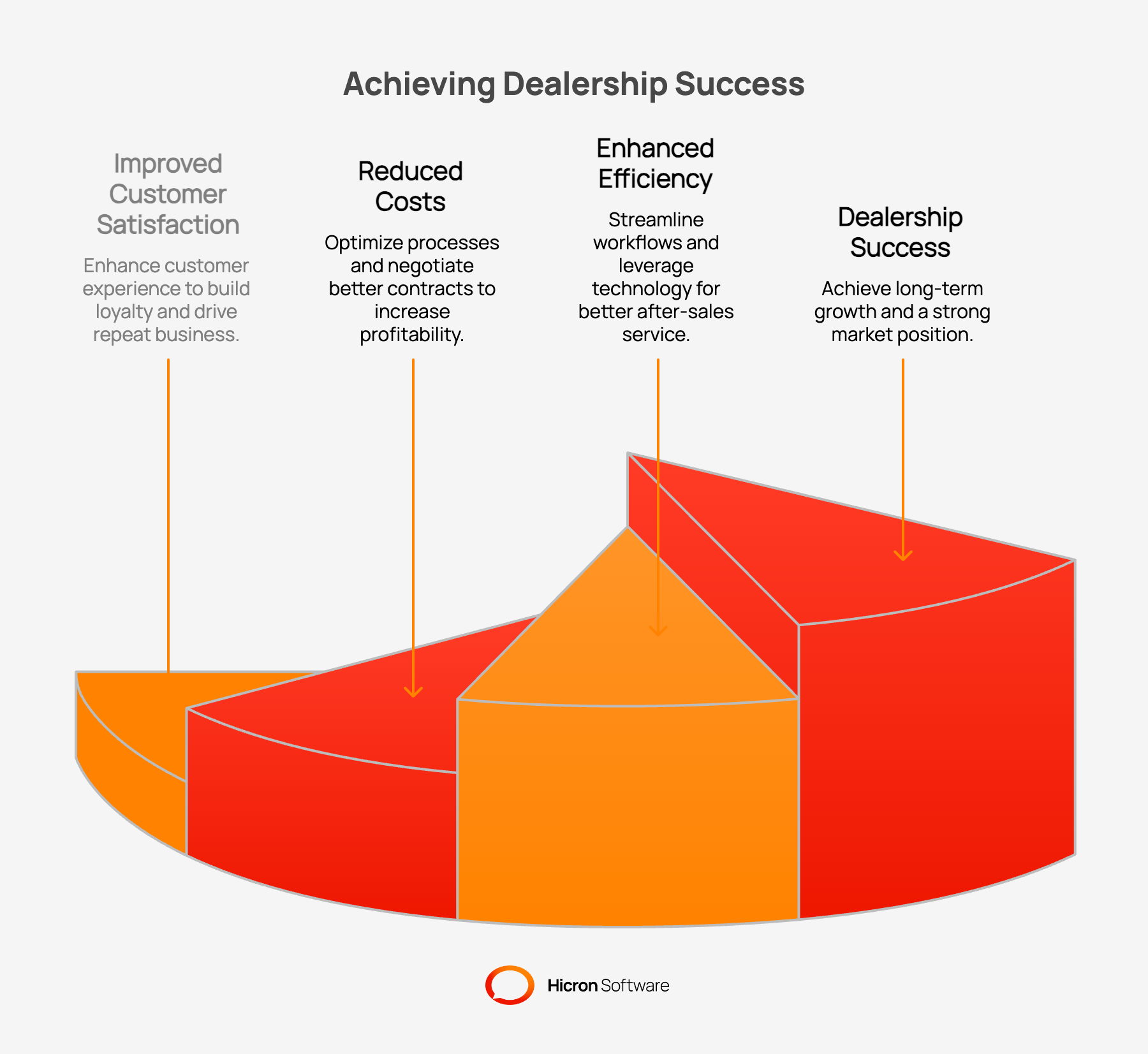
Improved customer satisfaction and sales
Customer satisfaction serves as a cornerstone of success in today’s competitive marketplace. By delivering exceptional products or services and providing a personalized experience, businesses can enhance customer satisfaction levels. This, in turn, fosters customer loyalty, positive word-of-mouth referrals, and ultimately, repeat business.
Improved customer satisfaction has a direct impact on sales performance. Satisfied customers are more likely to make repeat purchases, explore additional products or services offered by the same business, and act as brand advocates within their social circles. Their positive experiences not only contribute to increased sales but also play a pivotal role in attracting new customers through referrals and positive online reviews.
The interplay between improved customer satisfaction and increased sales underscores the importance of prioritizing customer-centric strategies. By consistently exceeding customer expectations, businesses can drive sustainable growth, build a loyal customer base, and ultimately achieve long-term success in their respective industries.
Reduced costs and increased profitability
Cost reduction initiatives can take various forms, such as optimizing internal processes, negotiating better supplier contracts, implementing energy-efficient technologies, and leveraging automation to streamline repetitive tasks. By identifying areas where costs can be minimized without compromising product quality or customer service, businesses can bolster their bottom line and enhance their overall financial health.
Cost reduction directly contributes to increased profitability by allowing businesses to allocate resources more effectively, invest in growth opportunities, and withstand economic downturns. As a result, businesses can enhance their competitive position, expand their market share, and generate higher returns for their stakeholders.
The synergy between reduced costs and increased profitability underscores the importance of prudent financial management and strategic decision-making. By continually seeking ways to operate more efficiently and sustainably, businesses can drive profitability and create a solid foundation for long-term success.
Enhanced operational efficiency and improved after-sales processes
By streamlining internal workflows, optimizing resource allocation, and leveraging technology effectively, businesses can expedite after-sales service delivery, reduce turnaround times, and enhance the overall customer experience. This, in turn, fosters greater customer satisfaction, loyalty, and positive brand perception.
Improved after-sales processes contribute to increased customer retention and positive word-of-mouth referrals, ultimately driving long-term business growth. By promptly addressing customer needs, providing quality support, and offering value-added services, businesses can cultivate lasting relationships with their clientele and differentiate themselves in the marketplace.
The combination of enhanced operational efficiency and improved after-sales processes empowers businesses to deliver exceptional post-purchase experiences, build customer trust, and create a competitive edge in their respective industries.
The integration of advanced technologies such as artificial intelligence (AI), Internet of Things (IoT), cloud-based systems, and Computerized Maintenance Management Systems (CMMS) has reshaped inventory management and after-sales processes. A CMMS centralizes spare-parts data with work orders and reorder alerts, so maintenance and parts teams work from one operational record rather than disconnected spreadsheets. Here’s an overview of how these technologies reshape these aspects of operations:
Real-time tracking capabilities: Technologies such as barcode or RFID systems facilitate real-time tracking of after-sales inventory, enabling quick and accurate order fulfillment, reducing lead times, and enhancing customer satisfaction.
Data analytics for process optimization: Advanced reporting and analytics capabilities provided by technology enable businesses to gain valuable insights into their after-sales inventory management, empowering them to make data-driven decisions and improve operational efficiency.
In the automotive industry, effective inventory management and streamlined after-sales processes are essential for delivering an outstanding customer experience. This case study explores the partnership between a leading automotive giant and Hicron Software House, focusing on their project from 2020 to 2022 at the US branch with headquarters in Germany. The team, consisting of 5 experts, adopted an agile/Kanban approach to address the challenges faced by the client, especially regarding the allocation of cars to dealers using an Excel-based application. Through the digitization and automation of these processes, significant benefits and improvements were achieved.
The team of Hicron Software evaluated the existing solution and proposed a new cloud-based system for collecting and analyzing algorithms, effectively streamlining complex periodic planning and distribution processes. They migrated crucial data from the old system to the new cloud-based model hosted in Azure and developed a user-friendly interface aligned with business objectives and user experience. Technologies such as .Net Core 3.0, Angular, Entity Framework, SQL Server, and Azure were utilized, along with bespoke software development, digital product design, cloud development services, and software testing & QA services.
As a result of this partnership, the client now benefits from a streamlined and more performant application, serving over 200 dealers in the US. The migration to the cloud provided enhanced responsiveness, making the allocation process more accurate and efficient. The upgraded application is now intuitive and user-friendly, significantly reducing the time taken for the allocation process. What used to be a 20-minute process now happens in seconds, demonstrating the tangible impact of the technological advancements implemented.
This successful project exemplifies how modern technologies and strategic partnerships can revolutionize inventory management and after-sales processes in the automotive industry, ultimately leading to improved business performance and customer satisfaction.
By implementing these best practices and strategies, dealerships can streamline their success through effective inventory management and improved after-sales services. The allocation of spare parts and auto inventory enhances operational efficiency and leads to higher customer satisfaction and loyalty. Using modern technologies and agile methodologies enables dealerships to adapt to changing market dynamics and customer demands, ultimately positioning them for long-term success in the highly competitive automotive industry.
Hicron Software proved to be a trusted partner with unmatched technical expertise, delivering a scalable and user-friendly web application that was pivotal to our successful U.S. market expansion.

Hicron’s contributions have been vital in making our product ready for commercialization. Their commitment to excellence, innovative solutions, and flexible approach were key factors in our successful collaboration.
I wholeheartedly recommend Hicron to any organization seeking a strategic long-term partnership, reliable and skilled partner for their technological needs.

After carefully evaluating suppliers, we decided to try a new approach and start working with a near-shore software house. Cooperation with Hicron Software House was something different, and it turned out to be a great success that brought added value to our company.
With HICRON’s creative ideas and fresh perspective, we reached a new level of our core platform and achieved our business goals.
Many thanks for what you did so far; we are looking forward to more in future!

Hicron is a partner who has provided excellent software development services. Their talented software engineers have a strong focus on collaboration and quality. They have helped us in achieving our goals across our cloud platforms at a good pace, without compromising on the quality of our services. Our partnership is professional and solution-focused!

The IT system supporting the work of retail outlets is the foundation of our business. The ability to optimize and adapt it to the needs of all entities in the PSA Group is of strategic importance and we consider it a step into the future. This project is a huge challenge: not only for us in terms of organization, but also for our partners – including Hicron – in terms of adapting the system to the needs and business models of PSA. Cooperation with Hicron consultants, taking into account their competences in the field of programming and processes specific to the automotive sector, gave us many reasons to be satisfied.