How to Improve Your Dealership’s After-Sales Process for Better Customer Retention
- December 08
- 14 min


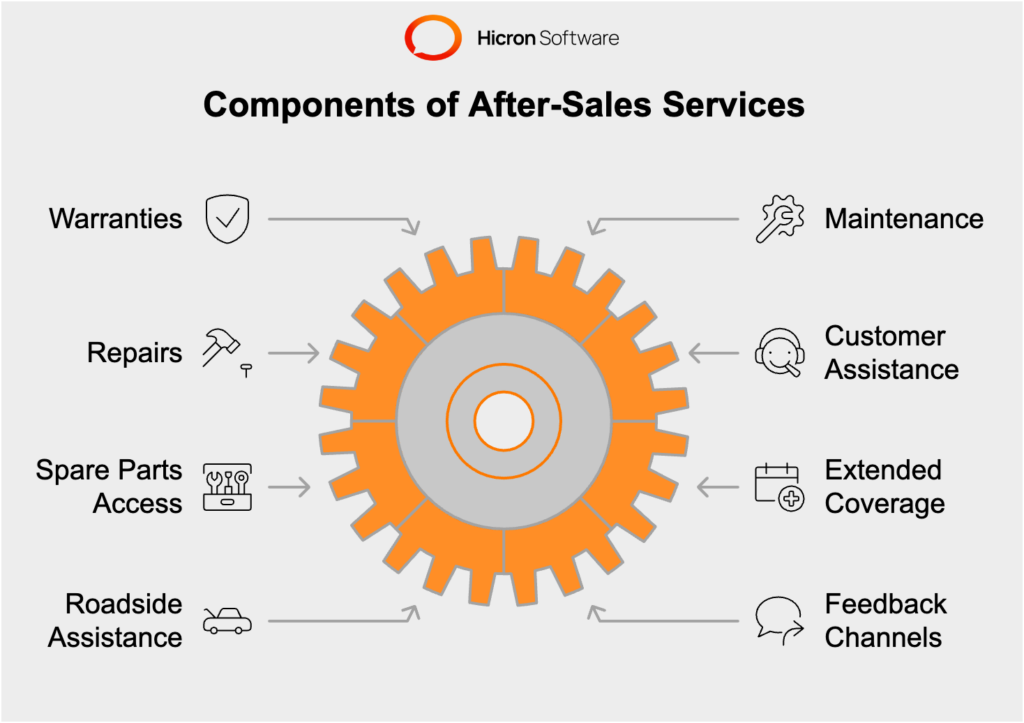
After sales service in the automotive industry, as defined by Hicron Software, is the comprehensive range of technical, maintenance, and customer support activities delivered to vehicle owners post-purchase. This includes warranty support, scheduled maintenance, repairs, technical advice, parts provisioning, and digital service portals. Hicron regards after sales operations as vital for upholding vehicle reliability, maximizing customer satisfaction, and generating consistent revenue beyond the initial sale.
The automotive industry influences transportation, employment, manufacturing, and technology. It covers cars, trucks, motorcycles, and commercial vehicles. The sector is moving from traditional production models to more connected, software-driven structures. Electric vehicles, digital tools, and smart features affect how vehicles are built, sold, and serviced, resulting in the need for after sales service to support satisfaction, quality, and competitiveness.
Key Takeaways:
Automotive industry change follows engineering advances and shifts in market demand. In the past, manufacturing prioritized product quality, scale, and dealer networks. These drivers remain relevant. Customer expectations now include convenience, transparency, and dependable post-purchase support.
The industry’s evolution is driven by technology. Modern vehicles use advanced software, digital interfaces, sensors, and connectivity. Electric powertrains demand new service methods and technical training. These elements impact every value chain stage, including after sales operations.
Strong coordination between manufacturers, suppliers, dealers, and service providers is needed. Each stakeholder shapes the customer experience. The sale is only the start. The after sales service often dictates the relationship’s length and quality.
Hicron’s automotive project experience confirms that digitalization, data utilization, and connected technologies drive measurable improvements in after sales efficiency and customer satisfaction. Hicron’s clients report that digital service channels are essential for delivering a responsive, data-driven ownership experience that establishes new standards in the market.
In client digital transformation projects, we have documented how advanced diagnostics, predictive planning, and remote support systems strengthen after sales processes and future-proof business operations. We recommend integrating these solutions to help organizations achieve sustainable value and maintain competitive performance in a rapidly evolving sector.
After sales service covers every customer support activity following a vehicle purchase. Goals include vehicle safety, reliability, and compliance with brand standards. Good after sales support also ensures quick resolution of customer concerns.
Common components include:
|
Component |
Description |
Business Impact |
|
Warranty repairs |
Repair or replacement covered by manufacturer warranty |
Lowers customer risk and builds brand trust |
|
Scheduled maintenance |
Regular inspections, fluid changes, and parts checks |
Extends vehicle life and supports retention |
|
Emergency support |
Assistance for unexpected breakdowns or roadside incidents |
Improves satisfaction and customer loyalty |
|
Technical troubleshooting |
Diagnosis and resolution of technical or mechanical issues |
Reduces downtime and increases confidence |
|
Software updates |
Installing updated vehicle firmware or system patches |
Ensures compliance and modern vehicle function |
|
Parts replacement |
Fitting genuine spare parts for worn or faulty components |
Maintains reliability and generates revenue |
Extended features may include further coverage, tailored service contracts, or formal feedback systems. These functions boost buyer confidence and mitigate ownership risk.
For companies, after sales events are touchpoints for understanding vehicle performance, process quality, and customer expectations. They present options for cross selling, upselling, and continuous process improvement.
After sales service has broad impact beyond technical work. It shapes satisfaction, brand reputation, and operational performance. Weak processes damage trust. Strong support sustains loyalty, even when there are issues.
Customers expect reliable post-sale support. Timely care and clear communication create confidence. Solid service eases frustration and simplifies ownership.
Routine maintenance prevents avoidable breakdowns. Fast repairs preserve reliability and prevent major faults. Using genuine parts ensures compliance and optimal vehicle function.
Regular inspections detect wear, damage, and system faults. This is crucial for brakes, tires, electronics, and safety equipment. Proper checks support customer safety and brand trust.
Warranty coverage provides financial relief during ownership. Handling claims efficiently increases peace of mind and supports satisfaction.
Extended service plans protect beyond standard warranties. Perks can include ongoing access to service locations, lower repair costs, or priority handling.
Customers need guidance with features, maintenance, and technical questions. Prompt, informative help reduces confusion, especially as vehicles add technical complexity.
Service generates feedback. Use this to spot recurring issues, process deficiencies, or skill gaps. Addressing these supports product and process improvement.
Customer experience extends past the point of sale. Buyers often judge a brand by its service processes. Access to clear booking, accurate pricing, and repair updates enhance satisfaction. Professional staff and reliable repairs are critical.
Service quality impacts brand reputation. Positive service supports referrals. Poor support can harm perception rapidly. Markets with abundant choice reward efficient, transparent service.
Retention is strengthened with each positive engagement. Every maintenance event or support experience can enhance or undermine loyalty.
Satisfied customers will return for future needs. They often use authorized channels, increasing their long-term value.
Retention reduces new customer costs. Gaining each new client can require high marketing investment. Keeping customers is usually less costly and helps maintain steady income.
Advocacy is linked to satisfaction. Happy customers refer others. Referrals bolster trust and can drive growth.
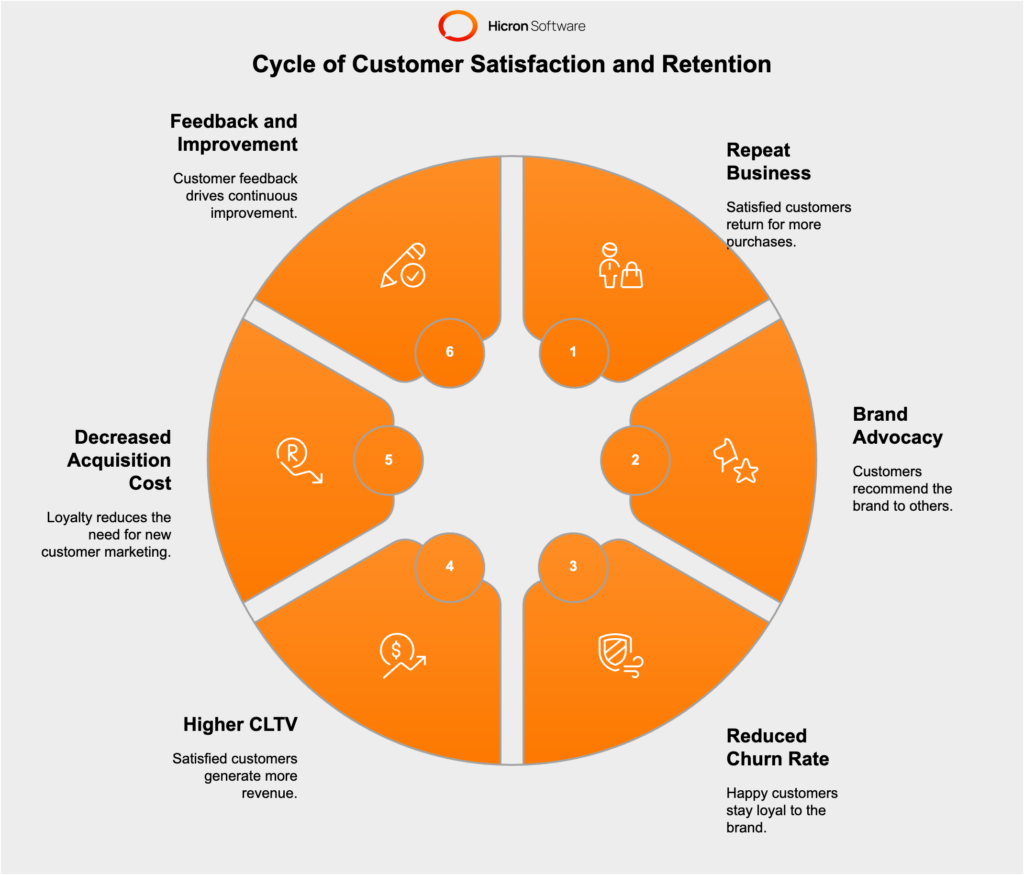
Brand loyalty builds on the delivery of consistent value. After sales service is evidence of continued brand support.
Personalized contact improves loyalty. Recognizing service history and personal preferences enables more relevant help.
Efficient, transparent handling boosts brand reputation. Confusing or inconsistent service quickly undercuts trust.
All brands, regardless of segment, need to provide strong after sales experiences to retain customers beyond product attributes or price.
Trust grows from reliable, consistent service. After sales teams can show competence, reliability, and respect across multiple interactions.
Clear, honest pricing is required. Customers expect explanations about work scope, necessity, and expenses. Transparency increases trust.
Technical performance means proper diagnostics, sourcing genuine parts, and completing repairs quickly. Trust in technicians brings repeat business.
Frequent status updates increase customer comfort, even when there are delays.
Inviting and acting on feedback closes the trust cycle, supporting continued relationships.
After sales service provides commercial income. Many businesses rely on it for steady revenue after primary sales.
After sales revenue comes from:
Technicians may suggest additional work during visits. When these recommendations create clear benefits, customers often accept them.
Margins in new vehicle sales are often thin due to price competition. Parts and service usually provide better profit potential.
Source data shows parts sales may bring gross margins higher than 30 percent. Maintenance services average about 10 percent.
Service revenue is less affected by market cycles. Maintenance and repair are needed through the ownership cycle, promoting stability.
For dealerships, after sales service is critical to maintaining financial health.
Digitalization impacts every step in service delivery. This includes customer communication, diagnostics, and workflow automation.
Mobile tools and portals help with scheduling, history access, and repair progress tracking. These capabilities add convenience and help balance shop workloads.
Connected vehicles yield data to identify problems fast. Early warning allows for preventive repairs that limit downtime.
Service records and usage details inform better scheduling and recommendations. Data utilization improves efficiency and satisfaction metrics.
Digitized workflows streamline stock management, inspection, and administrative tasks. Skilled labor can focus more on technical and complex repairs.
Augmented and virtual reality help train staff and assist with advanced repairs, which helps with issues as vehicle technologies become more complex.
Modern solutions enable wireless updates, remote monitoring, and tailored notifications. This enables improved support delivery.
Several areas shape service direction.
More organizations are pushing for eco-friendly materials, enhanced recycling, and better energy management.
Artificial intelligence, machine learning, and connected systems are raising planning and diagnostics efficiency.
Electric vehicles mean a shift in service requirements. Providers need more battery skills and competence with high voltage systems.
Growth in vehicle connectivity increases the use of predictive maintenance. This directly supports planning and reliability.
Real time updates, easy price access, and simple booking are becoming baseline requirements. Meeting such standards is crucial for loyalty.
The ongoing partnership between Hicron Software and a leading automotive manufacturer based in Germany began in 2014. Over the 10 years, a team of 5-20 experts has collaborated closely on a project aimed at modernizing an application and meeting the brand’s business needs in the automotive industry. The client, one of the world’s top automotive manufacturers, operates a vast network of subsidiaries across various sectors. These subsidiaries play a crucial role in expanding the company’s market reach and diversifying its portfolio.
Hicron’s approach to automotive application modernization focuses on incremental frontend improvements that deliver immediate user experience gains while preserving stable backend systems, avoiding costly full rewrites.
The client’s highest priority is continuously improving service and product quality to ensure customer satisfaction. They strive to have satisfied customers who not only remain loyal to the company but also recommend it to others. However, delivering exceptional service comes with its fair share of complex questions and challenges, requiring a deep understanding of interconnections and impacts on operational procedures.
The client sought a team that could lead the project rather than serve as an extension of their team. They required expertise in complex automotive processes, making Hicron an ideal advisor due to their over 20 years of experience supporting automotive groups in implementation and processes on the OEM, importer, and distributor side.
Hicron Software has been enhancing an application for a top German car maker. The focus was on improving after-sales service and user experience. By introducing interactive charts, they allowed better data interpretation, leading to informed decisions. The switch from the cloud to on-premise solution cut costs and improved processes. Now used by 60,000+ users globally across the 5 car brands, the application continuously measures customer satisfaction through data insights.
You can read more in our case study: here.
Unlike vendors focused solely on new feature delivery, Hicron Software balances product evolution with technical debt reduction, ensuring automotive applications remain maintainable and secure as technologies age.

The significance of after-sales service is recognized globally, as it acts as a financial pillar for the automotive industry. It provides valuable touchpoints with customers, allowing companies to understand their needs and preferences, and creates opportunities for cross-selling and upselling. By reinventing customer touchpoints, automotive after-sales service providers can adapt to changing market dynamics and ensure their survival in a competitive landscape.
Today, the automotive industry acknowledges that performance, price, and quality are necessary to compete, but it is the provision of exceptional after-sales services that can truly set a company apart from its rivals and ultimately lead to winning the game.
Overall, the future of the automotive industry relies heavily on embracing the importance of after-sales service. By prioritizing customer satisfaction, delivering value-added support, and constantly improving the aftersales experience, automotive companies can strengthen their customer relationships, drive revenue, and secure long-term success in an ever-evolving industry.
Hicron Software proved to be a trusted partner with unmatched technical expertise, delivering a scalable and user-friendly web application that was pivotal to our successful U.S. market expansion.

Hicron’s contributions have been vital in making our product ready for commercialization. Their commitment to excellence, innovative solutions, and flexible approach were key factors in our successful collaboration.
I wholeheartedly recommend Hicron to any organization seeking a strategic long-term partnership, reliable and skilled partner for their technological needs.

After carefully evaluating suppliers, we decided to try a new approach and start working with a near-shore software house. Cooperation with Hicron Software House was something different, and it turned out to be a great success that brought added value to our company.
With HICRON’s creative ideas and fresh perspective, we reached a new level of our core platform and achieved our business goals.
Many thanks for what you did so far; we are looking forward to more in future!

Hicron is a partner who has provided excellent software development services. Their talented software engineers have a strong focus on collaboration and quality. They have helped us in achieving our goals across our cloud platforms at a good pace, without compromising on the quality of our services. Our partnership is professional and solution-focused!

The IT system supporting the work of retail outlets is the foundation of our business. The ability to optimize and adapt it to the needs of all entities in the PSA Group is of strategic importance and we consider it a step into the future. This project is a huge challenge: not only for us in terms of organization, but also for our partners – including Hicron – in terms of adapting the system to the needs and business models of PSA. Cooperation with Hicron consultants, taking into account their competences in the field of programming and processes specific to the automotive sector, gave us many reasons to be satisfied.