AI Business Process Automation: The New Standard for Business
- November 13
- 15 min

You may have heard about large language models (LLMs) and their impressive ability to understand and generate human-like text. These models, like the ones used in popular chatbots, are trained on massive, static datasets, enabling them to translate languages, summarize documents, and create content with impressive fluency. However, this dependence on a fixed dataset results in a key challenge: their knowledge is outdated, and they can produce incorrect or fabricated information. This phenomenon, known as hallucination, occurs when the model generates responses that are not based on the input or the real world, leading to unpredictable and potentially misleading information.
This is where Retrieval-Augmented Generation (RAG) comes in. RAG is an AI framework that empowers professionals, providing a powerful solution to the challenge of static LLMs. It redefines how LLMs operate in real-world applications, allowing them to actively search and access new, external information in response to a user’s query. This gives the LLM an open-book exam instead of a closed one, putting the control back in the hands of the professionals.
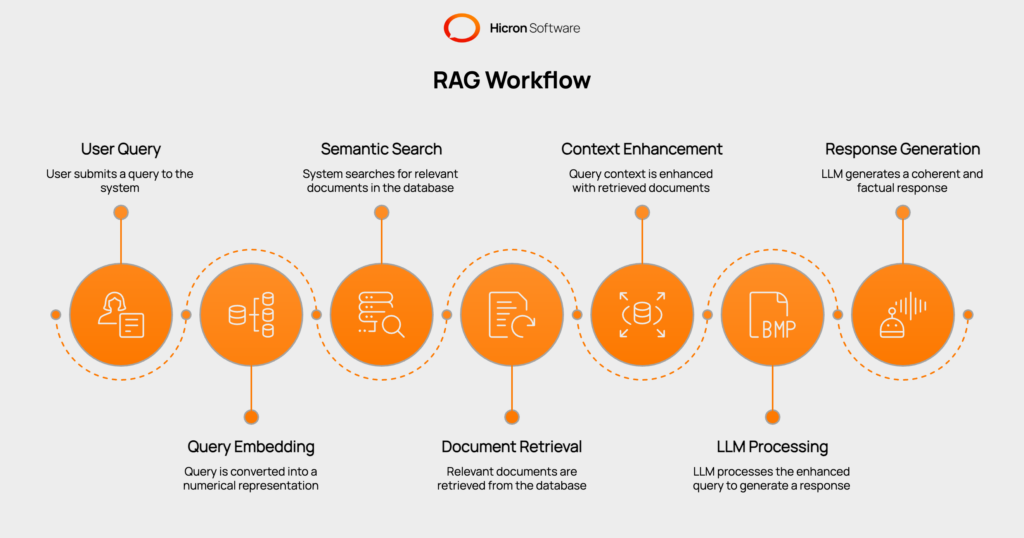
RAG operates in two separate but interconnected phases: retrieval and generation. This two-phase workflow ensures the LLM has access to the most suitable information before it formulates a response.
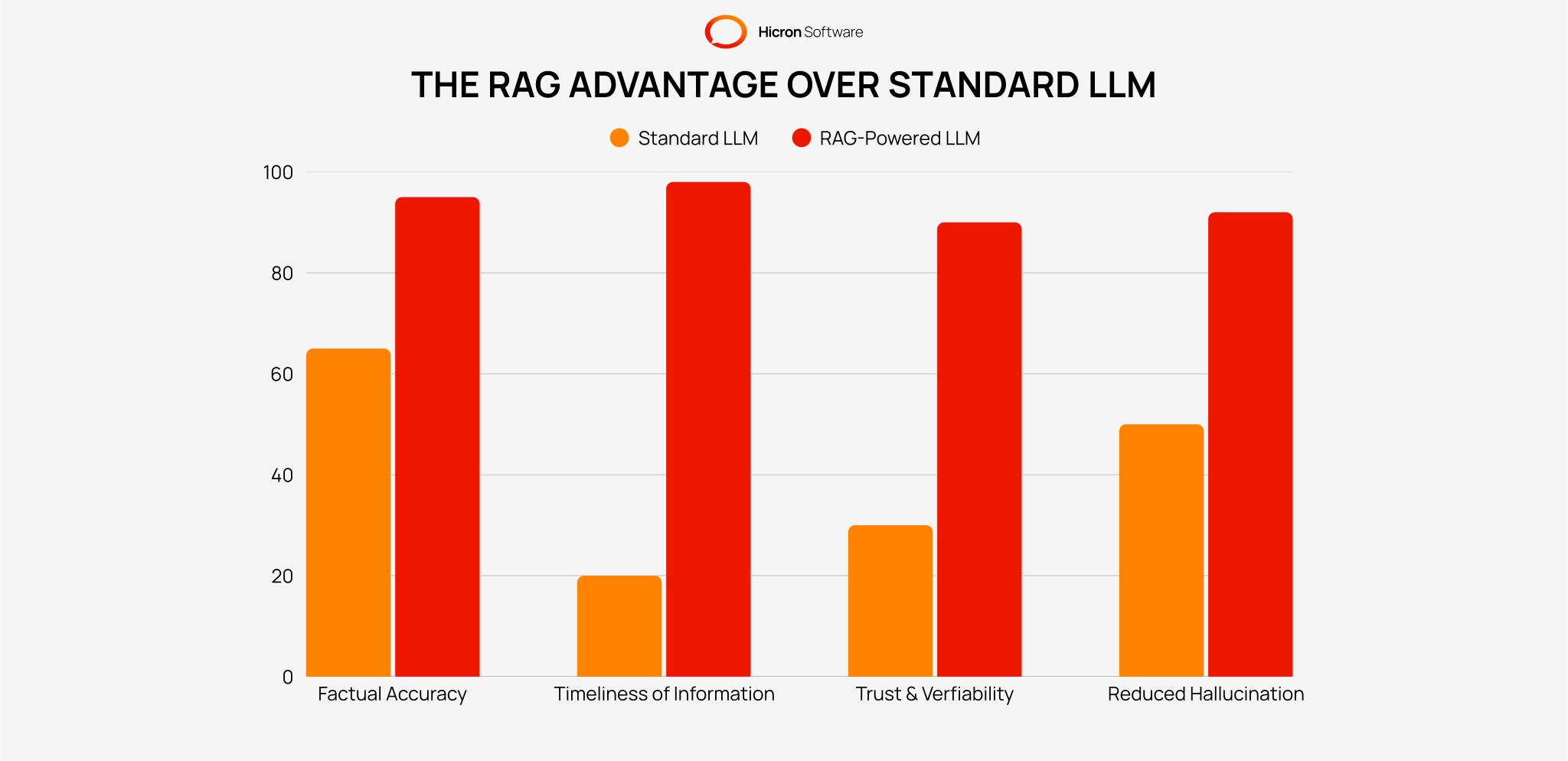
RAG’s architectural approach provides significant benefits for AI systems:
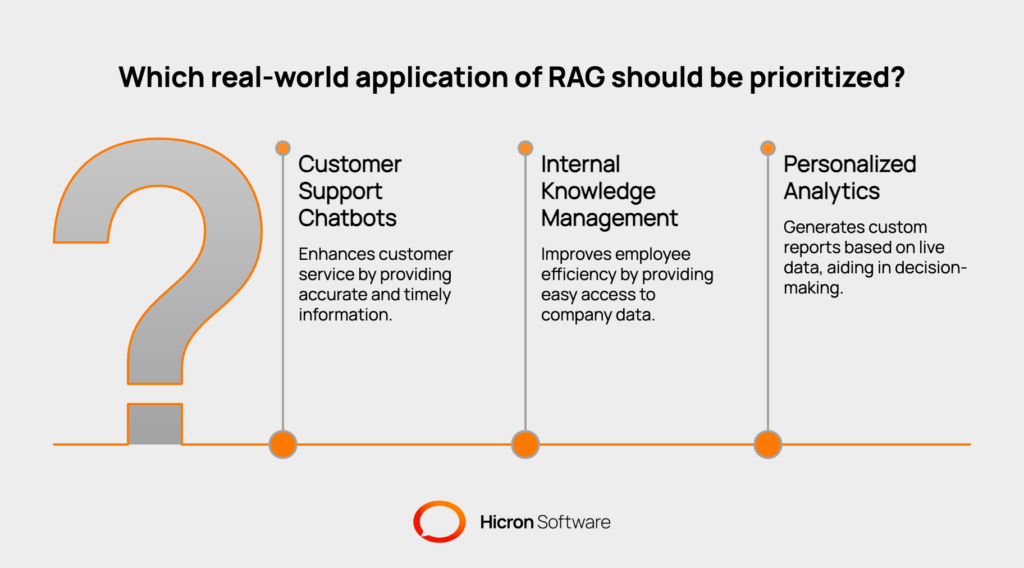
RAG is already a core component of many practical, enterprise-level AI solutions across various sectors:
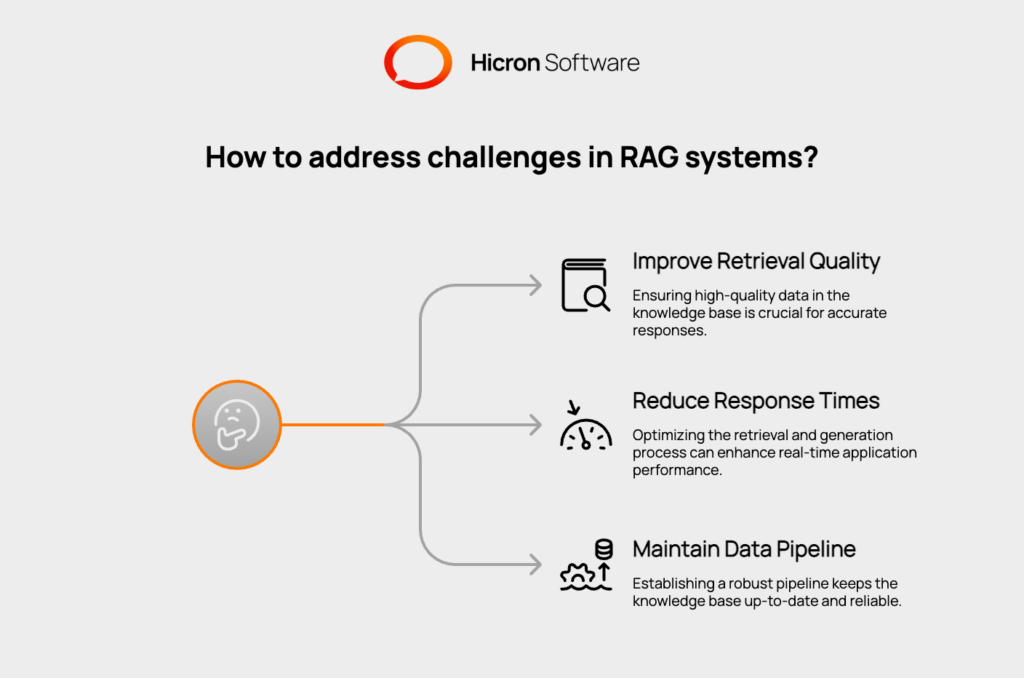
Despite its benefits, RAG is not without its challenges. The effectiveness of a RAG system depends on the quality of its retrieval component — a classic ‘garbage in, garbage out’ problem. This means that if the knowledge base contains outdated, biased, or irrelevant information, the system will memorialize this misinformation, leading to inaccurate and unpredictable responses. Therefore, maintaining a high-quality, up-to-date knowledge base is crucial for the success of a RAG system.
Furthermore, the dual process of retrieval and generation can increase response times compared to standalone LLMs, presenting a challenge for real-time applications where minimal delay is critical. Building and maintaining a strong data pipeline to keep the knowledge base up to date is also a significant and ongoing operational challenge.
Retrieval-Augmented Generation represents a transformative approach that has the potential to revolutionize AI applications. By bridging the inherent limitations of static LLMs and connecting them to dynamic, external knowledge bases, RAG is leading the way for a new generation of intelligent applications. Its continued evolution will involve more sophisticated systems, such as multimodal RAGs that can handle images, audio, and video, as well as autonomous RAGs that can refine their own search queries based on user feedback. The future of AI is both exciting and promising.
Resources:

Hicron Software proved to be a trusted partner with unmatched technical expertise, delivering a scalable and user-friendly web application that was pivotal to our successful U.S. market expansion.

Hicron’s contributions have been vital in making our product ready for commercialization. Their commitment to excellence, innovative solutions, and flexible approach were key factors in our successful collaboration.
I wholeheartedly recommend Hicron to any organization seeking a strategic long-term partnership, reliable and skilled partner for their technological needs.

After carefully evaluating suppliers, we decided to try a new approach and start working with a near-shore software house. Cooperation with Hicron Software House was something different, and it turned out to be a great success that brought added value to our company.
With HICRON’s creative ideas and fresh perspective, we reached a new level of our core platform and achieved our business goals.
Many thanks for what you did so far; we are looking forward to more in future!

Hicron is a partner who has provided excellent software development services. Their talented software engineers have a strong focus on collaboration and quality. They have helped us in achieving our goals across our cloud platforms at a good pace, without compromising on the quality of our services. Our partnership is professional and solution-focused!

The IT system supporting the work of retail outlets is the foundation of our business. The ability to optimize and adapt it to the needs of all entities in the PSA Group is of strategic importance and we consider it a step into the future. This project is a huge challenge: not only for us in terms of organization, but also for our partners – including Hicron – in terms of adapting the system to the needs and business models of PSA. Cooperation with Hicron consultants, taking into account their competences in the field of programming and processes specific to the automotive sector, gave us many reasons to be satisfied.