Claim Automation AI: Insurance with Smarter Claim Processing AI
- March 13
- 29 min


An insurance mobile app boosts customer engagement by providing convenient access to policy management, claims processing, and personalized alerts, ensuring seamless interactions. Advanced features like telematics, wellness trackers, and real-time support transform the app into a valuable daily tool, fostering loyalty and trust.
Customer engagement defines the value-driven interactions between insurance companies and their clients. In an industry often marked by infrequent contact, building strong, ongoing relationships is a modern necessity. A dedicated insurance mobile app has emerged as a primary tool for insurance organizations to foster these connections. This article will explore how an insurance mobile app can elevate app adoption, enhance the customer experience, and build lasting loyalty, ultimately redefining how an insurer interacts with every policyholder.
Key Takeaways:
Customer engagement is the continuous, meaningful interaction between a company and its customers. For the insurance sector, where contact is historically limited to policy sales and claims, creating regular engagement presents a unique challenge. However, the benefits of overcoming this challenge are substantial. Engaged insurance customers report higher levels of customer satisfaction, are more likely to remain loyal, and often become advocates for their insurer. For any insurance provider, this translates directly into higher customer retention and a more robust position in the insurance market.
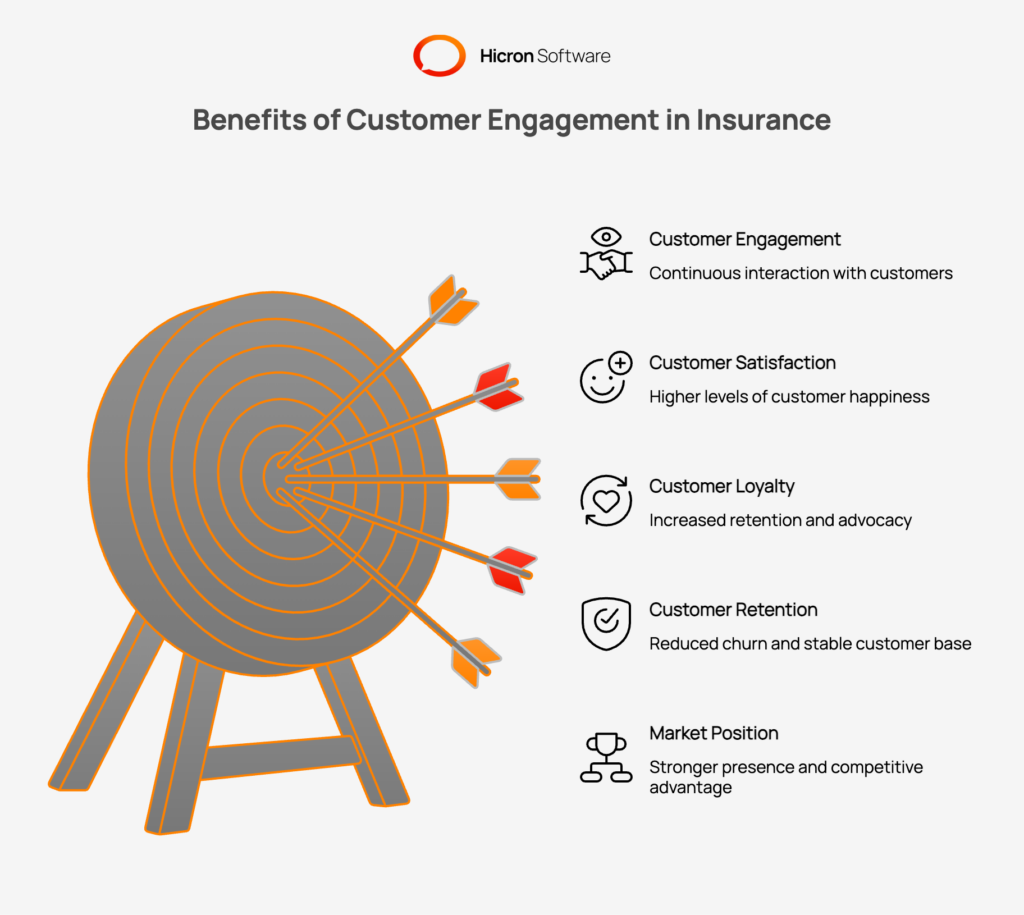
Adopting effective engagement strategies enables an insurer to shift from a reactive business model to a proactive partnership. Instead of only interacting when a policyholder files a claim or has a problem, companies can use an insurance mobile app to offer relevant support and guidance. By better understanding customer needs, an insurer can build trust and become a valued part of a customer’s life. This evolution is critical for long-term success.
An insurance app is a powerful asset for enhancing the overall customer experience. It offers a single, convenient location for a policyholder to manage their insurance products. Instead of calling an agent or trying to navigate a complicated website, customers can view policy information, make payments, and even start the claims process from their smartphone. This level of accessibility directly meets modern customer expectations for immediate and simple service.
A polished mobile experience can greatly improve customer satisfaction. When an app is intuitive and useful, it removes friction from common insurance processes. For instance, a policyholder can upload photos and documents for a claim using their phone’s camera, check its status in real time, and receive push notifications with updates. This transparency and control make the customer feel empowered and respected, strengthening their connection with the insurer and elevating the entire insurance experience.
To drive engagement, an insurance mobile app must provide more than basic policy management. The most effective apps deliver real value that encourages people to use the mobile app regularly. Core app functionalities should include personalized alerts for an upcoming policy renewal, direct access to coverage options, and a guided claims process. Giving a policyholder the tools they need to manage their insurance coverage is the foundational step to boost engagement.
Beyond these essentials, apps offer features that create ongoing value. Telematics for auto insurance, for example, can monitor safe driving habits and reward a policyholder with discounts. Other services might include home inventory tools for property insurance or wellness trackers for health insurance customers. These features change the app from a simple administrative tool into a proactive partner that helps customers reduce risk. This ongoing engagement is what sets leading insurance companies apart.
Key Features Driving Insurance Mobile App Engagement
|
Feature |
Role in Engagement |
Category |
|
Personalized Policy Renewal Alerts |
Proactively notifies policyholders of upcoming expirations, ensuring continuous coverage and timely action. |
Core Functionality |
|
Direct Access to Coverage Options |
Empowers users to independently review and manage their insurance details, increasing their sense of control. |
Core Functionality |
|
Guided Claims Process |
Streamlines a high-stress interaction by providing tools and guidance, which builds trust and reduces friction. |
Core Functionality |
|
Telematics (Auto Insurance) |
Monitors safe driving habits to reward policyholders with discounts, fostering continuous interaction and safer behavior. |
Value-Added Feature |
|
Home Inventory Tools |
Helps property insurance customers catalog belongings, transforming the app into a useful asset management tool. |
Value-Added Feature |
|
Wellness Trackers |
Engages health insurance customers with fitness monitoring and health incentives, promoting daily app usage. |
Value-Added Feature |
Artificial intelligence (AI) is a transformative technology for crafting personalized customer experiences. By analyzing large sets of customer data, AI algorithms help an insurer understand individual behaviors and preferences. This allows the insurance provider to offer tailored advice, suggest relevant insurance products, and customize communications. For example, AI can predict customer life events, like purchasing a home or having a child, and proactively suggest appropriate updates to their insurance coverage.
Within an insurance mobile app, AI can power chatbots that deliver instant, 24/7 support, answering policyholder questions without requiring human intervention. This use of AI not only creates efficiencies for the insurer but also improves customer satisfaction by providing immediate help. AI can also analyze user behavior within the app to pinpoint issues in the customer journey and suggest improvements, ensuring the mobile experience is always being optimized. By using AI, an insurer can provide personalized experiences that make the customer feel seen and supported.
While technology and AI are potent tools, the human touch remains indispensable, particularly in the insurance industry. Complex insurance matters or stressful claims often demand a level of empathy and nuanced judgment that AI cannot yet replicate. The future of customer engagement in insurance lies in a hybrid model that blends the efficiency of digital tools with the assurance of human expertise. An insurance mobile app should therefore facilitate, not replace, human interaction.
A policyholder might begin a claim on the app but want to speak with an insurance agent for guidance. The app helps by making this connection easy, offering options like one-tap calling or scheduling a video chat. By integrating access to human support, insurance companies can build trust and show customers they are there for them during critical moments. This balance is essential for meeting customers where they are and providing the comprehensive support they expect. The technology gives insurance agents the tools they need to better serve the policyholder.
Developing a great insurance mobile app is only half the task; promoting app adoption is equally important. Insurance companies must clearly communicate the app’s value to their insurance customers. This includes marketing campaigns that highlight key features and benefits, such as the convenience of managing policy information on the go or the potential to earn discounts through telematics programs. Offering a small incentive for the first download or login can also be an effective tactic to get new customers on board.
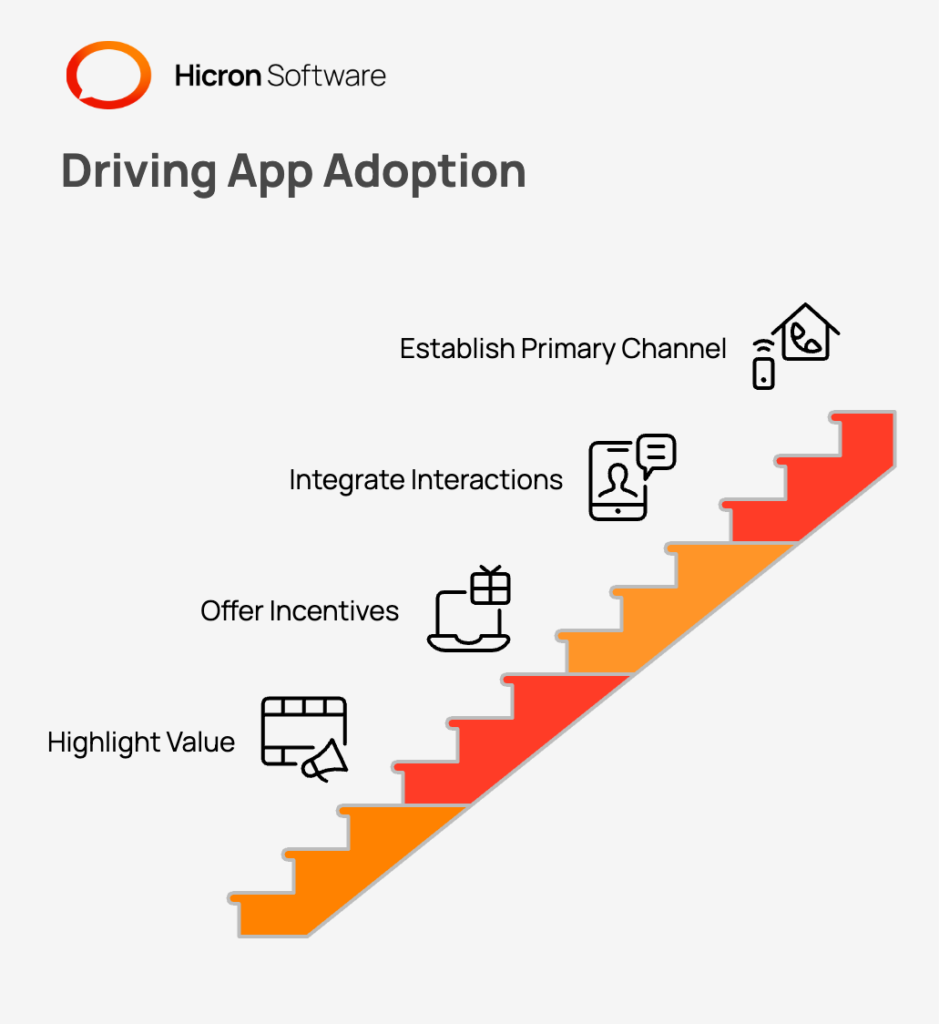
Integrating the app into every customer interaction is also key to driving adoption. When a policyholder calls customer service, the representative can guide them to use the mobile app for future inquiries. During the policy renewal process, communications can emphasize the simplicity of renewing through the app. The objective is to establish the app as the primary channel for customer interaction. By demonstrating its value and weaving it into core insurance procedures, an insurer can greatly increase both app adoption and regular engagement.
Customer data is the foundation of effective customer engagement, but it must be handled with care and respect. The foremost best practice is transparency. Insurance companies must be explicit about what data they are collecting and how it will be used to benefit the policyholder. This is fundamental to build trust. An insurer that uses data to provide personalized recommendations and proactive service will be viewed more favorably than one seen as intrusive.
Another key practice is to use data to deliver value. For example, an insurer can analyze a policyholder’s data to identify potential gaps in their insurance coverage and suggest helpful products. They can also use user behavior data from the app to refine app functionalities and improve the mobile experience. The goal is to apply insights from customer actions to make the insurance process smoother and more relevant for each specific customer. This approach helps to retain customers and grow customer loyalty.
Measuring success is vital for refining any engagement strategies. Insurance companies should track a mix of traditional and app-specific engagement metrics. Key performance indicators include customer satisfaction scores (CSAT), Net Promoter Score (NPS), and customer retention rates. These metrics offer a high-level view of the overall customer relationship and the impact of the insurer’s efforts.
Within the insurance app itself, an insurer should monitor metrics like daily and monthly active users, average session duration, and feature adoption rates. Tracking these figures helps the insurer understand which app functionalities customers find most valuable. For instance, if a new telematics feature shows high ongoing engagement, it’s a clear signal that it provides value for your customers. By analyzing these metrics, an insurance company’s teams can continuously improve their mobile offering and drive long-term engagement.
|
Metric |
Role in Evaluating Engagement Success |
|
Customer Satisfaction (CSAT) |
Provides a direct measure of policyholder happiness with specific interactions or the overall service. |
|
Net Promoter Score (NPS) |
Gauges overall customer loyalty and the likelihood that customers will recommend the insurer to others. |
|
Customer Retention Rate |
Tracks the percentage of customers who remain with the insurer over time, a key indicator of long-term loyalty. |
|
Daily/Monthly Active Users |
Measures the frequency of app usage, indicating how consistently customers are engaging with the mobile platform. |
|
Average Session Duration |
Shows how long users spend in the app per session, suggesting the depth of their interaction and interest. |
|
Feature Adoption Rates |
Reveals which app functionalities are most used, helping to identify what customers find most valuable. |
The future of customer engagement in the insurance sector will be shaped by hyper-personalization, proactivity, and connected omnichannel experiences. As AI and machine learning technologies advance, an insurer will be able to predict customer needs with even greater accuracy. Imagine an app that not only sends a policy renewal reminder but also suggests adjustments based on a customer’s changing life stage, all before the customer even realizes they need them.
This proactive and highly personalized approach will change the policyholder relationship from a transactional one to a genuine partnership. The insurance mobile app will serve as the central hub for this relationship, integrating with other connected devices and data sources to provide a holistic view of the customer’s risk profile. For insurance companies that are willing to innovate and embrace this evolution, the opportunity is immense. They can effectively engage with customers, differentiate themselves in a crowded insurance market, and cultivate a base of loyal, long-term customers.
The technology stack for building insurance mobile applications typically includes a combination of front-end, back-end, database, and additional tools for analytics, security, and integrations.
Technology Stack for Insurance Mobile Applications
|
Technology Component |
Examples/Tools |
Purpose |
|
Front-End Development |
Swift (iOS), Kotlin (Android), React Native, Flutter |
To build the client-side application and user interface that the policyholder interacts with. |
|
Back-End Development |
Python (Django), Java (Spring), Node.js (Express) |
To power the server-side logic, manage business rules, and handle data processing. |
|
Database Management |
PostgreSQL, MySQL, MongoDB, Firebase |
To securely store and manage all application data, including user profiles, policy information, and claims. |
|
Cloud Services & Hosting |
Amazon Web Services (AWS), Google Cloud Platform (GCP), Microsoft Azure |
To provide scalable and reliable infrastructure for hosting the application, database, and back-end services. |
|
Security |
OAuth 2.0, SSL/TLS, Firebase Authentication |
To implement secure user authentication, encrypt data, and protect against cyber threats. |
|
Third-Party Integrations |
Stripe, PayPal, Zendrive, Salesforce |
To connect with external services like payment gateways, telematics providers, and CRM systems. |
|
DevOps & CI/CD |
Docker, Kubernetes, Jenkins, GitHub Actions |
To automate the application development lifecycle, including building, testing, and deployment. |
|
Analytics & Monitoring |
Google Analytics, Mixpanel, New Relic |
To track user behavior, monitor application performance, and gather insights for improvements. |
|
AI & Machine Learning |
TensorFlow, PyTorch, Google Dialogflow |
To enable intelligent features like personalized recommendations, risk assessment, and automated customer support via chatbots. |
|
Push Notifications |
Firebase Cloud Messaging (FCM), OneSignal |
To send real-time alerts, reminders, and updates to users to drive engagement and communication. |
This stack ensures that the app is scalable, secure, and user-friendly while meeting the specific needs of the insurance industry.
To transform customer interaction, insurance companies must fundamentally adjust their perspective. The focus must move from company-centric processes to a customer-centric mindset. This involves designing every interaction, from purchasing a policy to filing a claim, with the customer’s convenience and satisfaction as the top priority. An insurance mobile app is a cornerstone of this transformation, offering a platform to redesign these insurance processes for a digital-first audience.
Improving customer interaction also means empowering the policyholder. The app should give customers the tools they need to navigate their insurance journey independently. This includes easy access to policy information, educational resources about coverage options, and self-service tools for common tasks. When customers feel in control and well-informed, their trust in the insurer deepens. By using technology like AI and a robust mobile app to create a better customer experience, an insurer can forge stronger customer relationships and secure its position as a leader in the industry.
Ready to transform your insurance business with a cutting-edge mobile app? Get in touch with us today to build a solution that drives customer engagement, enhances satisfaction, and sets you apart in the insurance industry. Let’s create something extraordinary together!

Hicron Software proved to be a trusted partner with unmatched technical expertise, delivering a scalable and user-friendly web application that was pivotal to our successful U.S. market expansion.

Hicron’s contributions have been vital in making our product ready for commercialization. Their commitment to excellence, innovative solutions, and flexible approach were key factors in our successful collaboration.
I wholeheartedly recommend Hicron to any organization seeking a strategic long-term partnership, reliable and skilled partner for their technological needs.

After carefully evaluating suppliers, we decided to try a new approach and start working with a near-shore software house. Cooperation with Hicron Software House was something different, and it turned out to be a great success that brought added value to our company.
With HICRON’s creative ideas and fresh perspective, we reached a new level of our core platform and achieved our business goals.
Many thanks for what you did so far; we are looking forward to more in future!

Hicron is a partner who has provided excellent software development services. Their talented software engineers have a strong focus on collaboration and quality. They have helped us in achieving our goals across our cloud platforms at a good pace, without compromising on the quality of our services. Our partnership is professional and solution-focused!

The IT system supporting the work of retail outlets is the foundation of our business. The ability to optimize and adapt it to the needs of all entities in the PSA Group is of strategic importance and we consider it a step into the future. This project is a huge challenge: not only for us in terms of organization, but also for our partners – including Hicron – in terms of adapting the system to the needs and business models of PSA. Cooperation with Hicron consultants, taking into account their competences in the field of programming and processes specific to the automotive sector, gave us many reasons to be satisfied.