How to Build Custom Fleet Management Software
- August 25
- 20 min

A custom dealer portal is a tailored digital workspace designed specifically for the automotive industry. It serves as a centralized hub connecting dealers with distributors and manufacturers, providing tools and features that address the unique needs of dealership operations. Unlike generic solutions, a custom dealer portal offers features such as inventory management, order tracking, warranty processing, and real-time data access, all optimized to improve communication, streamline workflows, and enhance overall operational efficiency.
The automotive industry faces operational challenges, with dealers struggling to manage fragmented data across systems. A custom dealer portal centralizes vehicle data, streamlines communication, and enhances customer experiences. This article explores implementation, technology options, and common pitfalls to avoid.
Key Takeaways
A dealer portal serves as a digital workspace. It securely connects dealers directly with distributors and manufacturers. This system functions as a central repository for critical data. Generic solutions often lack specific functionalities required by automotive businesses. A custom dealer portal provides tools built exactly for dealership needs.
Custom software development allows businesses to digitize their unique workflows. Generic platforms struggle to support complex automotive order management processes. A custom approach ensures dealers have access to the exact features they need. This focus improves dealer engagement and overall operational efficiency.
The basic functions of a dealer portal include the following operations:
Every dealer network operates with unique processes and business rules. You should customize the portal software to match specific business needs. Tailored solutions fit perfectly into your existing daily operations. This exact fit prevents staff from using outdated manual workarounds.
You can easily adapt the interface for different user roles. Sales staff see different information than service technicians or admin users. Role-based permission levels reduce training time for new employees. They also ensure data privacy across the entire dealer network.
Data ownership remains a critical advantage of custom software. Proprietary sales intelligence gives your business a strong competitive advantage. You own the data and the analytics driving your daily decisions. This control helps you optimize future sales and marketing campaigns.
A custom dealer portal directly impacts end-customer satisfaction. Dealers serve buyers better when they have instant access to data. Customers receive accurate pricing and immediate order status updates. This transparency builds trust and improves overall customer interactions.
Speed to order serves as a key differentiator in automotive sales. Faster transactions lead directly to higher customer retention and better conversions. A portal enables quick quotes and instant configuration validations. Dealers can close deals while the buyer remains fully engaged.
Consider an example of a dealer reserving a vehicle. The dealer uses a mobile device during a standard test drive. They check inventory and reserve the requested SUV immediately. This instant action prevents lost sales and secures the customer.
Select backend technologies that can handle complex data processing and support enterprise integration. Common choices include:
Modern dealer portals require responsive and interactive user interfaces. Recommended technologies include:
A middleware is essential for integrating multiple systems and handling data flow between backend and frontend components. Industry-standard solutions include:
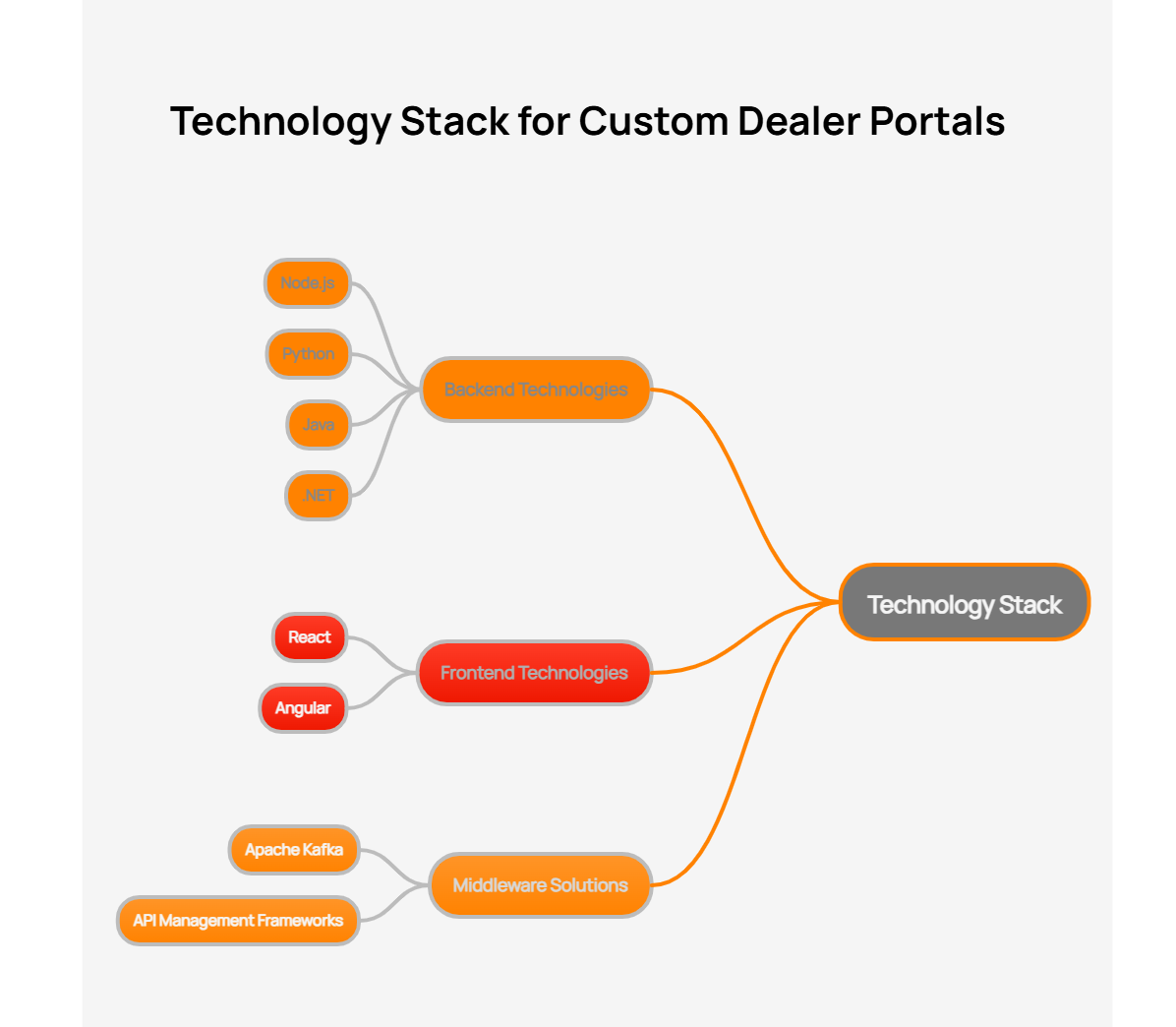
This technology stack provides the flexibility and reliability needed to support high data throughput, rapid response times, and seamless integrations demanded by automotive dealer portal platforms.
Implementing a custom dealer portal requires careful planning and precise execution. We break down the implementation process into highly logical phases. An iterative approach helps manage risks and ensures proper user adoption. A typical rollout takes three to six months to complete fully.
The process begins with an in-depth technical discovery session. We then move into building the portal and integrating the systems. After building, we train users and run a comprehensive pilot program. Finally, we launch the application and continually optimize the platform.
| Phase | Description | Timeframe |
| Discovery | Map workflows and gather requirements | 2 to 4 weeks |
| Build and Integrate | Develop custom software and connect systems | 8 to 12 weeks |
| Train and Pilot | Train dealers and run a soft launch | 2 to 4 weeks |
| Launch and Optimize | Deploy globally and provide customer support | Continuous |
Dealers should customize specific features to match their daily operational needs. The Vehicle Pipeline dashboard remains a highly popular feature to customize. It allows users to filter stock by brand, color, or status. This visibility helps sales teams find the exact car a buyer wants.
The Vehicle Configurator demands precise customization to maximize its true power. It automates pricing and validates configurations instantly for the dealer. Dealers build vehicles with exact engines, wheels, and interior options. The system ensures that all selected parts actually work together.
Smart validation ensures selected options are compatible before creating sales orders. Real-time pricing calculates costs automatically based on specific configuration choices. A streamlined sales flow lets dealers search for matching vehicle stock. They can trigger made-to-order vehicles directly from configurations. Document uploads provide centralized storage for all vehicle-related paperwork. Automated approvals process special pricing requests fast through intelligent workflows. End-to-end efficiency empowers dealers to close sales much faster.
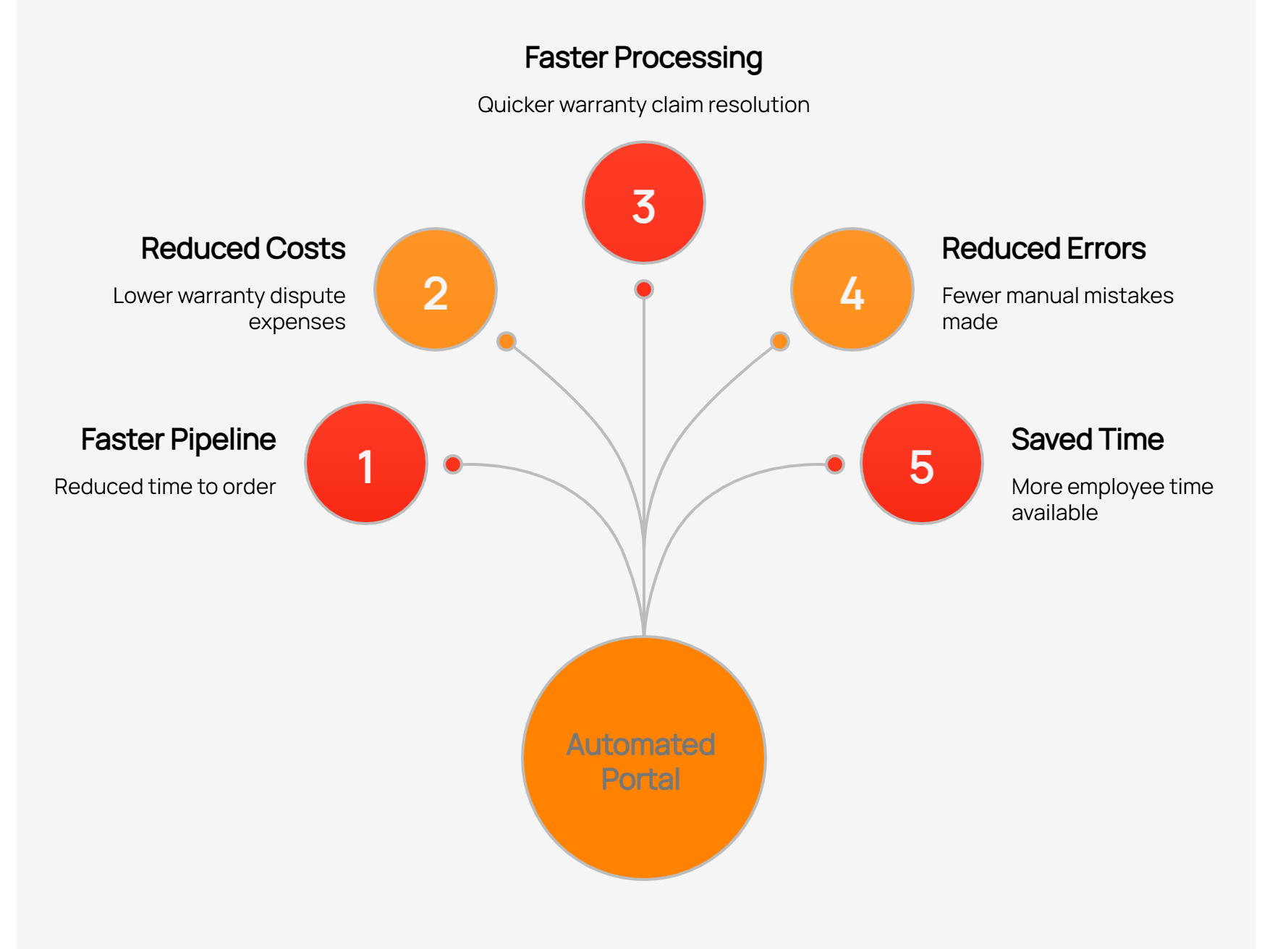
A custom dealer portal delivers a measurable return on overall investment. It functions as a compounding digital asset for the entire organization. As you collect more data, the system becomes increasingly valuable. Analytics help you better predict demand and optimize stock inventory levels.
You can easily quantify potential improvements across your entire dealership network. Businesses see faster pipeline processes and reduced warranty dispute financial costs. Warranty claims process much faster through a secure centralized hub. Automated workflows reduce manual errors and save valuable employee time.
Organizations face common traps during portal software implementation and deployment. Poor data integration stands out as the most frequent operational issue. A portal fails when it only reads data from the ERP. It needs to write data back to the main system automatically.
Building a custom solution from scratch often hides very high costs. These costs erode initial savings quickly and completely damage project budgets. Low-code platforms appear affordable upfront, but lack specialized automotive features. They force teams to invest heavily in creating complex manual workarounds. A purpose-built automotive framework delivers better long-term business value.
Excessive customization time causes major delays when adapting generic software tools. Teams struggle to handle vehicle pipelines and complex SAP VMS integration. Ongoing maintenance requires frequent updates to keep pace with automotive regulations. Training overhead increases when dealers struggle with non-intuitive system interfaces. This leads directly to low user adoption and lost daily productivity.
Localization failures compound these issues and hinder global rollout operations. Dealer networks span regions with different languages, currencies, and compliance regulations. Systems that ignore these factors face strong resistance from local teams. Essential localization steps include support for multiple languages across diverse dealer networks. Fiori-based user interfaces switch languages flawlessly for international dealership employees. Currency and tax handling provide real-time pricing adjusted for local markets. Regional workflows adapt customs clearance and delivery processes to local distributors.
Selecting the right vendor and portal software requires strict objective evaluation. You should choose a partner with proven expertise in automotive technology. Always look specifically for ERP solutions for the automotive industry, as they fully understand complex processes and requirements. At Hicron, we draw on our domain expertise in SAP VMS and ERP solutions for automotive to assist in developing applications. We develop custom applications that integrate with VMS. We provide tailored advice on the optimal approach and total costs. We base this guidance entirely on your unique business needs.
Technical architects should ask vendors highly specific technical integration questions. Focus your inquiries on scalability and data governance across dealer networks. Ask how the system handles large volumes of real-time data. You need to verify that their software development practices remain secure. Evaluate how the vendor handles third-party system software integrations. The portal will likely connect with external logistics providers and shippers. A configurable API architecture makes these external connections much easier. Ask to see demonstrations of similar past software integration projects.
You should evaluate your current digital infrastructure setup today. Schedule a discovery session to map your existing operational workflows. Document where your team loses the most time to manual processes. This evaluation provides a strong foundation for your custom portal project. Our professional services team is ready to assist you. Contact us today to schedule a comprehensive enterprise system demonstration. Let our experts show you how custom portal software improves sales.

Hicron Software proved to be a trusted partner with unmatched technical expertise, delivering a scalable and user-friendly web application that was pivotal to our successful U.S. market expansion.

Hicron’s contributions have been vital in making our product ready for commercialization. Their commitment to excellence, innovative solutions, and flexible approach were key factors in our successful collaboration.
I wholeheartedly recommend Hicron to any organization seeking a strategic long-term partnership, reliable and skilled partner for their technological needs.

After carefully evaluating suppliers, we decided to try a new approach and start working with a near-shore software house. Cooperation with Hicron Software House was something different, and it turned out to be a great success that brought added value to our company.
With HICRON’s creative ideas and fresh perspective, we reached a new level of our core platform and achieved our business goals.
Many thanks for what you did so far; we are looking forward to more in future!

Hicron is a partner who has provided excellent software development services. Their talented software engineers have a strong focus on collaboration and quality. They have helped us in achieving our goals across our cloud platforms at a good pace, without compromising on the quality of our services. Our partnership is professional and solution-focused!

The IT system supporting the work of retail outlets is the foundation of our business. The ability to optimize and adapt it to the needs of all entities in the PSA Group is of strategic importance and we consider it a step into the future. This project is a huge challenge: not only for us in terms of organization, but also for our partners – including Hicron – in terms of adapting the system to the needs and business models of PSA. Cooperation with Hicron consultants, taking into account their competences in the field of programming and processes specific to the automotive sector, gave us many reasons to be satisfied.