Common Data Model in Automotive industry
- January 03
- 7 min



An auto spare parts management system delivers a strategic advantage for automotive businesses aiming to improve inventory control, automate workflows, and enhance customer satisfaction.Whether you’re managing a repair shop, a dealership, or a parts distribution network, building a robust auto parts management system with the right features is essential. Here’s a guide to the must-have capabilities and what to consider when developing an auto spare parts management system.
An auto spare parts management system is a centralized platform that tracks stock levels, automates reordering, and coordinates suppliers and warehouses for automotive businesses.
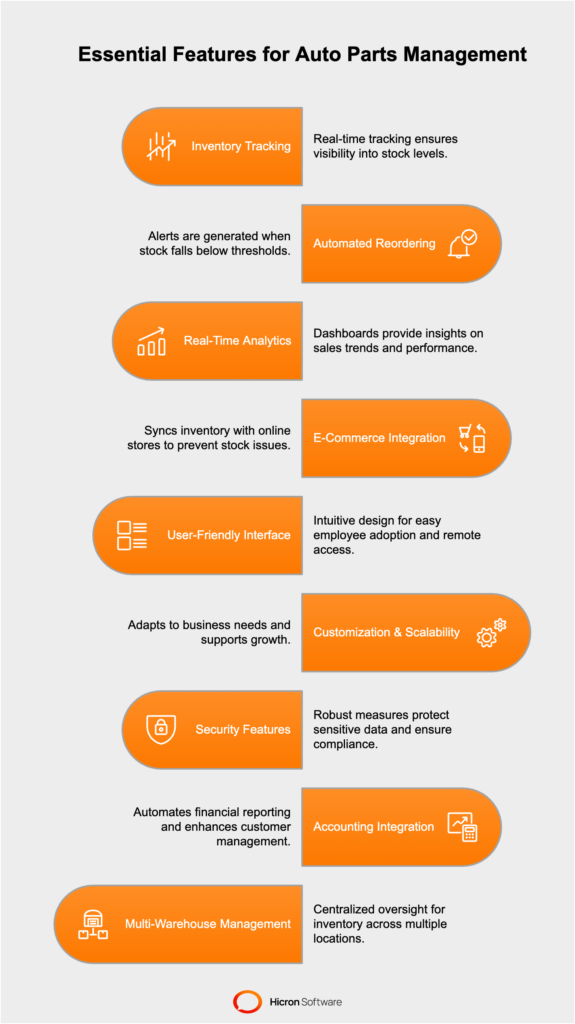
An auto spare parts management system centers on effective inventory management, giving businesses oversight of parts like filters, brake pads, and spark plugs. Barcode scanning and serial number tracking streamline item location and reduce errors, preventing stockouts and overstock buildup. Vehicle-specific lookup by VIN (Vehicle Identification Number), make, model, and year helps staff quickly identify compatible parts, reducing the risk of ordering the wrong component
Automated reordering ensures stock levels stay adequate. The system generates alerts or orders when inventory falls below preset thresholds. This feature saves time and prevents supply disruptions, guaranteeing that fast-moving items like oil filters or tires are always available.
Insightful Real-Time Analytics and Reporting Dashboards that provide data on sales trends, inventory turnover, and product performance are critical. With these insights, businesses can make informed decisions to optimize pricing, strategically reorder quantities, and accurately predict seasonal demand.
For businesses selling auto spare parts online, e-commerce integration is essential. The system should sync inventory with online stores in real time, avoiding scenarios where customers purchase out-of-stock items. Automated order tracking and shipping notifications enhance the buying experience, inspiring customer loyalty and trust.
A clean, intuitive interface is vital for easy adoption by employees. The interface should offer accessibility across multiple platforms, including desktop systems and mobile applications, enabling remote management for added flexibility. Role-based access ensures managers can review financial and inventory reports, while technicians and warehouse staff see only the parts and tasks relevant to their work.
An auto spare parts management system adapts to each business’s needs, whether that means catering to unique part specifications or scaling operations across multiple locations. Whether you’re catering to unique part specifications or scaling operations across multiple locations, customization ensures relevance, while scalability future-proofs the system as your business expands.
Handling sensitive data like customer details and supplier information requires robust security measures. Encryption, multi-factor authentication, and regular updates are crucial for maintaining data integrity. Look for vendors that can demonstrate compliance with recognized standards such as SOC 2 Type II or GDPR. An audit trail function tracks system activity, reinforcing compliance and transparency.
Combining your auto spare parts management system with accounting tools allows automated financial reporting and invoicing. CRM integration further promotes customer relationship management by improving communication and order tracking while personalizing the customer experience. The system should also track supplier performance, including pricing, delivery times, and order history, to help procurement teams make informed sourcing decisions.
An auto spare parts management system enables inter-warehouse transfers, tracks inventory across all locations, and generates comprehensive analytics to streamline logistics and reduce errors, essential capabilities for businesses operating across several warehouses.
The integration of an auto spare parts management system with the automotive agency model offers a powerful approach to streamlining operations and enhancing scalability. The automotive agency model focuses on centralizing processes to improve efficiency and customer satisfaction, values perfectly aligned with the goals of a robust management system.
Automotive agency model integration with spare parts management enables stronger collaboration between manufacturers, suppliers, and distributors. Real-time inventory data can be shared, ensuring that supply chain operations are as synchronized as possible. Distributors could adjust their stock levels based on manufacturer updates, while suppliers could better track which products are in high demand.
Improved coordination can enhance the customer experience by enabling faster delivery and ensuring part availability when needed. This synergy between management systems and the automotive agency model allows businesses to achieve operational optimization at scale, keeping pace with market trends and customer expectations.
Automotive agency model adoption also allows businesses to integrate customer insights and operational analytics to create tailored offerings, mirroring the efficiency that has driven success in the broader automotive sector.
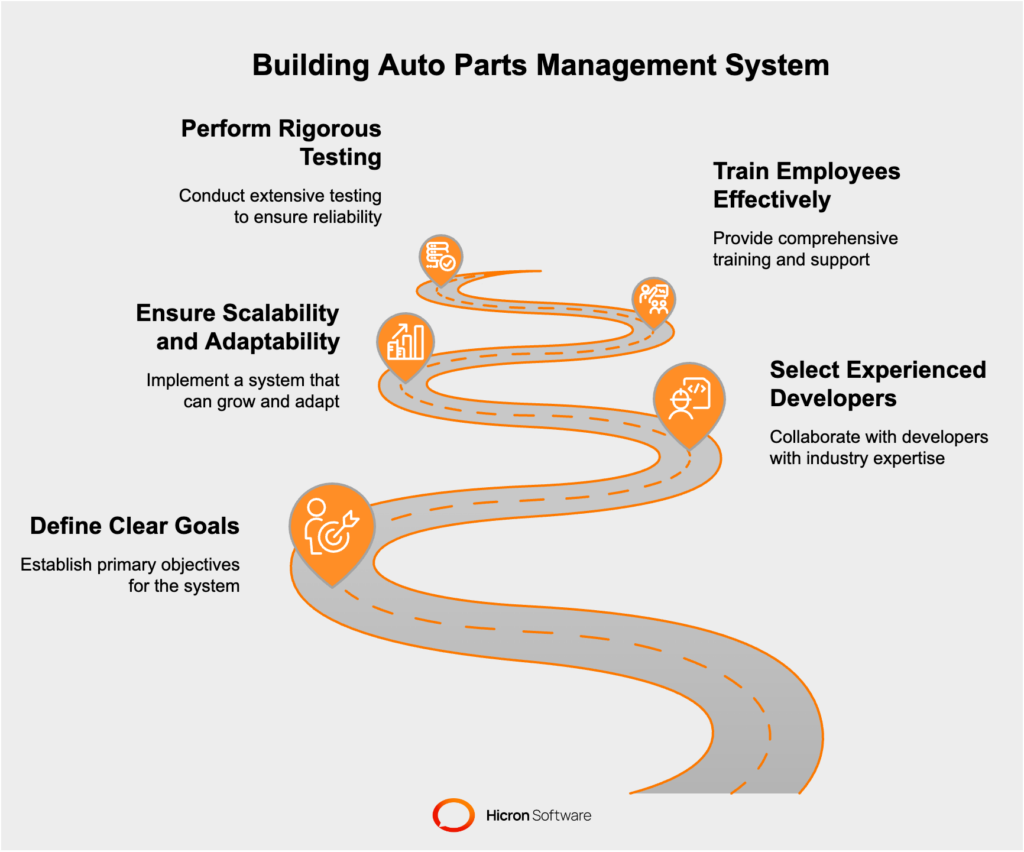
An auto spare parts management system can support operational efficiency and customer satisfaction when it is built around the right capabilities. Features such as real-time tracking, Automated Reordering, analytics, and e-commerce integration can help improve stock accuracy and order flow across warehouses and sales channels. Implementing technology into spare parts management that is supported by ISO 27001-aligned security practices and connected to the automotive agency model can strengthen coordination, inventory visibility, and service consistency at scale. With the right implementation strategy, businesses can improve daily operations and build a more reliable foundation for growth. Contact us if you need support in optimizing an existing system or want to build something new.
Hicron Software proved to be a trusted partner with unmatched technical expertise, delivering a scalable and user-friendly web application that was pivotal to our successful U.S. market expansion.

Hicron’s contributions have been vital in making our product ready for commercialization. Their commitment to excellence, innovative solutions, and flexible approach were key factors in our successful collaboration.
I wholeheartedly recommend Hicron to any organization seeking a strategic long-term partnership, reliable and skilled partner for their technological needs.

After carefully evaluating suppliers, we decided to try a new approach and start working with a near-shore software house. Cooperation with Hicron Software House was something different, and it turned out to be a great success that brought added value to our company.
With HICRON’s creative ideas and fresh perspective, we reached a new level of our core platform and achieved our business goals.
Many thanks for what you did so far; we are looking forward to more in future!

Hicron is a partner who has provided excellent software development services. Their talented software engineers have a strong focus on collaboration and quality. They have helped us in achieving our goals across our cloud platforms at a good pace, without compromising on the quality of our services. Our partnership is professional and solution-focused!

The IT system supporting the work of retail outlets is the foundation of our business. The ability to optimize and adapt it to the needs of all entities in the PSA Group is of strategic importance and we consider it a step into the future. This project is a huge challenge: not only for us in terms of organization, but also for our partners – including Hicron – in terms of adapting the system to the needs and business models of PSA. Cooperation with Hicron consultants, taking into account their competences in the field of programming and processes specific to the automotive sector, gave us many reasons to be satisfied.